How to Become a Professional Pet Sitter: Skills, Certification and First Clients
What professional pet sitters do, the knowledge owners expect, how to get experience, how pet sitter certification works and how to set up your business.
PetCred Editorial Team · Updated 2 August 2026 · 11 min read
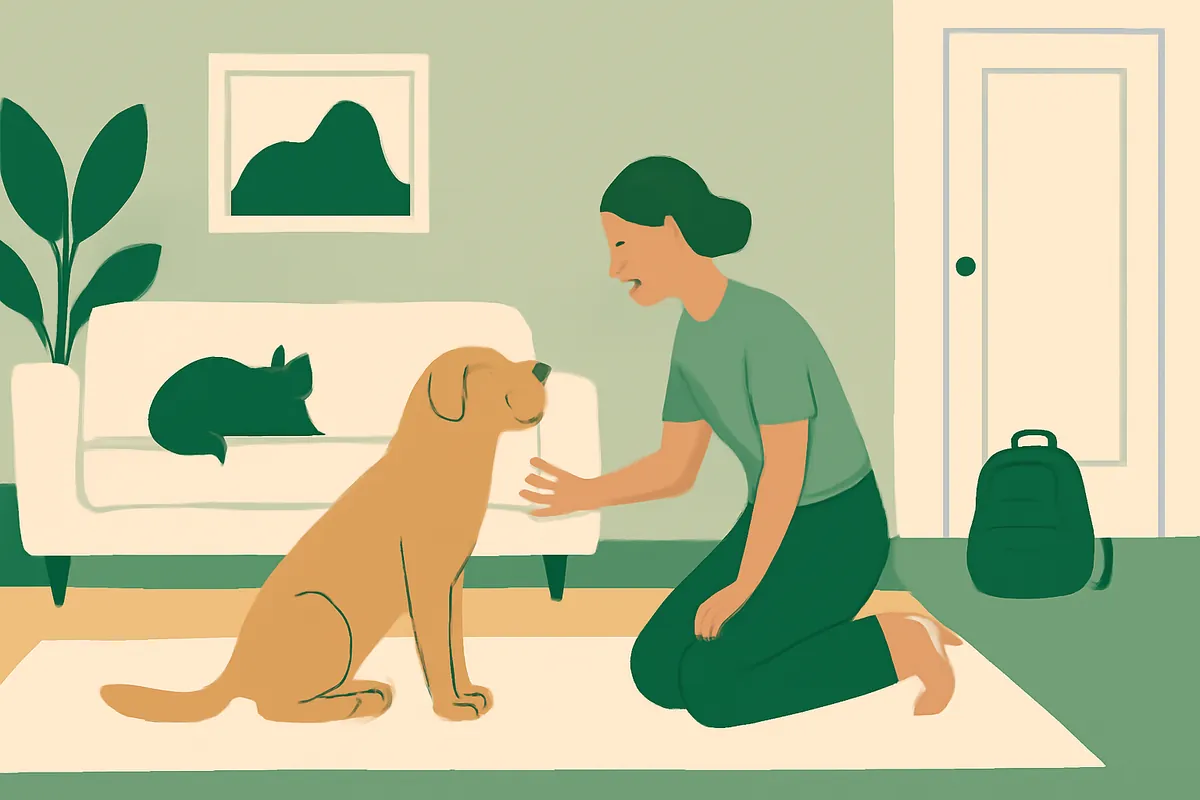
Pet sitting looks simple from the outside: feed the cat, walk the dog, lock the door. Owners who hire a professional are paying for something harder to see. They want someone who notices when an animal is unwell, gives medication exactly as prescribed, keeps their home secure and knows what to do when something goes wrong while they are hundreds of miles away. This guide explains how to become that kind of pet sitter, and where pet sitter certification fits into the route.
You do not need a degree to start, and in most places you do not need a license for pet sitting in the client's own home. What you need is reliable knowledge of animal care, professional habits, and a way to show strangers that they can trust you with their keys. This guide covers each of those.
What a professional pet sitter does
A pet sitter cares for animals in their own home while the owner is away or at work. The work usually takes one of three shapes:
- Drop-in visits. One or more visits a day to feed, give water, clean litter trays or cages, give medication, play and check the home.
- Overnight stays. Sleeping at the client's home so the animals have company in the evening and at night.
- Walks and daytime visits for dogs whose owners work long hours, often combined with feeding or a short play session.
Around the animal care sit the tasks that make it a business: meeting new clients, writing down instructions, keeping visit records, sending updates, managing keys and alarm codes, invoicing and scheduling.
The job suits people who are calm, organized and comfortable working alone. You are often the only person who sees the animal for days, so your judgment matters.
Pet sitting, dog walking, house sitting and boarding
These services overlap, and clients do not always use the words precisely. Knowing the difference helps you describe what you offer and check which rules apply.
| Service | Where the animal stays | What it usually involves |
|---|---|---|
| Pet sitting (drop-in) | Its own home | Scheduled visits for care, feeding and company |
| Overnight or house sitting | Its own home | You stay in the home, often combined with home care |
| Dog walking | Its own home, out for walks | Solo or group walks, sometimes with transport |
| Home boarding | Your home | The animal lives with you while the owner is away |
| Day care | Your home or premises | Dogs spend the day with you, often in a group |
Boarding and day care in your own home often need a license or permit. If you plan to offer them, read do you need a license or insurance to be a pet sitter? before you advertise.
The knowledge the job depends on
Owners rarely ask about knowledge directly. They ask "what would you do if…?", and your answer shows whether you have it.
Daily care routines by species
Professional sitting is rarely dogs only. You may care for cats, rabbits, guinea pigs, birds, fish or a bearded dragon in the same week. Each species has its own needs for food, water, temperature, cleaning and handling, and a routine that is fine for one can harm another. A rabbit that stops eating needs attention the same day; a reptile's heat lamp that fails overnight is an emergency for that animal. Learn the basics for the species you accept, and say no to the ones you do not know yet.
Reading stress and illness during visits
You see an animal for short periods, often in a home that feels different because its owner is missing. You need to know what normal looks like for that animal (the meet-and-greet is where you learn it) and to recognize the changes that matter: not eating, hiding, vomiting, diarrhea, straining in the litter tray, limping, labored breathing or unusual tiredness. Some changes can be watched and recorded; others mean calling a vet today. Our guide to pet emergencies every pet professional should recognize covers the signs that should never wait.
Medication and record keeping
Many clients hire a professional precisely because their animal is on medication. Your role is to give what the vet prescribed, exactly as the written instructions and the pharmacy label say, and to record each dose. It is never to adjust a dose, skip one because the animal seems better, or give anything the vet has not prescribed. If a dose is refused, spat out or missed, you record it and tell the owner, and you ask the vet what to do rather than guessing.
Emergencies and escalation to a vet
Sooner or later something will go wrong on your watch: an animal falls ill, gets injured, eats something it should not or escapes. The sitters who handle it well are the ones who prepared beforehand. That means the vet's details and the nearest emergency clinic saved in your phone, written permission from the owner for you to seek treatment, an agreed spending limit or payment arrangement, and a backup contact who can make decisions if the owner cannot be reached. A pet first aid course is worth taking early: see how to get pet first aid and CPR certified.
Keys, home security and client privacy
You will hold keys and alarm codes for homes that are empty for days. Label keys with a code rather than an address, keep codes out of your phone's notes if they could identify the house, and never post photos that reveal where a client lives or that they are away. Clients also trust you with their routines, their home layout and their personal information, and discretion is part of the service.
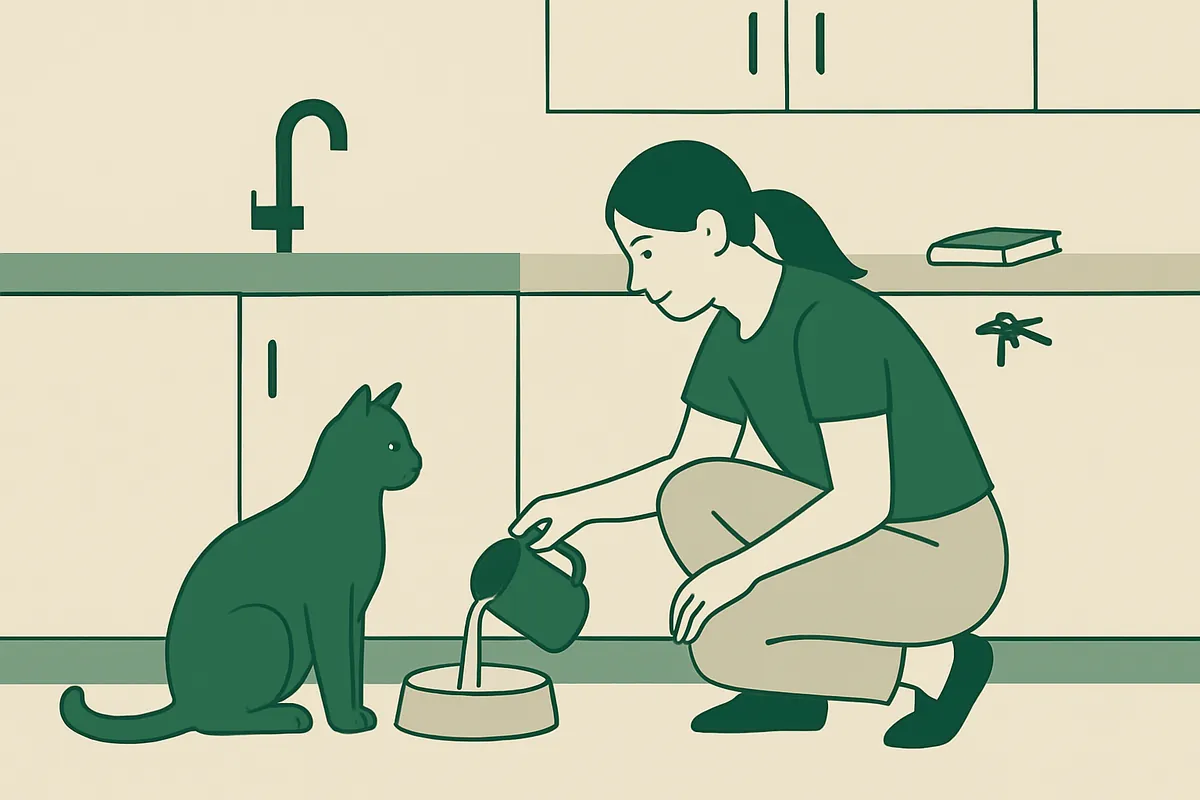
How to get experience
Good ways to build experience before, or while, you take paying clients:
- Care for animals you know. Friends' and neighbors' pets are a gentle start, if you treat each booking professionally, with written instructions and a visit log.
- Volunteer at a shelter or rescue. You meet animals with very different temperaments, and many shelters train volunteers in handling and hygiene.
- Work for an established pet sitting or dog walking business. You learn scheduling, client communication and how an experienced owner handles problems, and you are usually paid while you learn.
- Widen your species range gradually. If you only know dogs, spend time with cats and small animals before you accept them.
Keep a simple record of the animals and situations you have handled: it shows you your gaps and gives you honest examples for clients.
Do you need a license or insurance?
In most parts of the US, UK, Canada and Australia, at the time of writing, there is no specific license to care for pets in their owners' homes. That does not mean there are no rules. Business registration and tax rules apply to everyone who trades. Boarding animals in your own home or running day care is often licensed. Some local authorities limit how many dogs one person may walk in public spaces, or require permits for commercial dog walkers in certain parks.
Insurance is usually not required by law, but it is standard for professionals and many clients ask for it. Rules change and vary by state, province and council, so check with your local authority before you start. We go through each country in do you need a license or insurance to be a pet sitter?
Choosing a pet sitter certification
There is no single official pet sitter qualification in most countries. What you will find falls into a few types, and each proves something different:
- Association memberships and their courses. Professional associations for pet sitters offer education, resources and sometimes their own certification to members.
- College or awarding body qualifications in animal care, which teach broader animal husbandry through courses of varying length.
- Pet first aid certificates, which show you have studied, and ideally practiced, emergency response.
- Background checks, which are not a certification but answer the other question clients have: can this person be trusted in my home?
- Knowledge credentials, including online assessments, which test whether you understand the care, safety and professional side of the job and can apply it to realistic situations.
When you compare options, ask what each one actually tests. A course certificate shows you completed a course; an assessment shows you answered questions to a standard. Neither observes how you handle an animal in a real home. We compare the main types in pet sitter certifications compared.
The PetCred Pet Concierge & Sitter assessment is a knowledge credential. It asks 12 written, scenario-based questions in 60 minutes, marked against a published curriculum that covers daily care by species, reading stress and illness, medication and record keeping, home security and privacy, emergencies and vet escalation, dog walking safety, multi-pet and special-needs households, and contracts, insurance and professional standards. You get a score by topic within minutes, three attempts are included, and you can buy a personalized course built from any gaps. Those who pass receive a certificate with a public verification link that a client can check. It does not observe hands-on skill and has no experience requirement, so it works best alongside the experience described above.
Setting up your business
When you have the knowledge and some experience, the practical side comes next.
- Decide what you offer. Drop-in visits, overnights, dog walking, small animals, medication visits, or a mix. Starting narrow is easier to deliver well.
- Define your area. Travel time is unpaid time. A tight service area fits more visits into a day and lets you reach a home quickly if something goes wrong.
- Set your prices. Work out your costs, your time per visit including travel, and what the local market looks like, then price for the value of a reliable, knowledgeable service. See how to set your prices for pet sitting and dog walking.
- Write a service agreement. It should cover what you will and will not do, cancellation terms, key handling, what happens in an emergency, vet authorization and payment. Have it reviewed by someone qualified where you live.
- Build a meet-and-greet process. Every new client gets a visit before the first booking, with a standard form. Our meet-and-greet checklist lists what to collect.
- Arrange insurance and any registrations that apply to your business.
- Plan for your own absence. If you are ill or your car breaks down, who covers your visits? A trusted backup sitter, agreed with clients in advance, turns a crisis into an inconvenience.
If dog walking will be a large part of your work, read how to start a dog walking business and walking several dogs safely.
A worked scenario: an elderly dog on medication
A new client books a week of twice-daily visits for her 13-year-old terrier while she travels for work. The dog takes tablets morning and evening and has arthritis.
At the meet-and-greet you watch the owner give the morning tablet, hidden in a small piece of cheese, and note exactly how she does it. You check that the written instructions match the pharmacy label, count the tablets to make sure there are enough for the week with a few spare, and ask what the dog is like on a good day: how far it walks, how it gets up from its bed, how much it eats. You take the vet's details, a signed authorization to seek treatment, a spending limit and the number of her sister, who can make decisions while the owner is on a flight.
On day four the dog eats its breakfast but leaves the tablet in the cheese and walks stiffly to the door. You try once more the way the owner showed you. When it is refused again, you do not crush it into food or skip it quietly. You record the time and what happened, message the owner, and call the vet's practice to ask what they want you to do, because deciding what a missed dose means is the vet's call, not yours. You note the stiffness too, and mention it in your update so the owner can decide whether the dog needs to be seen.
Nothing dramatic happened. The client saw a sitter who followed instructions, noticed changes, kept records and escalated to the right person. That is the job.
Mistakes new pet sitters make
- Skipping the meet-and-greet. Taking a booking without meeting the animal and seeing the home is how sitters end up unable to find the cat, the food or the water shutoff valve.
- Relying on memory. Unwritten instructions get confused on a busy week. Write them down, and keep a visit log.
- Accepting species you do not know. Saying "I have never cared for a tortoise" is professional. Guessing is not.
- Leaving the owner in the dark. A short update after each visit (fed, medication given, all well) prevents worried calls and builds trust.
- Unclear emergency arrangements. Without written vet authorization and a backup contact, you can lose valuable time when something goes wrong.
- Underpricing. Low prices attract the clients who value you least and make it hard to afford insurance, training and a backup sitter.
For what sitters and walkers earn, with official pay figures and how visits add up to an income, read how much pet sitters and dog walkers earn.
Where to start today
If you are at the very beginning, a good first month looks like this: learn the daily care basics for the species you plan to accept, take a pet first aid course, write your own meet-and-greet form and service agreement, and offer a few professional-standard bookings to people you know so you can test your process.
When you want to check your knowledge, try our free sample pet sitter questions. They use the same format as the Pet Concierge & Sitter assessment, with model answers so you can compare your thinking. Then keep building experience: what you know, what you have done and how you show it is what makes owners hand you their keys.
Frequently asked questions
Do you need a certification to be a pet sitter?
Usually not by law: in most of the US, UK, Canada and Australia anyone can offer pet sitting in the owner's home. A certification is a way to show clients what you know before they trust you with their animals and keys, and some insurers and agencies look for training.
How long does it take to become a professional pet sitter?
You can start taking small bookings within weeks if you already care for animals confidently. Building the knowledge of several species, a written process, insurance and a steady client base usually takes several months to a year.
Can I start pet sitting as a side business?
Many sitters do, often with evening, weekend or holiday bookings. Treat it as a business from the start: written agreements, records and insurance, and a backup plan for bookings you cannot cover because of your main job.
Written by the PetCred Editorial Team and checked against the published curriculum for this program. Laws and requirements change and differ by place: check local rules before relying on anything legal or regulatory here.
Free course
Professional Pet Sitting Fundamentals: A Free 5-Lesson Course
Five short lessons, a quick check after each, no sign-up. Start now →
More pet sitting guides
Pet Sitter Certifications Compared
Pet sitting certification online and offline compared: association programs, courses, first aid, assessments and background checks, and what each proves.
25 September 2026
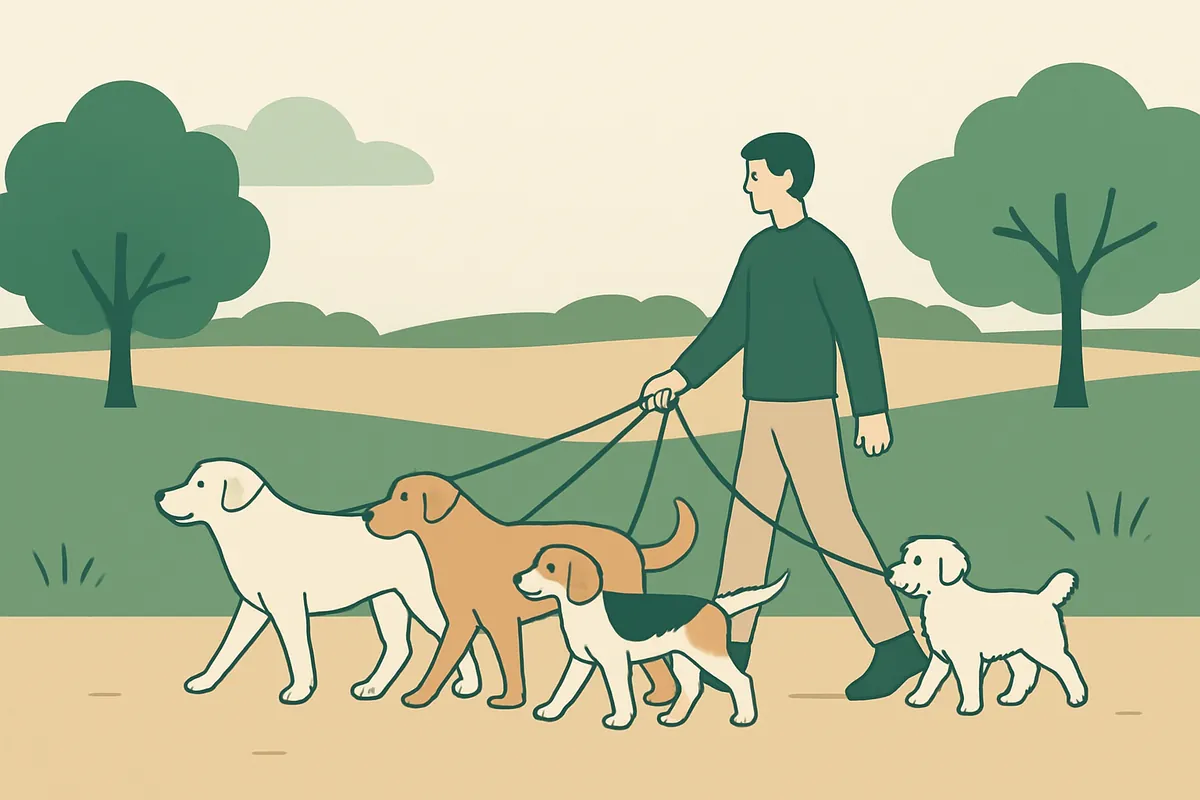
Walking Several Dogs Safely: Numbers, Leads and Compatibility
How many dogs can a dog walker walk? How to set safe numbers, choose compatible dogs, pick the right leads, read a group and respond if a fight starts.
22 September 2026
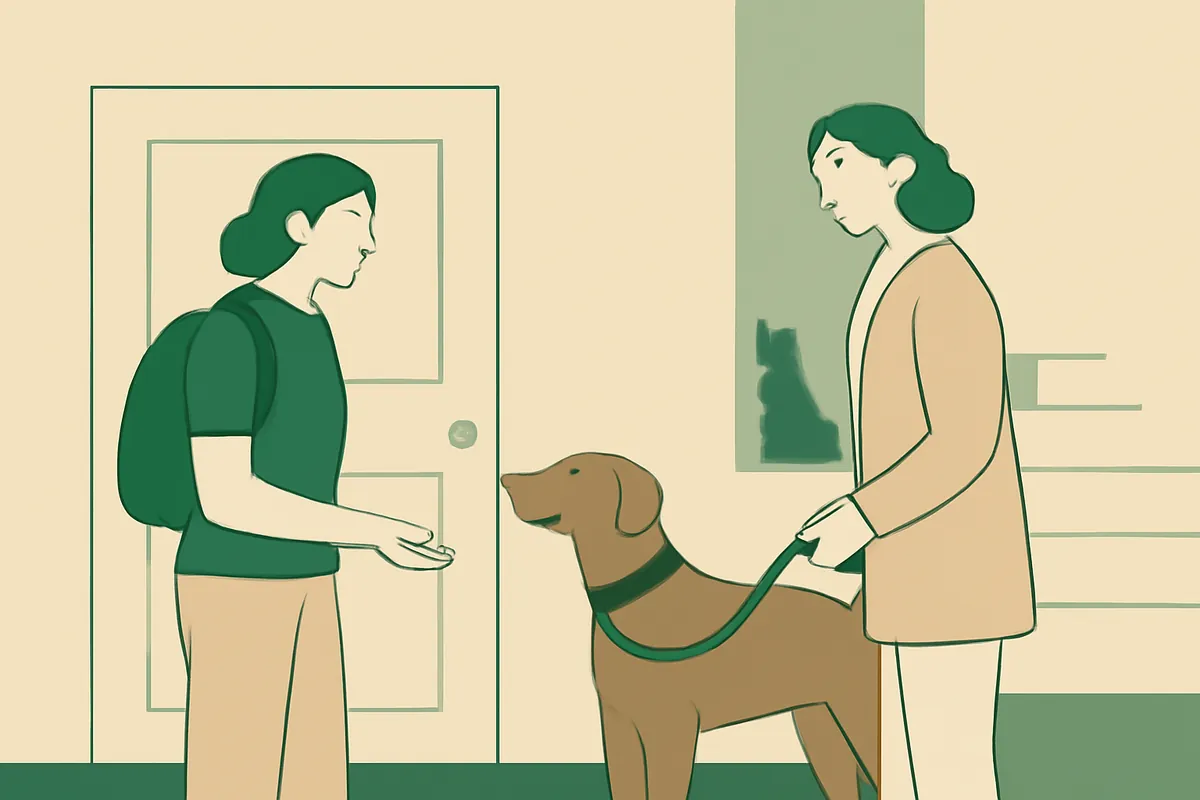
The Meet-and-Greet Checklist for New Pet Sitting Clients
What to collect at a pet sitting meet-and-greet: a complete pet sitter client form, vet authorization, routines, medication, home access and red flags.
19 September 2026
How to Set Your Prices for Pet Sitting and Dog Walking
How much to charge for pet sitting and dog walking, worked out from your costs, your real time per visit, the local market and the value you provide.
8 September 2026