Pet Sitter Certifications Compared
Pet sitting certification online and offline compared: association programs, courses, first aid, assessments and background checks, and what each proves.
PetCred Editorial Team · Updated 25 September 2026 · 6 min read
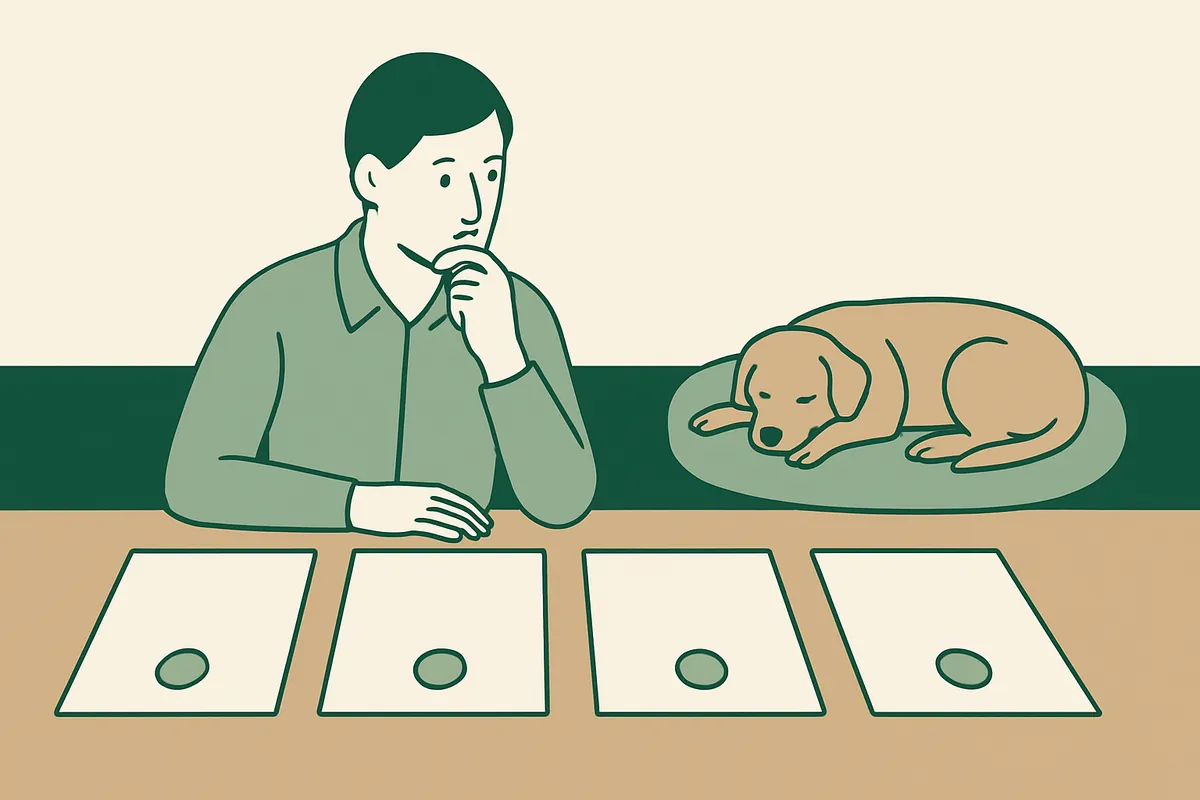
Search for a pet sitting certification online and you will find association programs, college qualifications, short video courses, first aid certificates and written assessments, all using similar words. They are not interchangeable. Each one proves something different, and none of them is a license: in most places pet sitting is not a regulated profession, so any credential you hold is a way of showing clients what you know, not a legal requirement.
This guide compares the main kinds of pet sitter credential by what they actually prove, then covers how to choose, whether online certification is worth it and how to combine credentials into a profile clients trust. We do not list prices or hour requirements: they change often, and you should check them with each provider.
Why credentials matter in pet sitting
Owners choose a pet sitter on trust. They are handing over their animals and their keys, often to someone they found online, and they have little to go on: reviews, photos, a conversation at the meet-and-greet. A credential they can check gives them one more concrete reason to choose you.
Credentials also matter to you. Studying for one fills gaps you did not know you had, and some insurers, agencies and employers ask about training.
The main kinds of pet sitter credential
Association programs
Professional associations for pet sitters and dog walkers offer members education, resources, directories and often access to insurance. Some run their own certification or training programs, usually a course followed by a test. In the US, Pet Sitters International and the National Association of Professional Pet Sitters are among the long-established associations for the profession. Other countries have their own associations, and some are national in reach while others are regional.
What it proves: that you completed the association's program and, where there is a test, passed it. Membership itself mostly shows that you have joined and agreed to its code of conduct.
College and awarding body qualifications
Colleges and training providers offer qualifications in animal care at different levels, and some are aimed at pet sitters, dog walkers or animal boarding. They usually involve structured study over weeks or months, sometimes with a practical element.
What it proves: broader animal care knowledge studied over time, and practical skill where the course includes supervised practice.
Short online courses
Many providers sell short courses in pet sitting or dog walking, delivered by video or reading, with a certificate at the end.
What it proves: that you completed the course. If there is no meaningful assessment, it shows attendance rather than knowledge.
Pet first aid certificates
A pet first aid course is one of the most useful credentials a sitter or walker can hold, because emergencies are where clients most need you to know what you are doing. Practical courses include hands-on practice; online courses cover the knowledge. See how to get pet first aid and CPR certified.
What it proves: emergency knowledge and, for practical courses, rehearsal of the physical skills.
Knowledge assessments
Some credentials are built around an assessment rather than a course: you answer questions set against a published curriculum, and the result shows whether you met the standard.
What it proves: that you can apply knowledge of care, safety and professional practice to realistic situations. It does not observe hands-on skill.
Background checks
A background check is not a certification, but it answers a question every client has: can this person be trusted in my home? Depending on where you live, this might be a basic DBS check in the UK, a police record check in Canada, a National Police Check in Australia, or a background check through a screening provider in the US.
What it proves: what the check covers in your country, and nothing about animal care.
Comparing them side by side
| Credential type | Typical format | What it shows clients | What it does not show |
|---|---|---|---|
| Association program | Course and test, plus membership | Completed a profession-specific program | Hands-on skill, unless observed |
| College qualification | Structured study, sometimes practical | Broad animal care knowledge over time | Current business practice, unless covered |
| Short online course | Video or reading, certificate | Completion | Knowledge, unless properly tested |
| Pet first aid | Practical or online course | Emergency preparedness | Everyday care knowledge |
| Knowledge assessment | Written questions against a curriculum | Applied knowledge to a standard | Hands-on skill |
| Background check | Official or screening check | Trustworthiness, as far as the check goes | Any animal care knowledge |
How to choose
Ask these questions of any credential before you pay:
- What does it test? A certificate for watching videos is different from one earned by passing an assessment.
- Is the curriculum published? You should be able to see the topics before you start, and they should match the job: daily care across species, reading illness, medication, emergencies, home security, walking safety and professional standards.
- Can clients verify it? A certificate a client can check through a verification page or the provider is worth more than a PDF anyone could edit.
- Is it honest about its scope? Be cautious of any credential that claims to qualify you to treat animals or that implies it is a license.
- Does it need renewing? Knowledge and guidance change. A credential that is refreshed or renewed keeps its meaning.
- What do clients and employers near you recognize? Look at what established sitters and agencies in your area hold.
Is an online pet sitting certification worth it?
It can be, if you know what it proves. An online credential is convenient, fits around work and can test a wide range of knowledge. It cannot show that you handle animals confidently, so it works best alongside experience you can describe and, ideally, a practical first aid course.
Be wary of online courses that award a certificate for completion alone. A credential is only as meaningful as its assessment.
Where PetCred fits
The Pet Concierge & Sitter assessment is a knowledge assessment. It asks 12 written, scenario-based questions in 60 minutes, marked against a published curriculum: daily care routines by species, reading stress and illness during visits, medication and record keeping, home security, keys and client privacy, emergency protocols and vet escalation, dog walking safety and group management, multi-pet and special-needs households, and contracts, insurance and professional standards.
You get a score by topic within minutes, three attempts are included, and you can buy a personalized course built from any gaps. Those who pass receive a certificate with a public verification link that clients can check. It does not observe hands-on skill and has no experience requirement, and it is not a license or a substitute for any local permit.
Building a profile clients trust
No single credential covers everything, and clients do not expect one to. A strong profile usually combines:
- Knowledge you can show: a credential clients can verify.
- Emergency preparedness: a pet first aid certificate, refreshed regularly.
- Trust: a background check where available, insurance, and clear written policies.
- Experience: honest descriptions of the animals and situations you have handled, and reviews from real clients.
Describe each credential accurately on your website and profiles, in plain words: what it is, who issued it and what it covers.
Next steps
For the full route into the profession, read how to become a professional pet sitter. If you are still setting up, do you need a license or insurance to be a pet sitter? covers the legal side, and the meet-and-greet checklist shows the professional process clients notice. To see the assessment format before you choose, try the free sample pet sitter questions.
Frequently asked questions
Is pet sitter certification required by law?
Not in most places. Pet sitting is generally not a regulated profession in the US, UK, Canada or Australia, so a certification is a way to show clients what you know, not a legal requirement. Related activities such as home boarding can need a license.
Which pet sitter certification is best?
It depends on what you want to prove. A course shows completion, an assessment shows knowledge to a standard, a first aid certificate shows emergency preparedness and a background check shows trust. Many sitters combine two or three.
Written by the PetCred Editorial Team and checked against the published curriculum for this program. Laws and requirements change and differ by place: check local rules before relying on anything legal or regulatory here.
Free course
Professional Pet Sitting Fundamentals: A Free 5-Lesson Course
Five short lessons, a quick check after each, no sign-up. Start now →
More pet sitting guides
How to Become a Professional Pet Sitter: Skills, Certification and First Clients
What professional pet sitters do, the knowledge owners expect, how to get experience, how pet sitter certification works and how to set up your business.
2 August 2026

Walking Several Dogs Safely: Numbers, Leads and Compatibility
How many dogs can a dog walker walk? How to set safe numbers, choose compatible dogs, pick the right leads, read a group and respond if a fight starts.
22 September 2026
The Meet-and-Greet Checklist for New Pet Sitting Clients
What to collect at a pet sitting meet-and-greet: a complete pet sitter client form, vet authorization, routines, medication, home access and red flags.
19 September 2026

How to Set Your Prices for Pet Sitting and Dog Walking
How much to charge for pet sitting and dog walking, worked out from your costs, your real time per visit, the local market and the value you provide.
8 September 2026