Walking Several Dogs Safely: Numbers, Leads and Compatibility
How many dogs can a dog walker walk? How to set safe numbers, choose compatible dogs, pick the right leads, read a group and respond if a fight starts.
PetCred Editorial Team · Updated 22 September 2026 · 7 min read
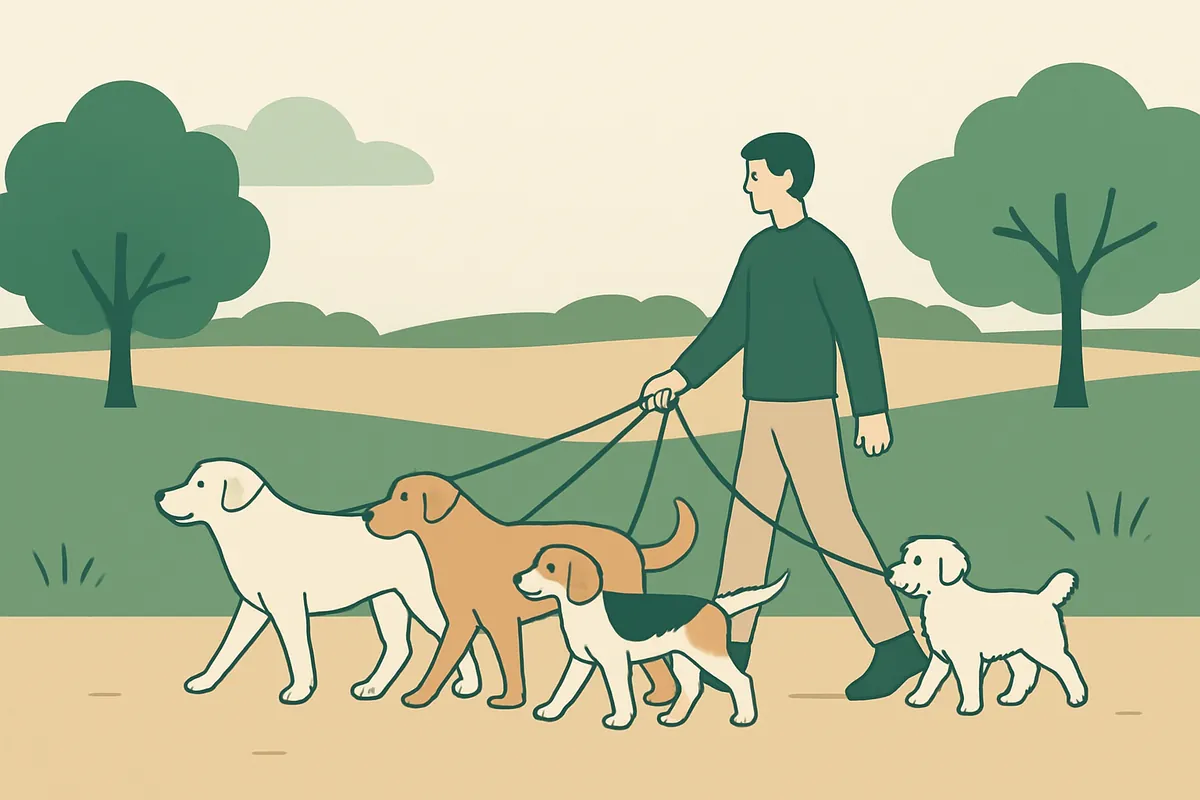
How many dogs can a dog walker walk? There is no single safe number that applies everywhere. The honest answer depends on the local rules where you walk, the conditions in your insurance policy, the dogs themselves, the place and your own skill. The real test is simple: you must be able to control every dog, see what each one is doing and pick up after each of them, all at the same time, and still cope if something goes wrong.
Group walks are efficient and many dogs enjoy the company. They also multiply every risk in the job: a scuffle, a slipped collar, a dog that bolts after a squirrel. This guide covers how to decide your numbers, choose compatible dogs, pick the right equipment, manage a group on the walk and respond calmly when things go wrong.
How many dogs can a dog walker walk?
Work through these limits in order. The lowest one wins.
- Local rules. Some councils and municipalities cap the number of dogs one person may walk in public places, or require commercial walkers to hold a permit for certain parks. The limit can differ from one park to the next, so check every area you use. See do you need a license or insurance to be a pet sitter?
- Your insurance. Many policies state a maximum number of dogs walked at once and set conditions on off-lead exercise. Walking more than your policy allows may mean a claim is not paid.
- The dogs. Two strong, excitable adolescents can be harder to manage than several calm, well-trained adults. Size, strength, lead manners, recall and temperament all count.
- The place. A quiet, enclosed field is not the same as a busy riverside path with cyclists, livestock or roads nearby.
- You. Your experience, strength and ability to read several dogs at once. If you are new, start with one or two dogs and build up.
A number that is safe on a quiet morning with familiar dogs may be unsafe on a hot afternoon or with a new dog in the group. Your limit is the number you can manage on the difficult days, not the easy ones.
Choosing dogs for a group
Compatibility matters more than numbers. A group works when the dogs are relaxed together, and falls apart when one dog is anxious, over-aroused or pestering the others.
- Walk every new dog alone first, more than once, to learn its lead manners, recall, triggers and how it reacts to other dogs from a distance.
- Introduce one dog at a time on neutral ground, walking side by side with space between them before letting them meet.
- Match energy and play style. A boisterous young dog can overwhelm a shy or elderly one even without any aggression.
- Watch size differences. Large dogs playing roughly can injure small ones by accident.
- Keep some dogs out of groups. Dogs that are reactive to other dogs, guard toys or food, are recovering from illness or injury, are unvaccinated puppies (follow the owner's vet's advice on when they can mix), or are females in season should be walked alone.
Group membership is not permanent. Revisit it when a dog's behavior changes, a new dog joins, or a dog gets older.
Leads, harnesses and equipment
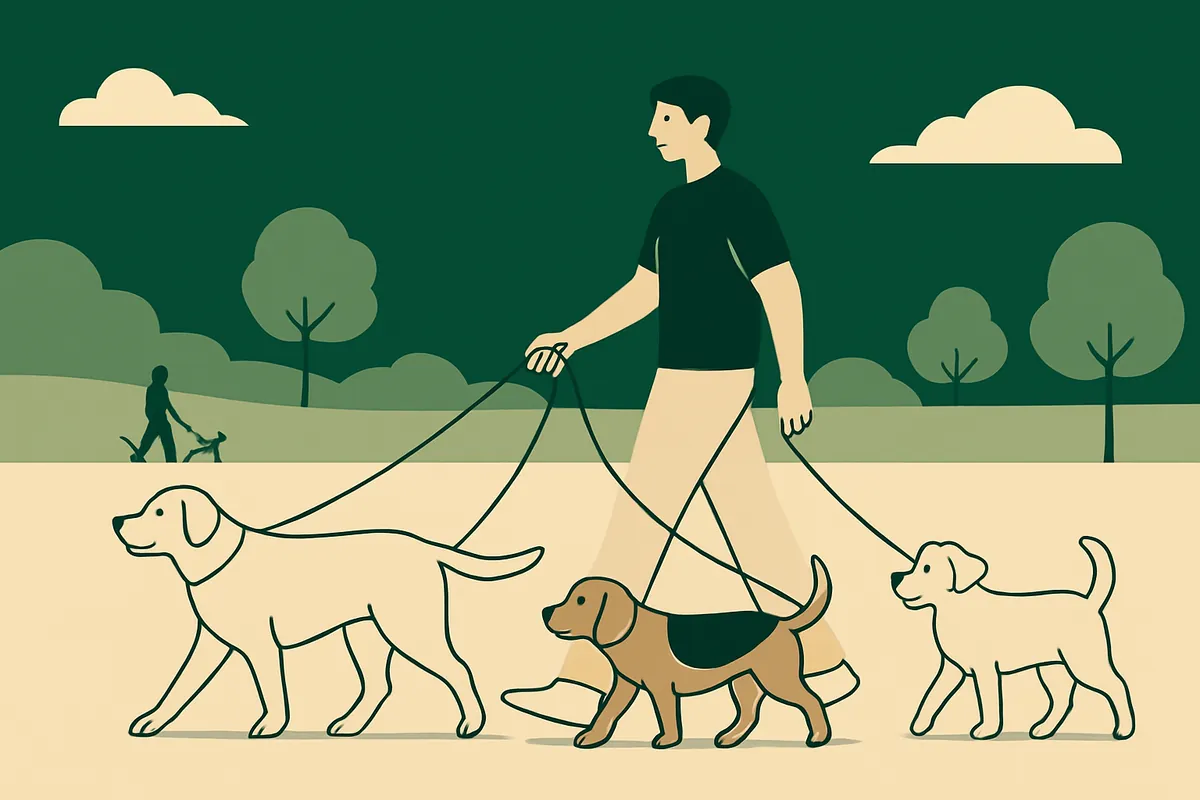
- Fixed-length leads for every dog. Avoid retractable leads in a group. They tangle, give little control, can cause friction injuries to people and dogs, and are easy to drop.
- Check fit at every pickup. A collar or harness should be snug enough that the dog cannot back out of it. A frightened dog that slips free near a road is one of the most serious risks a walker faces.
- Carry spares: a spare slip lead and a spare harness in a few sizes.
- Hold leads in your hands, not wrapped around your wrist or fingers. A sudden lunge can injure you badly if a lead is wrapped around your hand.
- Consider a waist or hands-free lead for one steady dog so your hands are free for waste bags, but not for strong pullers or reactive dogs, which can pull you over.
- ID tags on every dog, plus a charged phone with all owners' and vets' numbers.
Managing the group on the walk
- Plan routes that suit the group: wide paths, away from busy roads, with room to step aside when another dog or a cyclist approaches.
- Keep dogs on one side where you can, so leads do not cross and you can move the group out of the way quickly.
- Count your dogs often, especially at gates, car doors and after any off-lead time.
- Off-lead only with written owner consent, where local rules allow it, and only for dogs with reliable recall that you have tested on a long line. Let fewer dogs off at once than you think you could manage.
- Be careful with treats and toys. Rewarding one dog in a group can trigger guarding or squabbles. Many walkers keep toys out of group walks altogether.
- Pick up after every dog. Keep the others under control while you do it, which is where a steady dog on a waist lead helps.
- Adjust for the weather. Walk in the cooler parts of the day in summer, shorten walks in heat, carry water, and know which dogs are most at risk, such as flat-faced breeds and dogs carrying extra weight.
Reading the group: early warning signs
Most fights and bolts are preceded by signals. Watch for:
- A dog stiffening, freezing or staring at another dog.
- Raised hackles, a high, stiff tail or a closed, tense mouth.
- One dog repeatedly following, mounting or pestering another that is trying to move away.
- Play that becomes louder, faster and one-sided, with no pauses.
- A dog tucking its tail, trying to hide behind you or pulling to leave.
When you see them, act early: call the dogs apart, add distance, put dogs back on lead, give them something calm to do or end the off-lead session. A dog that keeps showing these signals in the group may need to be walked alone.
If a fight breaks out
Your own safety comes first, because an injured walker cannot help any of the dogs.
- Keep your hands away from heads, mouths and collars. Never put your hands or body between fighting dogs. Dogs in a fight can bite anyone, including someone they know well.
- Secure the other dogs so the fight does not spread, by clipping them on and moving them back if you can do it safely.
- Interrupt from a distance. A loud noise, or a barrier such as a jacket, bag or board pushed between the dogs, may be enough to break their focus.
- Once they separate, keep them apart on lead and out of sight of each other if possible.
- Check each dog for injuries only when it is calm and you can do so without being bitten. Bite wounds can be small and hidden under fur, and a frightened, hurt dog may snap. Use a muzzle or a towel if there is any risk.
- Get any injured dog to a vet, and tell every owner involved promptly and honestly, even if their dog seems unhurt.
Record what happened, when and where, and review whether the group should change. For injuries on a walk, see how to get pet first aid and CPR certified and pet emergencies every pet professional should recognize.
Knowing your group
Selecting compatible dogs, reading early stress signals and responding safely are judgments, not rules you can memorize. Dog walking equipment, safety and group management is one of the topics in the Pet Concierge & Sitter assessment, alongside reading stress and illness and emergency escalation. It tests your knowledge through written scenarios; the handling itself comes from practice with real dogs.
Transport and other risks
If you drive dogs to walks, secure each one in a crate or with a restraint suitable for the vehicle, keep dogs that do not get on apart, and never leave dogs in a parked car on a warm day, even for a few minutes. Open doors one dog at a time, with that dog on lead before it leaves the vehicle.
Plan for the day a dog goes missing, too: who you call first (the owner), where you search, and which local vets, shelters and microchip databases to alert.
Next steps
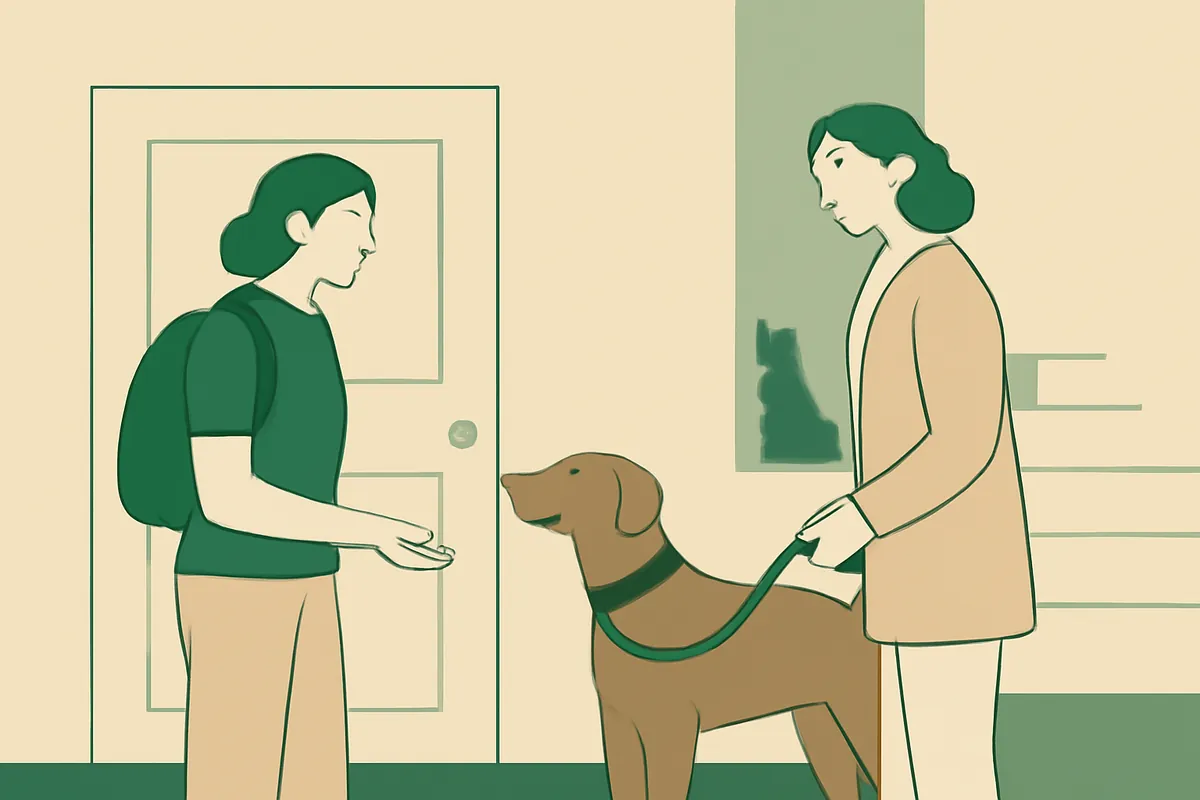
For the business side of group walking, read how to start a dog walking business. The meet-and-greet checklist covers what to learn about each dog before it joins a walk, and the pillar guide on how to become a professional pet sitter sets it all in context. To test your judgment on scenarios like these, try the free sample pet sitter questions.
Frequently asked questions
Is there a legal limit on how many dogs one person can walk?
In some places, yes. Some councils and cities cap the number of dogs one person may walk in public spaces or in certain parks, and limits can differ from park to park. Many insurance policies also set a maximum, so check both.
Written by the PetCred Editorial Team and checked against the published curriculum for this program. Laws and requirements change and differ by place: check local rules before relying on anything legal or regulatory here.
Free course
Professional Pet Sitting Fundamentals: A Free 5-Lesson Course
Five short lessons, a quick check after each, no sign-up. Start now →
More pet sitting guides
How to Become a Professional Pet Sitter: Skills, Certification and First Clients
What professional pet sitters do, the knowledge owners expect, how to get experience, how pet sitter certification works and how to set up your business.
2 August 2026
Pet Sitter Certifications Compared
Pet sitting certification online and offline compared: association programs, courses, first aid, assessments and background checks, and what each proves.
25 September 2026
The Meet-and-Greet Checklist for New Pet Sitting Clients
What to collect at a pet sitting meet-and-greet: a complete pet sitter client form, vet authorization, routines, medication, home access and red flags.
19 September 2026
How to Set Your Prices for Pet Sitting and Dog Walking
How much to charge for pet sitting and dog walking, worked out from your costs, your real time per visit, the local market and the value you provide.
8 September 2026