The Meet-and-Greet Checklist for New Pet Sitting Clients
What to collect at a pet sitting meet-and-greet: a complete pet sitter client form, vet authorization, routines, medication, home access and red flags.
PetCred Editorial Team · Updated 19 September 2026 · 6 min read
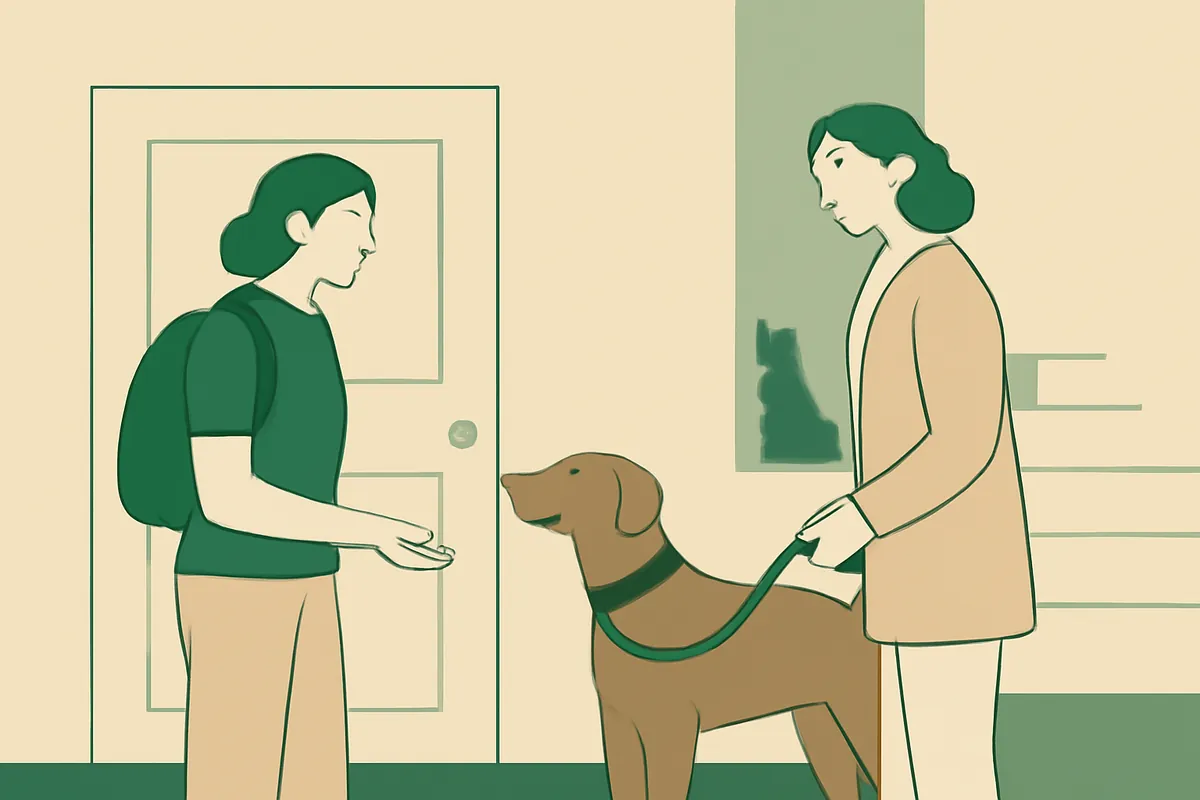
The meet-and-greet is the most important hour in a new pet sitting relationship. It is where you meet the animals on their own ground, learn their routines, see the home and collect the information you will rely on when the owner is out of reach. A good pet sitter client form, filled in together at that visit, turns an owner's memory into written instructions you can follow on a busy week and fall back on in an emergency.
This checklist covers what to send before the visit, what to collect on the day, what to watch for, what to agree and when to say no. Use it to build your own form, adapted to the species and services you offer.
Why every booking starts with a meet-and-greet
It is tempting to skip it for a quick booking or a friend of a friend. Do not. The meet-and-greet lets you:
- See what normal looks like for each animal, so you can recognize changes later.
- Check that you can safely handle the animals and give any medication.
- Learn the home: where the food, leads, carrier, cleaning supplies and water shutoff are, and how the doors, locks and alarm work.
- Collect written permissions you cannot get once the owner is on a plane.
- Decide whether the booking is right for you. Some are not, and it is better to find out before you have the keys.
Many sitters hold the meet-and-greet a week or two before the first booking, which leaves time to follow up on anything missing.
Before you arrive
Send the client your form and service agreement in advance, and ask them to have ready:
- Any medication, with its pharmacy label and the vet's written instructions.
- Their vet's details and the nearest emergency clinic.
- Spare keys, alarm codes and any building access arrangements.
- The animals' food, leads, harnesses, carriers and anything else you will need.
Arriving to a partly completed form saves time and gives you a list of questions to ask.
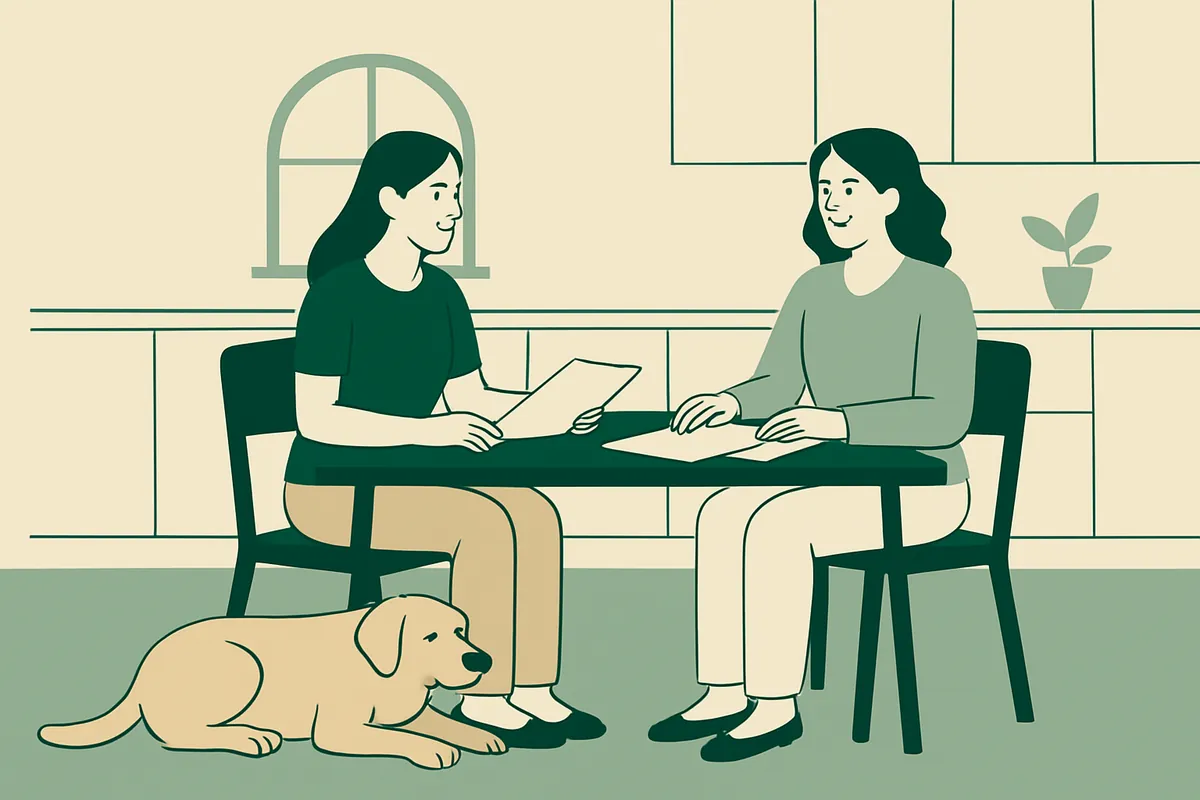
The pet sitter client form: what to collect
Client and emergency contacts
- The owner's phone numbers, email and how they prefer to receive updates.
- Travel dates, destination and time zone, and when they will be hard to reach.
- An emergency contact who has authority to make decisions if the owner cannot be reached, and who knows they have been named.
- Someone local who holds a spare key, if that is not you.
Veterinary details and authorization
- The usual vet's name, address and phone number, and the nearest emergency or after-hours clinic.
- Signed permission for you to seek veterinary treatment on the owner's behalf.
- A spending limit, or how payment will be handled if treatment is needed.
- The owner's wishes for serious situations, recorded plainly, so that nobody has to guess.
Each animal's routine
- Name, species, breed, age, sex and a recent photo.
- Food: what, how much, when, where it is kept and any treats allowed.
- Water, litter trays, cages or tanks: how and how often they are cleaned.
- Exercise and walks: length, route preferences, equipment and whether the dog may be off-lead (only with written consent and where allowed).
- Where each animal sleeps, hides and likes to spend time.
- Microchip and ID tag details.
Health and medication
- Current health conditions, allergies and past problems to watch for.
- Every medication: name as on the label, dose, timing, how it is given, and what to do if a dose is refused or missed. Check that the owner's instructions match the pharmacy label.
- What normal eating, drinking, toilet habits and energy look like for this animal.
- Signs the owner has seen before that meant a vet visit.
Behavior and handling
- How each animal reacts to visitors, other animals, children, noises and being handled.
- Fears and triggers (fireworks, bicycles, being picked up, men in hats).
- Recall, lead manners and any history of escaping, biting, guarding food or toys, or fighting with other animals.
- How the animals in the home get on with each other, and whether any must be kept apart.
The home
- Keys, alarm codes, and how to lock and unlock every door you will use.
- Rooms that are off limits, doors that must stay shut and windows that can be opened.
- Plants, mail, trash, heating and lights you are expected to handle, if any.
- Where the water shutoff valve, breaker box and a flashlight are kept, and who to call about household problems.
- Neighbors who know you will be visiting.
Watch the animals, not only the form
The form tells you what the owner believes. The animals tell you what is actually going on. While you talk:
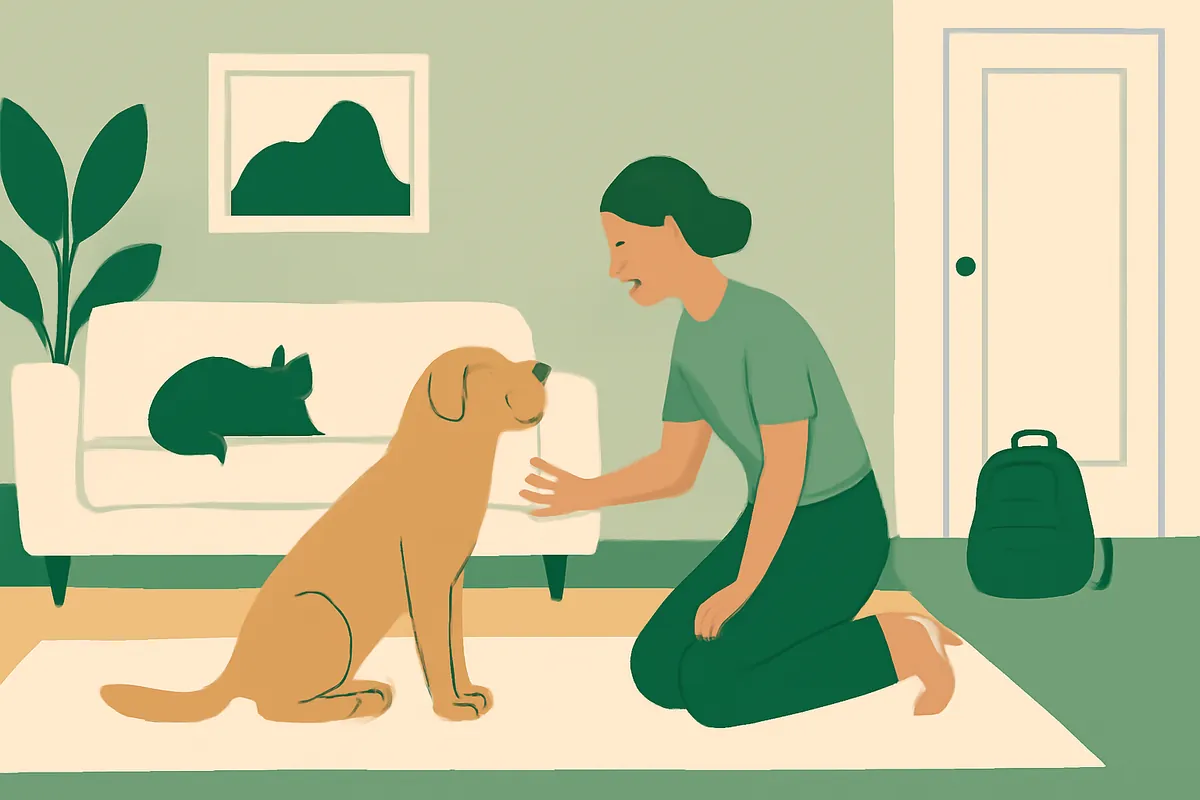
- Let each animal approach you in its own time. Avoid leaning over or reaching for a nervous dog or cat. You learn more from how it greets a stranger than from any description.
- Ask the owner to show you the routines that matter: how the tablet is given, how the harness goes on, how the cat is put in its carrier.
- Do it yourself while they watch. Put the harness on, give a treat, measure a meal. If you cannot do something safely with the owner present, you will not manage it alone.
- Walk the dog a short distance, ideally on the route you will use, to see how it behaves outside the home.
- Note the normal: body condition, coat, energy, how much is left in the food bowl. It is your baseline for spotting changes. Our guide to pet emergencies every pet professional should recognize covers the changes that should never wait.
Agree the terms
Before you leave, make sure you and the client agree in writing on:
- The dates, visit times, visit lengths and what each visit includes.
- Prices, deposits, payment and your cancellation policy. See how to set your prices for pet sitting and dog walking.
- How and when you will send updates, and whether you may take photos. Never post photos that show the client's home or reveal that they are away.
- How keys will be handed over, stored and returned.
- What happens if you are ill and who your backup sitter is.
When to decline or adapt a booking
Sometimes the right professional answer is no, or not yet. Consider declining or changing the booking if:
- An animal shows aggression you cannot manage safely, or you cannot handle it for essential care.
- The booking includes a species or medical routine you do not know how to manage.
- The owner will not provide vet details, treatment authorization or an emergency contact.
- The home is not secure enough to keep the animals in, such as a broken fence or a door that will not lock.
- The owner expects more than the visits can safely deliver, such as one short visit a day for a young dog left alone.
Offer alternatives where you can: longer or more frequent visits, a trial visit, or a referral to someone with the right experience.
Knowing what to ask
A meet-and-greet is only as good as the questions you know to ask. Knowing which details matter (medication instructions that match the label, a named decision-maker, the signs of illness for each species) is exactly the knowledge the Pet Concierge & Sitter assessment covers, along with emergencies, home security and client privacy. It tests that knowledge through written scenarios, not hands-on skill.
After the meet-and-greet
- Write it up the same day while it is fresh, and send the client a copy of the completed form to confirm.
- Store it securely. It contains addresses, access details and personal information. Label keys with a code, never an address.
- Book a short trial visit before a long stay if the animals are nervous or the routine is complex.
- Update the form at every new booking. Medication, health and routines change.
Next steps
The meet-and-greet is one piece of a professional process. For the full route into the job, read how to become a professional pet sitter, and for walkers, walking several dogs safely. To practice the kind of judgment this checklist supports, try the free sample pet sitter questions.
Written by the PetCred Editorial Team and checked against the published curriculum for this program. Laws and requirements change and differ by place: check local rules before relying on anything legal or regulatory here.
Free course
Professional Pet Sitting Fundamentals: A Free 5-Lesson Course
Five short lessons, a quick check after each, no sign-up. Start now →
More pet sitting guides
How to Become a Professional Pet Sitter: Skills, Certification and First Clients
What professional pet sitters do, the knowledge owners expect, how to get experience, how pet sitter certification works and how to set up your business.
2 August 2026
Pet Sitter Certifications Compared
Pet sitting certification online and offline compared: association programs, courses, first aid, assessments and background checks, and what each proves.
25 September 2026
Walking Several Dogs Safely: Numbers, Leads and Compatibility
How many dogs can a dog walker walk? How to set safe numbers, choose compatible dogs, pick the right leads, read a group and respond if a fight starts.
22 September 2026

How to Set Your Prices for Pet Sitting and Dog Walking
How much to charge for pet sitting and dog walking, worked out from your costs, your real time per visit, the local market and the value you provide.
8 September 2026