Pet Sitter Meet-and-Greet Checklist
A printable meet-and-greet checklist for pet sitters: contacts, vet consent, routines, medication, behavior, house access, the emergency plan and your terms.
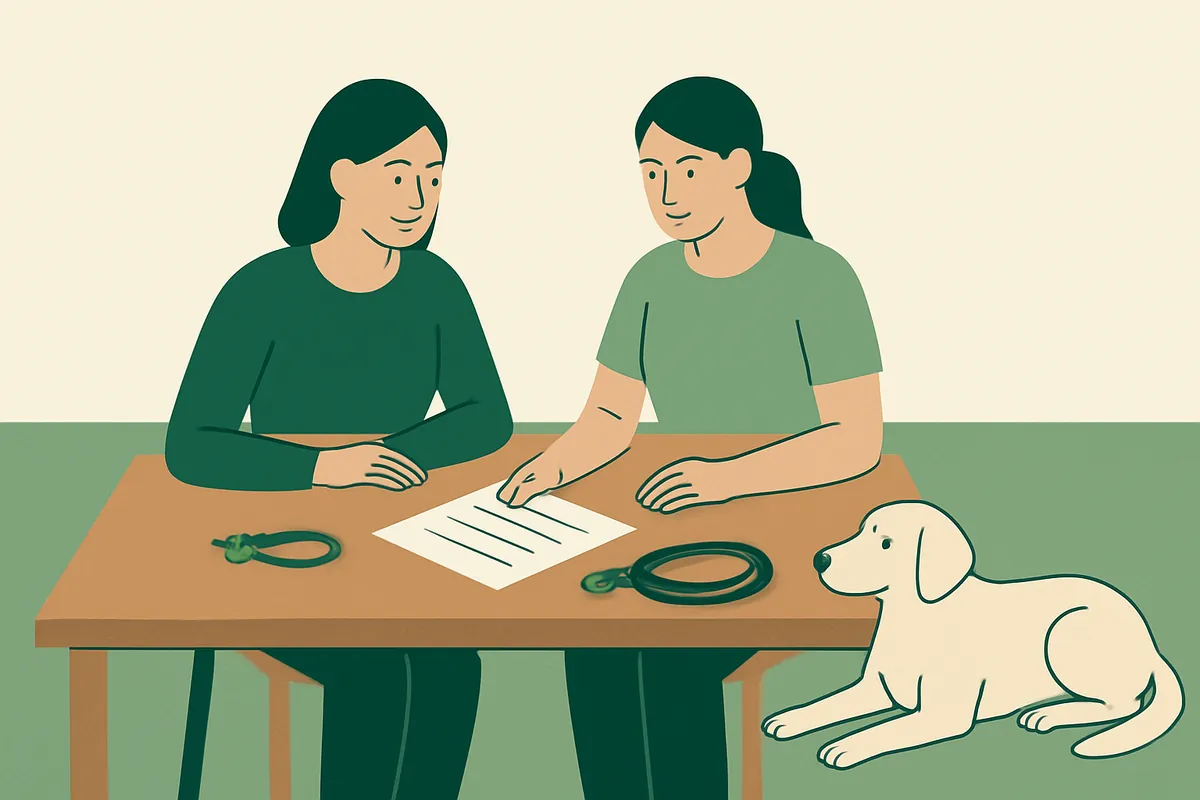
Pet sitter meet-and-greet checklist
0 of 49 items covered
Tick each item once it is written down or agreed, not just discussed. Your ticks are saved in this browser; client details are never stored here.
Before you arrive0 of 5
Send your client form and service agreement in advance, and ask the client to have these ready.
Client and emergency contacts0 of 4
Vet details and written consent0 of 4
Each animal's routine and feeding0 of 6
Health and medication0 of 5
Behavior and handling0 of 4
House access, alarms and the home0 of 5
Watch, and try it yourself0 of 5
The form tells you what the owner believes. The animals tell you what is actually going on.
Emergency plan0 of 3
Services and terms, agreed in writing0 of 4
After the visit0 of 4
When to decline or adapt the booking
- An animal shows aggression you cannot manage safely, or you cannot handle it for essential care.
- The booking includes a species or medical routine you do not know how to manage.
- The owner will not provide vet details, written consent for treatment or an emergency contact.
- The home is not secure enough to keep the animals in, such as a broken fence or a door that will not lock.
- The owner expects more than the visits can safely deliver, such as one short visit a day for a young dog left alone.
Offer alternatives where you can: longer or more frequent visits, a trial visit, or a referral to someone with the right experience.
This is a checklist of good practice, not legal advice. Rules on contracts, keys, personal data and animal care differ between countries and local areas, so check what applies where you work. Store completed forms securely: they hold addresses, access details and personal information.
At a glance
- 49 items in 11 sections, from what to send before the visit to what to do the same day afterward.
- It includes signed permission to seek veterinary treatment, a named emergency contact and a spending limit.
- Medication is recorded as the owner writes it and checked against the pharmacy label.
- It lists good practice from our meet-and-greet guide, not legal requirements, which vary by place.
- Your ticks are saved only in your own browser, and the list prints cleanly.
Last updated by the PetCred editorial team.
What the checklist is for
The meet-and-greet is the hour in which a pet sitter meets the animals on their own ground, learns their routines, sees the home and collects the information they will rely on when the owner is out of reach. It is easy to leave with a friendly impression and a gap: no emergency contact, a medication dose remembered but not written down, no idea where the carrier is kept.
This checklist gives you the whole visit in one list you can work through on the day, print for your client folder, and reuse for every new client. It is built from our pet sitter meet-and-greet checklist article, which explains each item in more detail.
How to use it
- Before the visit, send the client your form and service agreement, and ask them to have medication (with its pharmacy label), vet details, keys and the animals' equipment ready. The first section lists what to ask for.
- At the visit, work down the sections: contacts, vet details and written consent, each animal's routine and feeding, health and medication, behavior, house access and alarms, your emergency plan, and the services and terms you are agreeing.
- Tick an item once it is written down or agreed, not when it has merely been mentioned. "The dog has a tablet in the morning" is not the same as the medicine's name, dose, timing and what to do if a dose is refused, written by the owner and checked against the label.
- Watch, and try it yourself. Ask the owner to show you the routines that matter, then do them while they watch. If you cannot put the harness on or give the tablet safely with the owner present, you will not manage it alone.
- Afterward, write it up the same day and send the client a copy to confirm.
Your ticks are saved in this browser only. The tool never asks for, or stores, client names, addresses or codes; those belong in your own secure records. Use "Start a new client" to clear the list for the next meeting.
A worked example
A sitter meets a new client with a senior dog and a young cat before a ten-day booking. The client filled in most of the form in advance, so the visit starts with the gaps. The emergency contact section is blank; the client names a neighbor with authority to make decisions and agrees to tell her. The sitter gets signed permission to seek veterinary treatment, with a spending limit, and saves the vet's and the nearest after-hours clinic's numbers.
The dog takes a daily tablet. The owner has written the dose, but it does not match the pharmacy label, so the owner calls the vet's office to confirm the correct instructions before the booking and updates the form. The sitter gives the tablet, hidden in food, while the owner watches, and practices putting the cat in its carrier. A short walk on the usual route shows the dog pulls toward other dogs, which goes in the behavior notes.
Before leaving, they agree visit times, updates by message with photos that never show the house, key handover, and who the backup sitter is. Everything is ticked except the trial visit, which they book for the weekend.
When to decline or adapt a booking
The list ends with reasons to say no, or not yet: an animal you cannot handle safely for essential care, a species or medical routine you do not know how to manage, an owner who will not give vet details, consent or an emergency contact, a home that cannot keep the animals in, or expectations the visits cannot safely meet. Offer alternatives where you can, such as longer or more frequent visits, a trial visit, or a referral.
When the checklist is not enough
This is a list of good practice, not legal advice, and it is not a contract. Rules on service agreements, keys, personal data and animal care differ between countries and local areas, so check what applies where you work and have your own agreement reviewed if you are unsure. A checklist also cannot tell you how to give a medication or handle an animal you have never met; if a routine is beyond your experience, say so and adapt or decline the booking.
Learn more
For the route into professional pet sitting, read how to become a professional pet sitter. To set the prices and terms you agree at the visit, see how to set your prices for pet sitting and dog walking.
Frequently asked questions
What should a pet sitter ask at a meet-and-greet?
The owner's and an emergency contact's details, the vet and nearest emergency clinic, signed permission to seek treatment, each animal's routine, feeding, health and medication, behavior and handling, how to get into and secure the home, and the services and terms you are agreeing.
Should the owner's medication instructions be in writing?
Yes. Ask the owner to write down every medication with its name as on the label, dose, timing and how it is given, and check it against the pharmacy label. If the two differ, sort it out with the owner, and if needed their vet, before the booking starts.
Is my progress saved?
Your ticks are saved in this browser only, so you can come back to them. Nothing is sent to us, and the checklist never asks for client details. Clearing your browser data, or using a private window, removes them.
More free tools
- Pet Service Price Calculator: The price per visit or session that covers your costs and pays you what you need.
- Body Condition Score Guide: Three hands-on checks that point to your dog's or cat's score on the 9-point scale.
- Cat Calorie Calculator: Daily calories, treat allowance and portion size for a healthy cat, from weight and life stage.
- Dog Calorie Calculator: Daily calories and grams of food for a healthy dog, from weight and life stage.