How to Get Pet First Aid and CPR Certified: A Practical Guide
How to choose a pet first aid and CPR certification, what the training covers, and how to keep your emergency skills sharp as a working professional.
PetCred Editorial Team · Updated 24 September 2026 · 9 min read
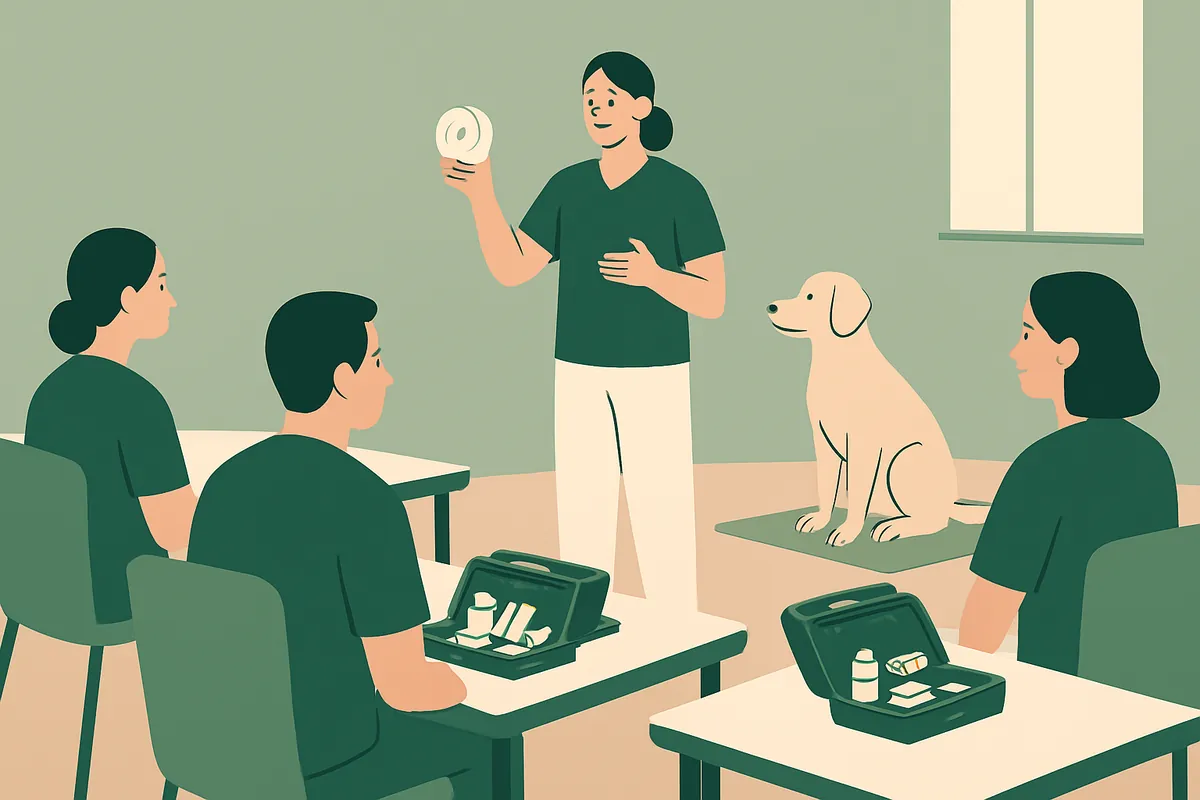
If you work with animals, the question is not whether an emergency will happen, but whether you will be ready when it does. Pet first aid and CPR certification is how professionals show they can respond in the minutes that matter: before the animal reaches a veterinarian. This guide is for groomers, dog walkers, pet sitters, trainers, shelter staff and anyone else who earns their living around animals and wants to be prepared.
Getting certified means two things. You need to know what to do in common emergencies, and you need to have practiced the physical skills that do not translate well from a screen. A good credential tests the knowledge; a good practical course lets you rehearse on a mannequin. Most professionals combine both.
What pet first aid certification covers
A serious first aid course for pet professionals covers the emergencies you are most likely to meet and the decisions that come before treatment. Expect to study:
- How to assess whether an animal is stable enough to move, or whether you should call a vet first.
- CPR and rescue breathing: when they are appropriate, what the basic principles are, and why technique matters.
- Choking and airway obstruction.
- Bleeding, wounds and bandaging.
- Poisoning and what to do until a vet gives instructions.
- Heatstroke, hypothermia and other environmental emergencies.
- Seizures, collapse and shock.
- Fractures and safe transport.
- Building a first aid kit and keeping it ready.
The exact curriculum varies by provider, but the core idea is the same: stabilize the animal, prevent things getting worse, and get professional veterinary help as soon as it is needed.
Who should get certified
Any professional who is alone with animals for part of the day should consider certification. That includes dog walkers and pet sitters who may be the only adult present when a dog collapses on a trail; groomers who spot distress, bleeding or a seizure on the table; trainers running classes where dogs overheat or fight; and shelter or rescue staff handling stressed animals with unknown health histories.
Owners can take pet first aid courses too, and many do. This article is written for people who work with pets, but the same principles apply at home.
Knowledge credentials and practical credentials are different
Not every certificate proves the same thing. It helps to know what you are buying.
Knowledge credentials, including online assessments, test whether you understand the principles: how to recognize an emergency, what first aid is appropriate, what is unsafe, and when to escalate to a vet. They are convenient, usually less expensive, and easy to fit around work.
Practical credentials include a hands-on session where you practice bandaging, muzzle application and CPR on a mannequin. They cost more and take more time, but they are the only way to learn whether your compressions are deep enough or your bandage is too tight.
The most useful preparation is usually a combination. Take a knowledge course or assessment to lock in the decision-making, then attend an in-person practical class to make your hands competent. Neither replaces the other, and neither replaces a veterinarian.
How to choose a pet first aid or CPR course
Look for these things when you compare providers:
- A published curriculum. You should be able to see exactly what topics are taught and how long the course takes.
- Clear scope. The course should state plainly what it qualifies you to do and what it does not.
- Hands-on practice for physical skills. If the course claims to teach CPR, it should include time on a mannequin, not just a video demonstration.
- Evidence of assessment. A certificate handed out for attendance is different from one earned by passing a test.
- Qualified instruction. Practical courses should be taught or overseen by a veterinary professional or an experienced instructor with recognized training.
- Current content. First aid guidance changes. Ask when the material was last reviewed.
Be cautious of any course that promises you will be able to treat animals, diagnose conditions or replace veterinary care. First aid is exactly what the name says: first help, not final treatment.
What a hands-on class should include
A practical pet first aid class is more than watching a demonstration. You should leave having done the motions yourself, with an instructor correcting your form. Look for a class that includes:
- CPR on a mannequin. You need to feel what firm, steady compressions are like on different chest shapes and sizes. A mannequin with feedback, or an instructor watching closely, tells you whether you are pressing too shallow or too deep.
- Bandaging practice. Wrapping a leg, foot or tail on a fake limb is harder than it looks. You want to know how tight is tight enough, how to secure the end, and how to keep a pad in place on a moving animal.
- Muzzle training. You should practice getting a soft muzzle onto a calm model, or at least be shown how to improvise one from a leash or gauze roll. A frightened animal in pain is the one most likely to bite.
- Scenario walk-throughs. The instructor presents a situation (a dog overheating on a walk, a cat hit by a car, a puppy choking on a toy) and talks you through what you would do, in what order, and why.
- Clear feedback. You should know at the end what you did well and what to practice more.
If the class ends with you only having watched videos or filled in a workbook, it is a knowledge course, not a practical one. There is value in that, but do not mistake it for hands-on skill.
What CPR training should teach
Pet CPR is the skill people ask about most, and it is the one most easily mislearned from a screen. A good course should teach you:
- How to tell whether an animal is truly unresponsive and not breathing normally.
- When CPR is appropriate and when it is not.
- The basic idea of chest compressions and rescue breathing, without pretending that watching a video is enough.
- How size, species and body shape change the approach.
- The importance of calling a vet or emergency clinic immediately, even while you start first aid.
The physical technique (compressions, rate, hand position and breath size) must be practiced on a mannequin with feedback from an instructor. Compression depth and rate that are right for a Great Dane are wrong for a cat. Get those details wrong and you can cause harm without helping. That is why this article describes principles only. For the physical skill, attend a hands-on course.
Building a practical first aid kit
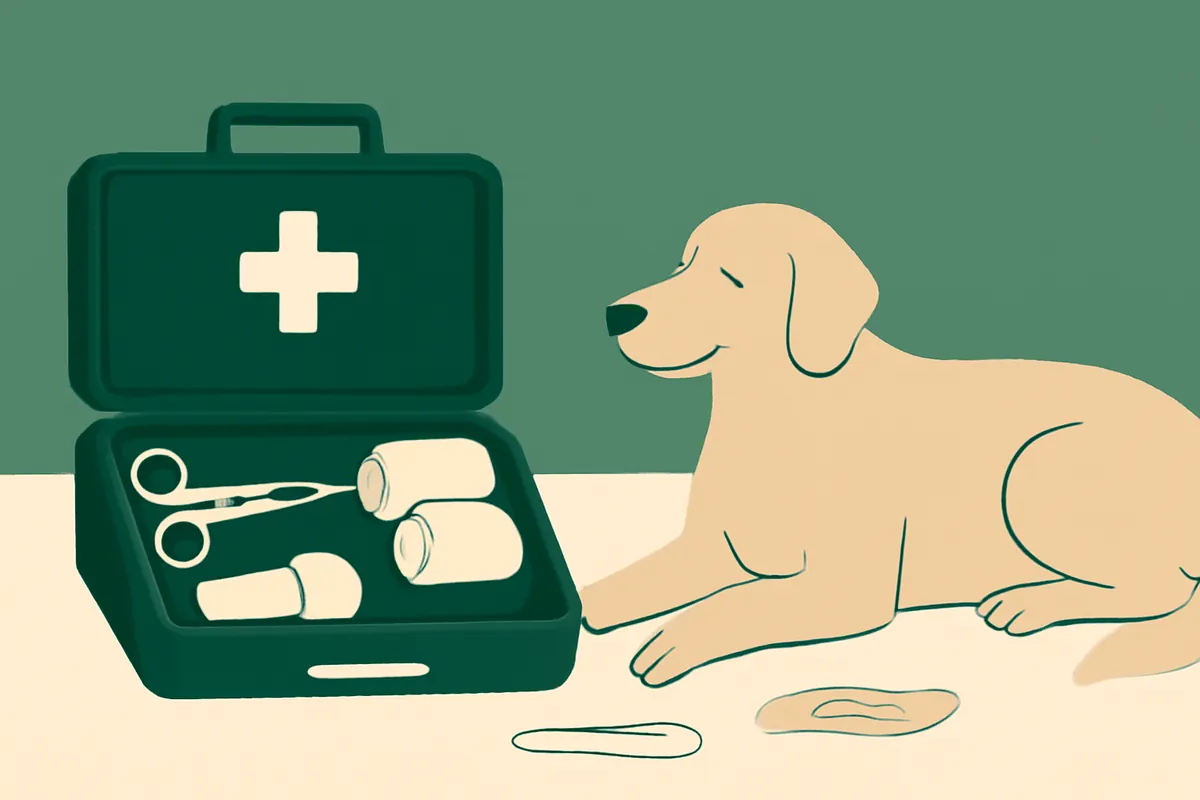
A kit you do not have with you is useless. Keep one in your vehicle, one at your workplace and a smaller kit in your bag if you walk dogs. A basic kit should include:
- A muzzle or soft muzzle material, because even gentle animals may bite when frightened or in pain.
- Sterile gauze pads and rolls, plus non-stick dressings.
- Self-adhesive bandage wrap.
- Blunt-tipped scissors and tweezers.
- Digital thermometer and water-based lubricant.
- Saline solution for flushing wounds or eyes.
- Disposable gloves.
- A blanket or towel for warmth, restraint or making a stretcher.
- A card with your vet's number, the nearest emergency clinic and any animal poison control line available in your country.
Check expiry dates every few months and replace anything you use at once. Know where the kit is and make sure it is easy to reach in a hurry.
How to study for an online first aid assessment
If your certification includes a written or online assessment, the best way to prepare is to work through realistic scenarios rather than memorize lists. Ask yourself:
- What would I do first if a dog in my care started choking?
- A cat has been hit by a car and is breathing fast but seems alert. Do I move it? How?
- A dog on a summer walk is panting heavily, drooling and seems unsteady. What are the steps?
- A puppy has eaten something toxic. What information does the vet need?
The PetCred Pet First Aid & CPR assessment uses scenario-based written questions drawn from the curriculum topics. You can see the style with our free sample questions. The assessment tests whether you can apply the knowledge, not whether you have memorized every step.
A worked scenario: a dog that may be choking
Imagine you are walking a client's spaniel when it suddenly starts pawing at its mouth, making high-pitched squeaking noises and drooling. The dog can still make noise, which means some air is moving. What do you do?
First, keep both of you safe. A frightened dog in distress can bite even if it knows you well. If you can do it without being bitten, gently restrain the dog and open its mouth just enough to look inside. If you can see an object and reach it easily, remove it with your fingers. If you cannot see anything, or the dog will not let you look safely, do not do a blind finger sweep.
If the dog is still struggling and cannot breathe, use the back-blow or chest-thrust technique you learned on your practical course, but only for a few attempts. Then get to a vet immediately, even if the object comes out. The throat may be damaged, or there may be a piece you did not see.
This is first aid: stabilize, do no harm, and hand over to a vet as soon as you can.
Keeping your skills current
First aid is not a learn-it-once skill. Memory fades, guidance updates and your caseload changes. Plan to refresh your training every one to two years. Between courses:
- Re-read your notes and run through your kit every few months.
- Practice bandaging on a stuffed animal or mannequin so the motions stay familiar.
- Keep your vet and emergency clinic numbers updated.
- Review any incidents you see or hear about, and ask whether you would have known what to do.
If your work changes, for example because you start walking brachycephalic breeds or caring for senior cats, update your training to match the risks you are now managing.
What a certificate does and does not mean
This is important. A pet first aid certificate proves you have studied the subject and, if the course included it, practiced the basic skills. It does not make you a veterinarian, a veterinary nurse or a substitute for professional care.
First aid is about stabilizing the animal and buying time. It is not about diagnosing disease, prescribing medication, performing surgery or deciding when treatment can stop. Every serious emergency should reach a vet as quickly as possible.
When you talk to clients or employers, be honest about your scope. Say what you can do in the first minutes, and say clearly where your role ends and the vet's begins. That honesty is part of being a professional.
Where to start today
If you are ready to get certified, start by comparing a few providers against the criteria above. Look for a published curriculum, hands-on practice and a clear statement of scope. Decide whether you want a knowledge assessment, a practical course or both.
If you are not sure where your knowledge stands, try the free sample Pet First Aid & CPR questions. They use the same scenario-based format as the Pet First Aid & CPR assessment, with model answers so you can compare your thinking. Then book the practical training that turns that knowledge into confident action.
Frequently asked questions
Can you learn pet CPR online?
You can learn the principles, recognition and decision-making online, but the physical technique of chest compressions and rescue breathing should be practiced on a mannequin in a hands-on course. Most professionals combine an online knowledge assessment with an in-person practical class.
Who should get pet first aid certified?
Dog walkers, pet sitters, groomers, trainers, shelter staff and anyone else who works with animals in settings where a vet may not be minutes away. Owners who want to be prepared can benefit too, but this article is written for people who work with pets.
Does a pet first aid certificate let me treat animals?
No. First aid is stabilization until a vet can take over. A certificate shows you know how to respond in the first minutes, not that you can diagnose disease, prescribe medication or replace veterinary care.
Written by the PetCred Editorial Team and checked against the published curriculum for this program. Laws and requirements change and differ by place: check local rules before relying on anything legal or regulatory here.
More pet first aid guides
Pet CPR: What Pet Professionals Need to Know
What pet CPR is, when it is appropriate, how to learn the physical skill safely, and what professionals should do while waiting for a veterinarian.
24 September 2026
Pet Emergencies Every Pet Professional Should Recognize
The warning signs that mean a dog or cat needs an emergency vet, what to do in the first minutes, and how pet professionals should respond safely.
24 September 2026