Choking, Bleeding and Poisoning: First Aid for Dogs and Cats
Dog choking first aid, how to control bleeding, and what to do when a dog or cat swallows something toxic: safe first steps for pet professionals.
PetCred Editorial Team · Updated 25 August 2026 · 7 min read
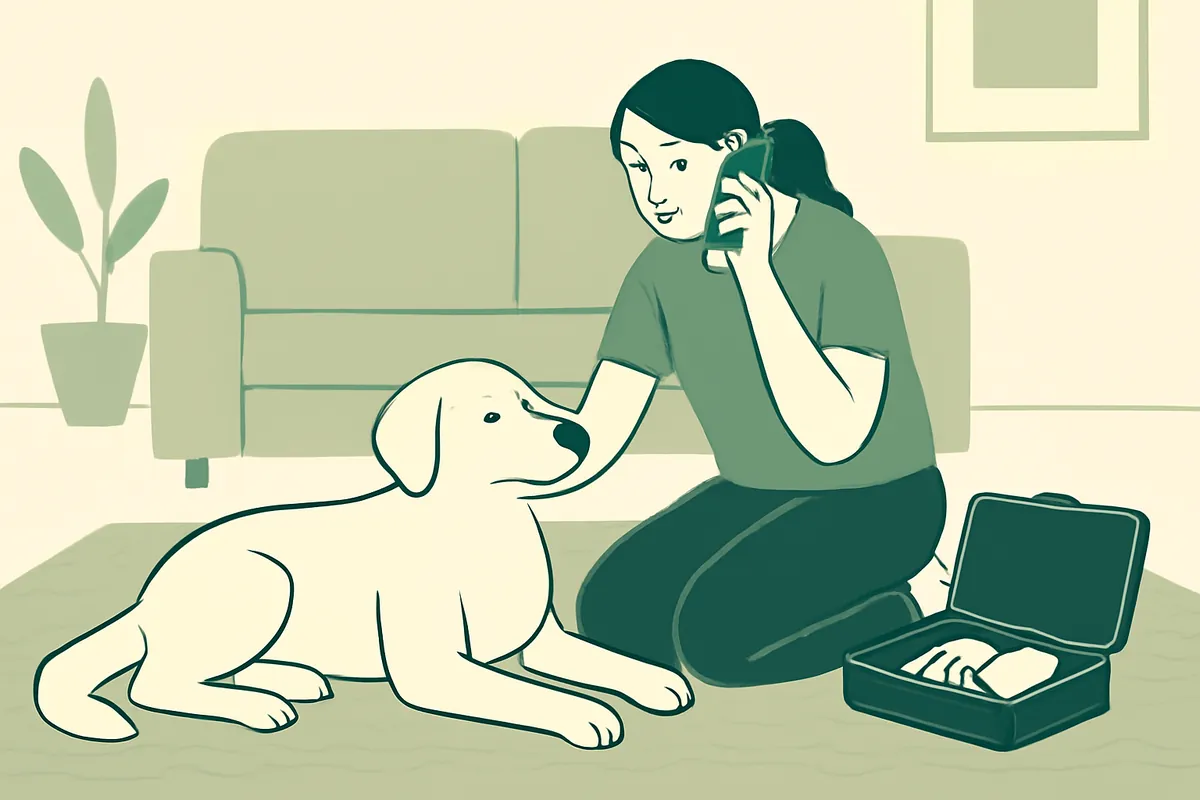
Choking, bleeding and poisoning are three of the emergencies pet professionals meet most often, and in each one the first few minutes matter. This guide covers dog choking first aid, how to control bleeding, and what to do when a dog or cat may have swallowed something toxic.
It is written for dog walkers, pet sitters, groomers, trainers and shelter staff. It describes the principles of first aid only. It does not replace a hands-on first aid course, where you practice these skills with an instructor, and it never replaces a vet. Every sequence below ends in the same place: getting the animal to veterinary care.
Your own safety comes first
In all three emergencies, the animal is likely to be frightened, in pain or panicking. Even a dog or cat that knows and trusts you may bite or scratch. You cannot help an animal if you are injured yourself.
Before you touch an injured or distressed animal:
- Make the area safe. Move away from traffic, other dogs or anything that caused the injury.
- Approach calmly and speak quietly.
- Restrain gently. Wrap a cat or small dog in a towel. Use a muzzle on a dog if there is any risk of a bite, but never on a dog that is choking, vomiting or struggling to breathe, because it needs its mouth free.
- Get help if anyone is nearby, so one person can call the vet.
Never put your hands in a distressed animal's mouth unless you can do so without being bitten.
Dog choking first aid
A dog that is choking has something blocking its airway, often a ball, a piece of toy, a bone or a stick. Cats choke less often, but thread, string, hair ties and small toys can cause problems.
Signs of choking
- Pawing at the mouth or rubbing the face on the ground.
- Gagging, retching or coughing.
- Drooling.
- Noisy or high-pitched breathing, or no sound at all.
- Gums and tongue turning pale, gray or blue.
- Panic, then weakness or collapse.
A dog that is coughing forcefully is still moving some air. Stay with it, keep it calm and be ready to act. A dog that cannot make any sound and is struggling to breathe needs help at once.
What to do
- Keep yourself safe as above. Call a vet, or have someone else call, as early as you can.
- Look in the mouth only if it is safe to do so. Open it gently and use a flashlight if you have one.
- Remove the object only if it is clearly visible and easy to reach. Use your fingers or tweezers, and only if you can do it without being bitten. Never do a blind finger sweep: pushing your fingers into the throat when you cannot see the object can push it further down.
- If the dog still cannot breathe, use back blows or chest thrusts only as you were taught on a practical course. The technique depends on the size of the dog, and it needs to be learned hands-on, not from an article.
- Go to a vet afterwards, even if the object comes out. The throat may be injured, or part of the object may still be there.
If you see string or thread hanging from a cat's or dog's mouth, do not pull it. Swallowed string can be caught further down the gut, and pulling it can cause serious internal damage. Leave it, keep the animal calm and go to a vet.
Bleeding: first aid for dogs and cats
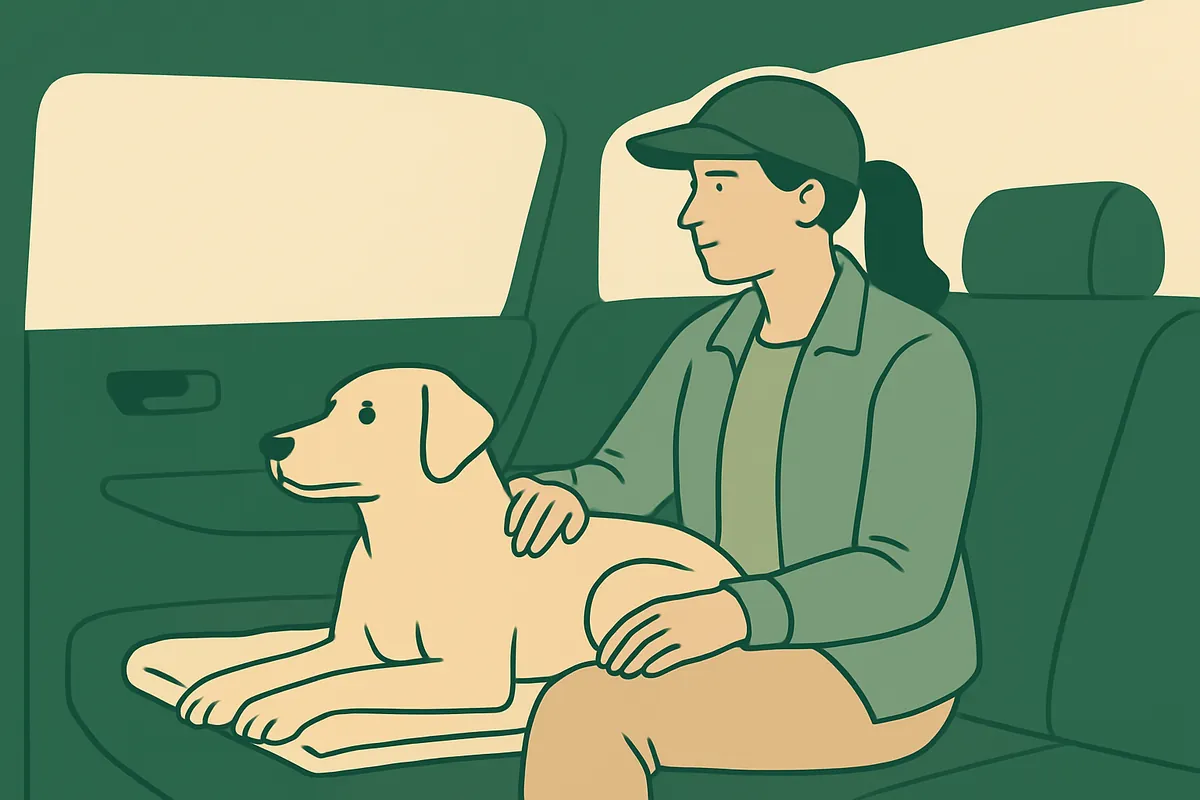
Bleeding can come from a cut pad, a torn nail, a bite wound or an accident. Blood that spurts or pours, or that does not slow with pressure, is always an emergency.
What to do
- Keep yourself safe. Restrain the animal gently, with a muzzle or a towel if there is any risk of a bite, and put on gloves if you have them.
- Apply firm, direct pressure with a clean pad (sterile gauze from your kit, or a clean cloth). Pressure is the first step. Do not stop to rinse the wound first.
- If blood soaks through, add another pad on top. Do not lift the first pad to check. Lifting it can pull away the clot that is starting to form, and the bleeding starts again.
- Once bleeding slows, bandage over the pads firmly enough to hold them in place, but not so tight that it cuts off circulation. A paw below the bandage that swells or turns cold means it is too tight.
- Keep the animal warm, calm and still, and get it to a vet.
A few things to avoid:
- Do not rinse or probe a wound that is bleeding steadily. Water washes away the clot, and probing causes pain and more damage. Cleaning is for the vet, or for minor wounds once bleeding has stopped.
- Do not use a tourniquet. For non-professionals, direct pressure is the safe and effective method.
- Do not remove an object stuck in a wound, such as a stick or glass. It may be limiting the bleeding. Pad around it and let the vet remove it.
Minor wounds
For a small graze or cut that has already stopped bleeding, you can gently flush away dirt with saline, cover it if the animal will lick it, and tell the owner so they can have it checked. Bite wounds, even small ones, should always be seen by a vet: they are often deeper than they look and can become infected. A nail cut too short during grooming usually stops with gentle pressure; if it does not, treat it as bleeding and follow the steps above.
Poisoning in dogs and cats
Pets eat, lick and walk through things they should not. Common household hazards include chocolate, grapes and raisins, onions and garlic, the sweetener xylitol (found in some sugar-free products), human medicines, rodent bait, antifreeze and some garden plants.
Cats have their own risks. Lilies are highly toxic to cats, including the pollen and the water in the vase. Some flea products made for dogs can be deadly to cats, which is why you should never use a dog product on a cat. Cats may also swallow substances while grooming them off their fur.
Signs of poisoning
Signs depend on the substance and may not appear for hours. They can include vomiting, diarrhea, drooling, trembling, weakness, wobbling, unusual excitement or sleepiness, seizures and collapse. An animal can have eaten something dangerous and still look completely normal for a while.
What to do
- Keep yourself safe and move the animal away from the substance. Prevent other animals from reaching it.
- Do not make the animal vomit unless a vet or a poison line tells you to. Some substances cause more damage coming back up, and some animals should not be made to vomit at all.
- Keep the packaging, a label, or a sample of the plant or substance.
- Note the time it happened, or when you found it, and how much you think was eaten.
- Call a vet or an animal poison line straight away and follow their instructions.
- Go to the vet if they tell you to, and take the packaging with you.
Do not wait for signs to appear before calling, and do not give food, milk or any home remedy. Only give an animal medication when a vet tells you to.
If a substance is on the fur or skin, stop the animal licking it (a towel wrap or a cone can help) and ask the vet how to remove it. If something has splashed in an eye, call the vet; they may ask you to flush it gently with saline or clean water.
Common mistakes
- Reaching into a panicking dog's mouth. Look only if it is safe, and remove only what you can see and reach. A bitten hand helps no one.
- Rinsing a bleeding wound or lifting the pad to check. Pressure first, and add pads on top.
- Making an animal vomit because it seems logical. Call first. The vet or poison line will tell you whether it is safe.
- Skipping the vet because the animal seems fine. A dog that stopped choking, a wound that stopped bleeding and a cat that ate part of a lily can all still need urgent treatment.
What to tell the vet
A clear handover saves time. Before you arrive, or as soon as you get there, tell the clinic:
- What happened and when.
- What you saw (signs, how they changed).
- What you did, in what order.
- For poisoning: what was eaten, how much and when, with the packaging.
- The animal's age, known health conditions and any medication, if you know them.
Then call the owner.
Where your role stops
First aid is about keeping the animal safe and stable until a vet takes over. As a professional, you recognize the emergency, act in a safe order and get the animal to veterinary care quickly. You do not diagnose, treat or decide that an animal is fine without a vet seeing it.
Next steps
Read our guides to the pet emergencies every professional should recognize and pet CPR: what professionals need to know. Make sure you have gauze, a muzzle and your vet's number with you by working through the pet first aid kit checklist, and read about another common summer emergency in heatstroke in dogs: prevention and first response.
For the full route into training, see how to get pet first aid and CPR certified. You can try the free Pet First Aid & CPR sample questions, which include a choking scenario, and see the topics covered by the Pet First Aid & CPR certification.
Frequently asked questions
Should I make my dog vomit if it ate something toxic?
Not unless a vet or an animal poison line tells you to. Some substances do more harm coming back up. Keep the packaging, note the time and amount, and call for advice straight away.
Should I clean a wound before stopping the bleeding?
No. Apply firm, direct pressure with a clean pad first. Rinsing a wound that is bleeding steadily can wash away the clot that is forming. Cleaning comes later, at the vet or once a minor wound has stopped bleeding.
Written by the PetCred Editorial Team and checked against the published curriculum for this program. Laws and requirements change and differ by place: check local rules before relying on anything legal or regulatory here.
Free course
Pet First Aid Fundamentals: A Free 5-Lesson Course
Five short lessons, a quick check after each, no sign-up. Start now →
More pet first aid guides
How to Get Pet First Aid and CPR Certified: A Practical Guide
How to choose a pet first aid and CPR certification, what the training covers, and how to keep your emergency skills sharp as a working professional.
12 July 2026

Pet First Aid Certifications Compared
A pet first aid course online, blended or in person? What each type of certificate proves, what you cannot learn online, and how to choose for your work.
6 September 2026
Heatstroke in Dogs: Prevention and First Response
Heatstroke in dogs first aid for pet professionals: which dogs are most at risk, how to prevent it, the early signs, and what to do before you reach the vet.
14 August 2026
What to Put in a Pet First Aid Kit
A pet first aid kit list for dog walkers, sitters, groomers and trainers: the core items, extras for each role, what to leave out and how to keep it ready.
30 July 2026