Pet CPR: What Pet Professionals Need to Know
What pet CPR is, when it is appropriate, how to learn the physical skill safely, and what professionals should do while waiting for a veterinarian.
PetCred Editorial Team · Updated 24 September 2026 · 6 min read
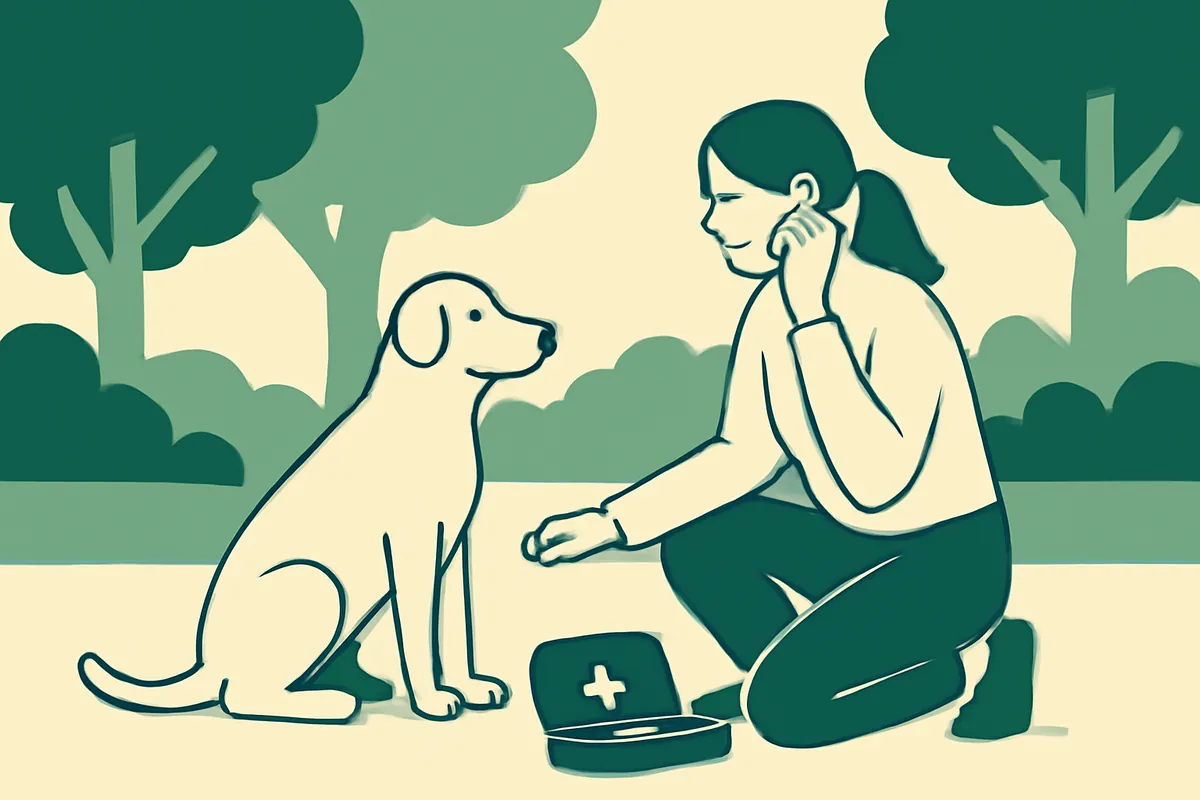
Cardiac arrest in an animal is rare, frightening and almost always an emergency that belongs in a veterinary clinic. For pet professionals, the value of learning CPR is not that you will perform it often. It is that, on the one day it matters, you will know whether to start, how not to make things worse, and how to keep yourself safe while someone calls the vet.
This article is for groomers, dog walkers, pet sitters, trainers, shelter staff and anyone else who works with animals outside a clinic. It covers what pet CPR is, when it is appropriate, how to learn it, and what to do in the minutes before a vet can take over.
What pet CPR is
CPR stands for cardiopulmonary resuscitation. In pets, it means trying to restart or support circulation and breathing when the heart has stopped or the animal has stopped breathing. It combines chest compressions, which push blood around the body, with rescue breaths, which put oxygen into the lungs.
The idea is simple. Doing it correctly is not. The depth, rate and hand position of compressions depend on the size, shape and species of the animal. What works for a German Shepherd will harm a Chihuahua. That is why reading about CPR is not the same as learning it.
When CPR is appropriate
CPR is only for an animal that is both unresponsive and not breathing normally. If the animal is breathing, even if it is shallow or irregular, CPR is not the right response. If the animal is conscious, CPR is not appropriate.
Before you start, quickly check:
- Is the animal truly unresponsive? Gently touch or call its name. There should be no reaction.
- Is it breathing? Look at the chest for movement. Listen and feel for breath from the nose or mouth.
- Is there a pulse? This can be hard to find in a panic, especially on a small or stressed animal. If you are not sure, treat it as an emergency and get to a vet.
If the animal is breathing but unconscious, your job is to keep the airway open, control any bleeding, prevent shock and transport to a vet. Do not do compressions.
What you cannot learn from an article
No article, video or diagram can teach you how hard to press, how fast to press, or how to give a rescue breath without forcing air into the stomach. Those details have to be practiced on a mannequin with an instructor giving feedback.
A good hands-on course will let you:
- Feel what compressions at the right depth are like on different chest shapes.
- Practice rescue breathing on a mannequin and learn how to hold the muzzle.
- Learn where to place your hands for a barrel-chested dog, a deep-chested dog, a cat and a puppy.
- Rehearse the decision chain: check responsiveness, check breathing, call for help, start CPR, continue until the vet takes over.
If a course only shows you a video and hands you a certificate, it has taught you theory, not skill. Theory is useful, but it is not CPR.
What a CPR course for pet professionals should cover
Look for a course that includes practice time on a mannequin and clear instruction on when not to start CPR. The curriculum should cover:
- How to assess responsiveness and breathing.
- How to open an airway and check for an obstruction.
- Hand placement and compression technique for different sizes.
- Rescue breathing technique.
- The ratio of compressions to breaths, taught as part of the practical session, not as numbers to memorize from a screen.
- How to continue CPR during transport.
- When to stop and accept that resuscitation is not working.
The course should also be clear about limits. CPR is not a treatment for choking, poisoning, heatstroke or trauma. Those conditions have their own first aid steps, and they all end with a vet. Our guide to the pet emergencies every professional should recognize covers the warning signs of each.
How to choose a CPR instructor
Not every provider is equal. Before you book, ask:
- Who teaches the practical part? A veterinary professional, a vet nurse or an instructor with a recognized animal CPR qualification is ideal.
- How much mannequin time is there? You want more time with your hands on the model than time watching slides.
- Does the course cover different sizes and species? If you work mostly with small dogs or cats, a course that only uses a large dog mannequin will not prepare you well.
- What is the assessment? A certificate of attendance is fine for awareness, but a tested skill check shows you can actually do it.
- Will you get feedback? You should leave knowing what you did well and what needs more practice.
Avoid any course that tells you that you can learn CPR entirely online or that gives you step-by-step numbers to use on any animal without sizing them first.
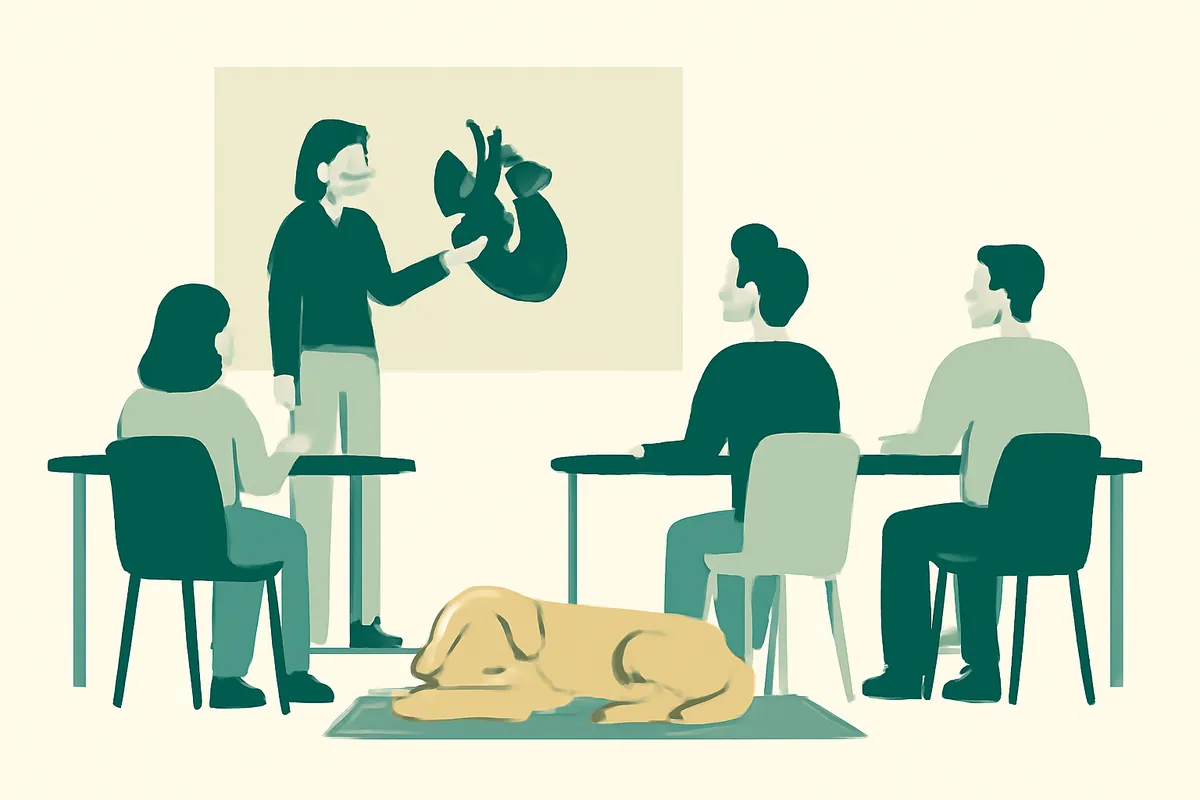
What to do while someone calls the vet
If you are alone, call the vet or emergency clinic on speakerphone before you start, so they know you are coming. If someone else is with you, they call while you assess the animal.
Make the area safe. Lay the animal on its right side on a firm, flat surface. If the animal collapsed in a public place, keep bystanders back. A frightened owner or onlooker can get in the way or be bitten by a stressed animal that suddenly rouses.
If you have been trained and the animal is unresponsive and not breathing, start the technique you learned. If you have not been trained, focus on getting to a vet as fast as safely possible. Unskilled CPR can cause broken ribs, lung damage or other injuries without helping.
Common mistakes
- Starting CPR on an animal that is breathing. An animal in shock or having a seizure may be limp and quiet but still breathing. Check carefully before compressing the chest.
- Delaying the vet call. CPR is a bridge, not a destination. Call first, or have someone else call, while you work.
- Using human CPR numbers. The rate and depth taught for adult humans do not transfer directly to dogs and cats. Learn species-specific technique.
- Giving up too soon or going too long. Your instructor will talk about when to continue and when to stop. Both decisions are hard.
- Forgetting your own safety. A seemingly lifeless animal can bite if it suddenly regains consciousness. Keep your face away from the mouth.
CPR and your workplace
If you work for a company, know the policy. Some employers expect staff to attempt CPR; others require staff to wait for a vet. If you are self-employed, decide in advance what you will do and tell clients when they sign up. Honesty protects both you and the animal.
A pet first aid certificate, including the PetCred Pet First Aid & CPR assessment, shows you understand the principles. It does not prove you can perform CPR on a real animal. Only hands-on training with a mannequin does that.
Where to learn more
Start with a practical CPR class aimed at pet professionals or taught by a veterinary team. Pair it with the knowledge side so you understand why each step matters. You can try the style of the written assessment with our free Pet First Aid & CPR sample questions.
For the wider route into first aid certification, including how to choose a course, see our guide to how to get pet first aid and CPR certified.
Frequently asked questions
Can CPR save a pet's life?
CPR can help in rare cases of cardiac or respiratory arrest, but success rates are low and the technique must be learned hands-on. The main goal is to buy time until a vet can take over.
Should I do CPR on a pet that is unconscious but breathing?
No. CPR is only for an animal that is unresponsive and not breathing normally. If the animal is breathing, even irregularly, keep the airway clear, call a vet and transport carefully.
Written by the PetCred Editorial Team and checked against the published curriculum for this program. Laws and requirements change and differ by place: check local rules before relying on anything legal or regulatory here.
More pet first aid guides
How to Get Pet First Aid and CPR Certified: A Practical Guide
How to choose a pet first aid and CPR certification, what the training covers, and how to keep your emergency skills sharp as a working professional.
24 September 2026
Pet Emergencies Every Pet Professional Should Recognize
The warning signs that mean a dog or cat needs an emergency vet, what to do in the first minutes, and how pet professionals should respond safely.
24 September 2026