How Much Do Pet Sitters and Dog Walkers Earn?
Pet sitter income explained honestly: official figures for four countries, why most miss self-employed sitters, and how visits, walks and travel build income.
PetCred Editorial Team · Updated 26 September 2026 · 6 min read
What pet sitters and dog walkers earn depends almost entirely on how they work. A student walking two neighbors' dogs after class, a kennel employee, a full-time walker with a van and a steady weekday round, and a sitter who does overnight house stays all count as pet sitters or dog walkers. Their incomes are not comparable, and a single pet sitter income figure tells you very little.
This guide answers in two layers. First, what official statistics say in the US, UK, Canada and Australia, and what they leave out: most of them count employees, while much pet sitting and dog walking is self-employed and part time. Second, how pet sitting income is actually built from visits, walks, stays, travel and costs, so you can work out a price from your own numbers. Figures checked September 2026.
What official statistics say
Pay statistics are published for broad groups of animal care jobs, never for pet sitters alone. All amounts are gross, before tax, in the local currency.
United States
The Bureau of Labor Statistics counts pet sitters inside Animal Caretakers (SOC 39-2021), together with groomers, kennel attendants and shelter workers. Its handbook describes pet sitters as people who look after animals while their owners are away. In the Occupational Employment and Wage Statistics survey for May 2025, the median annual wage for animal caretakers was USD 35,360; the lowest 10 percent earned less than USD 27,250 and the highest 10 percent more than USD 50,060. Source: BLS Occupational Outlook Handbook, Animal Care and Service Workers.
That wage survey does not include the self-employed. The same handbook lists self-employed workers as 25 percent of the 365,300 animal caretaker jobs it counts for 2025, so a large share of the field is outside the wage figures.
United Kingdom
The National Careers Service has no job profile for pet sitters or dog walkers at the time of writing, so there is no official salary guide for either role.
The Office for National Statistics Annual Survey of Hours and Earnings puts dog walkers in Animal care services occupations n.e.c. (SOC 2020 unit group 6129), with dog groomers, kennel assistants and stable hands. In the 2025 provisional results, full-time employees in that group had median gross annual pay of GBP 25,067. Source: ONS, ASHE Table 14. The survey covers employee jobs only, not self-employed walkers and sitters.
Canada
Job Bank places both pet sitters and dog walkers in Pet groomers and animal care workers (NOC 65220). For Canada as a whole it shows a low of CAD 15.00, a median of CAD 18.00 and a high of CAD 25.50 an hour, reference period 2023-2024 (wages updated November 19, 2025). Sources: Job Bank, pet-sitter wages and Job Bank, dog walker wages.
Australia
Jobs and Skills Australia publishes no earnings figure for pet sitters or dog walkers. Its Dog Walker profile, based on the 2021 Census, counts about 1,100 dog walkers, of whom 82.5 percent worked part time. The nearest group with an earnings figure is Animal Attendants and Trainers (ANZSCO 3611), which covers kennel hands, pet groomers and dog trainers rather than sitters: median weekly earnings of AUD 1,276 for full-time non-managerial adult employees, before tax, from the ABS Survey of Employee Earnings and Hours, May 2025. Source: Jobs and Skills Australia, Animal Attendants and Trainers. The site notes that these ANZSCO figures will not be updated again.
Reading these numbers honestly
The official figures describe employees in wide groups that also include kennel, shelter and clinic roles. A self-employed sitter or walker is paid per visit, per walk or per stay, sets their own prices and pays their own costs. What they take home depends on how many paid visits they fit into a day, how far they travel between them and what they charge, none of which appears in the tables above. The Australian part-time share is a reminder that many people do this work alongside something else.
How pet sitting and dog walking income is built
The services you sell
- Solo walks. One dog, your full attention, simple to price.
- Group walks. More income per hour, but only within safe numbers, with compatible dogs and within any local limits. Our guide to walking several dogs safely covers the risks.
- Drop-in visits for cats and small animals: feeding, cleaning, medication given as the owner's vet directs, company.
- House sitting and overnight stays. Long blocks of time that fill a diary but limit how many other clients you can see.
- Extras such as pet taxi runs to the groomer or vet, or basic care for older pets, priced separately.
The visits you can really fit in
Your income ceiling is set by the number of paid visits in a day. Travel between homes, key handovers, writing updates for owners and cleaning up all take time. Clustering clients in a small area is often worth more than any price rise.
Peaks and troughs
Holiday periods can bring more sitting requests, while regular weekday walks depend on owners' working patterns. A base of regular walking clients steadies income between busy holiday periods.
Costs that come out of the price
Insurance, any license or permit your area requires, vehicle and fuel costs, leads and equipment, a booking app, background checks, marketing and time off. Our guide to whether you need a license or insurance to be a pet sitter explains the kinds of rules to check locally.
What certification can and cannot change
No credential sets a price. Owners hand you their keys and their animals, so trust is the product. A certification shows you understand animal behavior, health warning signs, emergency response and safe handling, which helps owners choose you over someone with no background. It does not replace references, insurance or a good meet-and-greet.
A worked example: pricing a walk from your own numbers
This follows the method of the free pet service price calculator. The inputs are invented to show how it works. They are not typical earnings, costs or rates, and they are in no particular currency.
| Input | Example value |
|---|---|
| Income goal a month, before tax | 1,800 |
| Share set aside for tax and savings | 20% |
| Business costs a month (insurance, app, phone, marketing) | 250 |
| Walk length | 45 minutes |
| Travel time, round trip | 15 minutes |
| Travel distance and running cost | 6 km at 0.30 per km |
| Supplies per walk (bags, treats) | 0.50 |
| Hours a month for walks, including travel | 100 |
| Share of slots you expect to fill | 80% |
Working through it:
- Profit needed: 1,800 ÷ 0.80 = 2,250.
- Monthly target with costs: 2,500.
- Walks that fit: each takes 60 minutes with travel, so 100 fit into 100 hours. At 80 percent booked, 80 walks.
- Cost per walk: 0.50 + 6 × 0.30 = 2.30.
- Price per walk: 2,500 ÷ 80 + 2.30 = about 33.55.
- Break-even: 250 ÷ 80 + 2.30 = about 5.43.
The calculator treats every visit as the same length, so run it separately for each service: once for walks, once for drop-in visits, once for overnight stays with the hours you expect to give them. Our guide to setting your prices for pet sitting and dog walking explains how to compare the result with your local market.
How to increase income responsibly
- Tighten your area. Fewer kilometers between clients means more paid visits in the same day.
- Build a regular base. Weekly walking clients carry you through quiet months better than holiday bookings alone.
- Grow group walks carefully. Only with compatible dogs, within safe numbers and local rules, and with owners' agreement.
- Offer services that fit your skills. Visits for older pets or animals on vet-directed medication can justify a higher price if you have the knowledge and the owner's clear instructions.
- Keep safety first. A lost or injured dog costs far more than a month of extra walks, in money and in trust.
- Review prices every year, and give clients notice.
Where to go next
If you are still deciding how to start, read how to become a professional pet sitter and how to start a dog walking business. To test what you know, try the free pet sitting sample questions, and see what the Pet Concierge & Sitter certification covers. Then work out your own prices with the pet service price calculator.
Frequently asked questions
Can you make a full-time living from pet sitting and dog walking?
Some people do, but it depends on how many paid visits you can fit into a day, how far you travel between them, your prices and your costs. Many people start part time. Working out your own numbers before you commit is the most reliable way to know.
Why do official statistics say so little about pet sitters?
Statistics offices group pet sitters with kennel, grooming and other animal care workers, and most of their pay surveys count only employees. Self-employed sitters and walkers, who set their own prices, are largely outside the figures.
Are group walks more profitable than solo walks?
They can earn more per hour, but only within safe numbers, with compatible dogs and within any local limits. A lost dog or a fight costs far more than the extra income, so grow group walks slowly and with owners' agreement.
Written by the PetCred Editorial Team and checked against the published curriculum for this program. Laws and requirements change and differ by place: check local rules before relying on anything legal or regulatory here.
Free course
Professional Pet Sitting Fundamentals: A Free 5-Lesson Course
Five short lessons, a quick check after each, no sign-up. Start now →
More pet sitting guides
How to Become a Professional Pet Sitter: Skills, Certification and First Clients
What professional pet sitters do, the knowledge owners expect, how to get experience, how pet sitter certification works and how to set up your business.
2 August 2026
Pet Sitter Certifications Compared
Pet sitting certification online and offline compared: association programs, courses, first aid, assessments and background checks, and what each proves.
25 September 2026
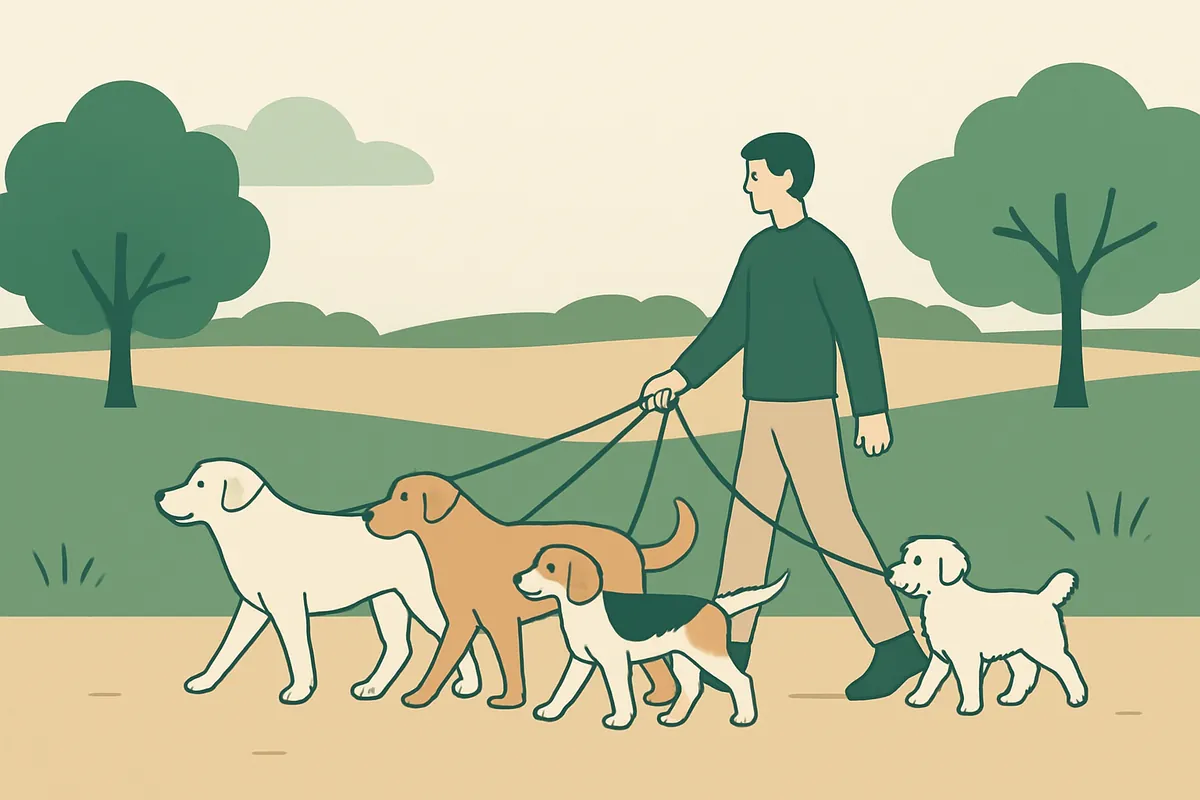
Walking Several Dogs Safely: Numbers, Leads and Compatibility
How many dogs can a dog walker walk? How to set safe numbers, choose compatible dogs, pick the right leads, read a group and respond if a fight starts.
22 September 2026
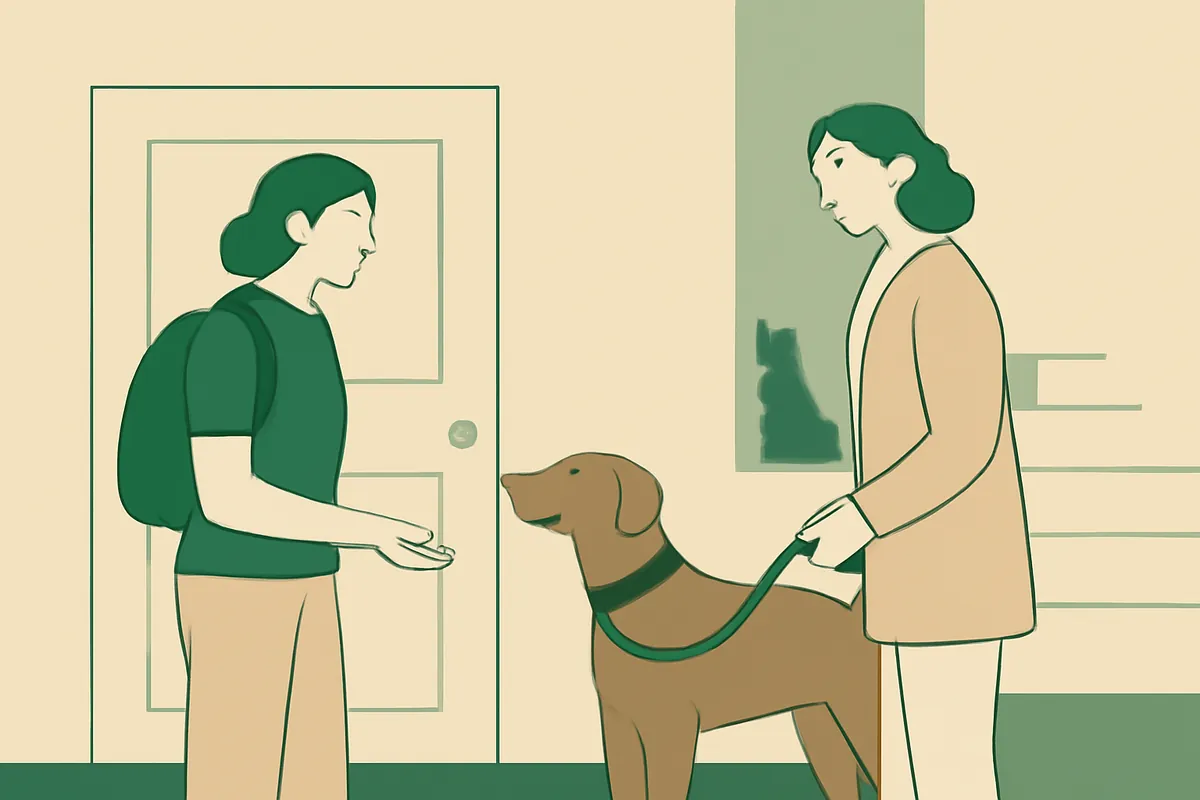
The Meet-and-Greet Checklist for New Pet Sitting Clients
What to collect at a pet sitting meet-and-greet: a complete pet sitter client form, vet authorization, routines, medication, home access and red flags.
19 September 2026