How to Become a Certified Dog Groomer: A Practical Guide
The skills a dog groomer needs, how to train through a school, apprenticeship or salon, which certification to choose and how to start working safely.
PetCred Editorial Team · Updated 25 September 2026 · 6 min read
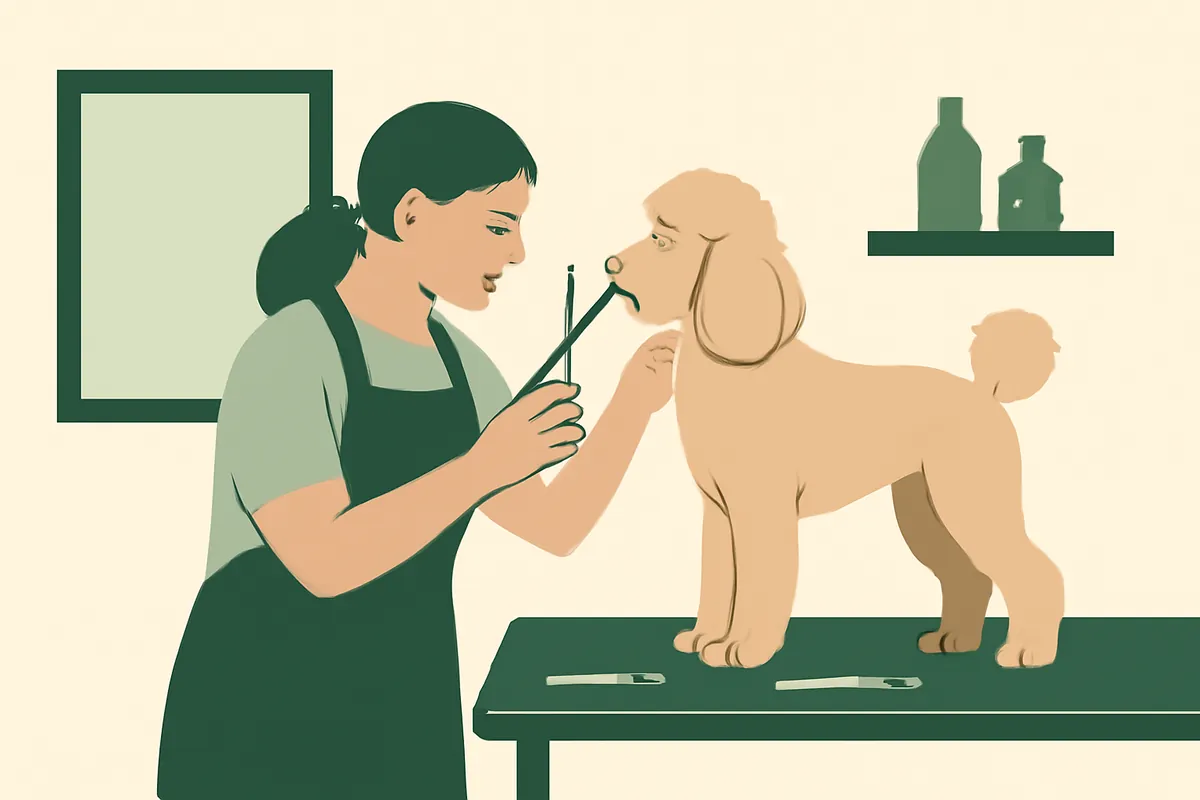
Dog grooming is skilled, physical work with steady demand: every dog with a coat that keeps growing needs a groomer every few weeks for its whole life. You can enter the profession without a degree, and in most places without a licence. What separates a groomer clients trust from one they try once is knowledge you cannot see from the outside: how coats and skin work, how to handle a frightened dog safely, and when a lump, a sore or a limp needs a vet rather than a trim.
This guide covers the route most working groomers take: what the job involves, the skills to learn, how to train, how to choose a certification and how to start working.
What a dog groomer actually does
A groomer's day is more varied than a nice haircut. A typical appointment includes:
- A health and coat check on arrival, and a conversation with the owner about what they want and what is realistic.
- Brushing out and removing tangles, bathing, and drying the coat completely.
- Clipper and scissor work to a breed style or a practical pet trim.
- Nails, ears, eyes, teeth and hygiene areas.
- A handover: what you did, what you noticed and when the dog should come back.
Around that sit cleaning and disinfecting, booking, stock, and managing dogs that are anxious, elderly, in pain or simply not keen on being handled. The work is physical: you stand for long periods, lift dogs and hold your arms up to scissor. It rewards patience, calm hands and an eye for detail.
The skills you need
Coat and skin knowledge
Every decision on the table depends on the coat: which brush, which shampoo, how to dry it, whether it can be clipped short. You need to recognise double, single, curly, wire and smooth coats and know how each grows and sheds. Our guide to dog coat types covers this in detail.
Brushing and de-matting
Removing tangles without hurting the dog is one of the most important skills in the job, and one of the most common sources of complaints. Knowing when a coat can be brushed out and when a short clip is the humane option is part of it. See how to de-matt a dog safely.
Clipper and scissor work
Blades, guards and scissors are the tools of the trade. Learn blade numbers and what length each leaves, how to keep blades cool and sharp, and how to scissor safely around faces, feet and hygiene areas.
Breed styles and pet trims
Clients ask for everything from a show-style breed trim to "short, so it lasts". Learn the standard styles for common breeds, then the practical variations most pet owners actually want.
Handling and low-stress grooming
A dog that is frightened on the table is at risk, and so are you. Learn to read stress signals, to use restraint that is safe and minimal, and to break grooming into shorter, easier steps for dogs that need it.
Health and safety
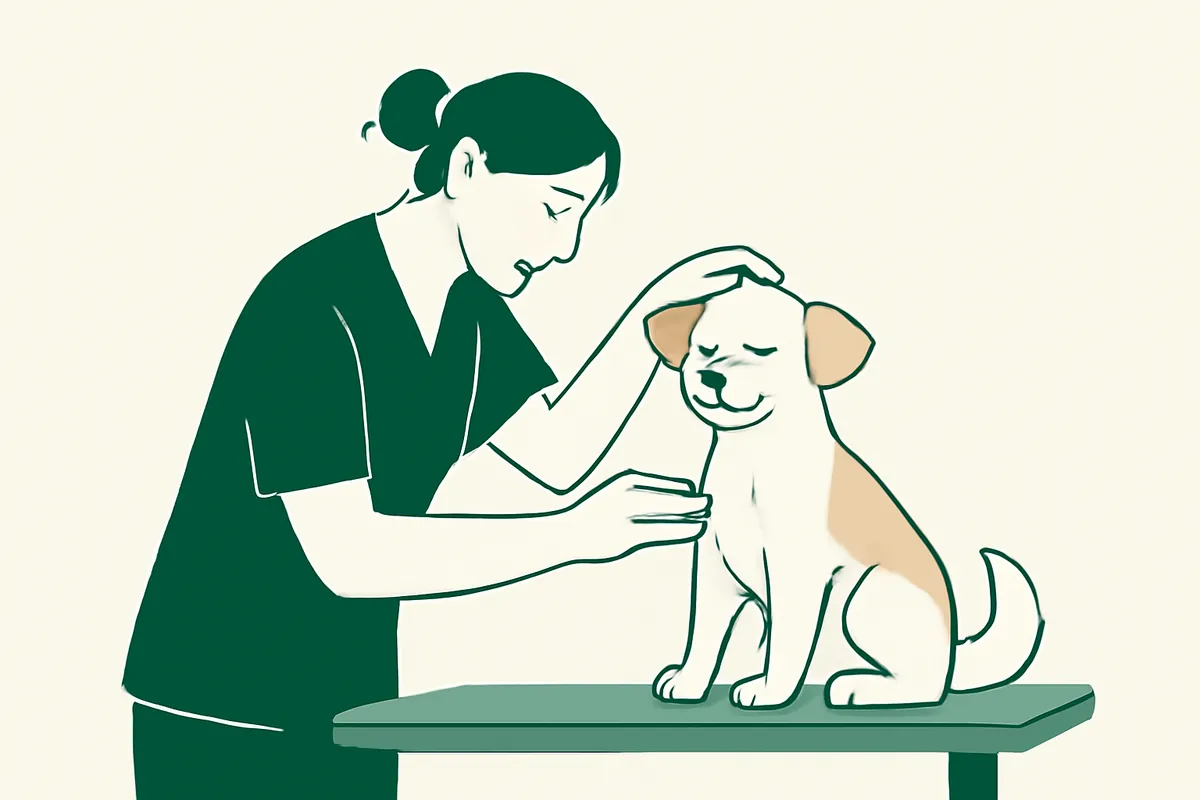
Groomers often notice health problems before anyone else: skin infections, parasites, lumps, ear problems, sore feet. You need to recognise them, avoid making them worse, and tell the owner clearly when a vet should look. You also need to prevent the injuries grooming itself can cause, especially from dryers and heat. See dog grooming safety.
How to train
There are three main routes, and many groomers combine them.
- A grooming school. Short, intensive courses teach the fundamentals on real dogs under supervision. They are the fastest way to get hands-on practice, but course length and quality vary a great deal.
- An apprenticeship or assistant job in a salon. You start by bathing and drying, then take on more of the groom as your skills grow. It is slower, but you learn on hundreds of dogs, see how a business runs and are often paid while you learn.
- Self-study plus practice. Books and online courses teach coat science, breed styles and safety well. They cannot teach your hands, so they work best alongside supervised practice.
We compare the routes, including what each proves to clients and employers, in dog grooming school, apprenticeship or certification.
Choosing a certification
There is no single official groomer qualification in most countries. Instead you will find:
- School diplomas and certificates, which show you completed a course.
- Practical assessments offered by some professional bodies, where an examiner watches you groom.
- Knowledge credentials, including online assessments, which test the theory: coat and skin science, safety, handling, health problems and when to refer.
A practical assessment shows your hands; a knowledge credential shows what you understand and can explain. Clients cannot judge either before booking, which is why a named credential they can check is valuable. Before you pay for anything, it is also worth knowing the legal position where you live. See do you need a license to be a dog groomer?
Setting up to work
When you have the skills, the practical side comes next:
- Where you work. Employed in a salon, renting a table in someone else's salon, running a mobile van, or working from a home salon. Each has different costs and rules.
- Equipment. A sturdy table with a grooming loop, a bath at a safe height, a high-velocity dryer, clippers, blades, scissors, brushes and combs. Buy good clippers and scissors; cheap ones cost more in the end.
- Insurance. Public liability insurance is standard, and many groomers also insure the animals in their care.
- Local rules. Business registration, planning or zoning for home salons, and wastewater rules for mobile vans and salons.
- Clear policies. Prices by size and coat condition, a matting and de-matting policy, cancellation terms, and what happens if you find a health problem.
How long it takes
| Route | Typical time to start working | What you get |
|---|---|---|
| Grooming school | A few weeks to a few months | Supervised practice and a course certificate |
| Salon apprenticeship | Several months to two years | Experience on many dogs, often paid |
| Self-study plus supervised practice | Months, at your own pace | Theory at low cost; practical skill depends on your practice |
Whichever route you choose, expect your speed and finish to keep improving for years. Good groomers keep learning: new tools, breed styles, handling techniques and health knowledge.
Mistakes new groomers make
- Promising the impossible. A severely matted dog cannot be brushed out to a long, fluffy coat in one visit without pain. Say so, and explain why.
- Rushing nervous dogs. Speed comes from calm dogs, not from pushing frightened ones.
- Leaving dogs unattended. On the table, in the bath or under a dryer, never.
- Ignoring health problems. If you see something worrying, tell the owner, write it down and suggest a vet visit.
- Underpricing. Grooming is skilled, physical work. Price for your time and the coat's condition.
Where to start today
If you are at the very beginning, a good first month is: learn coat types and skin basics, visit two or three local salons and ask whether they take assistants, practise brushing and handling on dogs you know, and look at the training and credentials groomers in your area hold.
When you want to check your knowledge, try our free sample dog groomer questions. They use the same format as the Professional Dog Groomer assessment, with model answers so you can compare your thinking.
Frequently asked questions
How long does it take to become a dog groomer?
Most people need between a few months and two years. A full-time grooming school course can take a few weeks to a few months; an apprenticeship in a salon usually takes longer but includes supervised work on many dogs. Speed on the table keeps improving for years.
Can you learn dog grooming online?
You can learn the theory online: coat types, skin health, products, breed styles, safety and when to refer to a vet. Clipper and scissor work, handling and speed have to be learned on real dogs, ideally under an experienced groomer.
Do dog groomers need a licence?
In most of the US, the UK, Canada and Australia there is no licence to groom dogs. Business registration, local permits and, for services such as boarding or day care, separate licences can apply, so check with your local authority.
Written by the PetCred Editorial Team and checked against the published curriculum for this program. Laws and requirements change and differ by place: check local rules before relying on anything legal or regulatory here.
More dog grooming guides
Do You Need a License to Be a Dog Groomer? Rules in the US, UK, Canada and Australia
Dog grooming is mostly unlicensed, but not unregulated. What the law asks of groomers in four countries, what clients look for and why training still matters.
25 September 2026
Dog Grooming School, Apprenticeship or Certification: Which Route Is Right for You?
Grooming schools, salon apprenticeships, online courses and certifications compared: what each teaches, what each proves and how to combine them.
25 September 2026
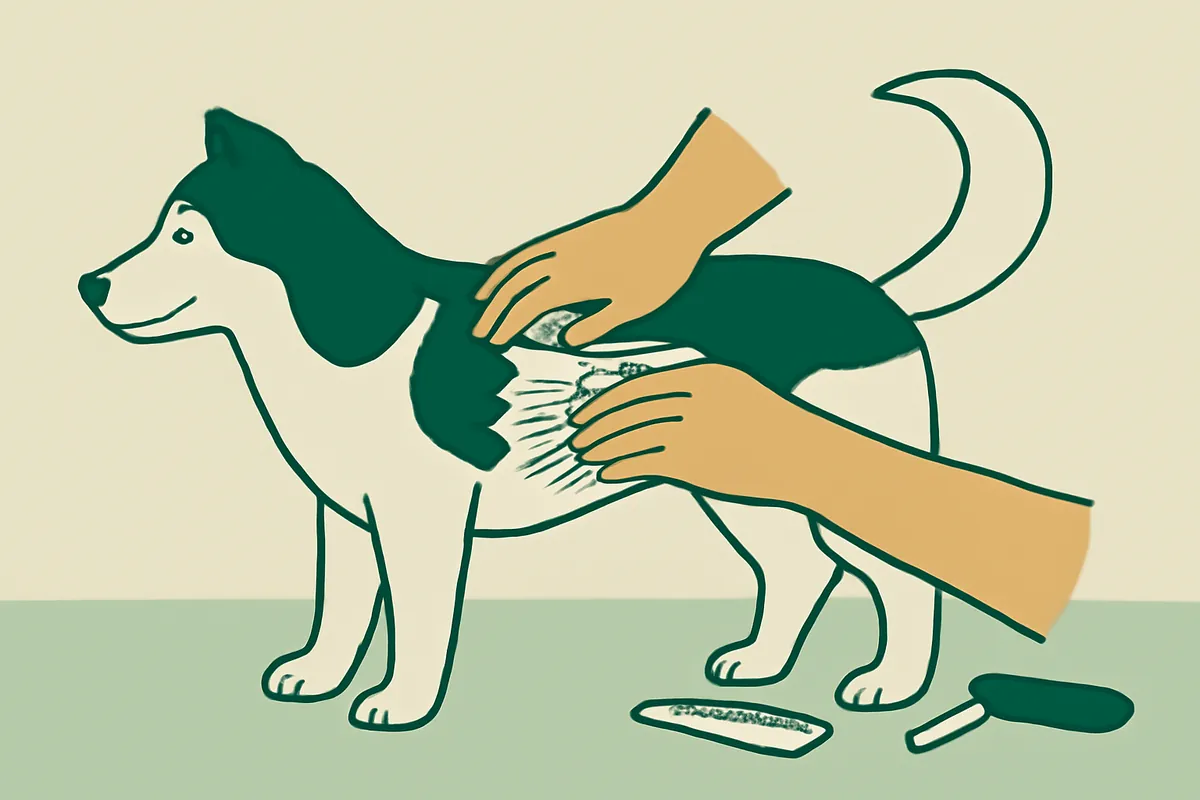
Dog Coat Types Explained: A Groomer's Guide
Double, single, curly, wire and hairless coats: how each grows, how to bathe, dry and brush it, and the common mistakes that damage coats and skin.
25 September 2026
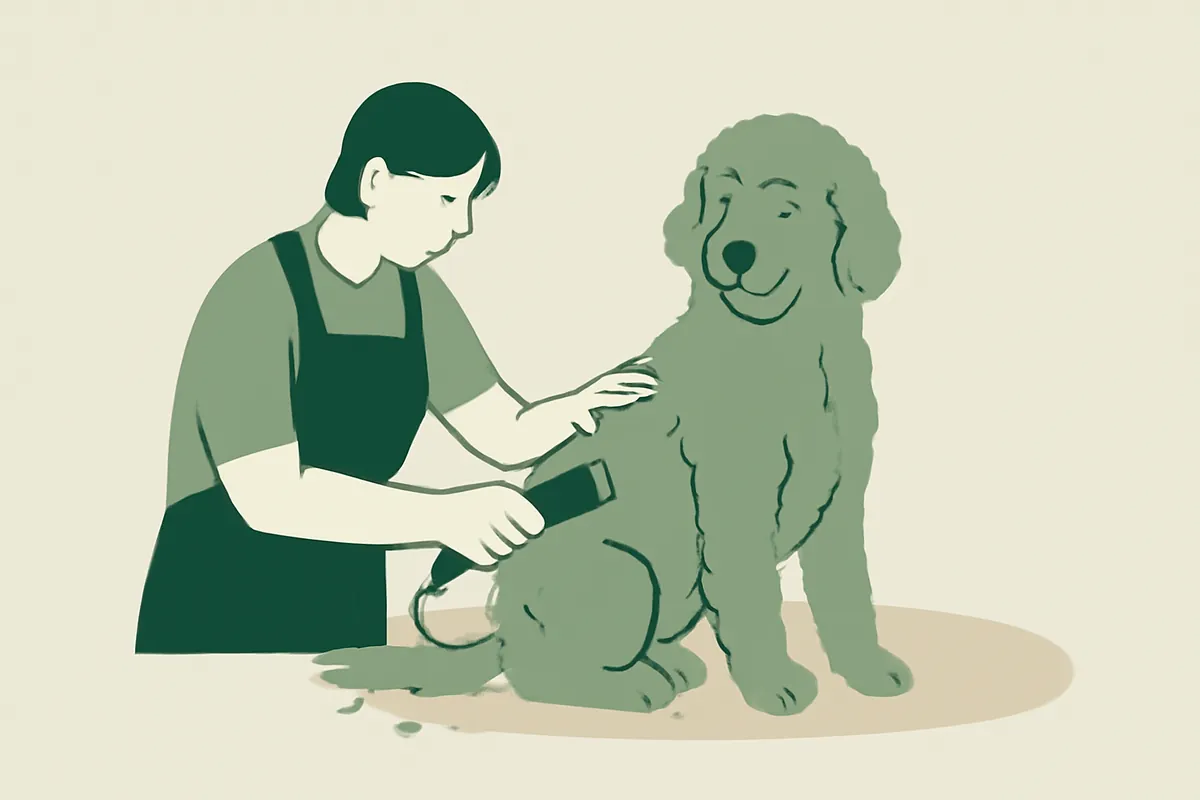
How to De-Matt a Dog Safely, and When to Shave Instead
Why mats form, how to remove light tangles without pain, when a shave-down is the humane choice and how to talk to owners about matted dogs.
25 September 2026