How to Trim Dog Nails Safely, Including Dark Nails
How to trim black dog nails and pale nails safely: finding the quick, choosing tools, a step-by-step method, what to do if you cut the quick and when to refer.
PetCred Editorial Team · Updated 11 September 2026 · 6 min read
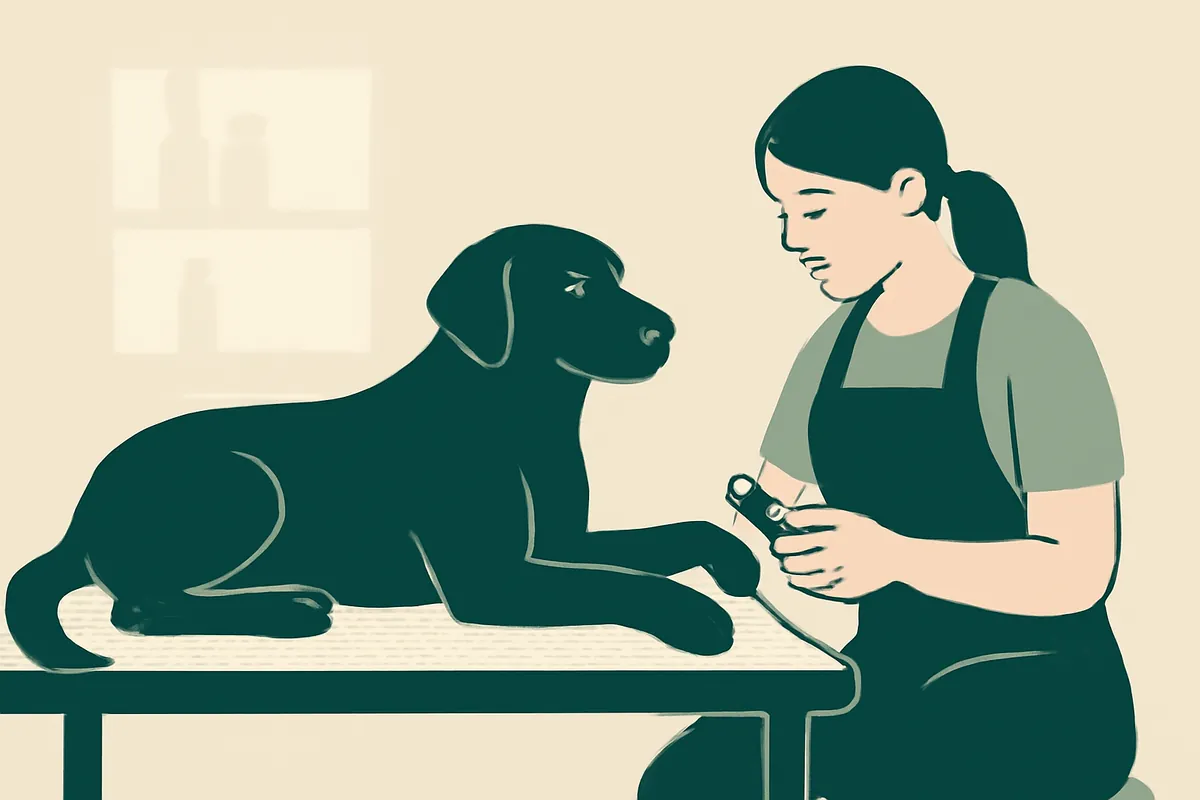
Nail trims are one of the most requested grooming services and one of the most dreaded, by dogs and by the people holding the clippers. Most of the fear comes from the quick, the living part of the nail that bleeds and hurts when it is cut. On pale nails you can see it. On dark nails you cannot, which is why "how to trim black dog nails" is one of the questions new groomers ask most.
This guide explains how to trim dog nails safely, including dark nails: the anatomy you are working with, the tools, a step-by-step method, what to do if you do cut the quick, and when a nail problem needs a vet. It is written for groomers and other pet professionals. Like any hands-on skill, nail trimming is best learned with an experienced groomer showing you on real dogs.
Nail anatomy: the quick
Each nail has a hard outer shell and, inside it, the quick: a core of blood vessels and nerves that runs from the toe down into the nail. Cutting into the quick causes pain and bleeding, and a dog that has had its quick cut often becomes wary of nail trims for a long time afterward.
Three things to understand:
- On pale nails, the quick shows as a pink area inside the nail, so you can see where to stop.
- On dark nails, the quick is hidden, so you have to judge it from the cut surface as you go.
- The quick grows with the nail. When nails are left long, the quick extends further down them. Regular trims allow the quick to recede gradually, so the nails can be kept shorter over time. You cannot shorten an overgrown nail to the ideal length in one session without cutting the quick.
Most dogs also have dewclaws on the inside of the front legs, and some on the back legs. Dewclaws do not touch the ground, so they do not wear down, and they can grow long enough to curl around into the pad. Check them at every trim.
Tools of the trade
- Scissor-style clippers. Strong and precise, and suitable for most dogs, especially medium and large breeds with thick nails.
- Guillotine-style clippers. The nail goes through a ring and a blade slides across. Some groomers like them for small dogs; they can crush thick nails.
- A nail grinder (a rotary tool with a sanding drum). It removes nail gradually and leaves a smooth edge, which makes it easier to avoid the quick on dark nails. It is noisy and vibrates, so some dogs need time to get used to it.
- Styptic powder or a styptic pencil, within reach before you start, not in a drawer across the room.
- Clean gauze or cotton pads, and good lighting.
Keep clippers sharp. Blunt blades squeeze and crush the nail, which is uncomfortable and can split it.
Before you start
- Check the feet. Look for broken or split nails, swelling, redness, discharge, nails growing into the pad, or anything the dog reacts to when touched. If you find any of these, do not trim that toe; tell the owner and suggest a vet check.
- Set up for safety. Your own safety comes first. A dog that dislikes having its feet handled can bite. Have a helper where possible, and use a well-fitted basket muzzle for a dog with a history of biting or one showing strong signs of stress.
- Position the dog comfortably, standing or lying on a non-slip surface. Small dogs can be held securely against your body.
- Hold the paw gently but firmly, supporting it rather than pulling the leg out at an awkward angle. Older dogs with stiff joints need extra care.
If a dog is very anxious about nail trims, short sessions and a gradual approach work better than force. Our guide to grooming an anxious dog covers low-stress handling in more detail.
How to trim pale nails
- Hold the paw and press gently on the pad to extend the nail.
- Find the pink quick through the nail.
- Cut the tip of the nail, staying well clear of the quick, at an angle roughly in line with the bottom of the paw.
- Trim a little at a time rather than one big cut.
- Smooth any rough edges with a file or grinder.
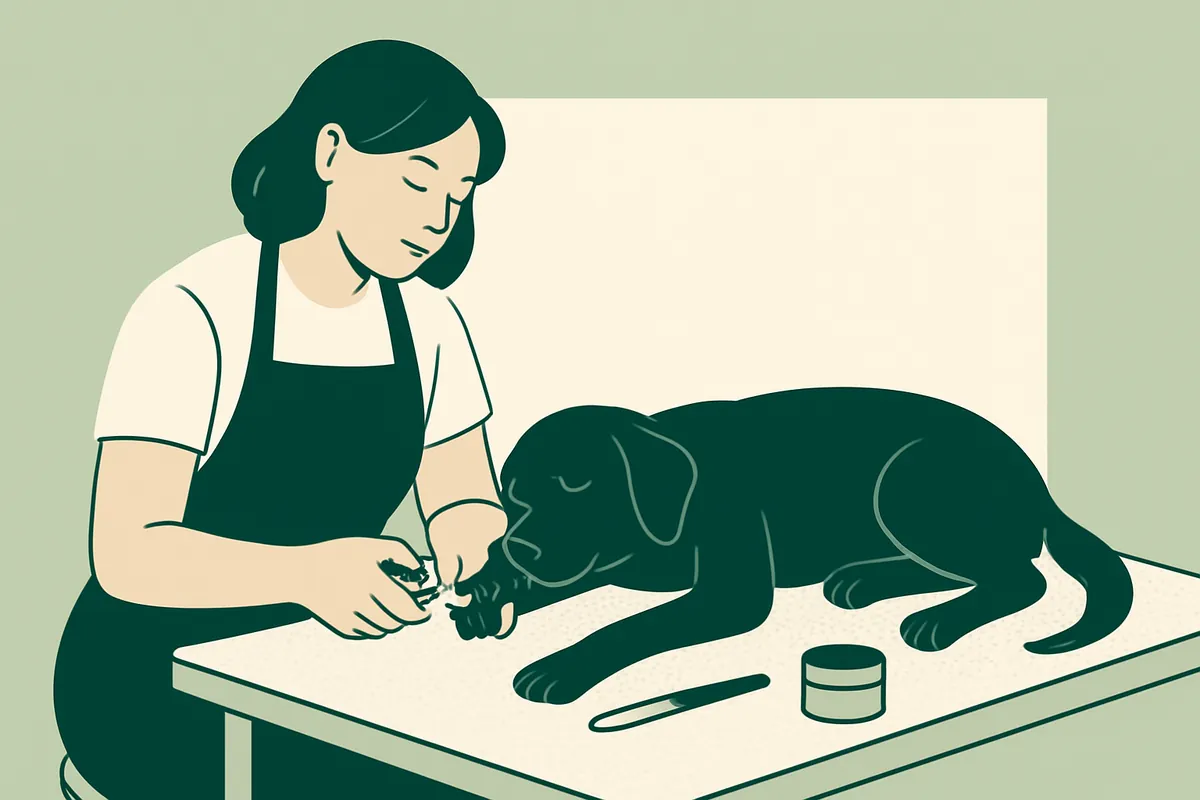
How to trim black dog nails
With dark nails you cannot see the quick, so you work gradually and read the cut surface.
- Start with a very small trim at the tip, just the hooked part of the nail that curves past the pad.
- Look at the cut surface after each slice. At first it looks dry, chalky and pale or grayish.
- Keep taking thin slices. As you get closer to the quick, the center of the cut surface changes: a small, darker, moist-looking circle appears, often surrounded by a paler ring.
- Stop when you see that dark center. The quick is just beyond it. Stopping there leaves a safe margin.
- Smooth the edge with a file or grinder.
Good light helps a great deal. A grinder is useful on dark nails because it removes nail slowly, giving you time to watch the surface change. With a grinder, touch the nail briefly rather than holding it on, because friction builds heat, and keep long hair on the feet out of the way so it cannot catch in the drum.
If a dark nail is badly overgrown, take a little off, then suggest more frequent trims so the quick can recede over time.
If you cut the quick
It happens to experienced groomers too. Stay calm: the dog takes its cue from you.
- Make sure you and the dog are safe. A dog in pain may pull away or snap. Keep a gentle, secure hold, and have a helper steady the dog if you can.
- Apply styptic powder firmly to the end of the nail, or press a clean pad firmly against it. Direct pressure is what stops the bleeding.
- Hold the pressure for a few minutes before checking. If blood soaks through a pad, add another on top rather than removing the first.
- Keep the dog quiet for a while afterward, so the clot is not knocked off.
- Tell the owner what happened and record it on the dog's record.
Contact a vet if the bleeding does not stop after several minutes of firm pressure, if the nail is split, cracked or torn, or if the toe later becomes swollen, hot or painful, or the dog starts limping.
After a nicked quick, end the nail trim on a calm note with a reward if the dog will take one, and consider finishing the remaining nails another day.
How often should nails be trimmed?
It depends on the dog: how fast its nails grow and how much they wear down on walks. A common sign that nails are too long is hearing them click on hard floors, or seeing them touch the ground when the dog is standing. Long nails change how a dog stands and walks, and can split, break or curl into the pads.
Many dogs benefit from a trim every few weeks. Owners of dogs with long or dark nails often do well with short, frequent maintenance visits between full grooms.
When to refer to a vet
Groomers often notice foot problems first. Do not try to treat them; describe what you see and suggest a vet visit for:
- Nails growing into the pad.
- Broken, split or torn nails.
- Swelling, redness, pus or a bad smell around a nail or toe.
- Nails that are brittle, misshapen or have changed color.
- Limping, or pain when a foot is handled.
Next steps
Nail care sits alongside ears, eyes, teeth and hygiene areas in every full groom. Our dog grooming safety guide covers the other common injuries in a salon, and grooming school, apprenticeship or certification explains how to get the supervised practice that builds confidence with clippers. For the whole route into the profession, see how to become a certified dog groomer.
Nails, ears, eyes, teeth and sanitary areas are one of the topics in the Professional Dog Groomer curriculum. Try the free sample dog groomer questions to see the kind of scenarios the assessment uses, each with a model answer.
Frequently asked questions
How do you know where the quick is on a black dog nail?
You cannot see it, so trim thin slices and look at the cut surface each time. It starts dry and chalky; as you near the quick, a small dark, moist-looking circle appears in the center. Stop there, and smooth the edge with a file or grinder.
What should you do if you cut a dog's nail too short?
Stay calm, keep the dog safely held, and press styptic powder or a clean pad firmly against the nail. Hold the pressure for a few minutes. If the bleeding does not stop after several minutes, or the nail is split or torn, contact a vet.
Written by the PetCred Editorial Team and checked against the published curriculum for this program. Laws and requirements change and differ by place: check local rules before relying on anything legal or regulatory here.
Free course
Dog Grooming Fundamentals: A Free 5-Lesson Course
Five short lessons, a quick check after each, no sign-up. Start now →
More dog grooming guides
How to Become a Certified Dog Groomer: A Practical Guide
The skills a dog groomer needs, how to train through a school, apprenticeship or salon, which certification to choose and how to start working safely.
15 July 2026
How to Start a Mobile Dog Grooming Business
How to start a mobile dog grooming business: choosing a van or house calls, equipment, local rules and insurance, heat safety, pricing, routes and clients.
30 August 2026
How to Groom an Anxious Dog: Low-Stress Techniques
Grooming an anxious dog safely: reading early stress signals, preparing the salon, low-stress handling, muzzles, split grooms and when to stop and refer.
18 August 2026
Breed Trims Every Groomer Should Know
Dog grooming styles by breed: poodle, doodle, terrier, spaniel and small breed trims, show versus pet styles, and why most groomers avoid shaving double coats.
7 August 2026