How to Start a Mobile Dog Grooming Business
How to start a mobile dog grooming business: choosing a van or house calls, equipment, local rules and insurance, heat safety, pricing, routes and clients.
PetCred Editorial Team · Updated 30 August 2026 · 6 min read
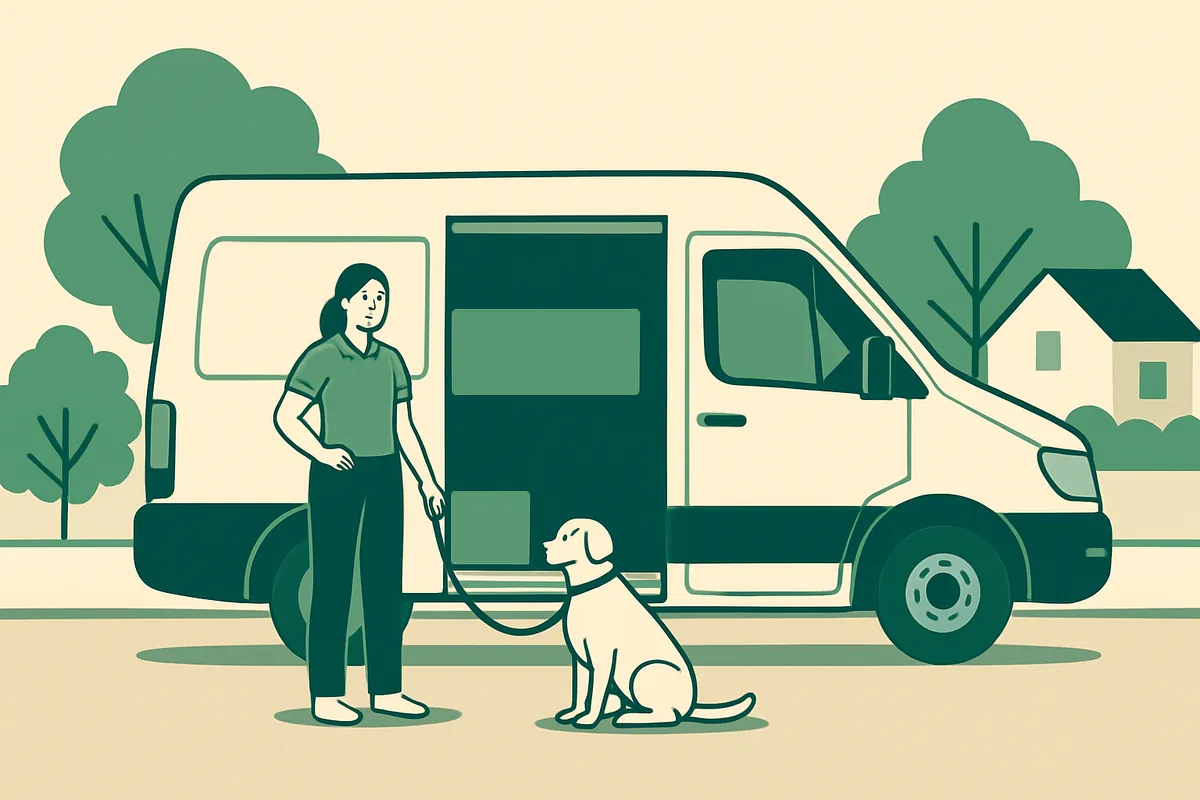
A mobile dog grooming business brings the salon to the client's door. Owners get convenience and one-to-one attention for their dog; groomers get control over their schedule, no salon rent and a business that can grow one van at a time. It is also demanding: you are the groomer, the driver, the mechanic's customer, the receptionist and the cleaner, and everything you need has to fit in a vehicle.
This guide walks through how to start a mobile dog grooming business: choosing a model, planning the vehicle and equipment, the rules to check, safety inside a van, pricing and routes, and finding clients. It is written for groomers who already have, or are building, the grooming skills. The business plan cannot make up for skills you do not yet have.
Is mobile grooming right for you?
Mobile grooming suits some groomers and some dogs better than others.
| Mobile grooming | Salon grooming | |
|---|---|---|
| Dogs per day | Fewer, one at a time | More, often several at once |
| Stress for the dog | Often lower: no waiting, no other dogs, short time away from home | Varies: busy salons can be noisy |
| Setup costs | Vehicle and fit-out | Premises, fit-out and rent |
| Running costs | Fuel, vehicle maintenance, water and power | Rent, utilities, staff |
| Working alone | Almost always | Usually with colleagues |
| Client relationship | Close, one-to-one | Varies |
Mobile grooming particularly suits anxious, elderly or reactive dogs, owners with limited time or mobility, and households with several dogs. It suits groomers who like working independently, are organized, and are comfortable with driving, basic vehicle care and working in a small space. If you are still learning and would benefit from colleagues to ask, a salon job first may serve you better. Our guide to grooming school, apprenticeship or certification compares routes into the profession.
Choosing your mobile model
There are three common setups:
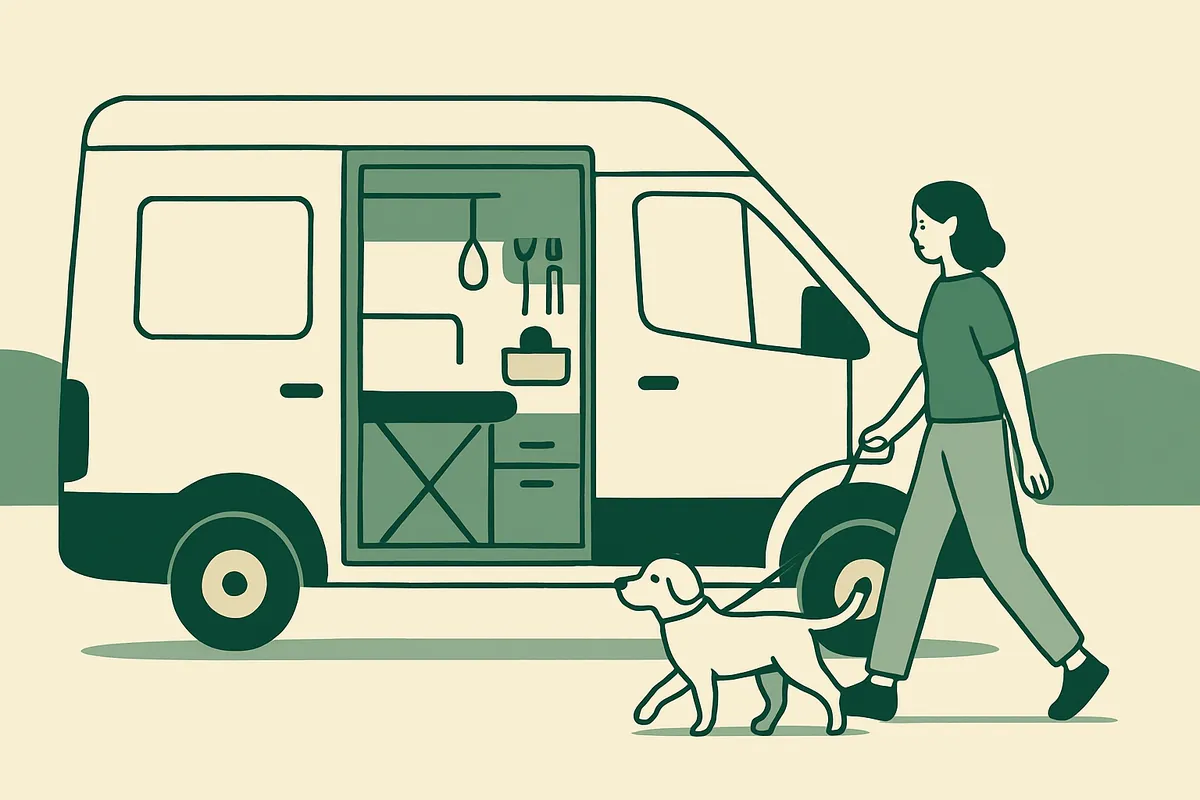
- A fully equipped grooming van or trailer. A self-contained salon on wheels, with a bath, table, dryer, water tanks, power and climate control. It is the most professional setup and the most expensive.
- A converted vehicle. A van fitted out by you or a converter. It can cost less, but the conversion must be safe, well ventilated and suitable for water and electrics.
- House calls. You bring portable equipment and groom in the client's home, often using their bath. It has the lowest setup cost but depends on each home's space, and it is harder to keep hygienic and efficient.
Many groomers start with house calls or a modest conversion to test demand, then invest in a purpose-built vehicle.
Planning the vehicle and equipment
Whatever setup you choose, the essentials are the same:
- A secure grooming table with a non-slip surface and a safe restraint point, fixed so it cannot move.
- A bath at a safe working height, with a way to get dogs in and out without lifting heavy dogs repeatedly, such as steps or a ramp.
- Water supply: fresh water tanks, a way to heat water, and a waste water tank.
- Power: a generator, a battery system or a hookup to the client's supply, enough to run dryers and clippers safely.
- Climate control: heating and, just as important, air conditioning and ventilation. A metal vehicle in sunshine becomes dangerously hot quickly.
- Dryers, clippers, blades, scissors and brushes, plus spares, because you cannot run to a store between appointments.
- Storage that keeps tools secured while driving, and products stored safely.
- Cleaning and hygiene supplies, and a first aid kit for people and for dogs.
Get professional advice on the gas, water and electrical parts of any conversion. They affect your safety, your insurance and whether the vehicle is legal to drive.
Rules, licenses and insurance
Grooming itself is unlicensed in most places, but a mobile business touches several kinds of rules. At the time of writing, the ones to check in the US, the UK, Canada and Australia typically include:
- Business registration and tax, as for any self-employed business.
- Local business or trading permits, which some cities, counties or councils require for mobile businesses.
- Wastewater disposal. Grooming water, with shampoo, hair and dirt, generally must not go into storm drains or onto the street. Find out where and how you may dispose of it legally.
- Parking and noise. Where you may park while working, and any restrictions on running a generator in residential streets.
- Vehicle rules: registration, roadworthiness, weight limits and any rules for converted vehicles.
- Insurance. Public or general liability, cover for animals in your care, equipment cover and a vehicle policy that covers business use and your fit-out. A personal car policy is unlikely to cover a working grooming van.
Rules vary a great deal by city, state, province and council, so check with your local authority before you buy a vehicle. Our guide to whether you need a license to be a dog groomer explains the wider legal position.
Safety in a small space
Safety matters even more when you are alone in a vehicle with a dog.
- Watch the temperature constantly. Heat is one of the biggest risks in grooming, and a van can heat up far faster than a salon. Run air conditioning and ventilation, avoid parking in full sun where you can, and never leave a dog alone in the vehicle.
- Never leave a dog unattended on the table, and never tethered by the neck when you turn away.
- Load dogs safely. Use steps, a ramp or a lift table so dogs are not jumping in and out, and so you are not lifting heavy dogs all day.
- Keep doors secure. Make sure a dog cannot escape into the street when the door opens.
- Clean between every dog, including the table, bath and tools.
- Have a plan for emergencies: know the nearest vet clinics on your route, and carry the owner's contact details and the dog's vet details for every appointment.
Our dog grooming safety guide covers heat, dryers and restraint in more depth.
Pricing and routes
Mobile grooming usually costs more to deliver per dog than salon grooming, because you groom fewer dogs a day and have travel time and vehicle costs. Work out your prices from your own figures rather than copying anyone:
- Add up yearly costs: vehicle payments or depreciation, fuel, maintenance, insurance, water, power, products, equipment, software and marketing.
- Estimate how many dogs you can realistically groom in a day, allowing for travel, cleaning and setup between appointments.
- Decide what income you need, and divide to find the minimum price per groom.
- Compare what local mobile groomers offer, and price for the convenience and one-to-one care you provide.
Route planning is where mobile groomers make or lose money. Define a service area, group appointments by neighborhood on set days, and consider a travel charge beyond your core area. Several dogs at one address, or neighbors booking on the same day, make a day far more efficient.
Finding clients
- Your vehicle is your best advertisement. A clean, well-branded van parked outside a client's home is seen by the whole street.
- Set up a business profile and a simple website with your service area, services, how pricing works and how to book.
- Build referrals with vets, trainers, dog walkers and pet sitters, who often meet owners of anxious or elderly dogs that would benefit from mobile grooming.
- Ask every happy client for a review and make it easy to leave one.
- Book the next appointment before you leave. Regular clients on a set cycle are the foundation of a stable route.
Common mistakes
- Buying the vehicle before checking the rules on parking, wastewater and permits in your area.
- Underestimating running costs, especially fuel, maintenance and time lost to breakdowns.
- Overbooking the day, so you rush dogs or run late for every client.
- A service area that is too large, so more of the day is spent driving than grooming.
- Neglecting climate control, which puts dogs at risk.
Next steps
Mobile grooming rewards groomers who combine solid skills with good organization. For the full route into the profession, see how to become a certified dog groomer.
Clients booking a groomer to come to their home cannot see your skills in advance, so credentials they can check help. The Professional Dog Groomer certification assesses the knowledge behind safe grooming, including salon safety and sanitation, and you can try the free sample dog groomer questions to see how it works.
Frequently asked questions
Do you need a license for mobile dog grooming?
Grooming itself is unlicensed in most places, but a mobile business can need business registration, local trading or parking permits, approved wastewater disposal and a vehicle insurance policy that covers business use. The rules vary by city, state, province and council, so check with your local authority first.
Is mobile dog grooming better for anxious dogs?
It often suits them well: there is no waiting room, no other dogs, and the dog is only a few steps from home. It does not replace low-stress handling, and some dogs still find grooming hard wherever it happens.
Written by the PetCred Editorial Team and checked against the published curriculum for this program. Laws and requirements change and differ by place: check local rules before relying on anything legal or regulatory here.
Free course
Dog Grooming Fundamentals: A Free 5-Lesson Course
Five short lessons, a quick check after each, no sign-up. Start now →
More dog grooming guides
How to Become a Certified Dog Groomer: A Practical Guide
The skills a dog groomer needs, how to train through a school, apprenticeship or salon, which certification to choose and how to start working safely.
15 July 2026
How to Trim Dog Nails Safely, Including Dark Nails
How to trim black dog nails and pale nails safely: finding the quick, choosing tools, a step-by-step method, what to do if you cut the quick and when to refer.
11 September 2026
How to Groom an Anxious Dog: Low-Stress Techniques
Grooming an anxious dog safely: reading early stress signals, preparing the salon, low-stress handling, muzzles, split grooms and when to stop and refer.
18 August 2026
Breed Trims Every Groomer Should Know
Dog grooming styles by breed: poodle, doodle, terrier, spaniel and small breed trims, show versus pet styles, and why most groomers avoid shaving double coats.
7 August 2026