Dog Grooming Safety: Heat, Dryers and the Risks Every Groomer Must Manage
The most common ways dogs get hurt at the groomer's and how to prevent them: dryer heat, restraint, cuts, nail injuries and spotting distress early.
PetCred Editorial Team · Updated 25 September 2026 · 3 min read
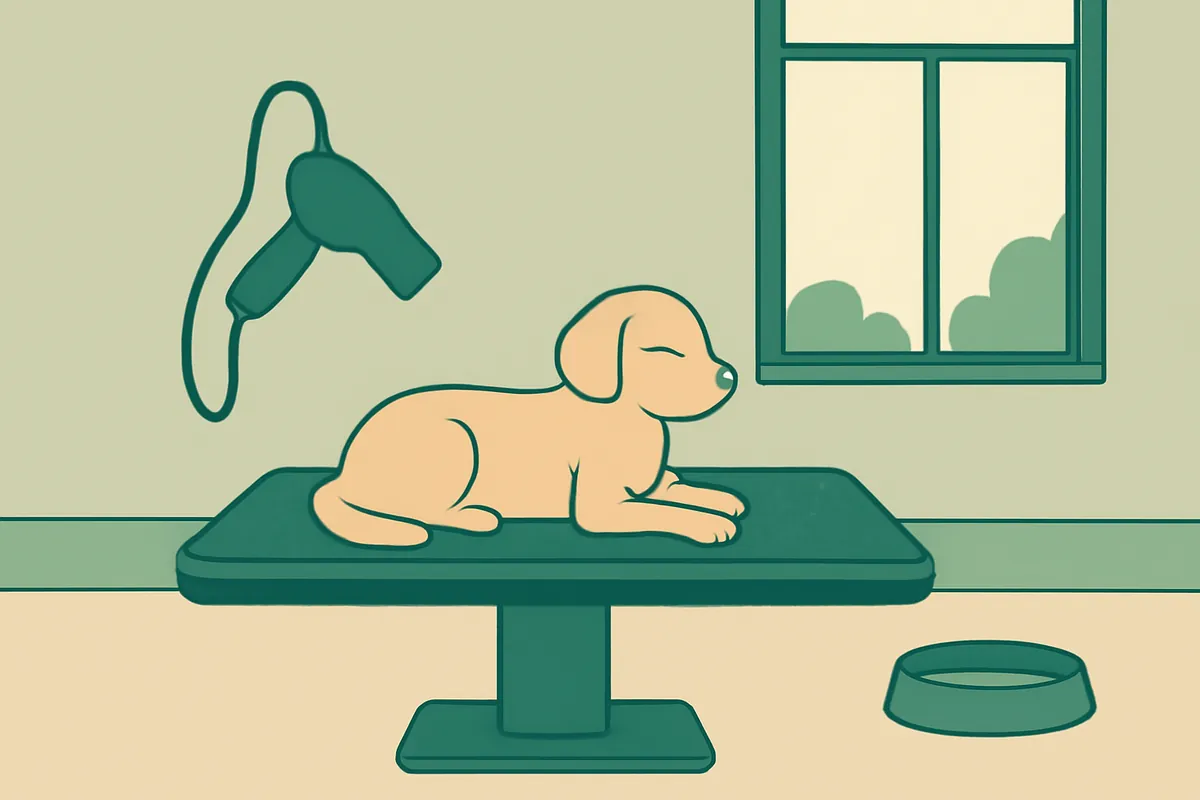
Most dogs leave the groomer's clean, comfortable and unharmed. When something does go wrong, it is usually one of a handful of preventable causes: heat, restraint, sharp tools, nails, or a dog left alone at the wrong moment. Every one of them can be managed with knowledge and routines.
This guide covers the main risks and how professional groomers prevent them.
Heat and dryers
Heat is the most serious risk in a grooming salon. A dog in a warm room, under a dryer, stressed and unable to move away can overheat quickly.
Know the dogs at higher risk:
- Flat-faced breeds such as Pugs, French Bulldogs and Shih Tzus.
- Elderly, overweight or unwell dogs.
- Dogs with thick double coats.
- Anxious dogs, whose stress raises their temperature.
- Very young puppies and very small dogs.
Recognise the signs of overheating:
- Heavy, rapid panting that does not settle.
- Bright red or very dark gums and tongue.
- Thick drooling.
- Glazed eyes, weakness, unsteadiness or collapse.
Prevention routines:
- Never leave a dog unattended under any dryer.
- Avoid heated cage dryers entirely for high-risk dogs; many groomers avoid them for all dogs.
- Use cool or low heat settings and keep the dryer moving.
- Keep the salon ventilated and offer water.
- Plan breaks for anxious or high-risk dogs.
If a dog overheats: stop at once, move the dog to a cool area, offer water, cool it with tepid rather than ice-cold water, and contact a vet immediately if it does not recover quickly. Record the incident and tell the owner the same day.
Restraint and the grooming table
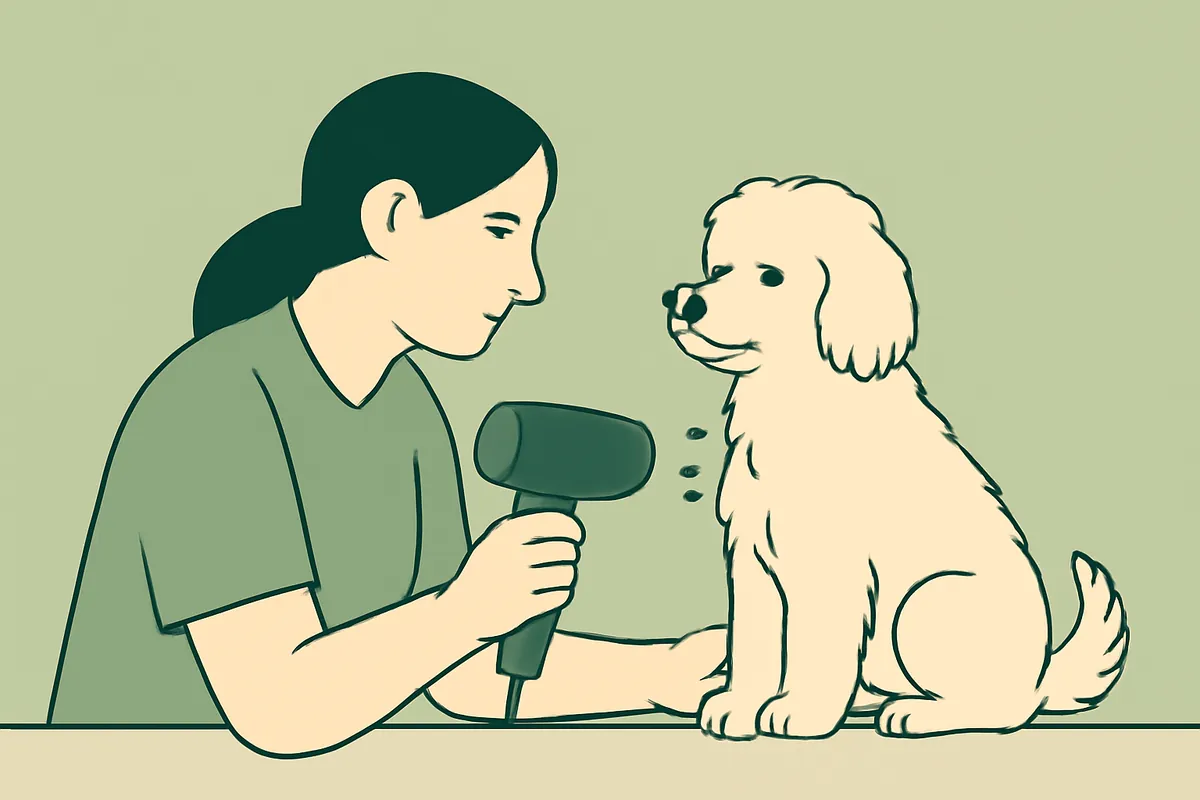
Grooming loops and tables keep dogs safe, but they can also cause injuries if used carelessly.
- Never leave a dog alone on the table, even for a moment, and never tethered by the neck when you step away. A dog that jumps or falls while attached to a loop can be seriously injured.
- Use restraint that is safe and minimal. Choose loops and supports that do not put pressure on the throat, especially for small and flat-faced breeds.
- Keep one hand on the dog when turning to pick up tools.
- Use non-slip surfaces so dogs feel secure.
Cuts and clipper injuries
- Scissor carefully around eyes, ears, lips, feet and hygiene areas, with the tips pointing away from the skin.
- Stretch loose skin flat in armpits, groin and behind the ears before clipping.
- Never scissor mats off close to the skin; clip under them with a short blade instead.
- Check blade temperature regularly. Hot blades can burn skin, especially on short clips.
- Keep blades sharp and clean. Dull blades pull and irritate skin.
Nails
- Find the quick before cutting, and trim small amounts at a time, particularly on dark nails.
- Keep styptic powder within reach.
- Handle feet gently; many dogs find nail trimming stressful, so short sessions and breaks help.
Reading stress early
A dog that is afraid is more likely to get hurt and more likely to bite. Watch for early signs: lip licking, yawning, turning away, whale eye, trembling, trying to sit or lie down, and refusing treats. When you see them, slow down, take a break, change your approach or split the groom over more than one visit.
Hygiene and the salon
- Clean and disinfect tables, baths, tools and cages between dogs.
- Follow product instructions for dilution and use.
- Store chemicals safely and know what to do if a dog or person is exposed.
- Keep records of any dog with a skin condition or parasites and clean thoroughly after them.
When to refer to a vet
Groomers are often the first to notice health problems. Tell the owner, record it, and suggest a vet visit if you see:
- Lumps, swellings or wounds.
- Red, flaky, greasy or smelly skin.
- Ear discharge, smell or head shaking.
- Eye discharge or cloudiness.
- Lameness, pain when handled, or sudden weight change.
Do not diagnose or treat; describe what you saw and recommend a vet.
Build safety into routine
Safety depends less on remembering rules in the moment than on routines: a health check at the start of every groom, a no-unattended-dogs rule everyone follows, set drying procedures for high-risk dogs, and an incident log.
Salon safety and spotting health problems are two of the topics in the Professional Dog Groomer curriculum. Our free sample groomer questions include one on recognising overheating under a dryer, with a model answer. For the full route into the profession, see how to become a certified dog groomer.
Written by the PetCred Editorial Team and checked against the published curriculum for this program. Laws and requirements change and differ by place: check local rules before relying on anything legal or regulatory here.
More dog grooming guides
How to Become a Certified Dog Groomer: A Practical Guide
The skills a dog groomer needs, how to train through a school, apprenticeship or salon, which certification to choose and how to start working safely.
25 September 2026
Do You Need a License to Be a Dog Groomer? Rules in the US, UK, Canada and Australia
Dog grooming is mostly unlicensed, but not unregulated. What the law asks of groomers in four countries, what clients look for and why training still matters.
25 September 2026
Dog Grooming School, Apprenticeship or Certification: Which Route Is Right for You?
Grooming schools, salon apprenticeships, online courses and certifications compared: what each teaches, what each proves and how to combine them.
25 September 2026
Dog Coat Types Explained: A Groomer's Guide
Double, single, curly, wire and hairless coats: how each grows, how to bathe, dry and brush it, and the common mistakes that damage coats and skin.
25 September 2026