Dog Grooming School, Apprenticeship or Certification: Which Route Is Right for You?
Grooming schools, salon apprenticeships, online courses and certifications compared: what each teaches, what each proves and how to combine them.
PetCred Editorial Team · Updated 25 September 2026 · 3 min read
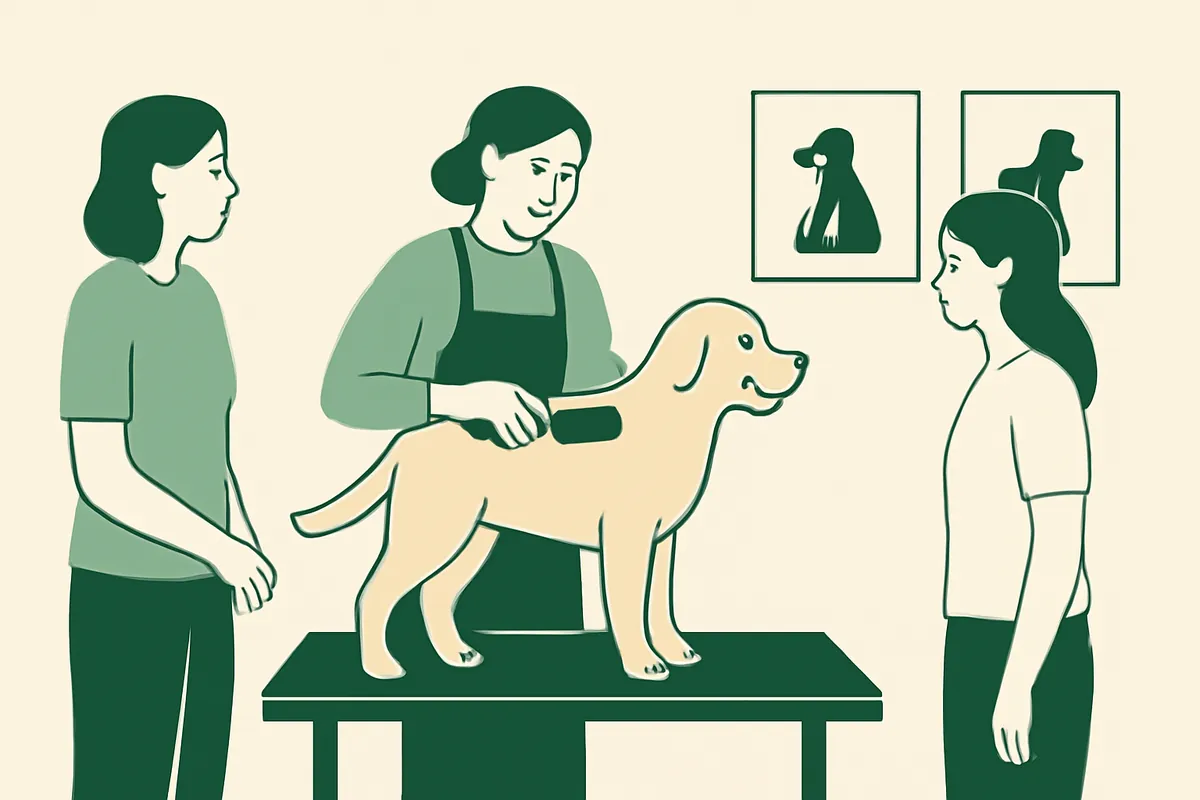
People searching for "dog grooming courses" are usually asking a bigger question: what is the best way to become a groomer? The answer depends on how you learn, how much time and money you have, and what you want to prove to clients and employers.
This guide compares the four main routes, then suggests how to combine them.
The routes at a glance
| Route | How it works | What it proves | Time | Cost |
|---|---|---|---|---|
| Grooming school | Intensive course with supervised practice on real dogs | You completed a structured course | Weeks to months | Moderate to high |
| Salon apprenticeship | Learning on the job, from bathing up to full grooms | Real experience on many dogs | Months to two years | Often paid |
| Online course | Video lessons and reading on theory and technique | You studied the material | Self-paced | Low to moderate |
| Certification or assessment | An exam of knowledge, skills, or both | You met an assessed standard | Days to months | Low to moderate |
Grooming schools
A good grooming school gives you what is hardest to get alone: hands-on practice on many dogs, with an instructor correcting your technique as you go.
Strengths: fast, structured, supervised practice from day one, and a certificate at the end.
Limits: quality varies widely, and a short course cannot give you the speed and range of experience that comes from months of real appointments. The certificate shows you completed that school's course, so its value depends on the school's reputation.
Questions to ask before you enrol:
- How many hours will I spend grooming real dogs, and how many dogs per instructor?
- Which breeds and coat types will I work on?
- Is handling, safety and health covered, or only styling?
- Can I speak to recent graduates?
Salon apprenticeships
Many groomers learned by starting as a bather or assistant in a salon and working up.
Strengths: you learn on a huge range of dogs, see how a salon runs, pick up speed naturally and are often paid while you learn.
Limits: progress depends on the salon, some teach bad habits alongside good ones, and theory such as coat science or health problems may be patchy. There may be no certificate at the end.
Making it work: agree clear stages with the salon owner, keep a log of the breeds and tasks you have done, and fill theory gaps with study.
Online courses
Online courses are good at what can be taught on a screen: coat types, skin health, products, breed profiles, tool maintenance and safety.
Strengths: cheap, flexible and good for theory and for refreshing knowledge.
Limits: no one corrects your hands. Clipper and scissor work, handling and speed must be practised on real dogs.
Certifications and assessments
A certification is different from a course: it assesses you against a standard rather than teaching you. Some are practical, where an examiner watches you groom. Others test knowledge, including online assessments like PetCred's.
The Professional Dog Groomer assessment is a knowledge assessment. It covers coat types and skin, bathing and drying, de-matting, clipper and scissor work, breed standards, handling and low-stress grooming, nails, ears, eyes and teeth, salon safety, and spotting health problems. You answer 12 written scenario questions in 60 minutes, get a score by topic within minutes, and can claim a verifiable certificate if you pass.
What it proves: that you understand the theory and can apply it to realistic situations.
What it does not prove: your hands. No one watches you groom. Pair it with documented practical experience.
Which route is right for you?
- You are starting from zero and want to be taught properly: a well-reviewed grooming school, then a job or apprenticeship to build speed.
- You need to earn while you learn: a salon apprenticeship, with online study to fill the theory gaps.
- You already groom and want to prove your knowledge: a knowledge assessment now, and a practical assessment if one is recognised where you work.
- You are changing career on a budget: online study and a knowledge assessment first, then a bathing job to build hands-on skill.
Most experienced groomers have done several of these. What clients care about is the result: a safe, calm dog that comes home looking good, from a groomer who can show their training.
Related guides
- How to become a certified dog groomer: the full route, step by step.
- Do you need a license to be a dog groomer?: the legal position in four countries.
- Try the free sample dog groomer questions, with model answers.
Written by the PetCred Editorial Team and checked against the published curriculum for this program. Laws and requirements change and differ by place: check local rules before relying on anything legal or regulatory here.
More dog grooming guides
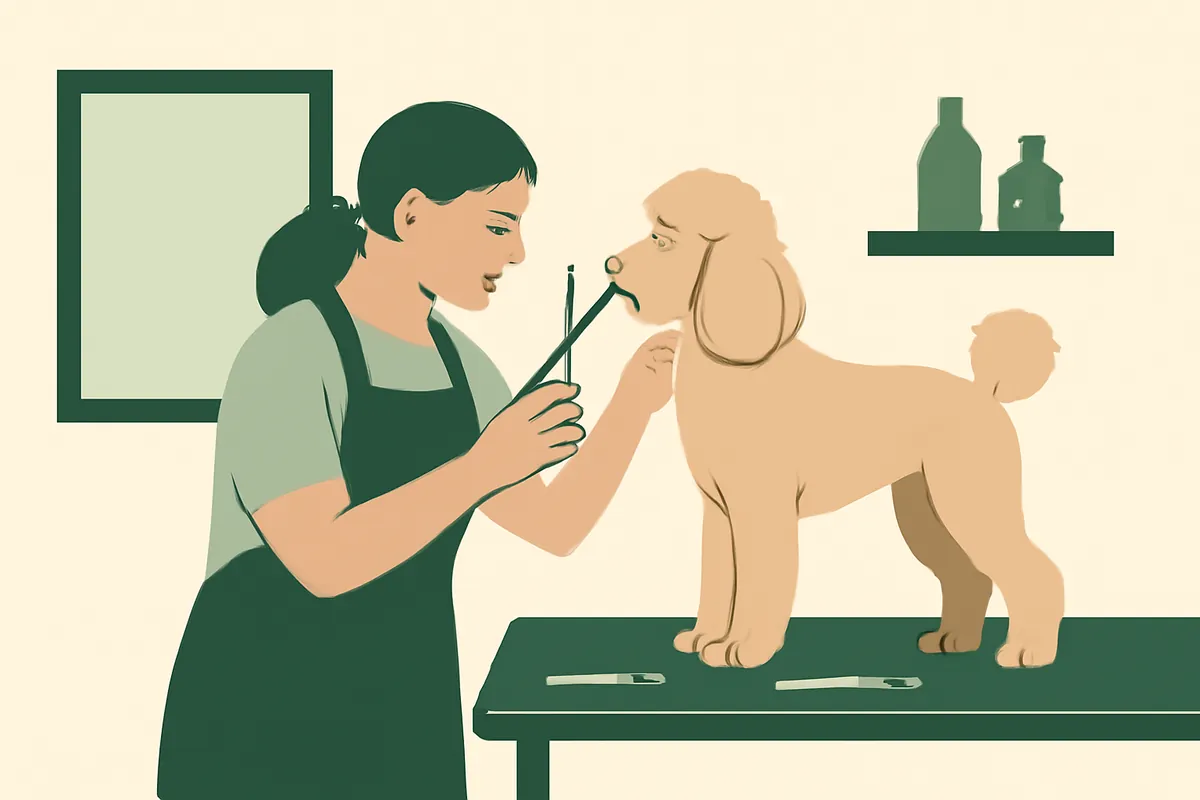
How to Become a Certified Dog Groomer: A Practical Guide
The skills a dog groomer needs, how to train through a school, apprenticeship or salon, which certification to choose and how to start working safely.
25 September 2026

Do You Need a License to Be a Dog Groomer? Rules in the US, UK, Canada and Australia
Dog grooming is mostly unlicensed, but not unregulated. What the law asks of groomers in four countries, what clients look for and why training still matters.
25 September 2026
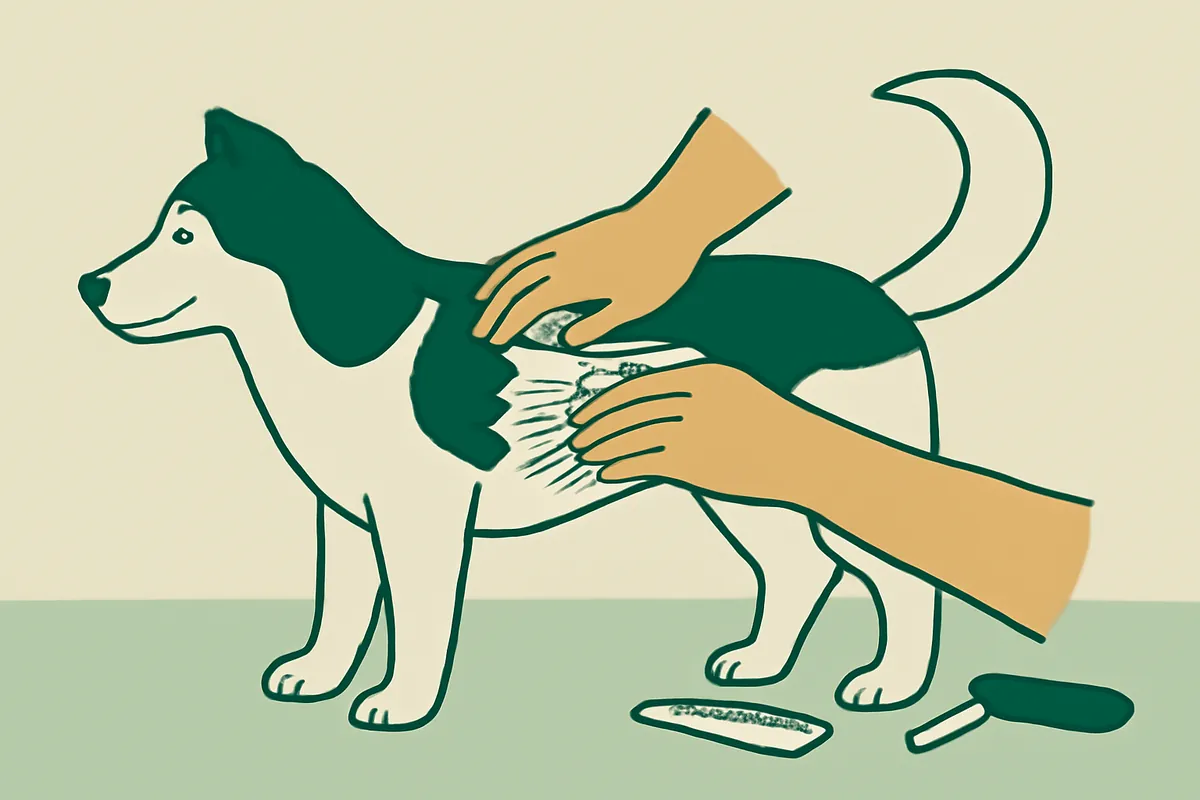
Dog Coat Types Explained: A Groomer's Guide
Double, single, curly, wire and hairless coats: how each grows, how to bathe, dry and brush it, and the common mistakes that damage coats and skin.
25 September 2026
How to De-Matt a Dog Safely, and When to Shave Instead
Why mats form, how to remove light tangles without pain, when a shave-down is the humane choice and how to talk to owners about matted dogs.
25 September 2026