How to Groom an Anxious Dog: Low-Stress Techniques
Grooming an anxious dog safely: reading early stress signals, preparing the salon, low-stress handling, muzzles, split grooms and when to stop and refer.
PetCred Editorial Team · Updated 18 August 2026 · 6 min read
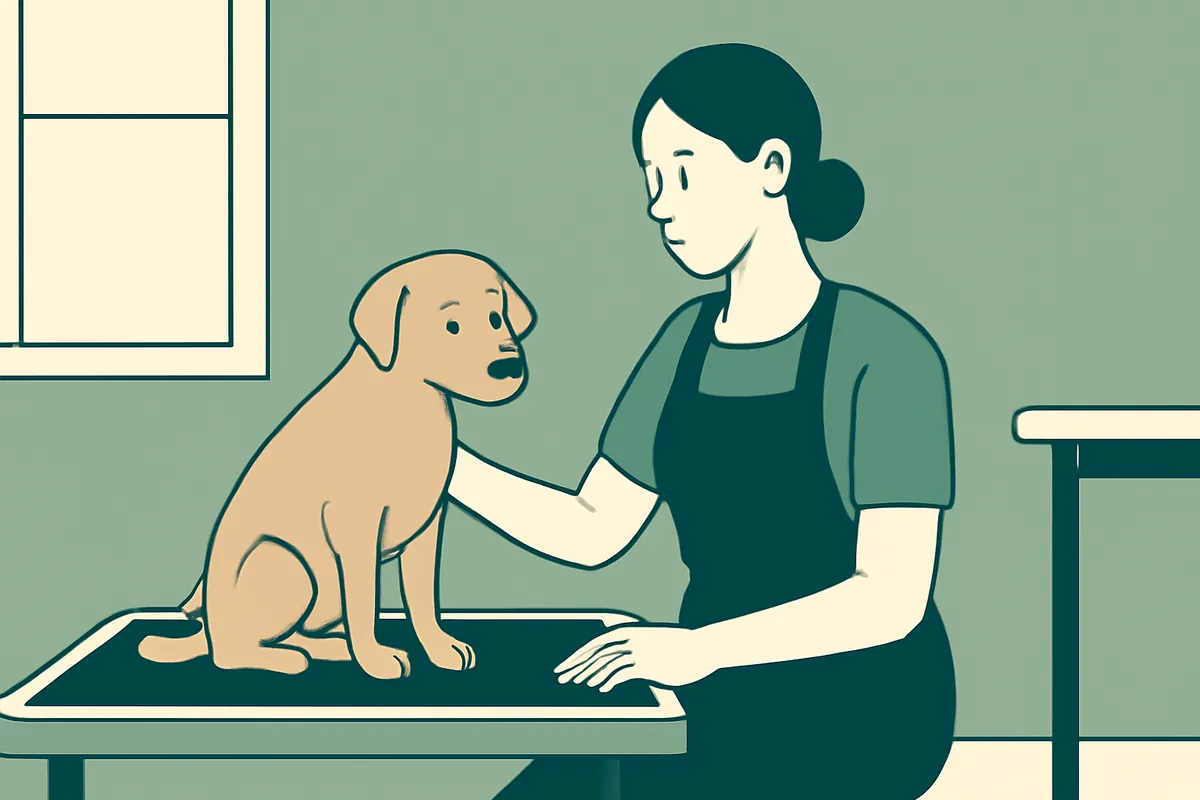
Every groomer has clients whose dogs tremble in the parking lot, freeze on the table or try to escape the moment the dryer starts. Grooming an anxious dog takes longer and needs more thought, but it is also where a groomer's skill shows most clearly. Done well, it keeps the dog and the groomer safe and can make each visit a little easier than the last. Done badly, it teaches the dog that grooming is frightening, and fear can turn into biting.
This guide covers low-stress grooming techniques for professional groomers: how to recognize fear early, how to prepare the salon and the appointment, how to handle anxious dogs with minimal restraint, and when to stop and refer. It is written for groomers, but the principles are useful for anyone who handles dogs.
Why some dogs find grooming hard
Grooming asks a lot of a dog. It is handled all over by a stranger, lifted onto a raised table, held still, sprayed with water and exposed to loud, unfamiliar noises. Dogs become anxious about grooming for many reasons:
- Little early experience of being handled, bathed or dried.
- A bad previous experience, such as a nail cut into the quick or a painful de-matting session.
- Pain or discomfort, from sore joints, ears, skin or teeth. Older dogs in particular may struggle to stand for long.
- Sensitivity to noise, especially clippers and high-velocity dryers.
- General fearfulness, which shows up in other situations too.
Pain deserves special attention. A dog that has recently become difficult to groom, or that reacts when a particular area is touched, may be hurting. Tell the owner what you noticed and suggest a vet check before the next groom.
Reading the signs of stress
Fear usually builds in stages. The earlier you notice it, the easier it is to change what you are doing before the dog feels it has to defend itself.
Early signs to watch for:
- Lip licking, yawning or a closed, tense mouth.
- Turning the head away or avoiding eye contact.
- Whale eye: the whites of the eyes showing.
- Ears pulled back, tail lowered or tucked.
- Trembling, panting when not hot, or sweaty paws leaving marks on the table.
- Refusing treats it would normally take.
Later signs that the dog is close to its limit:
- Freezing or going very still.
- Trying hard to escape, jump off the table or sit down.
- Lifting a lip, growling or snapping.
Never punish a growl. It is a warning, and a dog that learns not to warn may bite without one. When you see later signs, stop what you are doing, give the dog space and rethink the plan.
Before the appointment
Much of low-stress grooming happens before the dog reaches the table.
- Ask the right questions at booking. Has the dog been groomed before? How did it go? What does it dislike? Any health problems, pain, medication or bite history? Owners are more open when you ask calmly and without judgment.
- Choose the time slot. A quiet time, such as the first appointment of the day, avoids waiting rooms full of barking dogs.
- Plan a shorter visit. You do not have to finish a full groom in one appointment. Agree with the owner what is essential today and what can wait.
- Suggest a short introductory visit for very nervous dogs: a few minutes to walk in, sniff around, take treats and leave, with nothing done to them.
Setting up the salon
Small changes in the environment make a big difference for an anxious dog.
- Reduce noise. Turn down music, keep other dogs out of sight where you can, and schedule noisy tasks away from the nervous dog.
- Non-slip surfaces on the table and in the bath, so the dog feels secure.
- Quiet tools. Low-noise or cordless clippers, and a dryer on a low setting, held at a distance at first. Towel drying and patience are better than a dryer the dog cannot cope with.
- Never use a heated cage dryer on an anxious dog. Stress raises body temperature, and a dog left in a cage dryer can overheat quickly. Our dog grooming safety guide covers heat risks in detail.
- Keep everything ready before the dog arrives, so you are not turning away to find tools.
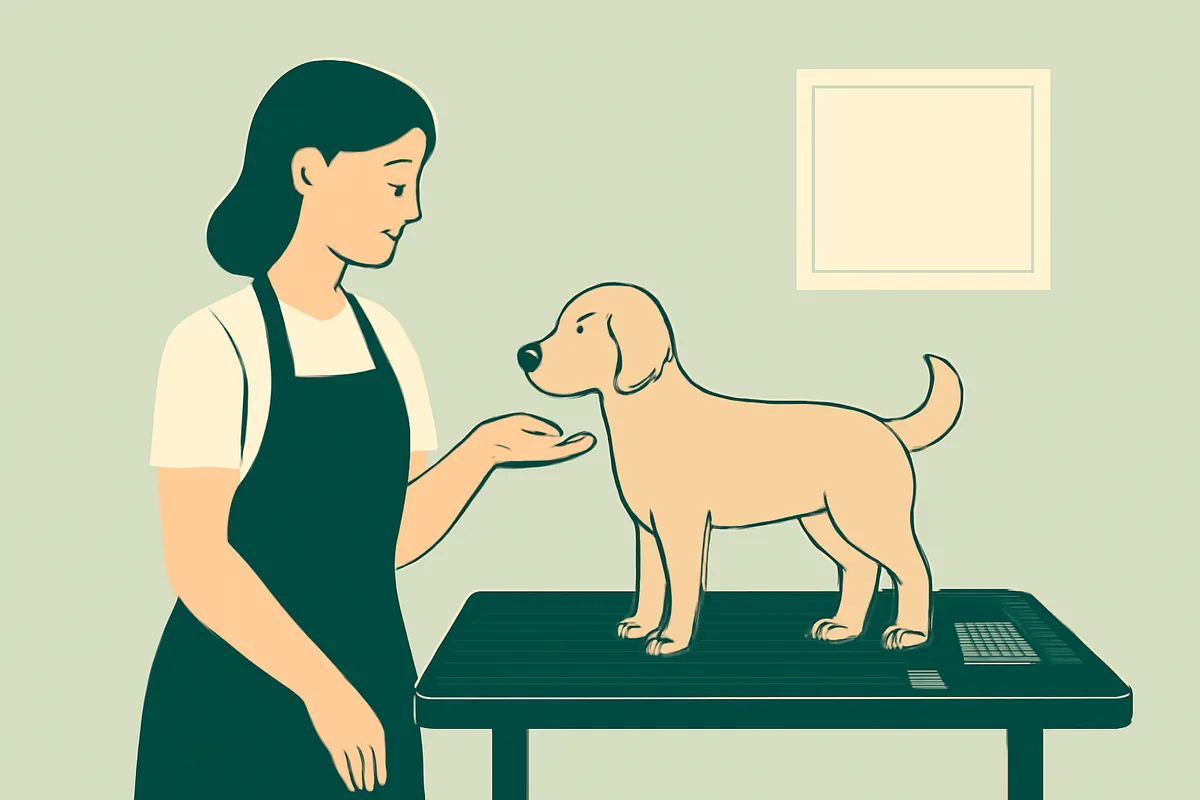
Low-stress handling on the table
The aim is to use the least restraint needed to keep the dog safe, and to give the dog some sense of control.
- Let the dog settle first. A minute of calm touch and treats before you pick up a tool is time well spent. With the owner's agreement, and only after checking for allergies or dietary restrictions, food rewards and lick mats can help.
- Start with the easiest task. Brushing an area the dog tolerates builds confidence before harder jobs like feet, face or nails.
- Work in short bursts with breaks. Do a little, then pause, reward and let the dog relax. Stress builds up if there is no recovery.
- Watch for the dog saying "enough". If the dog pulls away, stop, wait and then try again more gently or move to an easier area.
- Support rather than pin. Hold the dog gently and let it shift its weight. Restraint that the dog fights against increases fear and the risk of injury to both of you.
- Never leave the dog alone on the table, and never tethered by the neck when you step away.
Using a muzzle safely
For a dog with a bite history, or one showing later signs of stress, a muzzle protects you and allows the groom to continue calmly. Your own safety comes first: fit it before you handle sensitive areas, not after the dog has already snapped. A well-fitted basket muzzle lets the dog pant and drink. Ideally the owner has taught the dog to accept it at home with treats, so it does not become another source of fear. A muzzle is not permission to push on: a dog that is muzzled but panicking still needs you to stop.
Split grooms and building tolerance over time
For many anxious dogs, the most effective technique is doing less, more often.
- Split the groom across two or more short visits: one for bath and brush, another for trimming.
- Offer short maintenance visits between full grooms for nails, face and feet.
- Work with the owner at home. Suggest short daily handling sessions paired with treats: touching paws, lifting ears, brushing a small area, turning on a quiet electric toothbrush near the dog to mimic clipper sound. Progress is slow, but it adds up.
- Keep records. Note what the dog tolerated, what it did not and what helped, so every visit builds on the last.
A dog trainer can help owners with this kind of gradual training. Many groomers build referral relationships with local trainers for exactly these cases.
When to stop and refer
Sometimes the kindest and safest decision is not to finish the groom.
- Stop if the dog is in real distress, is panicking despite breaks and adjustments, or you cannot continue without forcing it. Explain to the owner what you managed and why you stopped.
- Refer to a vet if you suspect pain, if the dog's behavior has changed suddenly, or if the dog cannot be groomed safely even with patience. Some vets offer grooming under sedation for extreme cases; that is a veterinary decision and must be done under veterinary care.
- Refer to a behavior professional for severe fear or aggression, so the owner can get a proper training plan.
Owners are usually grateful when you put their dog's welfare first and explain your reasons calmly.
Common mistakes
- Rushing to fit the schedule. Anxious dogs need time; book it.
- Using force to "get it done". It may finish today's groom, but it makes the next one harder.
- Ignoring early signs until the dog growls or snaps.
- Using a cage dryer on a stressed dog.
- Not telling the owner what happened, what you saw and what might help next time.
Next steps
Handling and low-stress grooming is one of the topics in the Professional Dog Groomer curriculum, alongside safety and spotting health problems. You can try the free sample dog groomer questions to see the kind of scenarios the assessment uses. For more on the craft, read how to de-matt a dog safely, which often goes hand in hand with anxious dogs, and how to become a certified dog groomer for the full route into the profession.
Frequently asked questions
How do groomers calm an anxious dog?
Mostly through preparation and pacing rather than any single trick: a quiet time slot, non-slip surfaces, quiet tools, starting with easy tasks, short bursts with breaks and the least restraint needed. Very nervous dogs often do better with shorter, more frequent visits.
Should a groomer keep going if a dog growls?
No. A growl is a warning that the dog is close to its limit. Stop, give the dog space and change the plan, whether that means an easier task, a break, a muzzle the dog accepts, or ending the session and referring the owner to a vet or behavior professional.
Written by the PetCred Editorial Team and checked against the published curriculum for this program. Laws and requirements change and differ by place: check local rules before relying on anything legal or regulatory here.
Free course
Dog Grooming Fundamentals: A Free 5-Lesson Course
Five short lessons, a quick check after each, no sign-up. Start now →
More dog grooming guides
How to Become a Certified Dog Groomer: A Practical Guide
The skills a dog groomer needs, how to train through a school, apprenticeship or salon, which certification to choose and how to start working safely.
15 July 2026
How to Trim Dog Nails Safely, Including Dark Nails
How to trim black dog nails and pale nails safely: finding the quick, choosing tools, a step-by-step method, what to do if you cut the quick and when to refer.
11 September 2026
How to Start a Mobile Dog Grooming Business
How to start a mobile dog grooming business: choosing a van or house calls, equipment, local rules and insurance, heat safety, pricing, routes and clients.
30 August 2026
Breed Trims Every Groomer Should Know
Dog grooming styles by breed: poodle, doodle, terrier, spaniel and small breed trims, show versus pet styles, and why most groomers avoid shaving double coats.
7 August 2026