Feeding Puppies and Kittens: A Guide by Life Stage
A puppy and kitten feeding guide for pet professionals: growth foods, meals and portions by age, large breed puppies, switching to adult food and when to refer.
PetCred Editorial Team · Updated 19 August 2026 · 6 min read
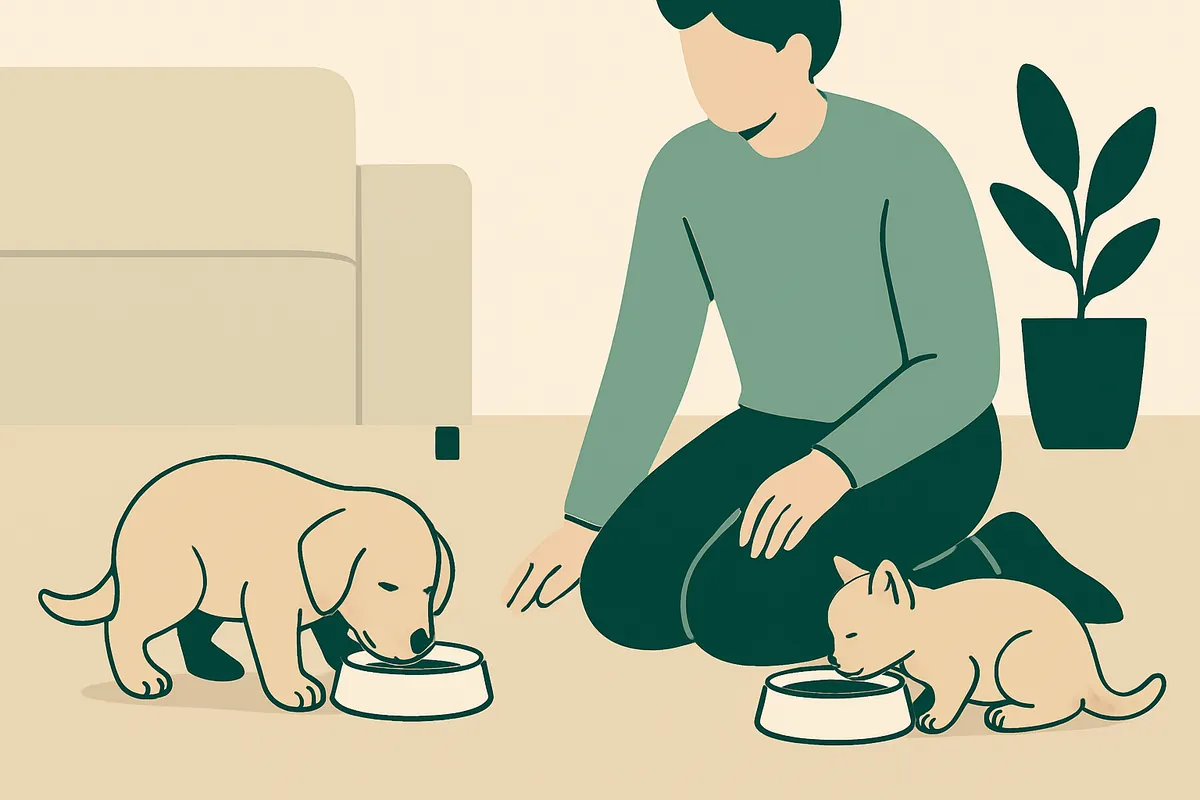
Young animals grow fast, and what they eat in the first months shapes how well they grow. A puppy feeding guide or kitten feeding plan is not only about how much to put in the bowl: it is about the right kind of food, the right number of meals, and knowing when to change as the animal matures. Mistakes here are common and some, such as overfeeding a large breed puppy or adding supplements to a balanced diet, can do lasting harm.
This guide takes pet professionals through feeding by life stage, from weaning to adulthood, for both puppies and kittens. It explains what to recommend, why, and where the vet takes over.
This is general education for pet professionals, not veterinary advice. Orphaned or very young animals, puppies and kittens that are not growing well, and any young animal that is unwell, not eating, vomiting or has diarrhea should be seen by a vet promptly.
Why growth needs its own diet
A growing animal needs more energy per kilogram than an adult, and more of certain nutrients, including protein, calcium and phosphorus. It also needs them in the right balance. Too little of a nutrient slows healthy growth; too much of some, calcium in particular, can be harmful to large breed puppies.
That is why the single most important recommendation is simple: feed a complete and balanced food made for growth. On a label this appears in the nutritional adequacy statement as "growth" or "all life stages". In the UK and Europe, look for a "complete" food suitable for puppies or kittens. An adult maintenance food is not designed for a growing animal. For help finding these statements, see how to read a pet food label.
From birth to weaning
For the first weeks, puppies and kittens get everything they need from their mother's milk. The first milk (colostrum) also passes on antibodies that help protect them early in life.
Weaning is gradual. Puppies and kittens typically start showing interest in solid food at around three to four weeks, and most are fully weaned by about seven to eight weeks. A common approach is to offer a growth food softened with water into a mash, then reduce the water over the following weeks.
Orphaned or rejected newborns are a different situation. They need a commercial milk replacer made for their species, careful bottle feeding and warmth, and a vet should be involved from the start. Cow's milk is not a suitable substitute.
Puppies: how much and how often
Meals. Young puppies have small stomachs and high energy needs, so they do best on several meals a day. A common pattern is three to four meals a day after weaning, reducing to two meals a day by around six months. Consistent times also help with house training.
Amount. The feeding guide on the bag is a sensible starting point. For a closer estimate, use the resting energy requirement (RER) and a growth factor. Commonly used factors are about 3 × RER up to four months of age, then about 2 × RER until the puppy reaches adult size. The method is explained step by step in how to calculate a dog's calorie needs. Base the calculation on the puppy's current weight and recalculate as it grows.
Monitoring. Weigh the puppy regularly and check body condition. A growing puppy should be lean: ribs easy to feel, a visible waist. Growth charts from the vet or breeder help show whether growth is steady. Adjust portions as the puppy grows rather than sticking to one amount for months.
Large and giant breed puppies
Puppies expected to be large as adults need particular care. Growing too fast, or getting too much calcium, is associated with developmental bone and joint problems in these breeds. Fast growth does not mean a bigger adult dog in the end; it means more strain on developing joints.
What to recommend:
- A food formulated for large breed growth. In the US, a suitable label states that the food is complete and balanced for growth including large size dogs (those expected to weigh 70 lb or more as adults).
- Controlled portions. Keep the puppy lean. Feeding freely from a full bowl makes overeating likely.
- No added calcium or other supplements unless the vet prescribes them. A complete growth food already contains what the puppy needs, and extra calcium can do harm.
- Regular checks of weight and body condition, shared with the vet.
Kittens: how much and how often
Kittens also need a complete and balanced growth food, and as obligate carnivores they need nutrients such as taurine that are supplied properly in cat food. Never feed a kitten or cat on dog food, which is not formulated for their needs.
Meals. Kittens do best with several small meals a day. Some owners leave dry food available for young kittens; others feed set meals. Either can work for a young kitten, but set meals make it easier to notice changes in appetite, which is useful because a kitten that stops eating needs a vet quickly.
Amount. A commonly used starting factor for kittens is about 2.5 × RER, recalculated as the kitten grows. The feeding guide on the food is a reasonable starting point too. Monitor weight and body condition, and adjust.
Wet and dry food. Both can form a complete diet if the label says so. Wet food adds water to the diet, and getting a kitten used to a range of textures early can make feeding easier later in life.
Changing to adult food
The switch to adult food depends on when the animal reaches adult size, which varies by species and breed:
| Animal | Typical time to change to adult food |
|---|---|
| Kittens | Around 12 months |
| Small and medium breed puppies | Around 9 to 12 months |
| Large and giant breed puppies | Later, often 12 to 18 months or more |
These are general guides; the vet can advise on an individual animal. Change foods gradually over about a week, mixing increasing amounts of the new food with the old, to avoid digestive upset.
Neutering reduces energy needs. Many animals gain weight in the months after neutering if portions stay the same, so this is a good time to recheck weight and adjust.
Common mistakes
- Feeding an adult food to a growing animal. Check the label says growth or all life stages.
- Overfeeding large breed puppies. A chubby puppy is not a healthy puppy.
- Adding supplements to a complete diet. Extra calcium or vitamins can unbalance a food that is already complete.
- Giving cow's milk. Puppies and kittens do not need it after weaning, and it can cause digestive upset.
- Not adjusting portions. A puppy's or kitten's needs change month by month.
- Too many treats. A common guideline is to keep treats and extras to no more than about 10% of daily calories, and training rewards count.
Where the professional's role stops
Trainers, sitters, groomers, breeders and nutrition consultants can all help owners feed young animals well: recommending an appropriate growth food, explaining meal schedules and portions, and teaching owners to check body condition.
Refer to a vet when a puppy or kitten:
- Is not gaining weight, or is growing unusually fast.
- Stops eating, even for a short time.
- Has vomiting, diarrhea, lethargy or a swollen belly.
- Has a known medical condition or needs a special diet.
- Is orphaned or very young.
A consultant does not diagnose why a young animal is not thriving. The job is to notice, record and refer early. Read more about that boundary in pet nutritionist vs veterinary nutritionist.
Next steps
Life-stage feeding is one of the core topics in the Pet Nutrition Consultant program, alongside energy requirements, species differences and label reading. For an overview of the career, see how to become a certified pet nutritionist. You can check your knowledge with free sample questions from the pet nutrition assessment.
Written by the PetCred Editorial Team and checked against the published curriculum for this program. Laws and requirements change and differ by place: check local rules before relying on anything legal or regulatory here.
Free course
Pet Nutrition Fundamentals: A Free 5-Lesson Course
Five short lessons, a quick check after each, no sign-up. Start now →
More pet nutrition guides
How to Become a Certified Pet Nutritionist: A Practical Guide
What a pet nutrition consultant does, the science to learn, where consulting ends and veterinary care begins, and how to choose a certification.
21 July 2026
Grain-Free Diets and Heart Disease in Dogs: What We Know
Grain-free dog food and DCM as of 2026: what the FDA investigation found, what remains unresolved and how pet professionals can advise owners honestly.
12 September 2026
Food Allergies in Dogs: How Elimination Trials Work
How dog food allergy elimination diets work: choosing a trial diet, how long it lasts, the challenge, and how professionals can help owners stick to it.
31 August 2026
How to Calculate a Cat's Calorie Needs
The cat calorie calculation step by step: resting energy, life stage factors, treats and portions, plus why weight loss in cats must always involve a vet.
8 August 2026