How to Calculate a Dog's Calorie Needs
Resting and daily energy requirements, life-stage factors, body condition scoring and how to turn a calorie target into a practical feeding plan.
PetCred Editorial Team · Updated 25 September 2026 · 3 min read
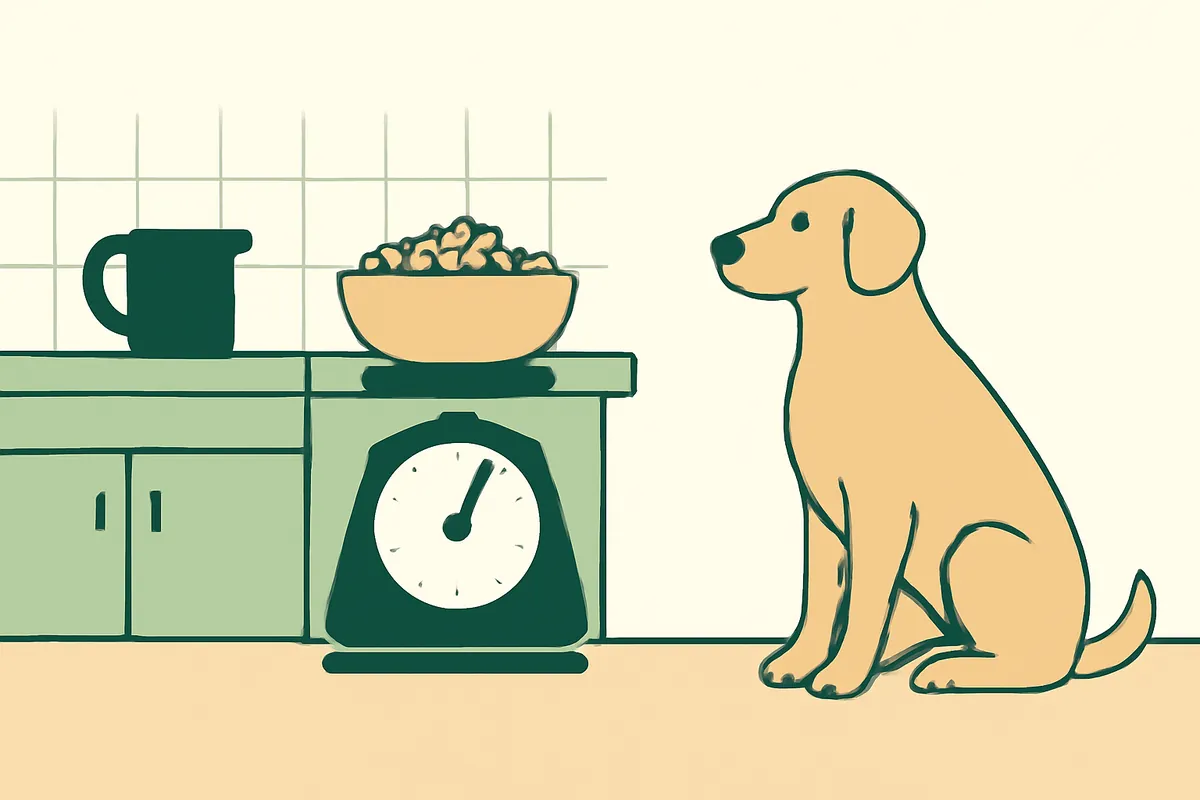
"How much should I feed?" is the question pet nutrition consultants hear most. The feeding guide on the bag is a rough start, but it cannot account for the individual dog. This guide explains the standard way to estimate a dog's daily energy needs, how to adjust it, and how to turn a calorie number into a practical plan.
These calculations are for healthy dogs. Dogs with medical conditions, or that are pregnant, nursing or very young, should have their diet set by a vet.
Step 1: Resting energy requirement
The resting energy requirement (RER) is the energy a dog uses at rest in a comfortable environment. The standard formula is:
RER (kcal per day) = 70 × (body weight in kg)^0.75
The exponent 0.75 reflects the fact that energy needs do not rise in a straight line with weight: a dog twice as heavy does not need twice the calories.
Worked example: a 20 kg dog.
- 20^0.75 is about 9.46.
- RER = 70 × 9.46 = about 662 kcal per day.
Use the dog's ideal weight, not its current weight, when planning weight loss.
Step 2: Multiply for life stage and activity
The maintenance energy requirement (MER) is the RER multiplied by a factor. Commonly used starting factors for dogs are:
| Dog | Typical factor × RER |
|---|---|
| Neutered adult, normal activity | 1.6 |
| Intact adult, normal activity | 1.8 |
| Inactive or prone to weight gain | 1.2 to 1.4 |
| Weight loss (using ideal weight) | 1.0 |
| Puppy, up to 4 months | 3.0 |
| Puppy, 4 months to adult size | 2.0 |
| Working or very active dog | 2.0 to 5.0 |
Continuing the example: a neutered 20 kg adult dog.
- MER = 662 × 1.6 = about 1,060 kcal per day.
These factors are averages. Individual dogs of the same weight can differ considerably, so the result is a starting point to adjust, not a final answer.
Step 3: Account for treats
A common guideline is to keep treats and extras to no more than about 10% of daily calories. For our example dog, that is about 100 kcal. Treats, chews, training rewards and table scraps are often why a feeding plan does not work, so ask about them in detail.
Step 4: Turn calories into food
Find the food's calorie content on the label, often given as kcal per cup, can or kilogram.
Example: the food provides 380 kcal per cup, and the dog's food allowance after treats is about 960 kcal.
- 960 ÷ 380 = about 2.5 cups per day, split into meals.
Measuring cups vary, so weighing food on kitchen scales is more accurate. For grams: divide daily kcal by the food's kcal per kilogram and multiply by 1,000.
Step 5: Monitor body condition and adjust
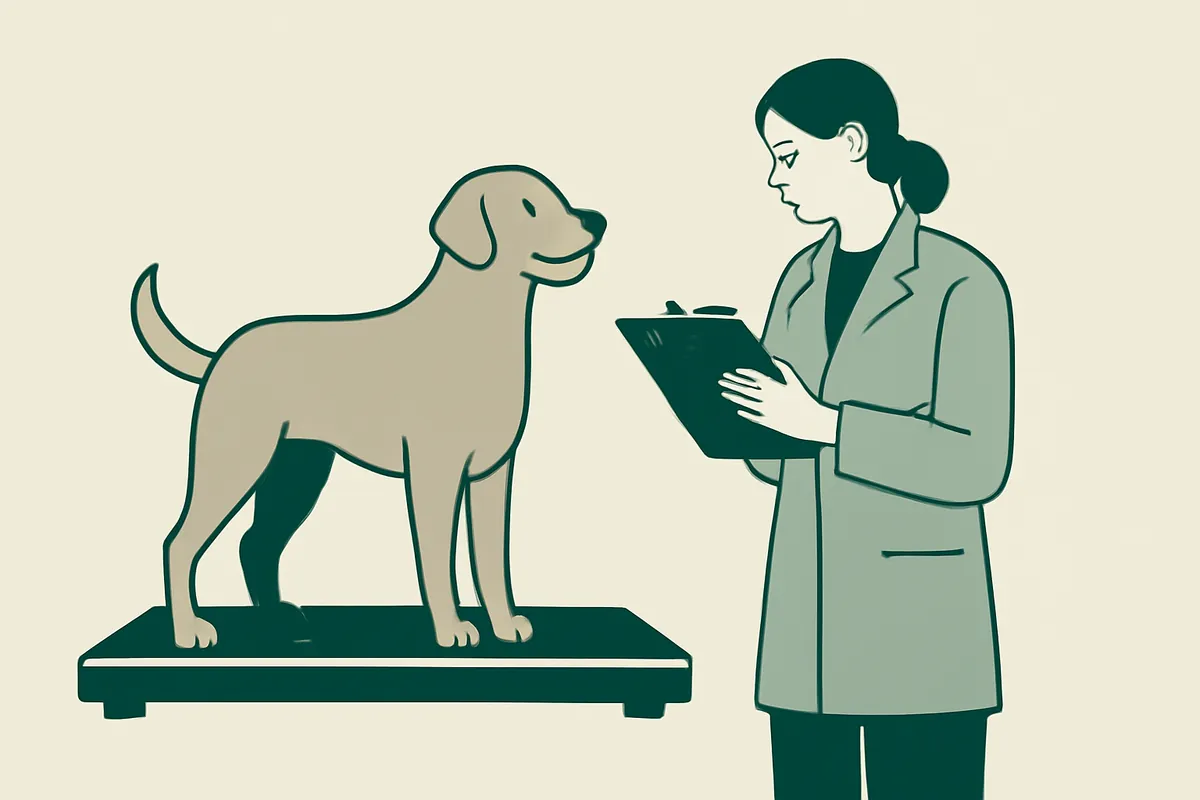
The calculation gets you close; body condition tells you whether you are right.
Most vets use a 9-point body condition score, where 4 to 5 is ideal:
- Ribs should be easy to feel with light pressure, with a thin covering of fat.
- From above, there should be a visible waist behind the ribs.
- From the side, the belly should tuck up behind the ribcage.
As a rough guide, each point above ideal represents about 10% extra body weight.
Weigh and score every two to four weeks, then adjust intake by around 10% at a time until weight and condition are stable. For weight loss, a safe rate for most dogs is roughly 1 to 2% of body weight per week, with the vet's involvement.
Common mistakes
- Using current weight for an overweight dog. Use ideal weight for planning weight loss.
- Forgetting treats. They add up quickly.
- Treating the formula as exact. It is an estimate; adjust using body condition.
- Changing too much at once. Change portions gradually and change foods gradually over about a week to avoid digestive upset.
- Applying dog numbers to cats. Cats use different factors, and rapid weight loss or fasting can be dangerous for them. Cat weight loss should always involve a vet.
Explaining it to owners
Owners do not need the formula. They need:
- A daily amount in grams or cups, and how to split it.
- A treat allowance they can actually use.
- How to feel their dog's ribs and waist.
- When to weigh again, and what to do if the weight does not change.
Energy requirements and body condition scoring are core topics in the Pet Nutrition Consultant curriculum. To compare foods properly first, see how to read a pet food label.
Written by the PetCred Editorial Team and checked against the published curriculum for this program. Laws and requirements change and differ by place: check local rules before relying on anything legal or regulatory here.
More pet nutrition guides
How to Become a Certified Pet Nutritionist: A Practical Guide
What a pet nutrition consultant does, the science to learn, where consulting ends and veterinary care begins, and how to choose a certification.
25 September 2026
Pet Nutritionist vs Veterinary Nutritionist: Who Does What
The difference between a pet nutrition consultant and a board-certified veterinary nutritionist, what each may do, and how to work within your scope.
25 September 2026
How to Read a Pet Food Label: A Practical Guide for Consultants
Nutritional adequacy statements, guaranteed analysis, dry matter comparisons and the ingredient list: what a pet food label tells you and what it does not.
25 September 2026
Raw and Home-Cooked Pet Diets: What Nutrition Consultants Should Know
The appeal, the evidence and the risks of raw and home-cooked diets for dogs and cats, and how a consultant can advise owners safely and honestly.
25 September 2026