How to Read a Pet Food Label: A Practical Guide for Consultants
Nutritional adequacy statements, guaranteed analysis, dry matter comparisons and the ingredient list: what a pet food label tells you and what it does not.
PetCred Editorial Team · Updated 25 September 2026 · 4 min read

Pet food packaging is designed to sell. The front of the bag tells you about wild ancestry, superfoods and happy dogs running on beaches. The useful information is on the back, in small print. This guide explains how to read it, what it tells you and what it does not.
Label rules differ by country. In the US, most states base their rules on model regulations from the Association of American Feed Control Officials (AAFCO). In the UK and Europe, industry guidelines from FEDIAF and EU feed law apply. The principles below hold in both.
1. Start with the nutritional adequacy statement
This is the most important line on the label, and it is often the hardest to find.
In the US it will say something like:
- "Formulated to meet the nutritional levels established by the AAFCO Dog Food Nutrient Profiles for adult maintenance", or
- "Animal feeding tests using AAFCO procedures substantiate that this food provides complete and balanced nutrition for all life stages."
It tells you two things:
- Whether the food is complete and balanced, meaning it can be fed on its own as the pet's whole diet.
- Which life stage it is for: growth (including puppies and kittens), adult maintenance, or all life stages. A food for "all life stages" must meet the requirements for growth, which may mean more energy or minerals than an adult needs.
If the label says "for intermittent or supplemental feeding only", it is not complete: it is a treat, topper or mixer.
In the UK and Europe, look for the words "complete" and "complementary". A complete food can be fed alone; a complementary food cannot.
2. Read the guaranteed analysis properly
The guaranteed analysis (called "analytical constituents" in Europe) lists crude protein, fat, fibre and moisture, usually as minimums or maximums.
Two cautions:
- These are not exact values. A minimum of 26% protein means at least 26%.
- They are "as fed", including water. That makes comparing wet and dry foods misleading unless you convert to dry matter.
3. Compare foods on a dry matter basis
To compare foods with different moisture levels, remove the water from the calculation:
Dry matter % = nutrient % ÷ (100 − moisture %) × 100
For example:
| Food | Protein as fed | Moisture | Protein on dry matter |
|---|---|---|---|
| Canned food | 8% | 78% | 8 ÷ 22 × 100 = about 36% |
| Dry kibble | 26% | 10% | 26 ÷ 90 × 100 = about 29% |
The canned food looks lower in protein on the label but is higher once water is removed.
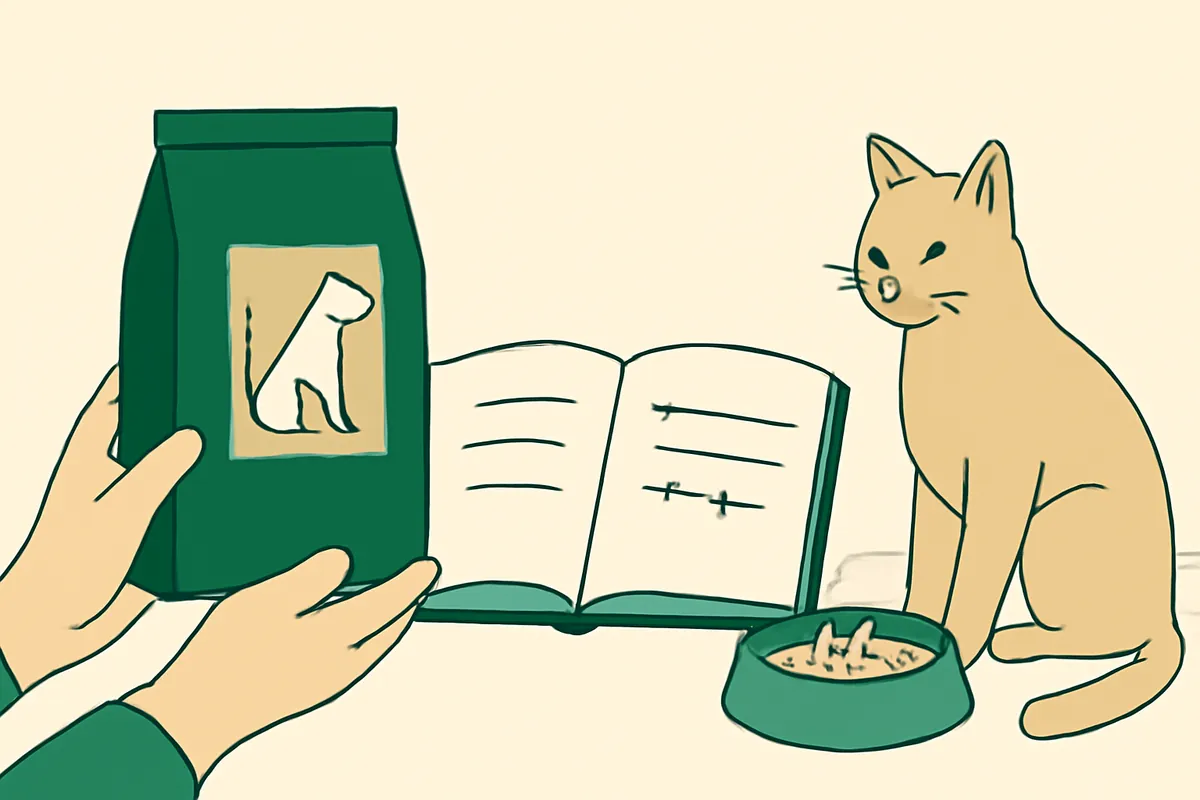
4. Read the ingredient list, with care
Ingredients are listed in descending order by weight before cooking, including their water. This leads to common misreadings:
- Fresh meat listed first may contribute less protein than a meat meal lower down, because fresh meat is mostly water that is removed in cooking.
- Ingredient splitting, listing several forms of the same ingredient separately, such as peas, pea protein and pea fibre, can push each one lower down the list.
- Ingredient names say little about quality. "By-products" can be nutritious organ meats; "human-grade" is mostly a marketing term.
The ingredient list is useful for spotting specific ingredients an owner wants to avoid. It is a poor guide to overall nutritional quality.
5. Check the calorie content
Many labels list energy, often as kcal per kilogram and per cup or can. This matters for feeding amounts: two foods can differ by a third or more in calories per cup. Use it with the pet's calculated needs. See how to calculate a dog's calorie needs.
6. Treat feeding guidelines as a starting point
The feeding table on the bag gives a range for weight. It is a starting point, not a prescription. Activity, neutering, age, breed and treats all change what a pet actually needs. Adjust based on body condition over several weeks.
Claims to read sceptically
- "Natural", "holistic", "premium": loosely defined or undefined terms with little nutritional meaning.
- "Grain-free": grains are not harmful for most pets. In 2018 the US Food and Drug Administration began investigating reports of dilated cardiomyopathy in dogs eating certain diets, many of them grain-free and high in legumes. The cause has not been settled, but it is a reason not to assume grain-free is better.
- "Vet recommended": tells you little without knowing which vets and on what basis.
- Named superfoods: often present in amounts too small to matter.
Questions a label cannot answer
Some of the most important questions need you to contact the manufacturer:
- Who formulates the diets, and do they employ a qualified nutritionist?
- Are the foods tested with feeding trials or formulated to profiles?
- What quality control is carried out on ingredients and finished products?
Guidance from the World Small Animal Veterinary Association suggests questions like these for choosing a pet food manufacturer.
Putting it together for a client
When an owner asks "is this a good food?", a structured answer covers:
- Is it complete and balanced for this pet's life stage and species?
- How does it compare on a dry matter basis with what they feed now?
- How many calories does it provide, and how much should they feed?
- Does the pet have health needs that mean the vet should choose?
Label reading is one of the core topics in the Pet Nutrition Consultant curriculum. For the full route into the role, see how to become a certified pet nutritionist.
Written by the PetCred Editorial Team and checked against the published curriculum for this program. Laws and requirements change and differ by place: check local rules before relying on anything legal or regulatory here.
More pet nutrition guides
How to Become a Certified Pet Nutritionist: A Practical Guide
What a pet nutrition consultant does, the science to learn, where consulting ends and veterinary care begins, and how to choose a certification.
25 September 2026
Pet Nutritionist vs Veterinary Nutritionist: Who Does What
The difference between a pet nutrition consultant and a board-certified veterinary nutritionist, what each may do, and how to work within your scope.
25 September 2026

How to Calculate a Dog's Calorie Needs
Resting and daily energy requirements, life-stage factors, body condition scoring and how to turn a calorie target into a practical feeding plan.
25 September 2026

Raw and Home-Cooked Pet Diets: What Nutrition Consultants Should Know
The appeal, the evidence and the risks of raw and home-cooked diets for dogs and cats, and how a consultant can advise owners safely and honestly.
25 September 2026