How to Become a Service Dog Trainer: A Practical Guide
What service dog trainers do, the skills and experience you need, how the law shapes the work and what a service dog trainer certification can and cannot show.
PetCred Editorial Team · Updated 5 August 2026 · 11 min read
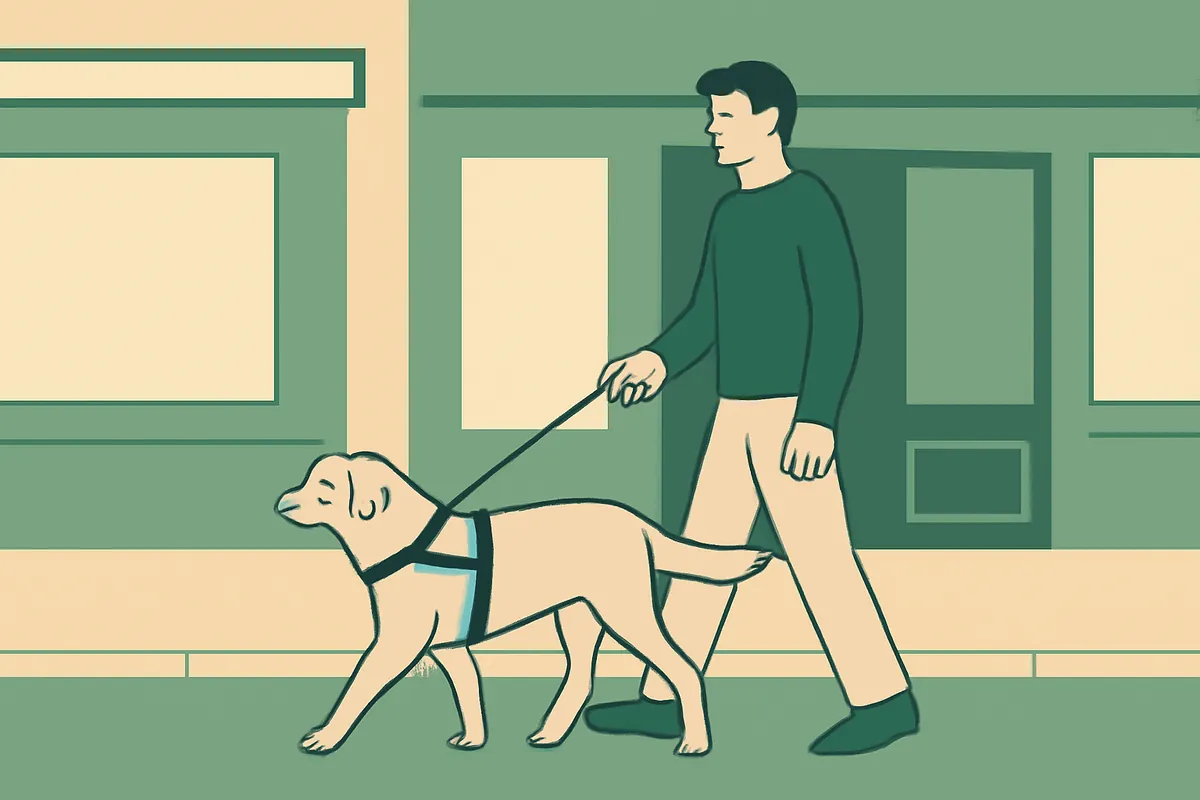
This guide is written for dog trainers, and for people who want to become one, who are thinking about training service and therapy dogs as part of their work. If you are an owner looking for a service dog for yourself, some of it will still be useful, but it is not written for you. It covers what the job involves, the knowledge you need, how people get experience, and what a service dog trainer certification can and cannot show.
Service dog training is one of the most demanding branches of dog training: the dogs have to work calmly in supermarkets, hospitals, trains and offices, perform specific tasks reliably for a person with a disability, and do it for years.
The route below is the one most working assistance dog trainers describe: a solid general training foundation first, then specialist knowledge, then supervised experience, then a credential that shows what you know.
What a service dog trainer actually does
The title covers several different jobs. Depending on where you work, you might:
- Assess candidate dogs: puppies from a breeding program, adult dogs from rescues, or a client's own dog, to decide whether they have the temperament and health for assistance work.
- Raise and socialize puppies, or support the volunteer puppy raisers who do it.
- Train tasks: behaviors that directly help a person with a disability, such as retrieving dropped items, alerting to a sound, opening doors or interrupting a specific behavior linked to a psychiatric condition.
- Build public access behavior: the calm, unobtrusive conduct a working dog needs in shops, restaurants, public transport and workplaces.
- Train the handler. A service dog is one half of a team. The handler has to learn to maintain the dog's training, care for it and handle it in public.
- Prepare therapy dog teams: dogs and their owners who visit hospitals, schools or care homes, which is related work with different standards.
- Decide when a dog should change career. Many dogs who start assistance training are better suited to another life, and placing them well is part of the job.
Most of the work is patient and repetitive: a task that looks simple in a video may take months to make reliable in every setting.
Service dogs, therapy dogs and emotional support animals are different jobs
Before anything else, a service dog trainer must be precise about categories, because clients, landlords and businesses are often confused about them, and the confusion causes real harm.
| Type | What it does | Trained tasks? | Typical legal status |
|---|---|---|---|
| Service or assistance dog | Performs specific tasks for one person with a disability | Yes | Public access rights in many countries, set by disability law |
| Therapy dog | Visits people in hospitals, schools or care homes with its owner | No disability tasks; trained for calm, safe visiting | Usually no public access rights; access by invitation of the facility |
| Emotional support animal | Provides comfort to its owner through its presence | Not required | Usually no public access rights; some housing protections in some places |
The details differ between the US, the UK, Canada and Australia, and the law section below touches on them. The point for now is simple: a trainer who blurs these categories, or tells a client that a certificate makes their pet a service dog, is misleading them. Clear, accurate advice is part of what a client pays you for.
Step 1: Build a strong general training foundation
Almost every assistance dog trainer was a good general trainer first. Task training and public access work sit on top of the same foundations as any other training, and gaps in those foundations show quickly when a dog has to work in a busy station.
You need to be fluent in:
- Learning theory. Operant and classical conditioning, reinforcement schedules, and how emotions are learned. Our guide to positive reinforcement dog training is a good starting point.
- Shaping and chaining. Many tasks are chains of smaller behaviors (find the phone, pick it up, carry it, deliver it to hand). You need to be able to break a task down, train each part and link them.
- Generalization and proofing. A behavior that works in the training room is not finished. Service dogs must perform in new places, with new distractions, when the handler is stressed or unwell.
- Body language and stress. Working dogs must be able to cope, not merely comply. You need to see early stress signals and adjust before the dog is overwhelmed.
If you are new to training altogether, start with our guide on how to become a certified dog trainer, then come back to this one.
Step 2: Learn the specialist knowledge
On top of general training, assistance dog work has its own body of knowledge. These are the areas that separate it from pet training.
Candidate selection
Not every dog can do this work, and some that seem suitable as puppies turn out not to be. You need to know what temperament traits matter (resilience, recovery from surprises, sociability without over-excitement, low reactivity to other dogs) and how health affects a working life. Structural problems, allergies or chronic conditions can end a career, so candidate dogs are screened by a vet.
Task training
A task must be trained to help with a specific effect of a person's disability. That means you need to understand the person's needs well enough to design the task, and then train it to a standard where it works reliably when it matters, including when the handler cannot give perfect cues.
Public access standards
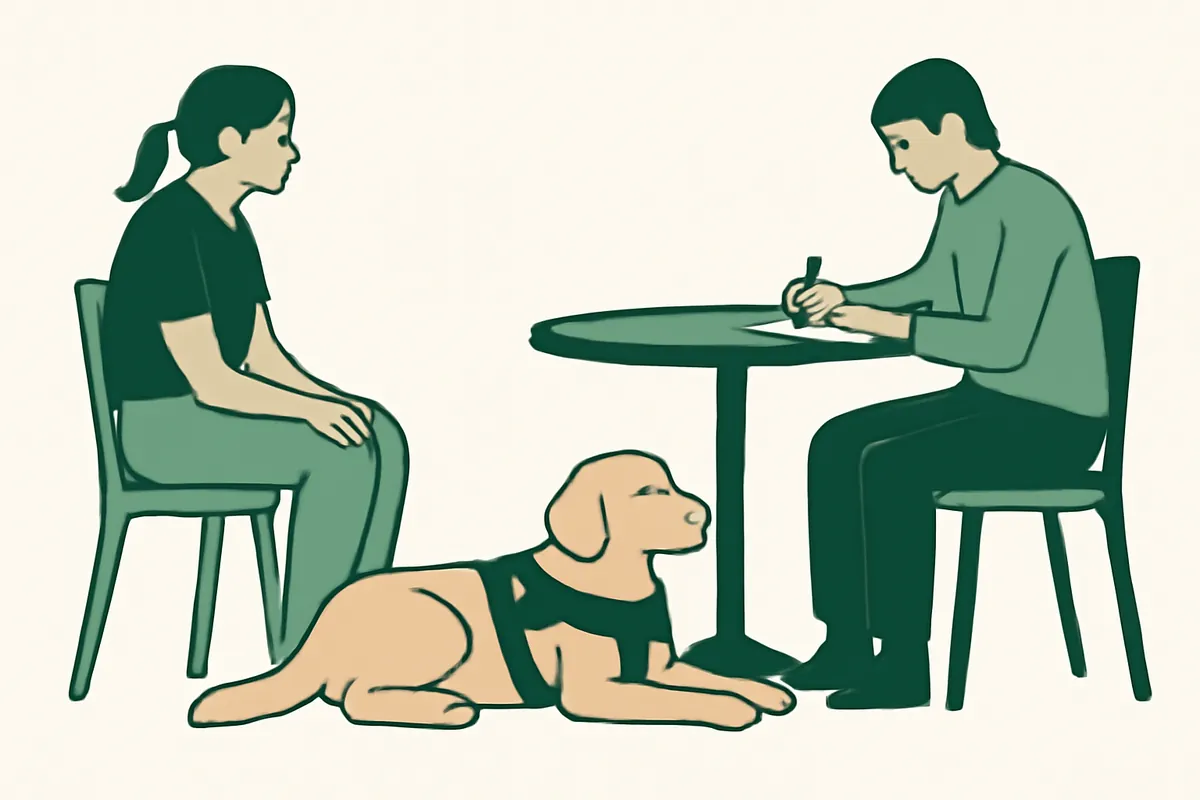
Assistance dog organizations and testing bodies publish standards for how a working dog should behave in public: no soliciting attention or food, settling quietly under a table, walking on a loose lead through crowds, ignoring other dogs, coping with elevators and getting in and out of vehicles. You need to know these standards and how dogs are assessed against them.
Handler training and matching
Matching the right dog to the right person, then teaching that person to handle, reward and maintain the dog, is skilled work.
Welfare and career change
Working dogs need rest, play, veterinary care and a way out if the job stops suiting them. Knowing when to retire a dog, or to withdraw a candidate from training, is a professional responsibility.
Step 3: Get supervised experience
Experience with working dogs is what makes you a service dog trainer, and the best experience is supervised by people who already do the work well.
Common routes in:
- Volunteer as a puppy raiser for an assistance dog organization. Raisers take a puppy into their home and work on socialization and foundation behavior under the organization's guidance. It teaches you how these programs think about development and selection.
- Work or apprentice at an assistance dog organization. Many trainers start in kennel or support roles and move into training. Programs vary in how they train their staff, but supervised work on real candidates is hard to replace.
- Assist an experienced independent trainer who supports owner-trainers. This shows you the other side of the field: helping people train their own dogs, with all the variety and uncertainty that involves.
- Volunteer with a therapy dog program. Evaluating and supporting visiting teams is a good way to learn about temperament, handler skills and working in institutional settings.
Keep a log of the dogs you work with, the tasks and behaviors you train and the outcomes, including dogs who did not succeed and why.
Step 4: Understand the law where you work
Service dog trainers are asked legal questions constantly. Can this business refuse my dog? Does my dog need a vest? Is my dog in training allowed in shops? Do I need to register my dog?
You are not a lawyer and should not act like one, but you must know the basics of disability access law in the places you work well enough to give accurate general information and to know when to send a client to an official source. In brief, at the time of writing:
- In the US, the Americans with Disabilities Act defines a service animal as a dog individually trained to do work or perform tasks for a person with a disability. It does not require certification or registration, and online registries are not official.
- In the UK, access for assistance dog users rests mainly on the Equality Act 2010 and the duty to make reasonable adjustments for disabled people.
- In Canada, access is protected through human rights and accessibility laws, and some provinces, such as British Columbia and Alberta, have their own service dog legislation.
- In Australia, the Disability Discrimination Act 1992 defines assistance animals, and some states have their own schemes.
These summaries are simplified. Rules change and differ between states, provinces and territories, so check with the relevant authority before advising anyone. The safest habit is to share general information, point clients to the official guidance for their country, and suggest a lawyer or an advocacy organization for a specific dispute.
Step 5: Choose a service dog trainer certification
There is no single official service dog trainer license in the US, the UK, Canada or Australia. That surprises many people. It means the credentials on offer vary a lot, and you need to look at what each one actually proves.
Broadly, you will find:
- Training within an accredited assistance dog organization. Organizations can be accredited by umbrella bodies such as Assistance Dogs International. The accreditation applies to the organization and its practices, not to you as an individual, but training inside such a program is highly regarded experience.
- Academy or school courses that teach assistance dog training, often with practical assessment. Quality and recognition vary, so look at who teaches, what is assessed and whether graduates are working in the field.
- General trainer credentials with an experience requirement, which show you are a competent trainer but do not focus on assistance work.
- Online knowledge assessments, which test what you know about selection, task training, public access standards and the law through written questions. They cost less and are faster, but they do not observe you training a dog.
Many trainers combine them: a general training credential, supervised experience in a program, and a specialist knowledge credential that shows they understand the standards and the law.
Whatever you choose, be careful how you describe it. A certificate for you as a trainer is not a certificate for any dog you train, and it does not give any dog public access rights. Say exactly what you hold and who issued it.
Where you fit: program-trained and owner-trained teams
Service dogs reach their handlers by two broad routes, and trainers work in both.
Program-trained dogs are bred or selected, raised and trained by an organization, then matched with a handler. Trainers in these programs work as part of a team with standardized methods, and much of the work is with dogs before they meet their handler.
Owner-trained dogs are trained by the handler, often with help from an independent trainer. In the US, the ADA does not require a service dog to be professionally trained, so owner training is legally recognized. In other countries the position differs, which is one more reason to know the law where you work.
Independent trainers who support owner-trainers face particular challenges:
- Candidate dogs are not chosen for the work. Many owners start with a pet they already have, so your first job is often an honest assessment of whether that dog is suitable. Saying "this dog is not suited to public access work" protects the owner, the dog and the public.
- The handler is also the student. You coach someone who may be managing a disability, sometimes one that affects energy, mobility or concentration, while training their dog.
Ethics and welfare
- Be honest about suitability. Continuing to train a dog who is clearly stressed by public work is unfair to the dog and risky for the handler.
- Plan for career changes. A dog who is withdrawn from training needs a good home or another role. Organizations call this a career change for a reason: it is not a failure.
- Do not sell status. Never sell vests, ID cards or certificates that imply a dog has legal status it does not have. Beyond the ethics, misrepresenting a pet as a service animal is an offense in a number of US states and damages trust in genuine teams.
- Stay within your scope. You train dogs and coach handlers. You do not diagnose disabilities, and you should not advise on a client's medical care.
Mistakes new service dog trainers make
- Starting task training before foundations are solid. A dog that cannot settle calmly in a quiet cafe is not ready for task work in a busy one.
- Rushing public exposure. Taking a young or unready dog into demanding places too soon can create the fear you were trying to prevent.
- Confusing obedience with suitability. A dog can know every cue and still be temperamentally unsuited to the stress of public work.
- Ignoring the handler. The team is only as reliable as the handler's skills. Build in time to train the person.
For what this work pays, with official figures for animal trainers and assistance dog trainers, read how much service dog trainers make.
Where to start today
If you are at the beginning, a sensible first step is to make sure your general training skills are strong, then contact assistance dog organizations near you about volunteering as a puppy raiser or in support roles. Read the public access standards that organizations in your country publish, and learn the basics of access law where you work.
When you want to see where your knowledge stands, try our free sample service dog trainer questions. They are written in the same format as the Therapy and Service Dog Trainer assessment, which covers candidate selection, task training, public access standards, handler training, therapy visits and the legal differences between service, therapy and emotional support work.
Frequently asked questions
Is there an official service dog trainer certification?
Not in the US, the UK, Canada or Australia at the time of writing. Trainers show their competence through experience in assistance dog organizations, school or academy courses, general training credentials and specialist knowledge assessments. Check exactly what any credential assesses before relying on it.
Does a trainer certificate make the dogs I train service dogs?
No. A trainer's credential is about the trainer. A dog's status as a service or assistance dog comes from disability law in the place where the team lives and works, and from the dog's training to help a person with a disability.
Do I need to be a dog trainer before training service dogs?
In practice, yes. Task training and public access work build on general training skills such as shaping, generalization and reading stress signals. Most assistance dog trainers worked as general trainers, or in supervised support roles, before specializing.
Written by the PetCred Editorial Team and checked against the published curriculum for this program. Laws and requirements change and differ by place: check local rules before relying on anything legal or regulatory here.
Free course
Service and Therapy Dog Training Fundamentals: A Free 5-Lesson Course
Five short lessons, a quick check after each, no sign-up. Start now →
More service dog training guides
Therapy Dog Programs: How Trainers Prepare Dogs and Handlers
How therapy dog programs work, the temperament and skills dogs need, how to coach handlers and what a good therapy dog trainer course or class should cover.
23 September 2026
Service Dog Laws for Trainers: US, UK, Canada and Australia
Service dog laws in the US, UK, Canada and Australia explained for trainers: who qualifies, what businesses may ask, dogs in training and what never to claim.
20 September 2026
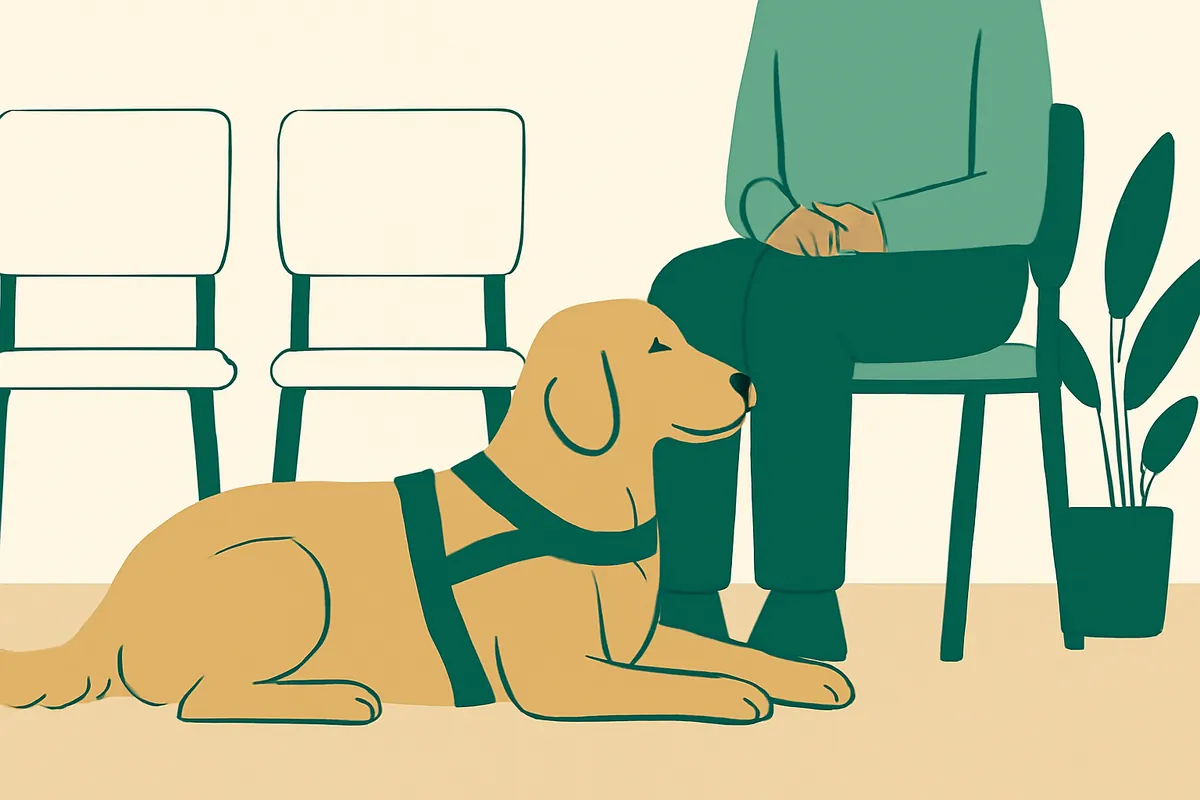
Public Access Training: Standards and Assessment
Service dog public access training for trainers: the behaviors standards expect, how to build and proof them step by step, and how to judge team readiness.
9 September 2026
Selecting a Puppy or Adult Dog for Assistance Work
What service dog temperament means in practice, how to assess puppies and adult dogs fairly, which health checks to ask for and when a dog is not suited.
28 August 2026