Positive Reinforcement Dog Training, Explained for New Trainers
The learning science every dog trainer needs: reinforcement and punishment, markers, timing, reinforcement schedules and why reward-based training is the modern standard.
PetCred Editorial Team · Updated 24 September 2026 · 5 min read
Every modern dog training method rests on a small set of ideas from learning science. Trainers who understand them can solve problems they have never seen before. Trainers who only know recipes get stuck the first time a dog does not follow the recipe.
This article explains those ideas in plain terms: how dogs learn, what reinforcement and punishment actually mean, why timing matters so much, and why reward-based training has become the professional standard.
Two kinds of learning
Classical conditioning is learning by association. When one thing reliably predicts another, the dog starts to react to the predictor. The sound of the treat tin predicts food, so the dog comes running. The car ride predicts the vet, so some dogs start trembling when the car door opens.
Classical conditioning matters to trainers for two reasons. It explains a lot of fear, and it gives you the tool to change it: pairing something the dog worries about, at a distance it can cope with, with something it loves.
Operant conditioning is learning from consequences. A behavior followed by something good becomes more likely. A behavior followed by something unpleasant, or by the loss of something good, becomes less likely.
In real life the two run together. While you teach a sit with food (operant), the dog is also learning that you and training sessions predict good things (classical). That second lesson is often the more important one.
Reinforcement and punishment, properly defined
The everyday meanings of these words cause a lot of confusion. In learning science:
- Reinforcement is anything that makes a behavior more likely in the future.
- Punishment is anything that makes a behavior less likely in the future.
- Positive means something is added.
- Negative means something is taken away.
That gives four combinations:
| Behavior becomes more likely | Behavior becomes less likely | |
|---|---|---|
| Something is added | Positive reinforcement: the dog sits, gets a treat | Positive punishment: the dog jumps, gets a knee in the chest |
| Something is removed | Negative reinforcement: pressure on the lead stops when the dog moves forward | Negative punishment: the dog jumps, the owner turns away and attention stops |
"Positive" does not mean nice, and "negative" does not mean bad. Negative punishment, removing attention or a reward, is part of most reward-based training plans.
What counts as reinforcing is decided by the dog, not by us. A pat on the head is a reward for some dogs and something to tolerate for others. A good trainer watches whether the behavior actually becomes more frequent.
Markers and timing
Dogs connect a consequence with whatever they were doing at the moment it arrived. If the treat comes two seconds after the sit, the dog may be learning to stand up, look at your hand or sniff the floor.
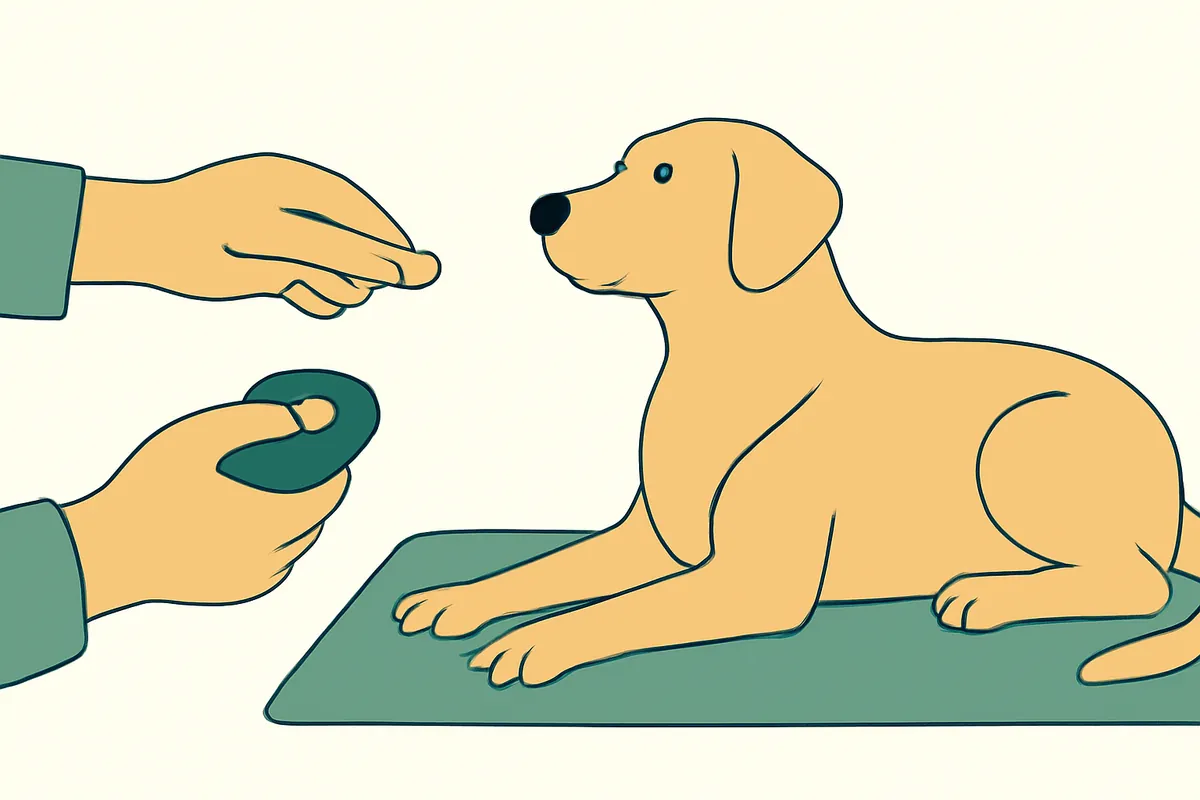
A marker solves this. A clicker or a short word like "yes" is paired with food until it predicts food reliably. Then it can pinpoint the exact moment the dog did the right thing, and the food can follow a moment later.
Good marker habits:
- Mark first, then move your hand to get the reward. Moving first teaches the dog to watch your hand.
- Mark the behavior itself, not the moment after.
- One marker, one reward. The marker is a promise.
Most "this dog is stubborn" problems turn out to be timing problems.
Getting the behavior in the first place
You cannot reward a behavior the dog is not doing. There are three main ways to get it:
- Luring: guiding the dog with food into position. Fast, but fade the lure early or it becomes part of the cue.
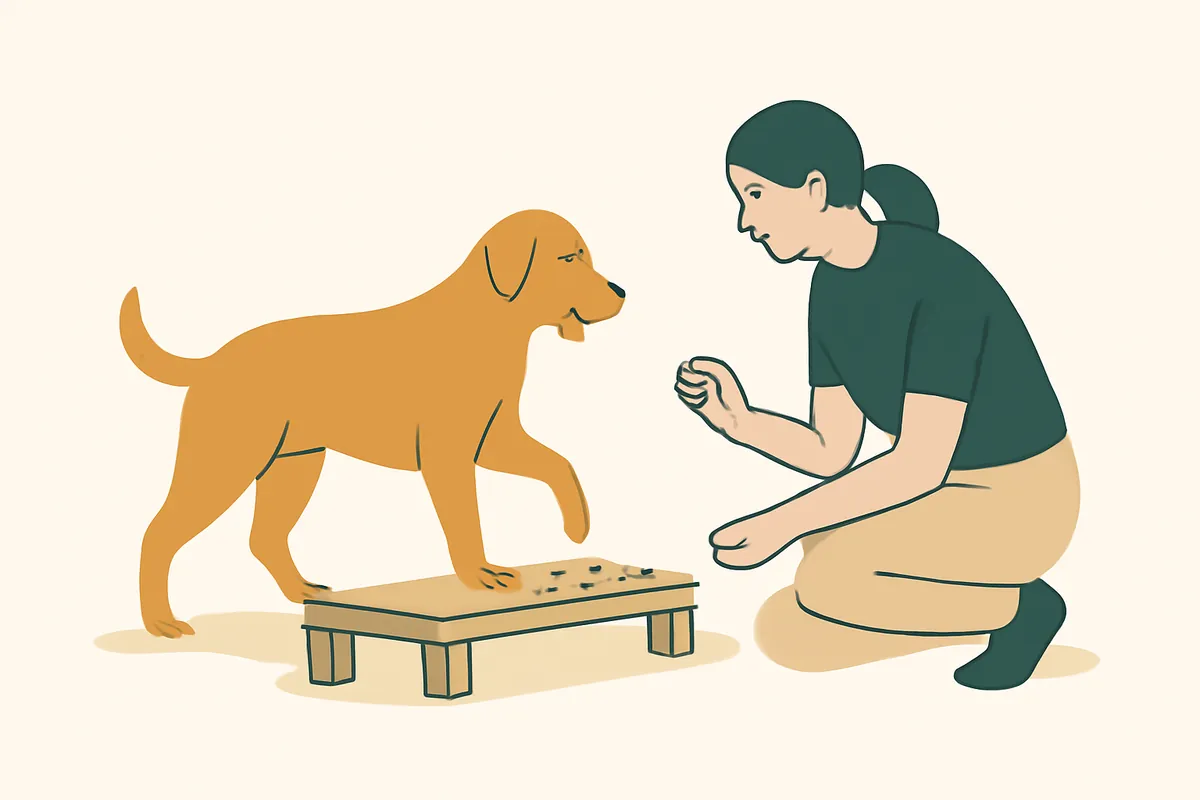
- Capturing: waiting for the dog to offer the behavior naturally, then marking it. Great for relaxed behaviors such as lying down on a mat.
- Shaping: rewarding small steps towards the final behavior. It takes skill but produces confident dogs that offer behaviors readily.
Once the behavior happens reliably, add the cue word or signal just before the dog does it. Naming a behavior before it is reliable attaches the word to confusion.
Reinforcement schedules
Early on, reward every correct response: this is a continuous schedule, and it builds a behavior fastest.
Once a behavior is fluent in many places, you can move to rewarding some responses and not others, often called a variable or intermittent schedule. Behaviors maintained this way tend to be more resistant to fading when rewards are not available.
Two cautions:
- Thin rewards only when the behavior is fluent. Doing it too early is a common reason behaviors fall apart.
- When the environment gets harder, reward more, not less. A recall in the park competes with squirrels.
Why reward-based training is the standard
Reward-based training is not only kinder. It is what the evidence supports.
Veterinary behavior organizations, including the American Veterinary Society of Animal Behavior, recommend reward-based methods and advise against training that relies on pain, intimidation or startle. Research reviews have linked aversive methods with increased stress, fear and aggression, and have found that reward-based methods are at least as effective.
In practice, the argument that persuades most owners is simpler. Punishment can tell a dog what not to do, but it does not tell it what to do instead, and it can damage the relationship with the person delivering it. Rewarding the behavior you want gives the dog a clear alternative and makes training something it looks forward to.
A useful principle many trainers follow is to use the least intrusive, most effective approach first: manage the environment, check health, reward alternatives, and change emotional responses before considering anything more intrusive.
Common misunderstandings
- "The dog will only work for food forever." Food is a tool for teaching. As behaviors become fluent, rewards become intermittent and shift to life rewards such as going through a door, chasing a ball or greeting a friend.
- "Reward-based means permissive." It does not. Reward-based trainers set clear rules and use management, such as leads, gates and crates, so the dog cannot rehearse the wrong behavior.
- "Some breeds need a firm hand." Every dog learns by the same principles. What changes between dogs is what they find rewarding and what they find stressful.
Put it into practice
Learning theory only sticks when you use it. Pick one behavior, such as settling on a mat, and teach it from scratch: capture it, mark it, add a cue, then build duration and distraction step by step. Film yourself and check your timing.
When you want to check your understanding, the free sample dog trainer questions include a written question on building a reliable cue, with a model answer. Learning theory is also the first topic in the Professional Dog Trainer curriculum, and the foundation of our guide on how to become a certified dog trainer.
Written by the PetCred Editorial Team and checked against the published curriculum for this program. Laws and requirements change and differ by place: check local rules before relying on anything legal or regulatory here.
More dog training guides
How to Become a Certified Dog Trainer: A Practical Guide
What a dog trainer actually needs to know, how to get hands-on experience, which certification to choose and how to find your first clients, step by step.
24 September 2026

Do You Need a Certification to Be a Dog Trainer? Rules in the US, UK, Canada and Australia
Dog training is largely unregulated, but that is not the whole story. What the law requires in four countries, what clients expect and when certification matters.
24 September 2026
Dog Trainer Certifications Compared: Exams, Courses and What Each One Proves
Exam-based credentials, academy programs, association membership and online assessments: how the main kinds of dog trainer certification differ and how to choose.
24 September 2026
How to Get Your First Dog Training Clients
Practical ways a new dog trainer finds clients: local partnerships, a simple website, reviews, group classes and packages that keep owners coming back.
24 September 2026