How to Become a Certified Dog Trainer: A Practical Guide
What a dog trainer actually needs to know, how to get hands-on experience, which certification to choose and how to find your first clients, step by step.
PetCred Editorial Team · Updated 24 September 2026 · 7 min read
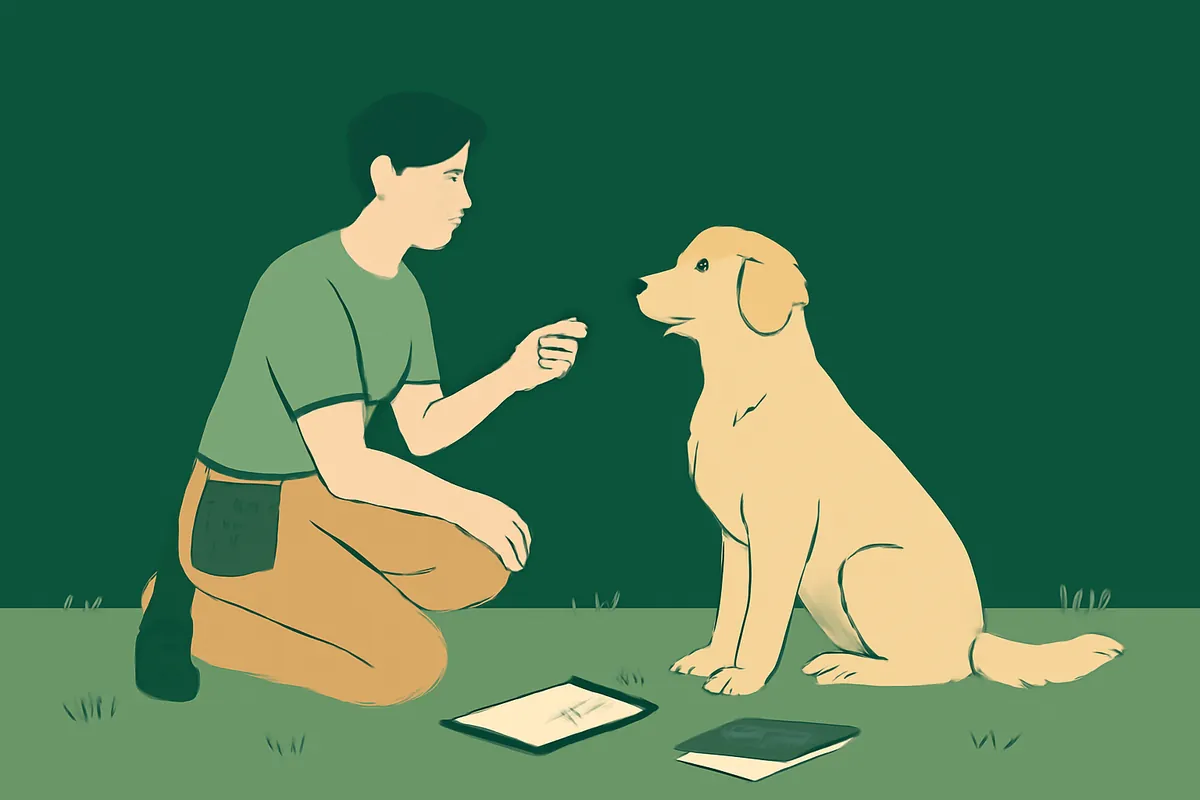
Dog training is one of the few animal careers you can enter without a degree, a licence or a large investment. That is good news, and it is also the problem: because anyone can call themselves a trainer, owners have no easy way to tell who knows what they are doing. Becoming a certified dog trainer is how you answer that question for them.
This guide walks through the route most working trainers take, in the order that makes sense: what the job really involves, the knowledge you need, how to get hands-on experience, how to choose a certification and how to start working.
What a dog trainer actually does
The job description sounds simple: teach dogs to behave. In practice, most of a trainer's working day is spent teaching people.
A typical week might include:
- Private sessions in clients' homes, working on loose-lead walking, recall, jumping up or settling when visitors arrive.
- Group classes for puppies or adolescent dogs, where you manage six or eight dogs and their owners in one room.
- Writing short training plans and homework, then following up to see whether owners are actually practising.
- Spotting the cases that are not training problems at all: pain, fear or aggression that needs a vet or a behavior specialist.
- The unglamorous parts: bookings, invoices, insurance, marketing and travelling between clients.
If you enjoy dogs but find coaching adults frustrating, it is worth knowing that before you invest in qualifications. The dogs are rarely the hard part.
Step 1: Learn how dogs learn
Every modern training method rests on the same learning science. You need to understand it well enough to explain it to an owner in plain words and to use it without thinking.
The core ideas are:
- Operant conditioning. Behavior that is followed by something the dog wants becomes more likely. Behavior followed by something the dog wants to avoid becomes less likely.
- Classical conditioning. Dogs learn associations. A lead coming off the hook predicts a walk; a certain van predicts the vet. Much fear is learned this way, and much can be unlearned the same way.
- Timing and markers. A marker word or a clicker tells the dog exactly which moment earned the reward. Poor timing is the most common reason training "does not work".
- Reinforcement schedules. How often a behavior is rewarded changes how quickly it is learned and how durable it becomes.
We cover these in detail in positive reinforcement dog training, explained for new trainers. If you only study one topic properly, make it this one.
Step 2: Learn to read dogs
A trainer who cannot read body language will push dogs past what they can cope with, and sooner or later someone gets bitten. You need to recognize, quickly and reliably:
- The early signs of stress: lip licking out of context, yawning, turning the head away, showing the whites of the eyes, a lowered body or tail.
- The difference between play, over-arousal and conflict when dogs interact.
- When a dog has stopped being able to learn: it will not take food it would normally take, or cannot respond to cues it knows well.
Watch dogs everywhere: parks, shelters, videos with the sound off. Describe what you see in words before you decide what it means. It is a skill that improves with deliberate practice more than with reading.
Step 3: Get hands-on experience
Knowledge gets you started; experience makes you a trainer. Some certifications will not let you sit their exam until you can document a set number of hours training dogs, and even when they do not, clients can tell the difference.
Good ways to build experience:
- Assist an established trainer. Helping with group classes is the fastest way to learn how to run a room, and many trainers welcome a reliable volunteer.
- Volunteer at a rescue or shelter. You will meet a far wider range of dogs than friends and family can offer, including dogs that are fearful or under-socialized.
- Train your own and friends' dogs to a high standard. Teach real-world behaviors, not just tricks, and film sessions so you can review your timing.
- Keep a log. Record the date, the dog, what you worked on and what happened. It is useful evidence for certification applications and for your own progress.
Aim for variety: puppies and older dogs, confident and nervous dogs, small and large breeds. The dog you have never met before is the one that will teach you most.
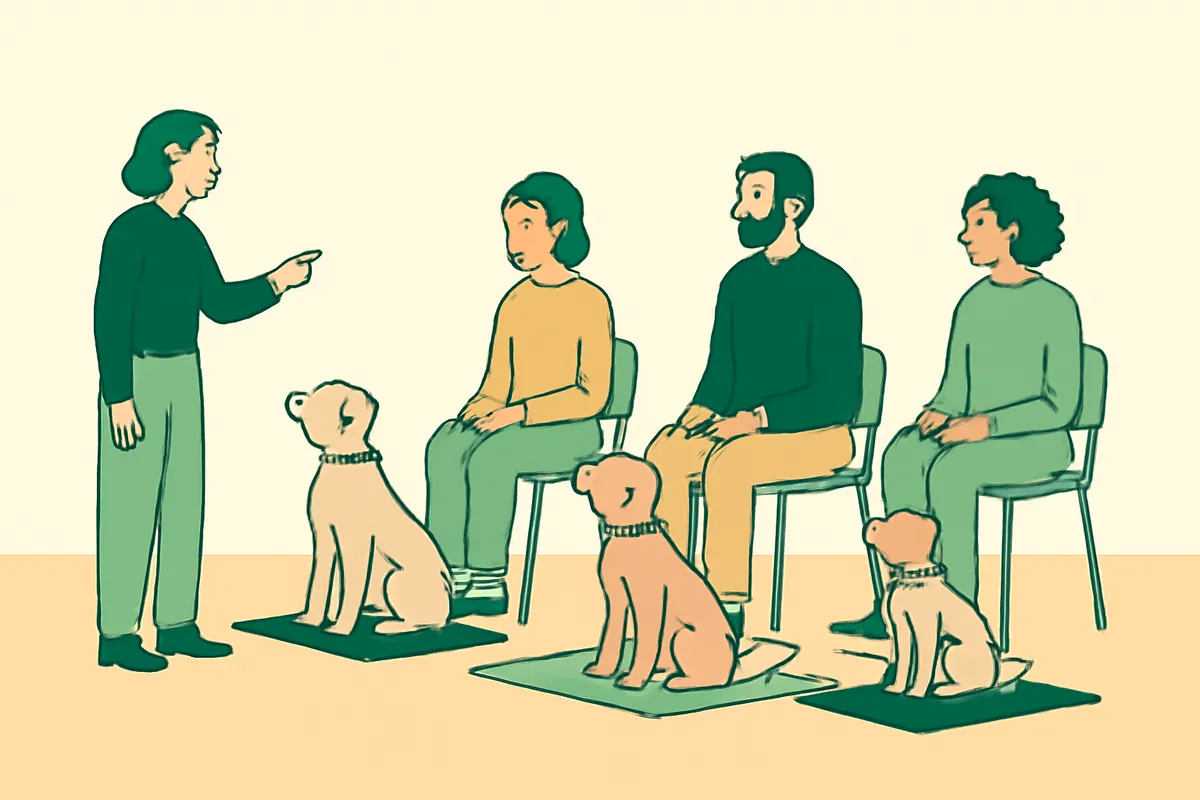
Step 4: Learn to teach people
Owners forget instructions, practise inconsistently and sometimes disagree with each other about the rules at home. Good trainers plan for this.
Practical habits that help:
- Break every behavior into small steps and give owners one or two steps to practise, not ten.
- Demonstrate, then let the owner try while you coach, then write it down.
- Set homework that fits into daily life: five recalls on every walk, not "practise recall for 20 minutes a day".
- Ask what gets in the way. Most "non-compliance" is a plan that did not fit the household.
Step 5: Choose a certification
There is no single official dog trainer qualification, which is why choosing one confuses people. Broadly, you will find four kinds:
- Independent, exam-based credentials, usually with an experience requirement and continuing education to stay certified.
- Academy or school programs, which combine a course with practical assessment and are usually the longest and most expensive route.
- Association membership, where some bodies assess members before admitting them and others simply ask you to agree to a code of practice.
- Online knowledge assessments, which test what you know through written questions and cost far less, but do not observe you handling a dog.
We compare them in detail, including what each actually proves, in dog trainer certifications compared. Many trainers hold more than one: for example, an online knowledge credential early on, then an exam-based credential once they have logged enough hours.
Before you pay for anything, it is worth knowing whether you need a certification at all where you live. In most places you do not, legally, but there are exceptions around boarding, equipment and business licensing. See do you need a certification to be a dog trainer?
Step 6: Set yourself up to work
Once you have the knowledge, some experience and a credential, the practical side comes next:
- Insurance. Public liability insurance is rarely a legal requirement, but many venues, rescues and clients will not work with an uninsured trainer.
- A clear offer. Decide what you do and do not take on. New trainers do well with puppy classes, basic manners and loose-lead walking; aggression and severe fear are specialist work.
- Prices and policies. Publish your prices, cancellation terms and what a package includes. Owners trust trainers who are clear.
- Referral partners. Vets, groomers, dog walkers and rescues all meet owners with training problems every week.
Our guide to getting your first dog training clients covers this step in detail.
How long it takes and what it costs
The honest answer is that it depends on the route and on how much practical experience you already have.
| Route | Typical time | Typical cost | What it gives you |
|---|---|---|---|
| Self-study plus online knowledge assessment | A few months | Low | Proof that you know the theory; you still need hands-on practice |
| Experience first, then an exam-based credential | One to two years | Moderate | A widely recognized credential backed by documented hours |
| Academy or school program | Six months to a year or more | Highest | Structured teaching, mentoring and a practical assessment |
Whichever route you choose, budget for ongoing learning. Good trainers keep taking courses, attending seminars and reading, and most credentials require continuing education to stay current.
Specializing later
After a year or two of general training, many trainers specialize. Common directions are:
- Behavior work: fear, anxiety, reactivity and aggression. This requires deeper knowledge and close work with vets. See the Canine Behaviorist certification.
- Service and therapy dogs: selecting, raising and training dogs for assistance work. See the Therapy and Service Dog Trainer certification.
- Sports: agility, scent work, obedience competition.
- Puppies and prevention: socialization classes and pre-adoption advice, often in partnership with vets and breeders.
Mistakes new trainers make
A few patterns come up again and again:
- Taking on cases beyond their skill. Saying "this needs a specialist" is professional, not a failure.
- Promising results. Behavior depends on the dog, the owner and the environment. Promise a clear plan and honest support instead.
- Teaching dogs, forgetting owners. A dog that behaves perfectly for you and not for its family has not been trained.
- Using methods they cannot defend. If you would not be comfortable explaining a technique to a vet, do not use it.
Where to start today
If you are at the very beginning, a sensible first month looks like this: study learning theory and body language, ask a local trainer whether you can help with classes, start a training log and look at the certifications trainers in your area hold.
When you are ready to see where your knowledge stands, you can try our free sample dog trainer questions. They are written in the same format as the Professional Dog Trainer assessment, with model answers so you can check your thinking.
Frequently asked questions
How long does it take to become a certified dog trainer?
Most people need somewhere between six months and two years. The knowledge can be learned in a few months of study; what takes longer is supervised, hands-on experience with many different dogs, which some certifications require in hours before you can sit their exam.
Can I become a dog trainer without a certification?
In most places, yes: dog training is generally not a licensed profession in the US, UK, Canada or Australia. A certification is how you show clients and employers what you know, not a legal requirement. Related activities such as boarding or day care can need a licence, so check your local rules.
Can I learn dog training online?
You can learn the theory online: learning science, body language, training plans and client coaching. You cannot learn handling and timing only from a screen, so pair online study with practice on real dogs, ideally under an experienced trainer.
Written by the PetCred Editorial Team and checked against the published curriculum for this program. Laws and requirements change and differ by place: check local rules before relying on anything legal or regulatory here.
More dog training guides

Do You Need a Certification to Be a Dog Trainer? Rules in the US, UK, Canada and Australia
Dog training is largely unregulated, but that is not the whole story. What the law requires in four countries, what clients expect and when certification matters.
24 September 2026

Dog Trainer Certifications Compared: Exams, Courses and What Each One Proves
Exam-based credentials, academy programs, association membership and online assessments: how the main kinds of dog trainer certification differ and how to choose.
24 September 2026
Positive Reinforcement Dog Training, Explained for New Trainers
The learning science every dog trainer needs: reinforcement and punishment, markers, timing, reinforcement schedules and why reward-based training is the modern standard.
24 September 2026
How to Get Your First Dog Training Clients
Practical ways a new dog trainer finds clients: local partnerships, a simple website, reviews, group classes and packages that keep owners coming back.
24 September 2026