How to Run a Puppy Class
A puppy training class plan for trainers: who the class is for, how to set up the room, a six-week outline, session structure and handling shy puppies.
PetCred Editorial Team · Updated 6 August 2026 · 7 min read
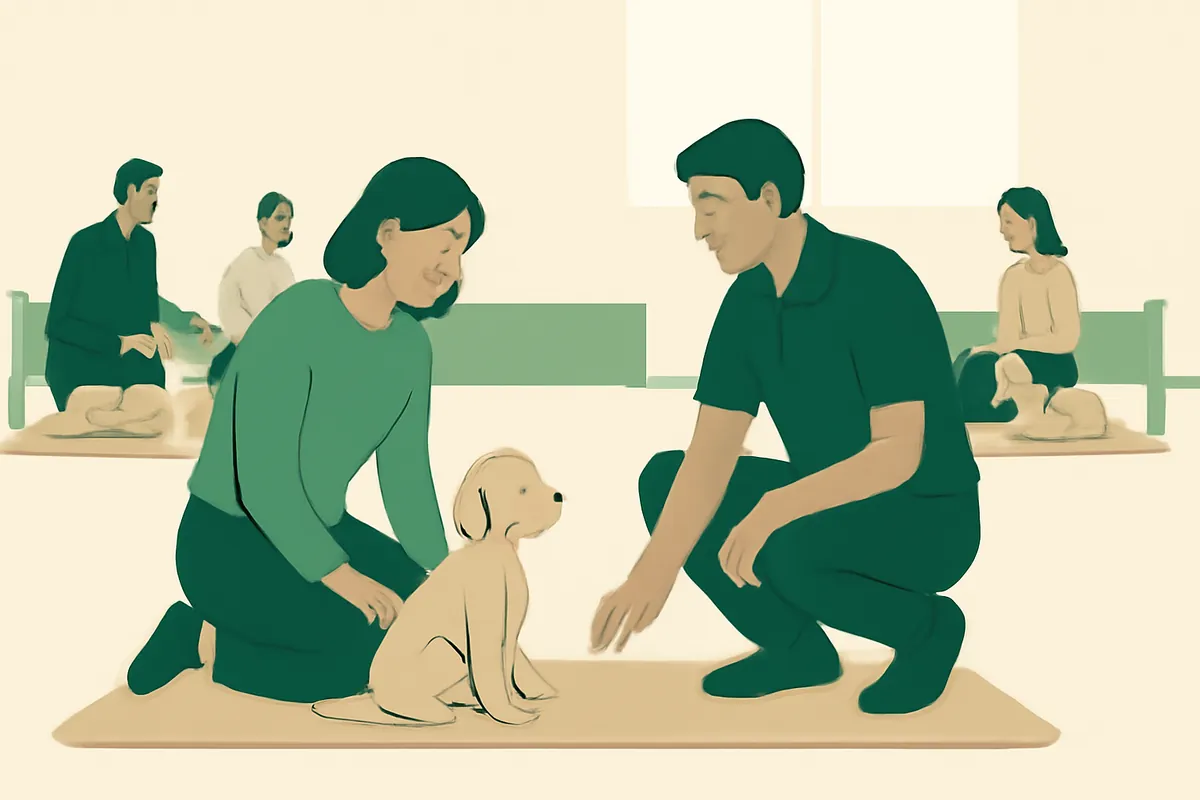
A good puppy class does more than teach sit and down. It gives young dogs calm, positive experiences of new people, places and other puppies at the age when those experiences shape them most, and it gives owners the habits that prevent the problems trainers spend years fixing later. A clear puppy training class plan is what turns a noisy room of puppies into that kind of class.
This guide is for trainers who are planning their first puppy course, or who want to tidy up one they already run. It covers who the class is for, how to set up the room, a week-by-week plan, how to structure each session and how to handle the puppies and owners who need something different.
Who a puppy class is for
Puppies go through a sensitive period for socialization early in life, generally described as lasting until somewhere around three to four months of age. What a puppy meets calmly during this window it tends to accept as normal later; what it never meets, or meets badly, it is more likely to fear. That is why puppy classes aim to start young.
Practical points to settle before you advertise:
- Age range. Decide the youngest and oldest puppies you will take, and keep the range narrow enough that the puppies are at similar stages. Many trainers run a separate class for adolescent dogs rather than stretching one class to fit both.
- Vaccinations. Ask owners to follow their own vet's advice about when their puppy can safely join a class, and decide what proof of vaccination you ask for. Talk to local vets about what they recommend; they will often refer clients to a class that works this way.
- Class size. Keep it small enough that you can watch every puppy and help every owner in each session. If you have an assistant, you can take a few more.
- Who attends. Encourage the whole household to come, including older children who can follow instructions. Consistency at home matters more than anything you do in the hall.
Setting up the room
The environment does half your work. A room that feels safe keeps puppies able to learn; a crowded, slippery or echoing one makes even confident puppies struggle.
- Non-slip flooring, or mats and rugs for every puppy.
- A station per puppy: a mat or bed, a water bowl and space between stations. Low barriers or pens help shy puppies watch from a safe place.
- Hygiene. Clean the floor before and after class with a product safe for animals, keep cleaning supplies and waste bags to hand, and ask owners to toilet their puppy before coming in.
- Novel things to explore: a low wobble board, a tunnel, different surfaces, a cardboard box, an umbrella, recorded sounds played quietly. Everything should be optional to approach.
- Chews and stuffed food toys so puppies can settle while owners listen.
A six-week puppy training class plan
Six weekly sessions is a common structure because it fits a puppy's development and an owner's attention span, but the shape matters more than the number. Build each week on the last, and repeat the basics every week.
| Week | Main topics | Homework focus |
|---|---|---|
| 1 | Name response, hand-feeding for attention, settling on a mat, how puppies learn | Short daily sessions, toilet training routine |
| 2 | Sit and down by luring, gentle handling of ears, paws and mouth, mouthing and bite inhibition | Handling for treats every day, redirecting mouthing to toys |
| 3 | Recall games between family members, leash introduction, new surfaces and sounds | Recall in the house and yard, short leash walks |
| 4 | Loose-leash walking basics, leaving items on cue, greeting people without jumping | Practice walks with lots of rewards, polite greetings |
| 5 | Stays of short duration, settling in a busy environment, alone-time practice | Short, calm absences, settling during family activity |
| 6 | Review in a new setup, recall with distractions, next steps and the adolescent stage | A plan for the next three months |
Alongside the exercises, cover the topics owners actually worry about: toilet training, chewing, mouthing, sleep, crate or pen use, and what to expect as their puppy becomes an adolescent. A short handout for each week helps, because owners remember little of what they hear in a busy room.
If you want a refresher on luring, capturing and marker timing before you teach them, see positive reinforcement dog training, explained for new trainers.
Planning each session
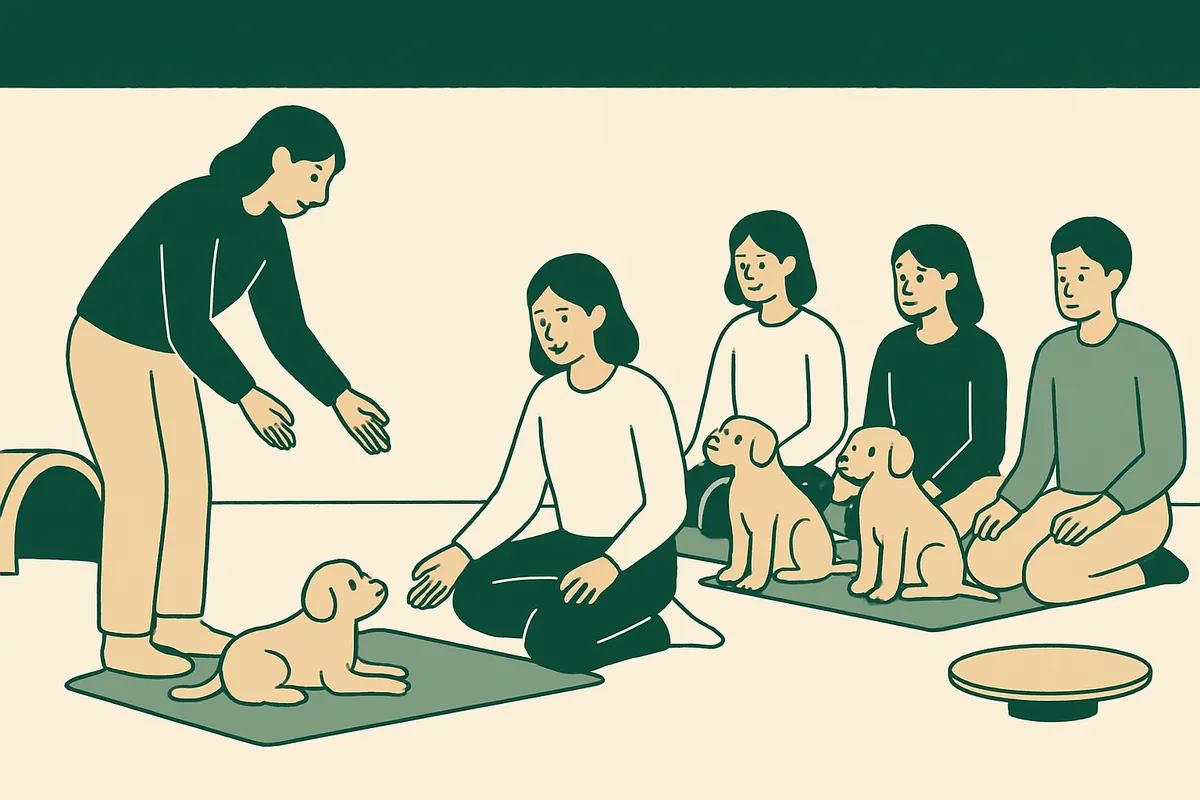
A predictable session structure makes classes easier to run and easier for puppies. One that works for many trainers:
- Arrival and settling. Owners go straight to their station. Puppies get a chew while everyone arrives, so the class starts calm.
- Review of last week. Ask each owner what went well and what was hard. This tells you who needs help and shows owners that practice at home is expected.
- One new exercise, demonstrated. Show it with a puppy or a demonstration dog, explain why it matters in one or two sentences, then let owners try while you move around the room.
- A socialization activity. New surfaces, sounds, handling by a new person, or a calm walk past another puppy. Keep it short and let each puppy go at its own pace.
- A settle break. Puppies tire quickly. A few minutes on the mat with a chew teaches a valuable skill and gives you time to answer questions.
- A second exercise or a game that builds on something already learned.
- Homework, clearly stated. One or two exercises, how often, and what success looks like.
Keep talking to a minimum. Owners came to do something with their puppy, and puppies cannot wait through a lecture.
Puppy play: planned, not a free-for-all
Off-leash play is the part many owners look forward to and the part that can go most wrong. A free-for-all can teach a confident puppy to bully and a shy one that other dogs are frightening.
If you include play:
- Match puppies by size, age and play style, two or three at a time.
- Watch for balanced play: role swaps, pauses, loose bodies. Interrupt calmly if one puppy is always on top or another keeps trying to escape.
- Keep sessions short and end them before arousal climbs.
- Let any puppy opt out and watch from its station. Watching calmly is socialization too.
- Teach owners to call their puppy out of play, reward it and let it go back. It is the start of a reliable recall.
Some trainers leave play out entirely and focus on calm exposure and training. Both approaches can work; what matters is that every puppy has a good experience.
Shy, overexcited and struggling puppies
Every class has puppies who need something different.
- The shy puppy. Give it a quieter station with a barrier, let it watch, and never let people or puppies approach it uninvited. Reward any brave choice it makes on its own.
- The overexcited puppy. More distance from the others, more settle practice, a stuffed food toy, and shorter bursts of activity with breaks.
- The mouthy puppy. Normal behavior at this age. Teach owners to redirect onto toys and end play calmly if teeth land on skin, rather than punishing.
- The puppy that is not coping. Frequent stress signals, hiding, refusing food it usually loves. Take the pressure off, and suggest a private session if class is too much for now.
If a puppy shows marked fear, unusual aggression or seems unwell, tell the owner kindly and suggest they talk to their vet. Sudden changes in behavior can have a medical cause, and some cases belong with a behavior professional rather than in a group class.
Coaching the owners
Your real students are the people holding the leash. Owners who understand why an exercise matters are far more likely to practice it.
- Explain the reason behind each exercise in one sentence.
- Demonstrate, let the owner try, then give one specific piece of feedback.
- Set homework that fits into daily life: three recalls before each meal, not "practice recall for twenty minutes".
- Praise effort in front of the group, and correct privately.
- Make it easy to ask for help between sessions, within limits you set.
Common mistakes when running puppy classes
- Too many puppies for the space or the staff. Nobody learns in chaos.
- Too much talking. Put the theory in the handout.
- Unmanaged play. It can undo weeks of good work in minutes.
- One pace for everyone. Offer easier and harder versions of each exercise.
- Ignoring stress. A puppy that cannot eat is not learning. Change the setup, not the puppy.
- No next step. Tell owners what comes after the course, whether that is an adolescent class or private sessions for specific problems.
Next steps
Puppy classes are one of the best ways for a new trainer to meet owners, build a reputation with local vets and fill a schedule. Our guide to getting your first dog training clients explains how classes fit into a wider business, and how to become a certified dog trainer covers the full route into the profession.
Puppy development, socialization and group class planning are topics in the Professional Dog Trainer curriculum. To see the kind of scenario the assessment uses, try the free sample dog trainer questions, each with a model answer.
Frequently asked questions
What should a puppy class cover?
Attention and name response, settling on a mat, sit and down, recall games, early loose-leash walking and gentle handling, alongside calm exposure to new surfaces, sounds and people. Good classes also cover toilet training, mouthing and chewing, because those are what owners struggle with at home.
Should puppies play off leash in a puppy class?
Only if the play is planned: small groups matched by size and style, short sessions, close supervision and the option for any puppy to sit out. Unmanaged play can teach confident puppies to bully and shy ones to fear other dogs, so some trainers leave it out entirely.
Written by the PetCred Editorial Team and checked against the published curriculum for this program. Laws and requirements change and differ by place: check local rules before relying on anything legal or regulatory here.
Free course
Dog Training Fundamentals: A Free 5-Lesson Course
Five short lessons, a quick check after each, no sign-up. Start now →
More dog training guides
How to Become a Certified Dog Trainer: A Practical Guide
What a dog trainer actually needs to know, how to get hands-on experience, which certification to choose and how to find your first clients, step by step.
6 July 2026
How to Price Your Dog Training Services
How to set dog trainer prices without guessing: work out your costs and real hours, research your local market, price the value and choose service formats.
10 September 2026
Insurance and Contracts for Dog Trainers
Dog trainer insurance explained: liability, professional indemnity and animal care cover, what a training contract should include, and the limits of waivers.
29 August 2026
Loose-Leash Walking: A Trainer's Step-by-Step Plan
A loose leash walking training plan for trainers: why dogs pull, equipment, eight stages from indoors to busy streets, troubleshooting and coaching owners.
17 August 2026