Loose-Leash Walking: A Trainer's Step-by-Step Plan
A loose leash walking training plan for trainers: why dogs pull, equipment, eight stages from indoors to busy streets, troubleshooting and coaching owners.
PetCred Editorial Team · Updated 17 August 2026 · 7 min read
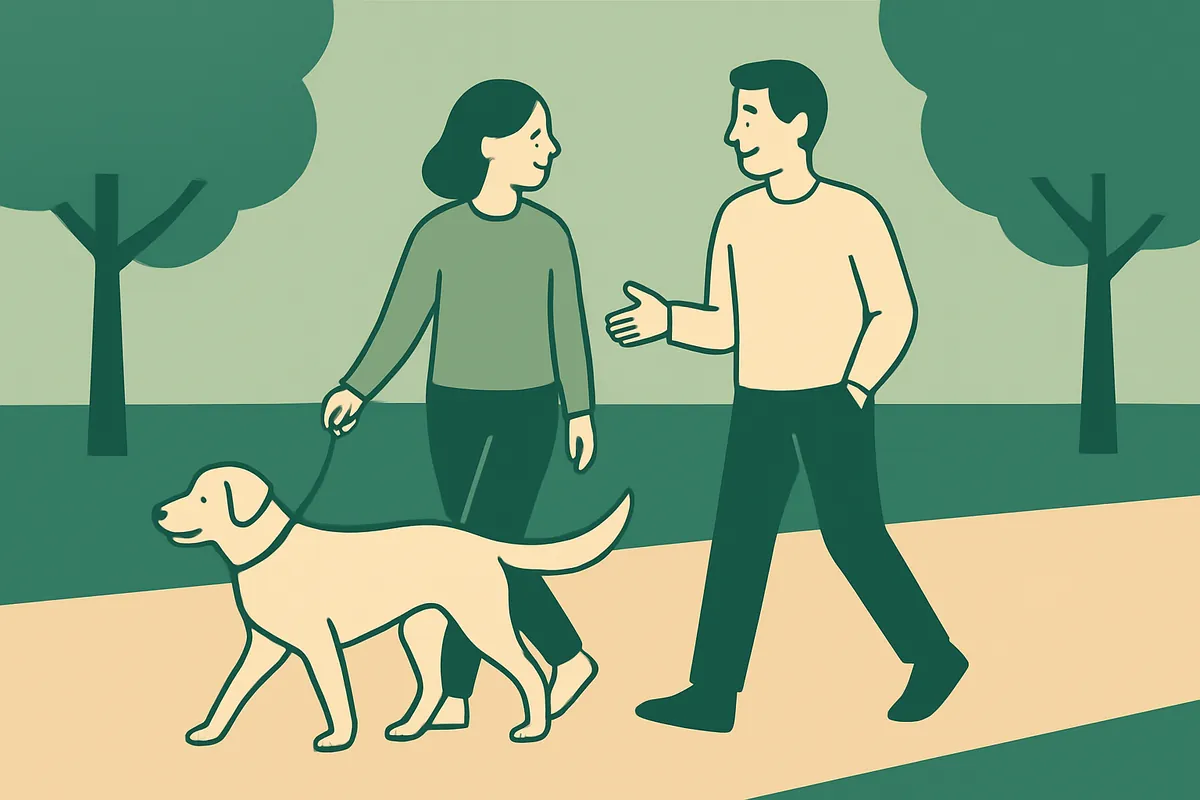
Pulling on the leash is one of the most common reasons owners call a trainer, and one of the most common reasons they give up on training. It is also one of the most teachable skills there is, as long as the plan is broken into small steps and the owner understands why the dog pulls in the first place. This article sets out a loose leash walking training plan you can use with clients, stage by stage.
It is written for trainers, so it also covers equipment choices, how to coach owners through the slow middle stages, and what to do when pulling turns out to be something else.
Why dogs pull
Dogs pull because it works. Every time a dog leans into the leash and the walk moves forward, pulling is reinforced: the dog gets closer to the smell, the other dog or the park. Most dogs also naturally walk faster than people, and the world outside is far more interesting than the person at the other end of the leash.
That tells you two things about the plan:
- Walking next to the owner has to pay better than pulling. At the start, that means frequent food rewards, delivered in the right place.
- Pulling has to stop working. If the dog sometimes gets where it wants by pulling, it will keep trying, because intermittent reinforcement makes behavior very persistent.
Explain this to owners in the first session. Once they see pulling as a learned strategy rather than stubbornness or dominance, they are much more willing to change their own habits.
Define what you are teaching
"Walk nicely" means different things to different owners. Agree on a clear, simple target before you start:
- The leash hangs in a loose curve, often described as a J shape.
- The dog can be slightly ahead, beside or behind, on either side you choose, as long as the leash stays loose.
- The dog is allowed to sniff and look around, on permission or at a pace the owner can follow.
This is different from a formal heel, where the dog stays in a precise position and watches the handler. A heel is useful for short stretches, but most pet owners want a relaxed walk, and a loose leash is a fairer and more achievable goal.
Equipment and setup
Good equipment makes training easier; it does not replace it.
- A well-fitted harness or a flat collar. Many trainers prefer a harness because pressure on the neck can be uncomfortable or harmful when a dog pulls hard. A harness with a front attachment point can reduce pulling while the dog is still learning.
- A standard fixed-length leash. Retractable leashes keep constant tension on the dog, which teaches it that a tight leash is normal.
- Small, soft, high-value treats in a pouch that is easy to reach, so the owner can reward quickly.
- Avoid equipment that works through pain or discomfort. It can suppress pulling in the moment but carries a risk of fear, stress and damage to the dog's relationship with the owner, and it goes against the reward-based approach that is now the professional standard. If you want to revisit the science behind that standard, see positive reinforcement dog training, explained for new trainers.
Management walks and training walks
A dog still needs exercise while it learns, and owners cannot train on every walk. A practical solution is to separate the two:
- Training walks are short and follow the plan exactly.
- Management walks use a setup that makes pulling less likely or less rewarding, such as a front-attach harness, a quiet route or a drive to an open space where the dog can run on a long line.
Some trainers also use a different piece of equipment or a different leash attachment for each kind of walk, so the dog learns that the training setup always means the same rules.
The loose leash walking training plan, stage by stage
Move to the next stage only when the dog succeeds at the current one most of the time. If it starts to struggle, go back a stage. Short sessions work best: a few minutes, several times a day, is better than one long session.
- Build value for the position, standing still. Indoors, with no distractions, reward the dog every time it is at the owner's side. Deliver the treat right beside the owner's leg, at the dog's nose height, so the dog learns where rewards appear.
- Add one step, then a few. The owner takes a step, and rewards the dog for staying close. Build to three, five and ten steps, still indoors, still rewarding often.
- Add turns and changes of pace. Turn away, slow down, speed up. Reward the dog for following. This keeps the dog paying attention to where the owner is going.
- Add a cue, once the behavior is reliable, such as "let's go" at the start of each stretch. Name the behavior only when the dog is already doing it, not before.
- Move to the backyard or a quiet driveway. Expect the dog to find this harder. Reward more often again, then gradually space the rewards out.
- Move to a quiet street, for short stretches. A few minutes of good walking, then a break with permission to sniff. Keep the first outdoor sessions very short.
- Increase the difficulty slowly. Busier streets, other dogs at a distance, familiar routes where the dog expects to pull. Raise one kind of difficulty at a time.
- Replace some food with life rewards. Permission to sniff a lamp post, greet a friend or move toward the park can reward a loose leash just as well as a treat, once the dog understands the game.
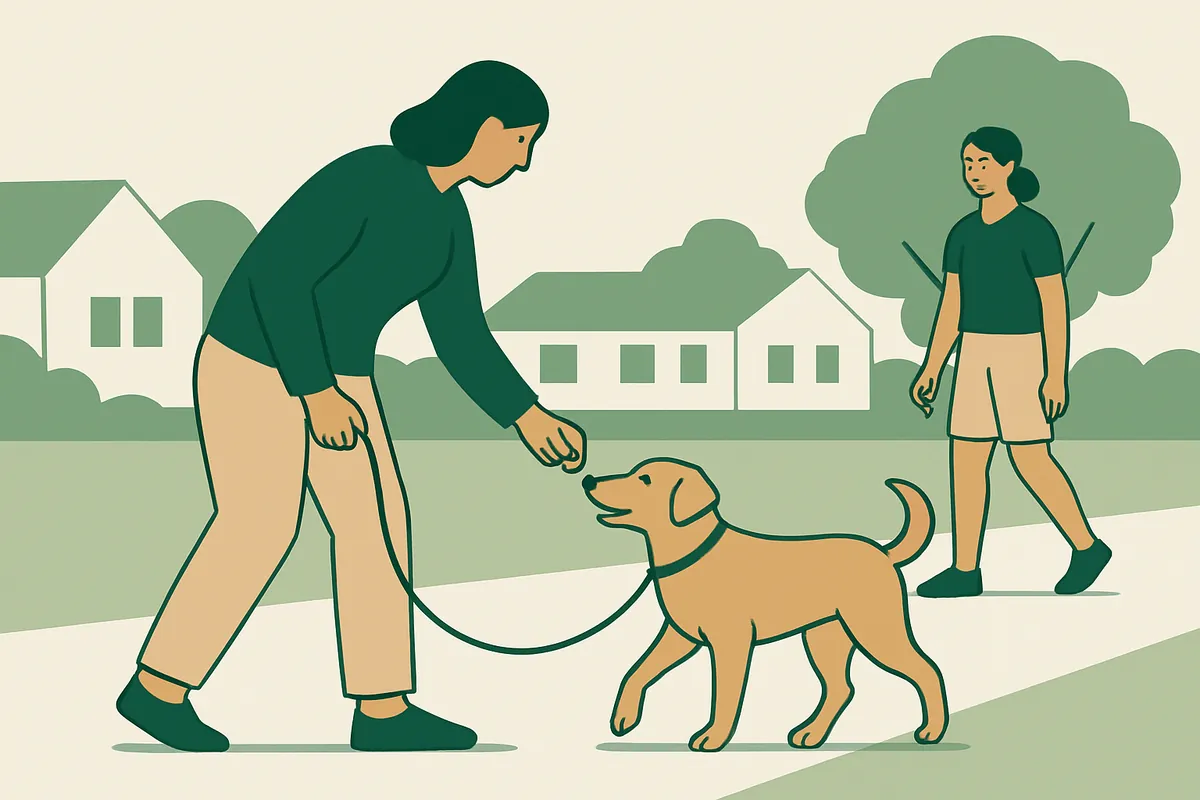
What to do when the leash goes tight
Whatever you choose, it must be applied every time on training walks, or pulling will keep paying off. Two common options:
- Stop and wait. The owner stands still the moment the leash tightens. When the dog turns back or steps back and the leash loosens, mark and reward, then carry on.
- Turn and go the other way. The owner calmly changes direction. When the dog catches up with a loose leash, reward it beside the leg. This can be more effective for dogs that simply wait at the end of a tight leash.
Neither involves jerking the leash. The aim is to remove the reward for pulling, not to punish it.
A sample session plan
| Part of session | What happens | Roughly |
|---|---|---|
| Warm-up | Rewards for standing at the owner's side, then a few steps | A minute or two |
| Main work | The current stage of the plan, with frequent rewards | A few minutes |
| Break | Sniffing time on a loose leash, or a game | A minute |
| Repeat | A second short round at the same stage or a slightly harder one | A few minutes |
| Finish | End on an easy success, then a relaxed walk home or a management walk | As needed |
Troubleshooting
- The dog is too excited at the start. Many dogs pull hardest in the first minutes. Practice calm departures: wait for four paws on the floor before opening the door, and start with a minute of easy rewards on the doorstep.
- The dog ignores food outside. It is too close to distractions or too aroused to eat. Increase distance, shorten the session or go back to a quieter place. A dog that cannot eat is usually a dog that cannot learn at that moment.
- Progress stalls in the middle stages. This is normal. Check the reward rate, the timing and whether pulling still sometimes pays off on management walks.
- The owner gets frustrated. Show them how far the dog has come, using video from the first session if you have it. Reset expectations: most dogs need weeks of consistent practice.
- The dog lunges, barks or freezes at other dogs or people. That is not only a leash manners problem. It may be fear or frustration, and it needs a different plan. Suggest the owner talks to their vet, especially if the behavior is new, and refer to a behavior professional if it is beyond your experience.
- The dog seems uncomfortable or reluctant to walk. Stop training and suggest a vet check. Pain can show up as pulling, lagging or refusing to move.
Coaching owners through the plan
The plan only works if owners practice it between sessions. A few habits help:
- Demonstrate each stage with the dog, then coach the owner doing it, then write it down.
- Give one or two stages to practice at a time, with a clear sign of success ("ten steps with a loose leash in the hallway").
- Ask owners to film a short clip each week. It shows you their timing and treat delivery, which are usually the real problem.
- Plan for real life: who walks the dog when, and which walks are training walks.
Owner coaching is often harder than dog training. The pillar guide on how to become a certified dog trainer covers it as a core skill, and the puppy class guide shows how to start leash skills early.
Next steps
Loose leash walking is one of the everyday problems in the Professional Dog Trainer curriculum, alongside recall, jumping up and barking. Our article on what a dog trainer certification exam asks explains how written assessments test this kind of plan, and the free sample dog trainer questions let you try a scenario and compare your answer with a model answer.
Frequently asked questions
How long does it take to teach loose leash walking?
It depends on the dog, how long it has been pulling and how consistently the owner practices. Many dogs improve within a few sessions indoors, but walking nicely on busy streets usually takes weeks of short, regular practice.
Is a harness or a collar better for a dog that pulls?
Many trainers prefer a well-fitted harness, because hard pulling puts pressure on the neck when the leash is attached to a collar. A front-attach harness can reduce pulling while the dog learns, but it does not teach loose leash walking on its own.
Written by the PetCred Editorial Team and checked against the published curriculum for this program. Laws and requirements change and differ by place: check local rules before relying on anything legal or regulatory here.
Free course
Dog Training Fundamentals: A Free 5-Lesson Course
Five short lessons, a quick check after each, no sign-up. Start now →
More dog training guides
How to Become a Certified Dog Trainer: A Practical Guide
What a dog trainer actually needs to know, how to get hands-on experience, which certification to choose and how to find your first clients, step by step.
6 July 2026
How to Price Your Dog Training Services
How to set dog trainer prices without guessing: work out your costs and real hours, research your local market, price the value and choose service formats.
10 September 2026
Insurance and Contracts for Dog Trainers
Dog trainer insurance explained: liability, professional indemnity and animal care cover, what a training contract should include, and the limits of waivers.
29 August 2026
How to Run a Puppy Class
A puppy training class plan for trainers: who the class is for, how to set up the room, a six-week outline, session structure and handling shy puppies.
6 August 2026