Therapy Dog Programs: How Trainers Prepare Dogs and Handlers
How therapy dog programs work, the temperament and skills dogs need, how to coach handlers and what a good therapy dog trainer course or class should cover.
PetCred Editorial Team · Updated 23 September 2026 · 6 min read
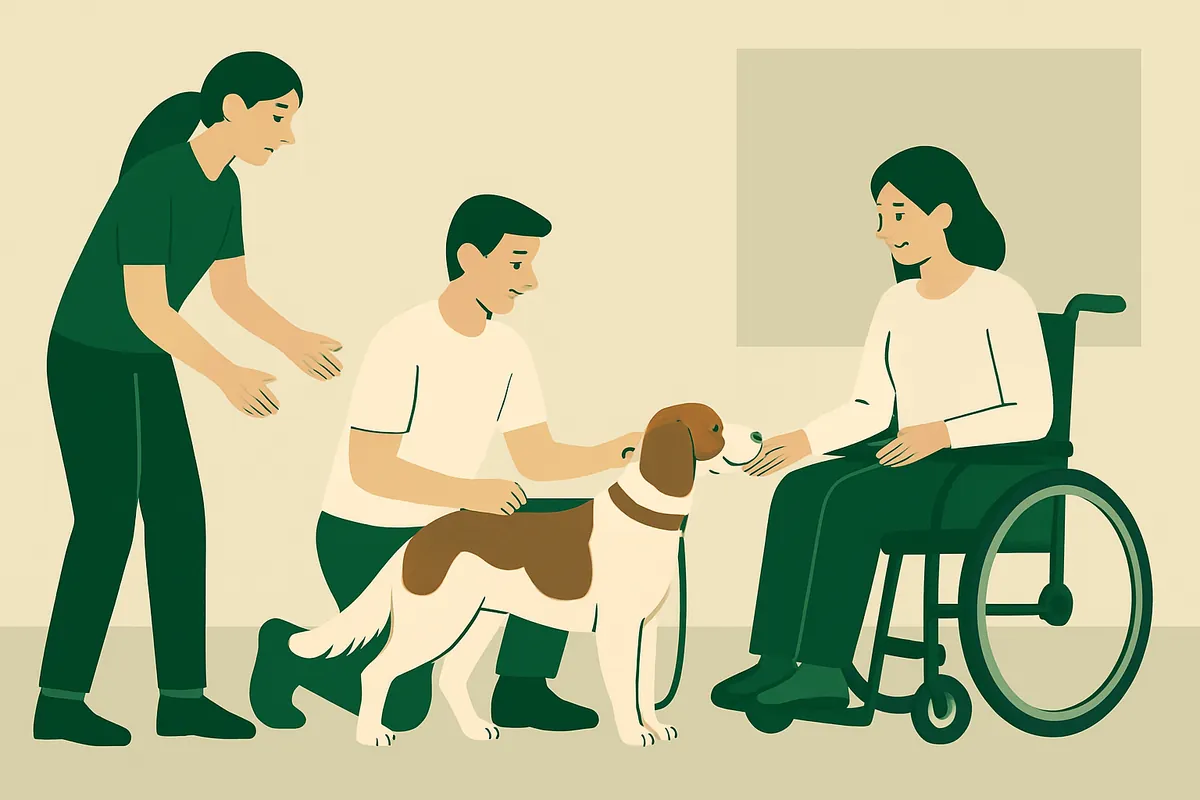
This article is for dog trainers who prepare dogs and their owners for therapy dog work, or who are thinking about adding a therapy dog class to their services. It explains how therapy dog programs work, what dogs and handlers need to learn, and what a good therapy dog trainer course or preparation class should cover. If you are an owner hoping your dog could become a therapy dog, you will find it useful, but it is written for the trainer.
Therapy dogs visit people who benefit from calm, friendly contact with an animal: patients in hospitals, residents in care homes, children in schools and libraries, students at exam time. Unlike service dogs, they do not work for one person with a disability, and they have no public access rights. Their work depends on temperament, good manners and a handler who can read their dog and follow a facility's rules.
What therapy dogs do
Therapy dog work usually falls into two broad kinds:
- Visiting activities. The dog and handler visit a facility to offer social contact and comfort, for example sitting with residents or walking through a ward. The goals are general: company, calm, a pleasant break.
- Goal-directed work with a professional. Some teams work alongside a health, education or therapy professional who uses the dog's presence as part of a planned session, such as encouraging a child to read aloud or motivating a patient during rehabilitation. The professional sets and tracks the goals, not the handler.
Most teams do the first. Both need the same foundations in the dog, and the second adds closer coordination with the professional in charge.
How therapy dog programs work
In each country, therapy dog visits are usually organized through national or regional organizations and charities. Examples include Pet Partners in the US, Pets As Therapy in the UK, St John Ambulance's therapy dog program in Canada and Delta Therapy Dogs in Australia, among others. Their rules differ, so check the current requirements of any program before you prepare a team for it.
Typically, a program will:
- Evaluate the dog and handler together before they can visit, and often re-evaluate them at intervals.
- Set minimum requirements, such as an age, a period of living with the handler, health checks and vaccinations.
- Train or brief the handler on visiting procedures, hygiene and confidentiality.
- Provide or arrange insurance for visits made through the program, and match teams with facilities.
- Set rules for visits, including their length, dress code and what the dog may and may not do.
Facilities add their own policies on top, especially hospitals, which may have infection control rules for animal visits.
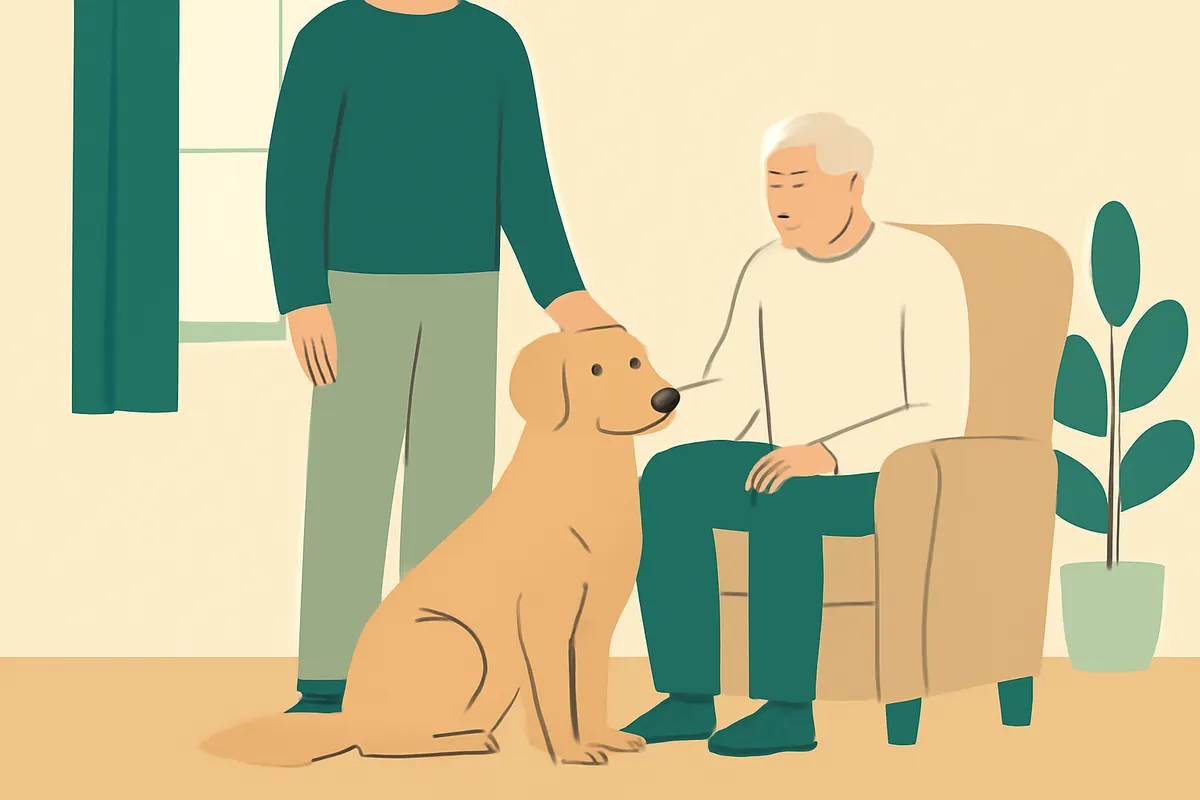
The temperament a therapy dog needs
Skills can be trained; temperament largely cannot. Before you take on a dog for therapy preparation, look honestly at whether it will enjoy the work.
A good candidate:
- Actively enjoys meeting strangers, including people who move or speak unpredictably, but greets calmly.
- Accepts being touched by several people at once, sometimes clumsily, without becoming stressed.
- Stays calm around equipment: wheelchairs, walkers, hospital beds, carts and beeping machines.
- Recovers quickly from surprises such as a dropped tray or a sudden shout.
- Is not mouthy, jumpy or overly excitable, and is comfortable with other dogs at a distance.
- Chooses to engage. The best therapy dogs seek contact rather than merely tolerating it.
A dog that tolerates people politely but would rather be elsewhere is not a good therapy dog, even if it would pass an evaluation. Being honest about this with owners protects the dog.
Skills to train
Most therapy dog preparation builds on good everyday manners. The skills that matter most:
- Calm greetings. Four paws on the floor, approaching people at the handler's pace.
- Leave it, reliably. Dropped food and medication can be found on floors in care settings, so the dog must leave anything it finds.
- Settle. A relaxed down beside the handler while people talk.
- Accepting handling of ears, paws, tail and body by strangers, and being stroked, hugged gently or brushed.
- Loose-lead walking through corridors, elevators and crowded rooms, past equipment.
- Positioning on cue, such as resting its chin on a bed edge or standing still beside a wheelchair, but only when the facility and the person allow it.
- Coping with other dogs calmly, since teams sometimes visit together.
Teach these with reward-based methods and practice them in realistic settings with permission, starting quiet and building up gradually. Our guide to positive reinforcement dog training covers the methods.
Preparing the handler
The handler is at least half of a therapy team, and much of your time goes into coaching them. Handlers need to:
- Read their dog. Recognize early signs of stress (lip licking, yawning, turning away, panting, trying to leave) and end an interaction or visit when they see them.
- Advocate for the dog. Politely stop people who crowd, grab or feed the dog.
- Follow hygiene rules, including clean grooming before visits, hand hygiene for the people the dog meets, and not visiting when the dog or handler is unwell.
- Respect confidentiality. What handlers see and hear on a visit stays there.
- Keep visits short and plan breaks, water and a place for the dog to rest.
- Know the limits of their role. Handlers are volunteers, not therapists or medical staff, and should pass concerns to the facility's staff.
Evaluation day
Each program runs its own evaluation, so prepare teams for the program they intend to join, using its published requirements. In general, evaluations look at whether the dog is friendly, controllable and comfortable in a simulated visiting setting, and whether the handler manages the dog well.
To help a team prepare:
- Run mock visits with volunteers acting as patients or residents, including some who are noisy, clumsy or use equipment.
- Practice in a new place, since evaluations rarely happen where the dog trained.
- Coach the handler's reactions, because a calm handler helps the dog.
- Do not guarantee a pass. Say honestly whether you think the team is ready, and never promise that your class leads to registration.
Welfare during visits
Visiting is tiring for dogs, even ones that love it. Good practice:
- Keep visits short, especially at first, and end early if the dog seems tired or stressed.
- Give the dog a quiet space and water during longer visits.
- Watch for changes over time: a dog that used to seek contact and now hangs back may be telling you the work no longer suits it.
- Refer any sudden behavior change to a vet, since pain or illness can show up first as reluctance or irritability.
- Check program rules on health, which can include vaccinations, parasite control and, in some programs, diet: some do not accept dogs fed raw diets because of infection risk in healthcare settings.
- Plan for retirement. An older dog may prefer shorter visits or none at all.
Therapy dogs are not service dogs
Owners sometimes assume that a therapy dog registration gives public access, or that a service dog vest would help on visits. Neither is true. Therapy dogs visit by invitation of the facility, and dressing them as service dogs misleads the public and can break the law in some places. Our guide to service dog, therapy dog or emotional support animal explains the categories, and service dog laws for trainers covers the legal detail.
Next steps
If you want to build a wider practice around working dogs, how to become a service dog trainer sets out the route, and selecting a puppy or adult dog for assistance work covers temperament assessment in more depth.
To check your own knowledge of therapy visit protocols and welfare, try the free sample service dog trainer questions, or see what the Therapy and Service Dog Trainer assessment covers.
Written by the PetCred Editorial Team and checked against the published curriculum for this program. Laws and requirements change and differ by place: check local rules before relying on anything legal or regulatory here.
Free course
Service and Therapy Dog Training Fundamentals: A Free 5-Lesson Course
Five short lessons, a quick check after each, no sign-up. Start now →
More service dog training guides
How to Become a Service Dog Trainer: A Practical Guide
What service dog trainers do, the skills and experience you need, how the law shapes the work and what a service dog trainer certification can and cannot show.
5 August 2026
Service Dog Laws for Trainers: US, UK, Canada and Australia
Service dog laws in the US, UK, Canada and Australia explained for trainers: who qualifies, what businesses may ask, dogs in training and what never to claim.
20 September 2026
Public Access Training: Standards and Assessment
Service dog public access training for trainers: the behaviors standards expect, how to build and proof them step by step, and how to judge team readiness.
9 September 2026
Selecting a Puppy or Adult Dog for Assistance Work
What service dog temperament means in practice, how to assess puppies and adult dogs fairly, which health checks to ask for and when a dog is not suited.
28 August 2026