Service Dog, Therapy Dog or Emotional Support Animal: What Trainers Must Know
Service dog vs therapy dog vs emotional support animal: what each does, how the US, UK, Canada and Australia treat them, and how trainers should explain it.
PetCred Editorial Team · Updated 16 August 2026 · 7 min read

This article is written for dog trainers, not for owners. Clients will ask you about service dog vs therapy dog vs emotional support animal status almost every week, often with a misunderstanding already in place, and your answer shapes what they do next. Getting the distinction exactly right is part of doing the job well.
The three categories describe different jobs, with different training and different legal standing. The table below gives the short version; the rest of the article explains each category, how the four countries we cover treat them at the time of writing, and how to talk to clients about it.
This is general information for trainers, not legal advice. Laws change and differ between states, provinces and territories. Check the official guidance where you work, and send clients with a specific dispute to a lawyer or a disability advocacy organization.
Service dog vs therapy dog vs emotional support animal: the short answer
| Service or assistance dog | Therapy dog | Emotional support animal | |
|---|---|---|---|
| Who it helps | One person with a disability | Many people, on visits | Its owner |
| What it does | Performs trained tasks linked to the handler's disability | Offers calm, friendly contact in hospitals, schools, care homes | Provides comfort through its presence |
| Task training | Required | Not for disability tasks; trained and assessed for safe visiting | Not required |
| Public access | Usually yes, under disability law | Generally no; access by invitation of the facility | Generally no |
| Species | Dogs (with narrow exceptions in some laws) | Mostly dogs | Any species, depending on the law |
The most common confusion is between the first and third columns. A dog that makes its owner feel better, however much it matters to them, is not a service dog unless it has been trained to perform tasks for a disability.
What makes a dog a service dog
A service dog, called an assistance dog in the UK and Australia, is defined by two things together: its handler has a disability, and the dog is trained to do work or perform tasks that help with that disability.
Tasks are specific, trained behaviors. Examples include:
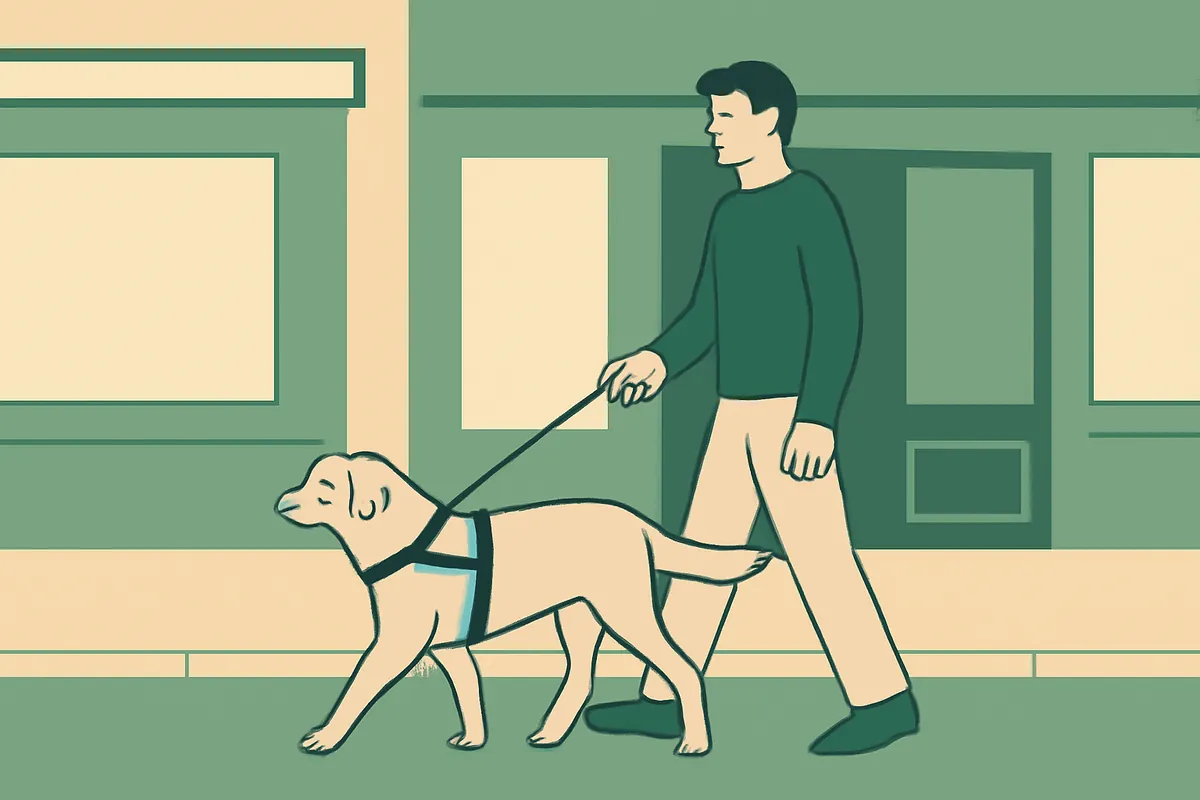
- Guiding a person who is blind or has low vision.
- Alerting a person who is deaf to sounds such as a doorbell or an alarm.
- Retrieving dropped items, opening doors or pressing buttons for a person with limited mobility.
- Performing a trained response to specific symptoms of a psychiatric condition, for example interrupting a behavior or leading the handler to a quiet place.
The line trainers need to hold is between a trained task and comfort from presence. A dog trained to respond to specific signs of a panic attack with a particular behavior is performing a task. A dog whose company makes its owner calmer is not, even though that comfort is real.

Therapy dogs: visiting, not access
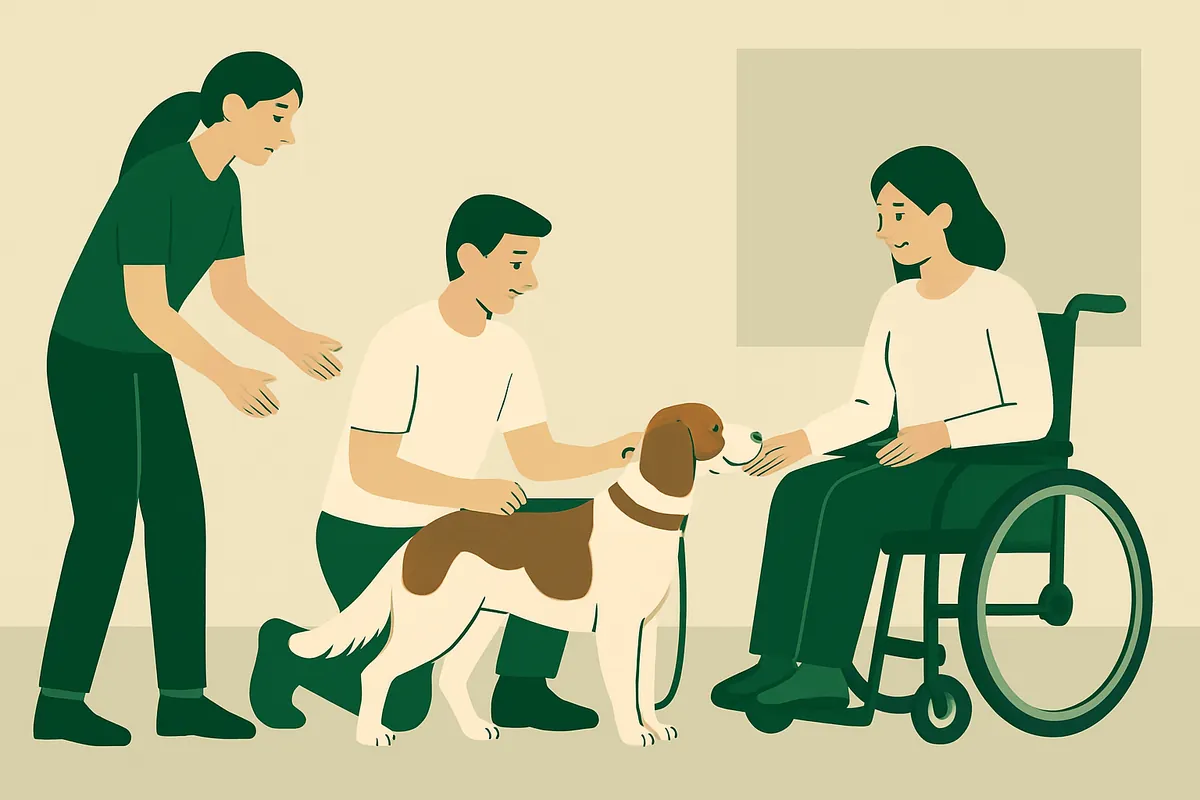
Therapy dogs visit people with their owners: patients in hospitals, residents in care homes, children in schools and libraries. They need a stable, sociable temperament and good manners with strangers, and they are usually evaluated as a team with their handler by a therapy dog organization before they can visit.
What therapy dogs do not have is public access rights. They go into facilities because the facility invites them, under that facility's rules. A therapy dog registration or evaluation is a record that a team met an organization's standard for visiting. It does not let the dog into shops, restaurants or planes.
Emotional support animals
An emotional support animal gives comfort to a person, often someone with a mental health condition, through companionship. No task training is required, and the animal does not have to be a dog.
In most places, emotional support animals have no public access rights. Their legal recognition, where it exists, is narrow: in the US it mainly concerns housing. That is why a client who says "my dog is an emotional support animal, so it can come into the store" is usually mistaken, and why a trainer should say so kindly and clearly.
Registries, vests and certificates
Online "service dog registries", ID cards, certificates and vests are widely sold. None of them is an official registry in the US, and none of them, on their own, gives a dog legal status in any of the four countries. In places that do have official schemes (some Canadian provinces and Australian states, described below), the scheme is run or recognized by government, not sold by a website to anyone who fills in a form.
For trainers, three rules follow:
- Never sell or recommend registrations as if they were official. It misleads clients and can expose them to penalties: a number of US states make it an offense to misrepresent a pet as a service animal.
- Separate gear from status. A vest can help the public recognize a working dog, but it neither creates nor proves service dog status.
- Describe your own credentials accurately. A trainer certificate is about the trainer. It does not certify any dog, and it does not grant access rights.
How the categories work in four countries
The summaries below describe the position at the time of writing. They are simplified, and each country has regional differences.
United States
- The Americans with Disabilities Act (ADA) defines a service animal as a dog individually trained to do work or perform tasks for a person with a disability. Therapy dogs and emotional support animals are not service animals under the ADA.
- The ADA does not require service dogs to be professionally trained, certified or registered.
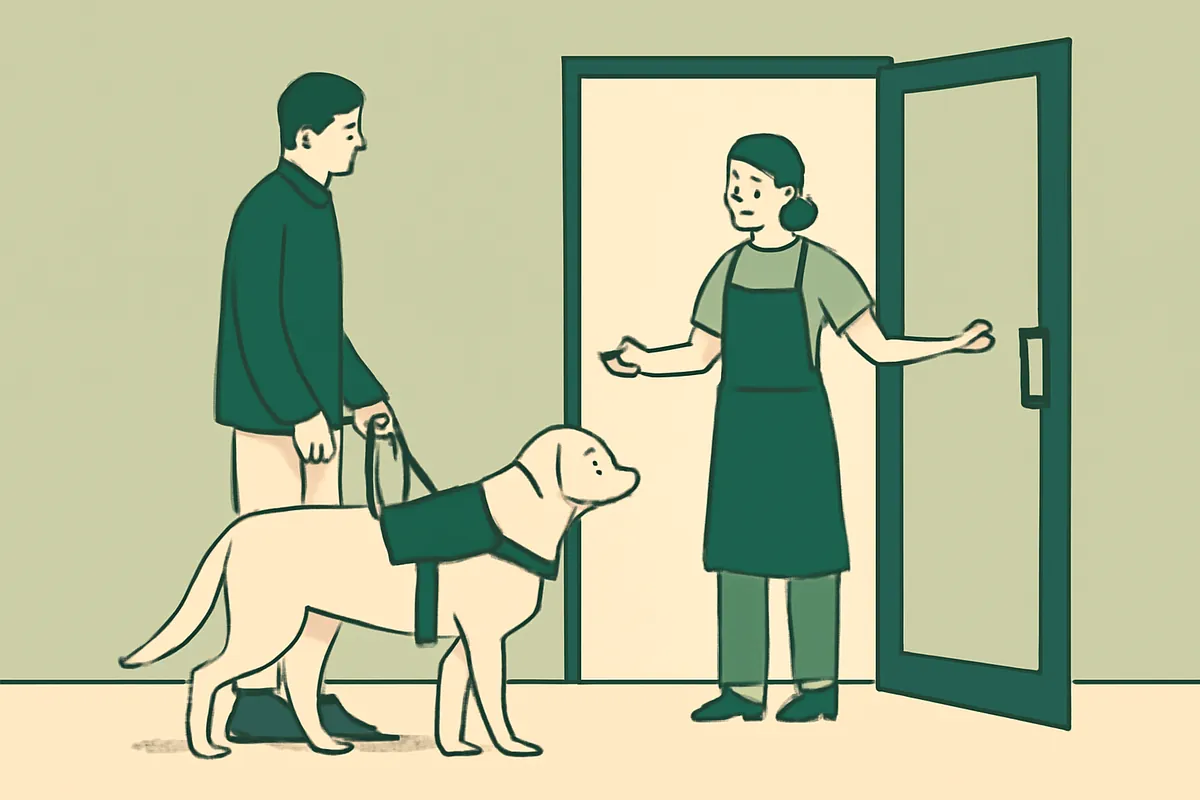
- Where it is not obvious what the dog does, staff may ask only two questions: whether the dog is required because of a disability, and what work or task it has been trained to perform. They may not ask for documentation or a demonstration, or about the person's disability.
- Housing is different. Under the Fair Housing Act, an emotional support animal can be a reasonable accommodation for a person with a disability, and housing providers may ask for reliable documentation when the disability is not obvious.
- Air travel is different again. Since early 2021, US airlines have not been required to treat emotional support animals as service animals.
- Service dogs in training are not covered by the ADA; some states give them access rights under state law.
United Kingdom
- Access for assistance dog users rests mainly on the Equality Act 2010, which requires service providers to make reasonable adjustments for disabled people. In practice, that usually means allowing an assistance dog.
- Taxi and private hire drivers must carry assistance dogs at no extra charge unless they hold a medical exemption.
- There is no official register of assistance dogs. Many are trained by member organizations of Assistance Dogs UK and carry identification from them.
- Emotional support animals have no specific legal status.
- Northern Ireland has its own disability discrimination law.
Canada
- Access is protected through federal and provincial human rights laws, and some provinces add their own rules. British Columbia and Alberta, for example, have service dog legislation with their own certification processes.
- Air travel is covered by federal accessibility rules, which deal with service dogs. How airlines treat emotional support animals is largely up to the carrier.
Australia
- The Disability Discrimination Act 1992 defines an assistance animal broadly: an animal accredited under a state or territory law, accredited by a prescribed training organization, or trained to alleviate the effect of a disability and meeting hygiene and behavior standards suitable for a public place.
- Some states run their own schemes. Queensland, for example, certifies guide, hearing and assistance dogs under its own law.
- An animal that provides comfort but is not trained to alleviate the effects of a disability does not fit the federal definition.
How to explain this to clients
The conversation is often delicate, because the client may be relying on the dog for real support. A few approaches help:
- Start from the job, not the label. Ask what the dog does for them. That usually shows which category fits.
- Be kind and specific. "Your dog clearly helps you. Under the law here, a service dog is one trained to perform specific tasks for a disability, so what you describe sounds like an emotional support role."
- Offer the options that exist. Some clients have a disability and could work towards a trained service dog. Others would enjoy therapy dog visiting. Many simply need help with a well-behaved companion.
- Point to official sources. Give general information, then direct them to their government's guidance or an advocacy organization rather than interpreting their specific case.
Next steps
If you want to go further into this field, our guide on how to become a service dog trainer covers the whole route, and do you need a certification to be a dog trainer? explains the wider legal picture for trainers. For the training side, positive reinforcement dog training covers the methods that task and public access training build on.
To check your own understanding of these categories, try the free sample service dog trainer questions, or see what the Therapy and Service Dog Trainer assessment covers.
Written by the PetCred Editorial Team and checked against the published curriculum for this program. Laws and requirements change and differ by place: check local rules before relying on anything legal or regulatory here.
Free course
Service and Therapy Dog Training Fundamentals: A Free 5-Lesson Course
Five short lessons, a quick check after each, no sign-up. Start now →
More service dog training guides
How to Become a Service Dog Trainer: A Practical Guide
What service dog trainers do, the skills and experience you need, how the law shapes the work and what a service dog trainer certification can and cannot show.
5 August 2026
Therapy Dog Programs: How Trainers Prepare Dogs and Handlers
How therapy dog programs work, the temperament and skills dogs need, how to coach handlers and what a good therapy dog trainer course or class should cover.
23 September 2026
Service Dog Laws for Trainers: US, UK, Canada and Australia
Service dog laws in the US, UK, Canada and Australia explained for trainers: who qualifies, what businesses may ask, dogs in training and what never to claim.
20 September 2026

Public Access Training: Standards and Assessment
Service dog public access training for trainers: the behaviors standards expect, how to build and proof them step by step, and how to judge team readiness.
9 September 2026