How Much Do Service Dog Trainers Make?
Service dog trainer salary for trainers: the closest official figures in four countries, what they cover, and how assessments and long programs build income.
PetCred Editorial Team · Updated 26 September 2026 · 6 min read
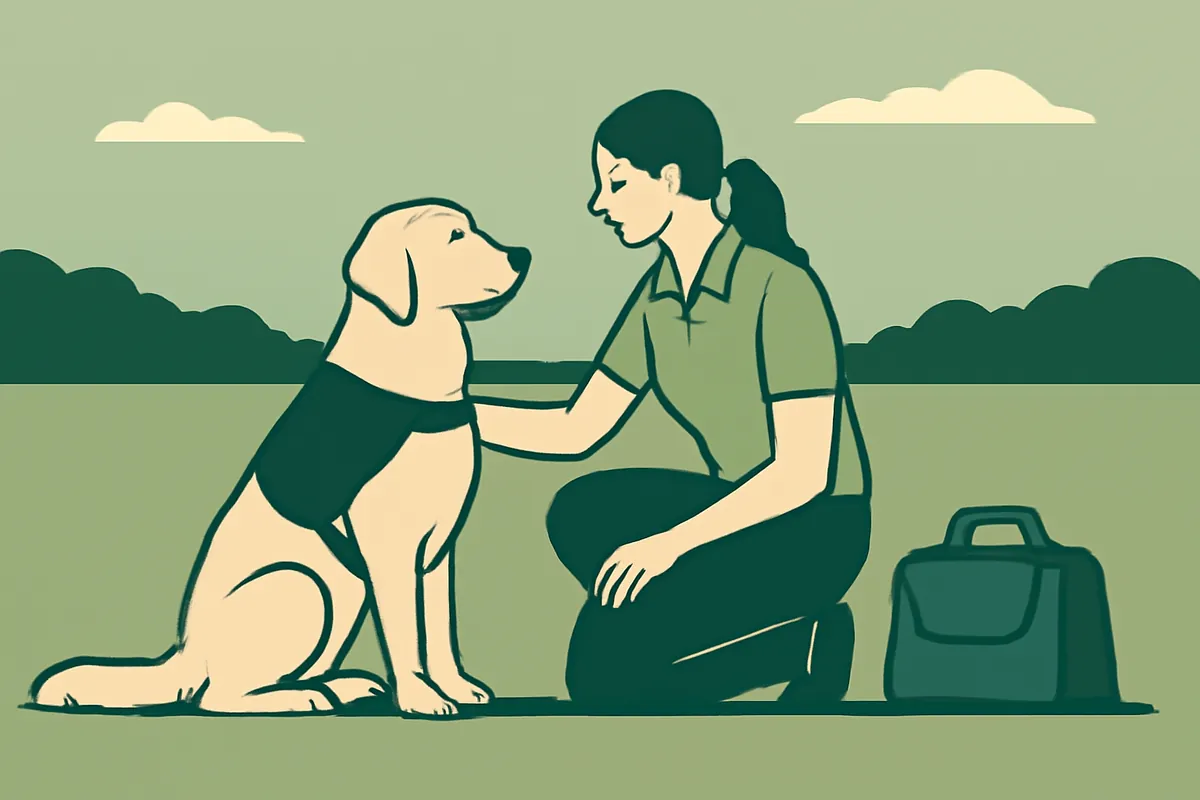
This guide is written for dog trainers, and people training to become one, who want to know what service dog training pays and how income from assistance work is built. If you are an owner looking for a service dog, it is not written for you. The short answer to "how much do service dog trainers make" is that no official statistic measures this specialism on its own, and income depends heavily on whether you work for an assistance dog organization, run your own business, or add assistance work to general training.
Service dog training is slow, specialist work. A single dog can take many months to prepare, many candidates do not finish, and the handler needs training as much as the dog. All of that shapes income. Below you will find the official figures that come closest, with what each one covers, and then a practical account of how assistance training income works, with a worked pricing example. Figures checked September 2026.
What official statistics say about service dog trainer pay
No statistics office publishes a figure for service dog trainers alone. The figures below are for wider groups. All amounts are gross, before tax, in the local currency.
United States
The Bureau of Labor Statistics publishes no separate figure for service dog trainers; the closest category is Animal Trainers (SOC 39-2011). Its handbook describes animal trainers as teaching skills such as obedience, performance and assisting people with disabilities, so the group covers assistance work but also every other kind of animal training. In the Occupational Employment and Wage Statistics survey for May 2025, animal trainers had a median annual wage of USD 39,990; the lowest 10 percent earned less than USD 29,600 and the highest 10 percent more than USD 75,490. Source: BLS Occupational Outlook Handbook, Animal Care and Service Workers.
The wage survey does not include the self-employed. The same handbook lists self-employed workers as 39 percent of animal trainer jobs in 2025, so independent trainers are largely outside the wage figures.
United Kingdom
The National Careers Service has an assistance dog trainer profile. It gives an average salary of GBP 24,000 for a starter and GBP 30,000 for an experienced trainer, with typical hours of 35 to 40 a week. The profile does not state a reference year. A salary range does not apply to self-employed trainers, who set their own prices.
Canada
Job Bank lists guide dog trainers within Pet groomers and animal care workers (NOC 65220), a group that also includes groomers, kennel staff and animal care workers. For Canada as a whole it shows a low of CAD 15.00, a median of CAD 18.00 and a high of CAD 25.50 an hour, reference period 2023-2024 (wages updated November 19, 2025). Source: Job Bank, guide dog trainer wages in Canada. Because the group is so broad, the figure says little about specialist assistance work.
Australia
Jobs and Skills Australia's Dog Handler or Trainer occupation includes training dogs for tasks such as search and rescue, detection or assistance work. It publishes no earnings figure for that occupation. The nearest figure is for Animal Attendants and Trainers (ANZSCO 3611), which also includes pet groomers, kennel hands and zookeepers: median weekly earnings of AUD 1,276 for full-time non-managerial adult employees, before tax, from the ABS Survey of Employee Earnings and Hours, May 2025. Source: Jobs and Skills Australia, Animal Attendants and Trainers. The site notes that these ANZSCO figures will not be updated again.
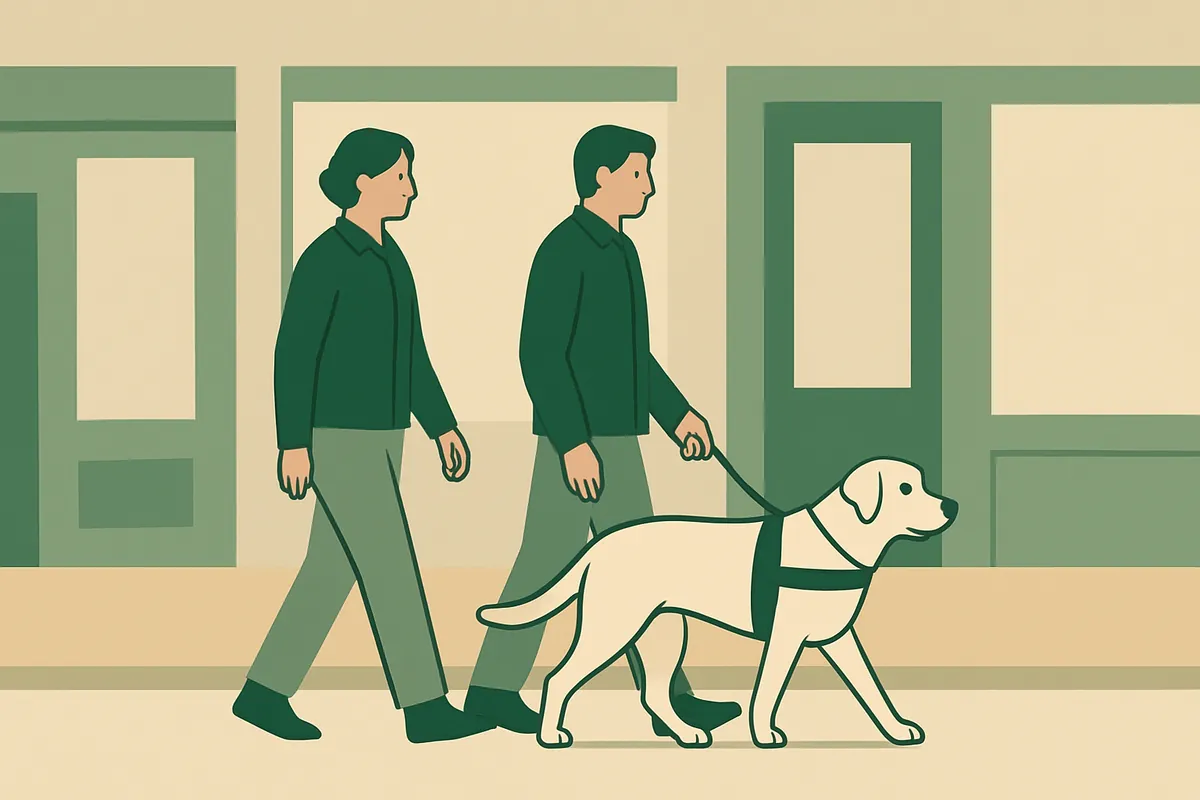
How service dog training income is built
Employed by an organization or self-employed
Trainers employed by an assistance dog organization are paid a wage, work within that organization's standards and often train dogs the organization breeds or selects. The income is steadier; the prices are not yours to set.
Self-employed trainers usually work differently. Common models include coaching owners who are training their own dog for assistance work, preparing therapy dog teams, running public access classes, or offering board and train. Each carries its own costs and risks, and in some places boarding dogs needs a license.
Long programs, not single sessions
Assistance training takes months, and a task that looks simple in a video can take a long time to make reliable everywhere. That affects how you sell your time:
- Programs of sessions over months, priced as a whole or in stages, with clear milestones.
- Assessments of candidate dogs before any commitment, so owners know early whether the dog is suited to the work. Our guide to selecting a dog for assistance work covers what to look for.
- Public access training in real settings, which takes preparation and travel.
- Handler coaching, because the team only works if the handler can maintain the training.
- Therapy dog team preparation, related work with different standards. See therapy dog programs for trainers.
Dogs that change career
Many dogs that start assistance training are better suited to another life. For an organization this is a cost built into its budget. For a self-employed trainer coaching an owner's dog, it means agreeing honestly at the start what happens if the dog is not suitable, and pricing assessments separately so neither side is locked into a program that will not work.
Knowing the rules
What counts as a service dog, and where it can go, differs between countries and sometimes within them. Clients rely on you to be accurate, and never to present an online registry or certificate as official status. Our guide to service dog laws for trainers summarizes the rules in the US, UK, Canada and Australia; check with your local authority for anything specific.
What certification can and cannot change
A trainer certification does not certify any dog, and it does not set your pay. It shows clients and organizations that you understand learning science, task training, public access standards, welfare and the difference between service, therapy and emotional support animals. Hands-on skill and a record of successful teams are what prove you can do the work.
A worked example: pricing a coaching session
This follows the method of the free pet service price calculator, for a self-employed trainer coaching owner-trainers. The inputs are invented to show the method. They are not typical earnings, costs or rates, and they are in no particular currency.
| Input | Example value |
|---|---|
| Income goal a month, before tax | 2,600 |
| Share set aside for tax and savings | 25% |
| Business costs a month (insurance, courses, software, equipment) | 500 |
| Session time, including planning and notes | 90 minutes |
| Travel time, round trip | 30 minutes |
| Travel distance and running cost | 20 km at 0.30 per km |
| Supplies per session | 2 |
| Hours a month for client work, including travel | 90 |
| Share of slots you expect to fill | 75% |
Working through it:
- Profit needed: 2,600 ÷ 0.75 = about 3,467.
- Monthly target with costs: about 3,967.
- Sessions that fit: each takes 120 minutes with travel, so 45 fit into 90 hours. At 75 percent booked, 33 (rounded down).
- Cost per session: 2 + 20 × 0.30 = 8.
- Price per session: 3,967 ÷ 33 + 8 = about 128.20.
- Break-even: 500 ÷ 33 + 8 = about 23.15.
A program of many sessions over months multiplies this into a large commitment for a client. Being open about the likely length, the milestones and what happens if the dog is not suitable is part of pricing fairly.
How to increase income responsibly
- Build a general training foundation first. Assistance work rests on strong everyday training skills, and general clients give you steady income while you specialize.
- Price assessments separately so clients can decide early and you are paid for that expertise.
- Offer group public access classes to serve several teams at once.
- Be scrupulous about claims. Never promise that a dog will qualify, and never sell anything as official certification or registration.
- Put welfare first. A dog that is stressed by the work should change career, even if that ends a paid program.
Where to go next
For the full route into the specialism, read how to become a service dog trainer, and for the categories clients confuse most, see service dog vs therapy dog vs emotional support animal. To test your knowledge, try the free service dog training sample questions, and see what the Therapy & Service Dog Trainer certification covers. Then work out your own session and program prices with the pet service price calculator.
Frequently asked questions
Is there an official salary figure for service dog trainers?
Not for the specialism on its own. The UK National Careers Service has an assistance dog trainer profile with a salary range, while the US, Canada and Australia group service dog trainers with other animal trainers or animal care workers.
Do service dog trainers earn more than general dog trainers?
No official data compares them directly. Assistance work needs more specialist knowledge and longer programs, which can support higher prices for self-employed trainers, but it also brings fewer clients and the risk that a dog is not suited to the work.
Can a trainer certify a service dog?
A trainer certification shows what the trainer knows; it does not certify any dog. Rules on service dogs differ by country, and online registries or certificates should never be presented as official status. Check the rules where you and your clients live.
Written by the PetCred Editorial Team and checked against the published curriculum for this program. Laws and requirements change and differ by place: check local rules before relying on anything legal or regulatory here.
Free course
Service and Therapy Dog Training Fundamentals: A Free 5-Lesson Course
Five short lessons, a quick check after each, no sign-up. Start now →
More service dog training guides
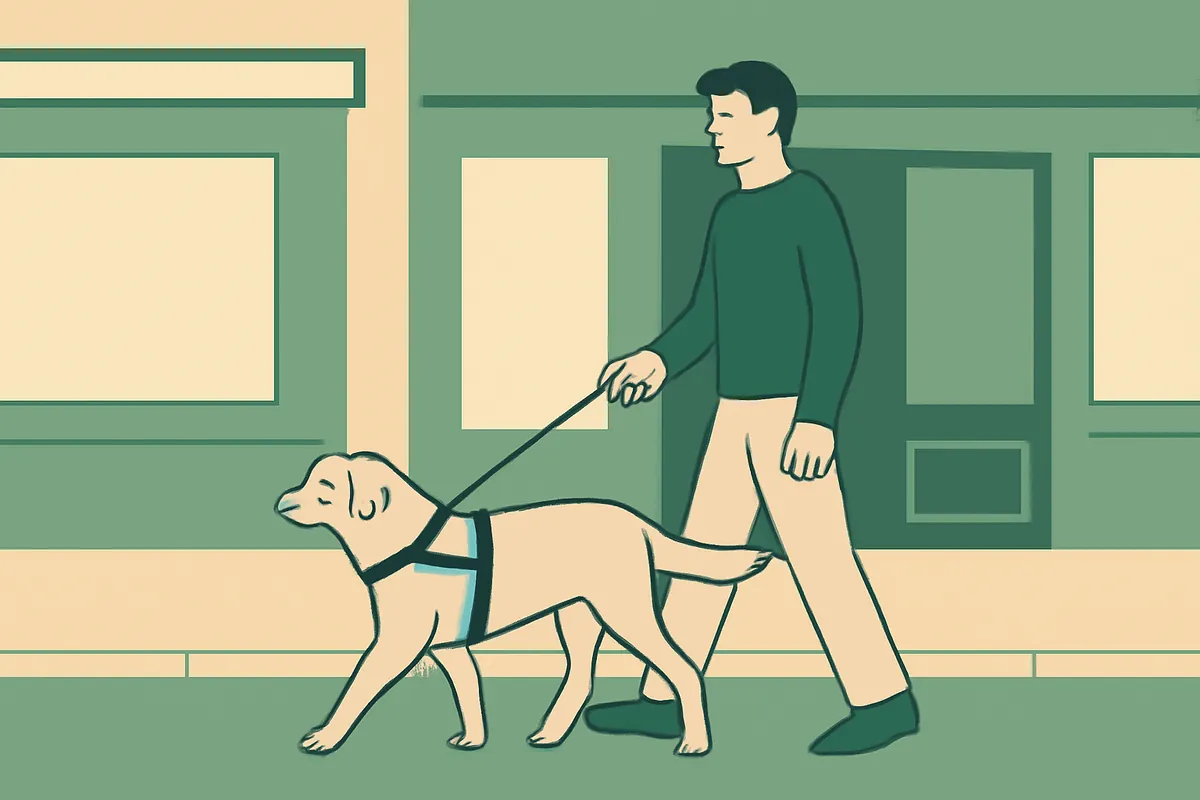
How to Become a Service Dog Trainer: A Practical Guide
What service dog trainers do, the skills and experience you need, how the law shapes the work and what a service dog trainer certification can and cannot show.
5 August 2026
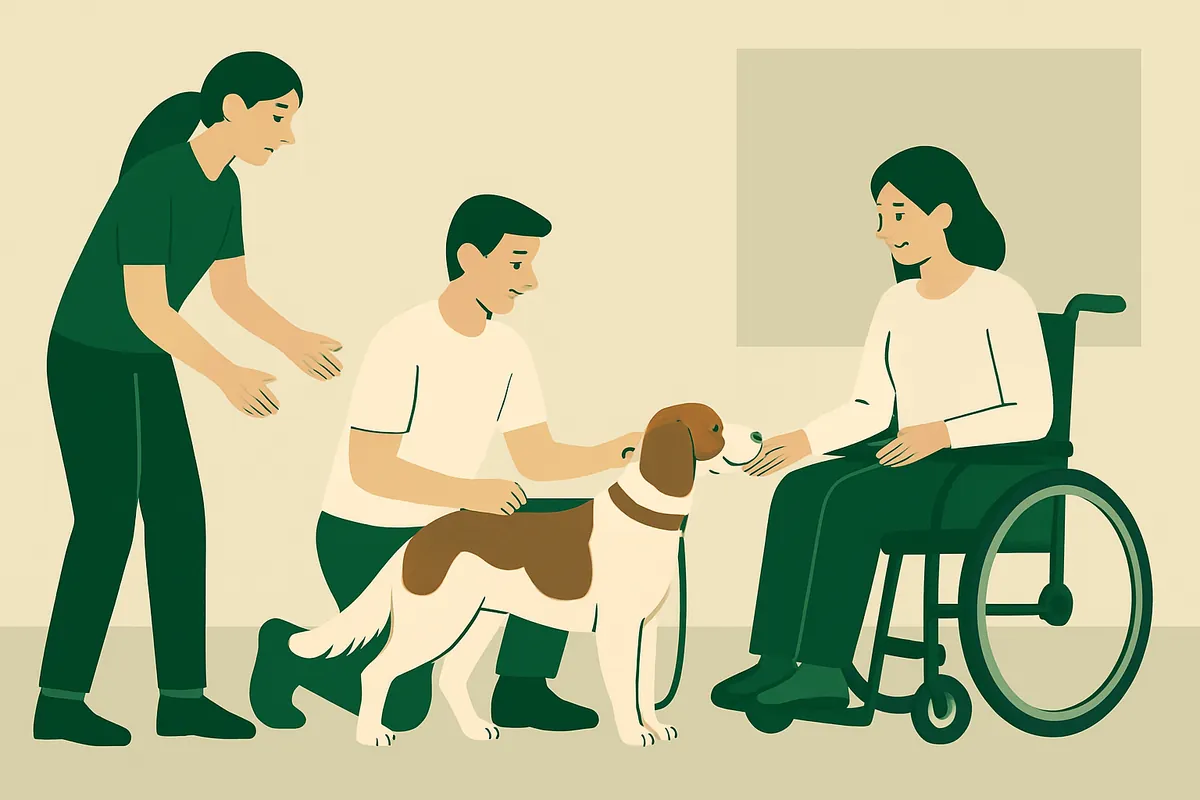
Therapy Dog Programs: How Trainers Prepare Dogs and Handlers
How therapy dog programs work, the temperament and skills dogs need, how to coach handlers and what a good therapy dog trainer course or class should cover.
23 September 2026
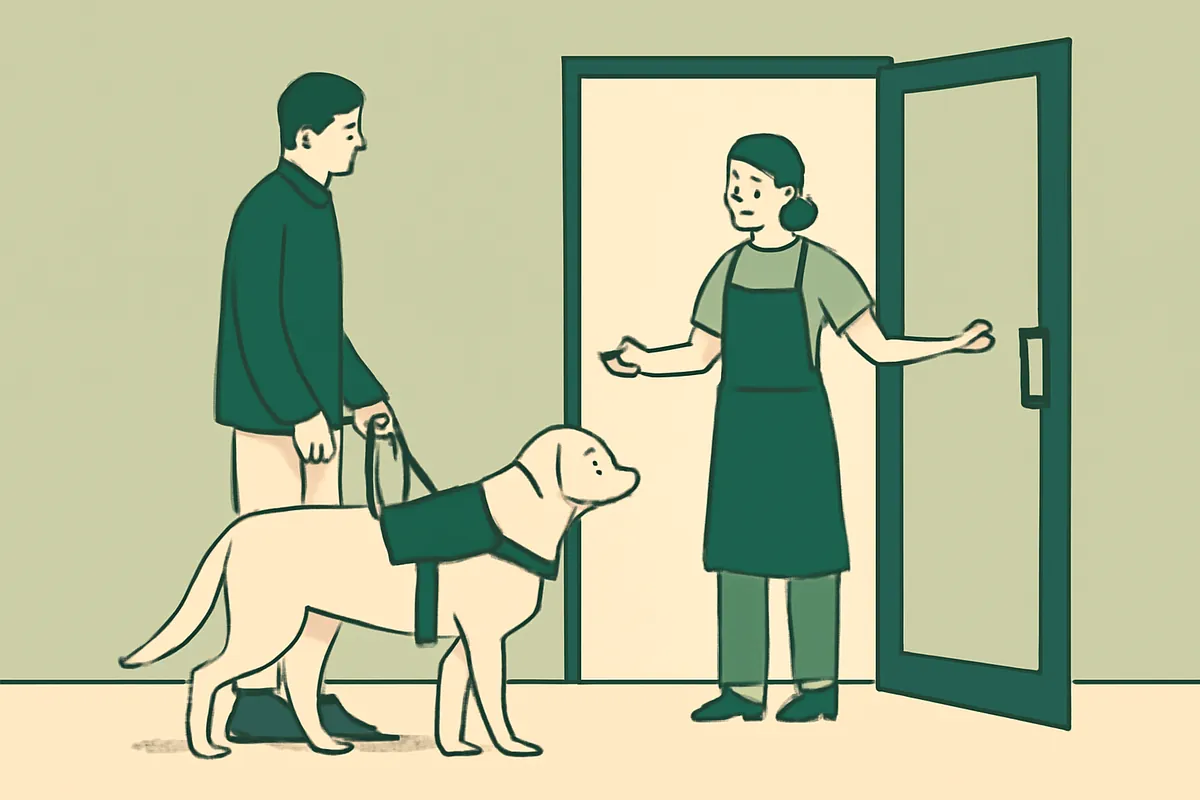
Service Dog Laws for Trainers: US, UK, Canada and Australia
Service dog laws in the US, UK, Canada and Australia explained for trainers: who qualifies, what businesses may ask, dogs in training and what never to claim.
20 September 2026
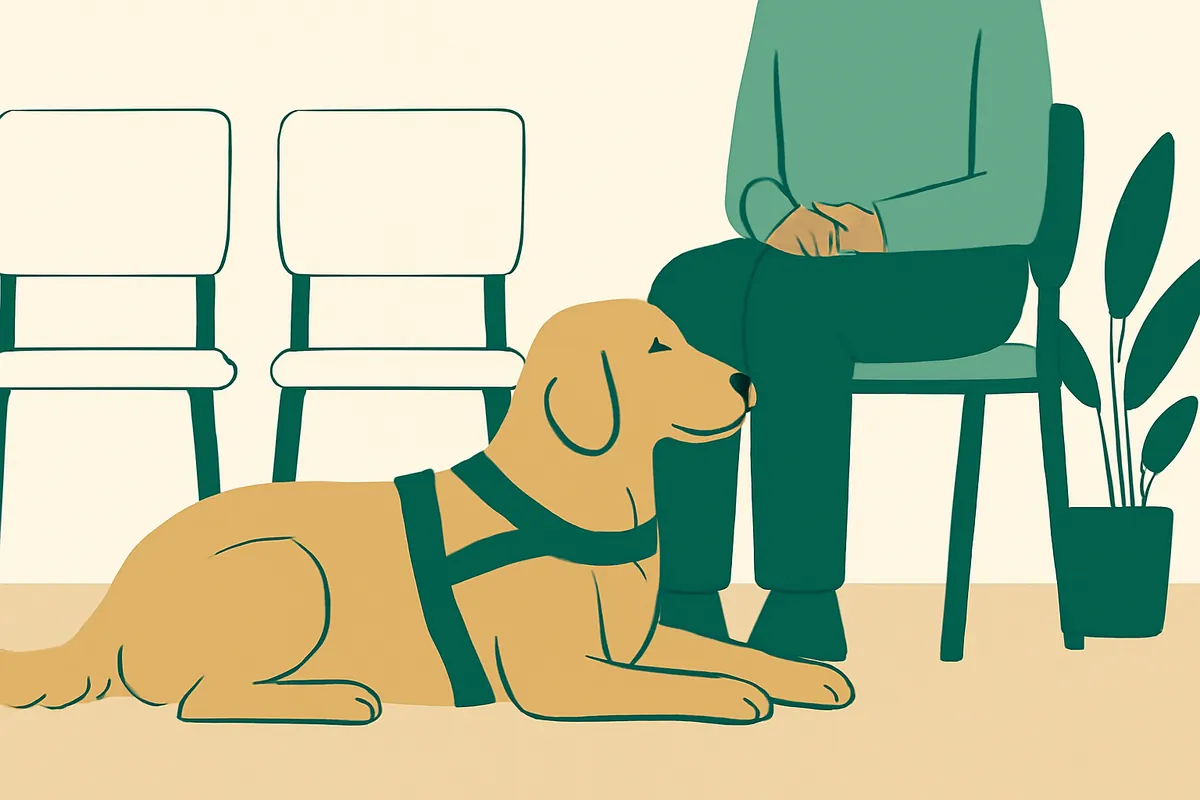
Public Access Training: Standards and Assessment
Service dog public access training for trainers: the behaviors standards expect, how to build and proof them step by step, and how to judge team readiness.
9 September 2026