Can You Make a Living as a Pet Nutrition Consultant?
Pet nutritionist salary, answered honestly: why no official figure exists, how consulting income is really built, where the role stops, and how to price advice.
PetCred Editorial Team · Updated 26 September 2026 · 6 min read

Can you make a living as a pet nutrition consultant? Some people do, but there is no standard pet nutritionist salary to point to, and anyone who quotes one is guessing. The role is new, it is not a regulated profession in most places at the time of writing, and it is often combined with other work: pet shop staff, groomers, trainers, sitters and breeders who add nutrition advice to what they already do, and a smaller number who build an independent consulting practice.
This guide is honest about that. First, it shows what official statistics offices in the US, UK, Canada and Australia publish for this role, which turns out to be nothing, and why the nearest-sounding figures would mislead you. Then it explains how nutrition consulting income is actually built, where the role must stop and a vet must take over, and how to price a consultation from your own numbers. Figures checked September 2026.
What official statistics say about pet nutritionist pay
We looked for an official pay figure in each of the four countries we cover. None exists for this role.
United States
The Bureau of Labor Statistics does not publish a figure for pet nutrition consultants, and its occupation groups for animal care do not single out nutrition advice. Veterinary nutritionists are veterinarians with specialist training, a different profession with its own pay data, and are not what this guide is about.
United Kingdom
The National Careers Service has no job profile for pet or animal nutrition consultants at the time of writing. Its nutritionist profile describes people who advise on the effects of food on human health, so its salary figures do not apply to pet nutrition work.
Canada
Job Bank has no occupation for pet nutrition consultants. The job title "animal nutritionist" is classified with biologists and related scientists (NOC 21110), a research science group that does not describe consulting with pet owners, so we do not quote its wages here.
Australia
Jobs and Skills Australia has no occupation for pet nutrition consultants. Its Nutritionist occupation covers nutrition for human health and wellbeing, at university degree level, so it is not a guide to pet nutrition income either.
What this means for you
With no official figure, the only reliable way to answer "can I make a living?" is to work from your own situation: how many consultations you can realistically sell, what you can charge in your market, and what the work costs you. The rest of this guide shows how.
How pet nutrition income is built
Alongside another role, or on its own
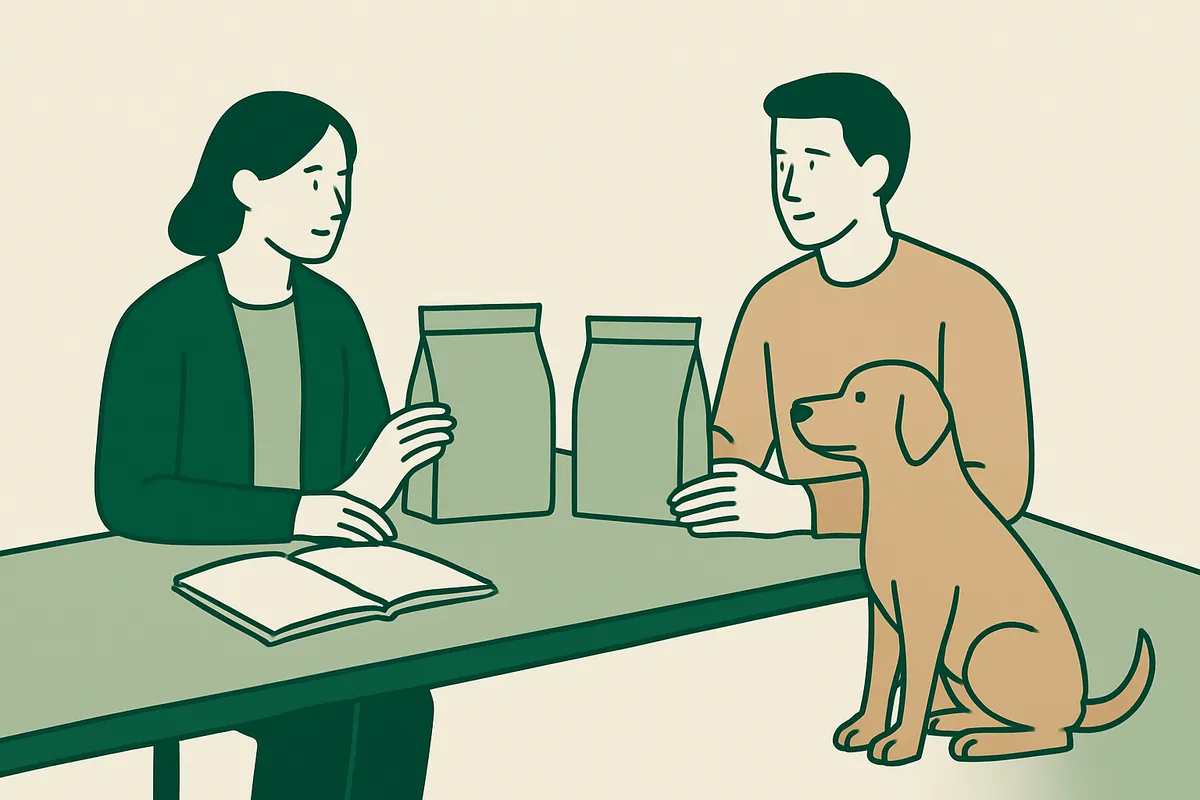
For many people, nutrition knowledge adds value to work they already do. A groomer or trainer who can answer feeding questions well earns trust and repeat clients. A pet shop adviser who understands labels and energy needs gives better advice than one reading the front of the bag. In these cases the income shows up indirectly, through loyalty and sales, rather than as consultation fees.
An independent practice is different. Your income then comes from paid consultations, and you carry all the costs and all the work of finding clients.
Services you can sell
- Diet reviews: assessing a healthy pet's current diet, weight and body condition, and explaining how the food compares with alternatives. Our guide to reading a pet food label covers one core skill.
- Feeding plans: how much to feed and how to transition between foods.
- Weight management support for healthy but overweight pets, alongside the vet.
- Life-stage advice for puppies, kittens and senior pets.
- Workshops and talks for breeders, clubs, rescues or pet shops.
- Written content for businesses in the pet industry, where your knowledge is the product.
Where your role stops
This is the most important part of the job, and it shapes what you can sell. A pet nutrition consultant helps owners of healthy animals. When a pet has a medical condition, a vet must lead: kidney disease, diabetes, allergies, pancreatitis, digestive disease and similar cases need veterinary diagnosis and, often, a therapeutic diet chosen by the vet. Sudden weight loss, loss of appetite or other signs of illness mean the owner should see a vet before any diet change. Weight loss in cats should always involve a vet, because fasting or rapid weight loss is dangerous for cats.
Knowing these limits protects animals and protects you. It also builds the vet relationships that bring referrals. Our guide to pet nutritionist vs veterinary nutritionist explains the boundary in detail.
Costs to plan for
Professional insurance that covers advice, continuing education, reference materials, software for diet analysis or record keeping, a website and marketing, and the time spent on reports and follow-up messages.
What certification can and cannot change
Because the role is not regulated in most places, a certification is how you show owners, employers and vets what you know: energy requirements, nutrients, label reading, life stages and the referral boundary. It does not make you a veterinary nutritionist, and it does not allow you to diagnose or treat. Our comparison of pet nutrition certification options sets out what each route proves.
A worked example: pricing a diet review
This follows the method of the free pet service price calculator, here for someone building consulting alongside another job. The inputs are invented to show the method. They are not typical earnings, costs or fees, and they are in no particular currency.
| Input | Example value |
|---|---|
| Extra income goal a month, before tax | 800 |
| Share set aside for tax and savings | 20% |
| Business costs a month (insurance, software, courses, website) | 120 |
| Consultation time, including preparation and written plan | 90 minutes |
| Travel time | 0 (video consultations) |
| Supplies per consultation | 0 |
| Hours a month available for consultations | 30 |
| Share of slots you expect to fill | 60% |
Working through it:
- Profit needed: 800 ÷ 0.80 = 1,000.
- Monthly target with costs: 1,120.
- Consultations that fit: 30 hours at 90 minutes each is 20. At 60 percent booked, 12.
- Price per consultation: 1,120 ÷ 12 = about 93.33.
- Break-even: 120 ÷ 12 = 10.
Now test the idea of making a full living from it. Double the income goal and the hours, and the price per consultation changes only a little (to about 88.33), but you need twice as many paying clients every month. That is the real question for a nutrition consultant: not the price, but whether there are enough owners of healthy pets in your reach who will pay for advice. Compare your result with what people near you charge for similar consultations, and be realistic about how long it takes to build a client base.
How to grow nutrition income responsibly
- Start alongside your current work. Test demand with existing clients before relying on consultation income.
- Build relationships with vets. Clear referral both ways brings cases and protects animals.
- Package your services. A diet review plus a follow-up weigh-in or check-in gives better results than a single appointment.
- Teach groups. Workshops for breeders, clubs and rescues reach many owners in one session.
- Never stretch your scope. Do not take on medical cases, recommend supplements as treatments or promise health outcomes. Refer to the vet.
- Keep your knowledge current, and cite primary sources when owners ask where your advice comes from.
Where to go next
For the full route into the role, read how to become a certified pet nutritionist. To test your knowledge, try the free pet nutrition sample questions, and see what the Pet Nutrition Consultant certification covers. Then work out a consultation price from your own numbers with the pet service price calculator.
Frequently asked questions
Is there an official salary for pet nutritionists?
No. At the time of writing, none of the official statistics sources in the US, UK, Canada or Australia publishes a pay figure for pet nutrition consultants. Figures for nutritionists in those sources describe human nutrition or research science roles.
Can a pet nutrition consultant advise on a pet with a medical condition?
Not on their own. A pet with a medical condition needs a vet to lead, and therapeutic diets are chosen by the vet. A consultant works with owners of healthy animals and refers anything medical, including any weight loss plan for a cat.
Do most pet nutrition consultants work full time?
There is no official data on this. Many people add nutrition advice to an existing role, such as grooming, training or pet retail, and some build an independent practice over time. Test demand before relying on consultation income alone.
Written by the PetCred Editorial Team and checked against the published curriculum for this program. Laws and requirements change and differ by place: check local rules before relying on anything legal or regulatory here.
Free course
Pet Nutrition Fundamentals: A Free 5-Lesson Course
Five short lessons, a quick check after each, no sign-up. Start now →
More pet nutrition guides
How to Become a Certified Pet Nutritionist: A Practical Guide
What a pet nutrition consultant does, the science to learn, where consulting ends and veterinary care begins, and how to choose a certification.
21 July 2026

Grain-Free Diets and Heart Disease in Dogs: What We Know
Grain-free dog food and DCM as of 2026: what the FDA investigation found, what remains unresolved and how pet professionals can advise owners honestly.
12 September 2026
Food Allergies in Dogs: How Elimination Trials Work
How dog food allergy elimination diets work: choosing a trial diet, how long it lasts, the challenge, and how professionals can help owners stick to it.
31 August 2026

Feeding Puppies and Kittens: A Guide by Life Stage
A puppy and kitten feeding guide for pet professionals: growth foods, meals and portions by age, large breed puppies, switching to adult food and when to refer.
19 August 2026