Pet Nutrition Certifications Compared: Courses, Credentials and What They Prove
Veterinary specialties, university courses, private certificates and online assessments in pet nutrition: what each qualifies you to do and how to choose.
PetCred Editorial Team · Updated 25 September 2026 · 4 min read

Search for "pet nutrition certification" and you will find everything from multi-year veterinary specialist training to certificates awarded after a few hours of video. They all use similar words, and they qualify you for very different things.
This guide sorts pet nutrition qualifications into five types, explains what each allows you to do, and helps you choose. PetCred offers one of the options; we describe it by what it does and does not prove, like the others.
The five types at a glance
| Type | Who it is for | Qualifies you to | Time | Cost |
|---|---|---|---|---|
| Veterinary specialist board certification | Veterinarians | Diagnose, treat and formulate therapeutic diets | Years of residency after a veterinary degree | Very high |
| University courses and degrees | Anyone; some require prior study | Understand nutrition science in depth | Weeks to years | Moderate to high |
| Veterinary nurse and technician training | Veterinary nurses and technicians | Support vets with nutrition in clinical settings | Part of professional training | Varies |
| Private certificate courses | Anyone | Advise healthy animals, within scope | Weeks to months | Low to high |
| Online knowledge assessments | Anyone | Show verified knowledge for advising healthy animals | Days to weeks | Low |
Veterinary specialist board certification
In North America, veterinarians can become board-certified in nutrition through the American College of Veterinary Internal Medicine. In Europe, the equivalent is the European College of Veterinary and Comparative Nutrition. Both require a veterinary degree, a residency and a demanding examination.
This is the only route that qualifies you to diagnose and treat disease with diet. If you want to formulate therapeutic diets for sick animals, you need to be a veterinarian.
University courses and degrees
Universities offer nutrition modules within animal science and veterinary nursing programs, and some offer standalone short courses in companion animal nutrition.
Strengths: depth, academic rigour, and teaching by nutrition scientists.
Limits: time and cost, and a course may teach the science without teaching how to advise real clients.
Veterinary nurse and technician qualifications
Veterinary nurses and technicians study nutrition as part of their training, and some go further with advanced credentials in clinical nutrition. They work under veterinary direction and are often the people in a practice who guide owners through diet changes.
Private certificate courses
Many private providers offer pet nutrition certificates, taught online or in person.
Strengths: accessible, flexible and often practical.
Limits: quality varies enormously. Some are written or reviewed by veterinary nutritionists; others are not. Some assess you properly; others issue a certificate for watching videos.
Questions to ask:
- Who wrote the material, and what are their qualifications?
- Is there a real assessment, and can you fail it?
- Does the course teach clear scope, including when to refer to a vet?
- Does it cover cats as well as dogs, and life stages?
- Does it make claims that sound like treatment, such as "curing" allergies with diet?

Online knowledge assessments
An online assessment tests what you know rather than teaching it. The older format is multiple choice. PetCred's format asks you to write answers to realistic scenarios, which are marked against a published curriculum.
The Pet Nutrition Consultant assessment covers:
- Macronutrients, micronutrients and energy requirements.
- Life-stage feeding: growth, adult and senior.
- Species differences, including cats as obligate carnivores.
- Reading and comparing pet food labels.
- Body condition scoring and weight management.
- Therapeutic diets and when to refer to a vet.
- Raw, home-cooked and alternative diets: risks and safety.
- Food allergies, intolerances and elimination trials.
You answer 12 written questions in 60 minutes, get a score by topic within minutes, have three attempts, and can claim a certificate with a public verification link if you pass.
What it proves: that you know the science and can apply it to realistic feeding situations, including recognising when a case belongs with a vet.
What it does not prove: it is not a veterinary qualification and does not allow you to diagnose or treat. It also does not replace experience advising real clients.
How to choose
- Decide what you want to do. If you want to treat sick animals with diet, the route is a veterinary degree. If you want to advise owners of healthy pets, a consultant-level credential is appropriate.
- Check scope. Choose a credential that teaches clear boundaries. Anything suggesting you can "treat" or "cure" with diet is a red flag.
- Check assessment. A credential you cannot fail proves little.
- Check verification. Clients should be able to confirm your credential.
- Combine study and assessment. Many consultants study with a course or textbook, then use an assessment to confirm and demonstrate their knowledge.
Related guides
- How to become a certified pet nutritionist: the full route into consulting.
- Pet nutritionist vs veterinary nutritionist: who can do what.
Written by the PetCred Editorial Team and checked against the published curriculum for this program. Laws and requirements change and differ by place: check local rules before relying on anything legal or regulatory here.
More pet nutrition guides

How to Become a Certified Pet Nutritionist: A Practical Guide
What a pet nutrition consultant does, the science to learn, where consulting ends and veterinary care begins, and how to choose a certification.
25 September 2026
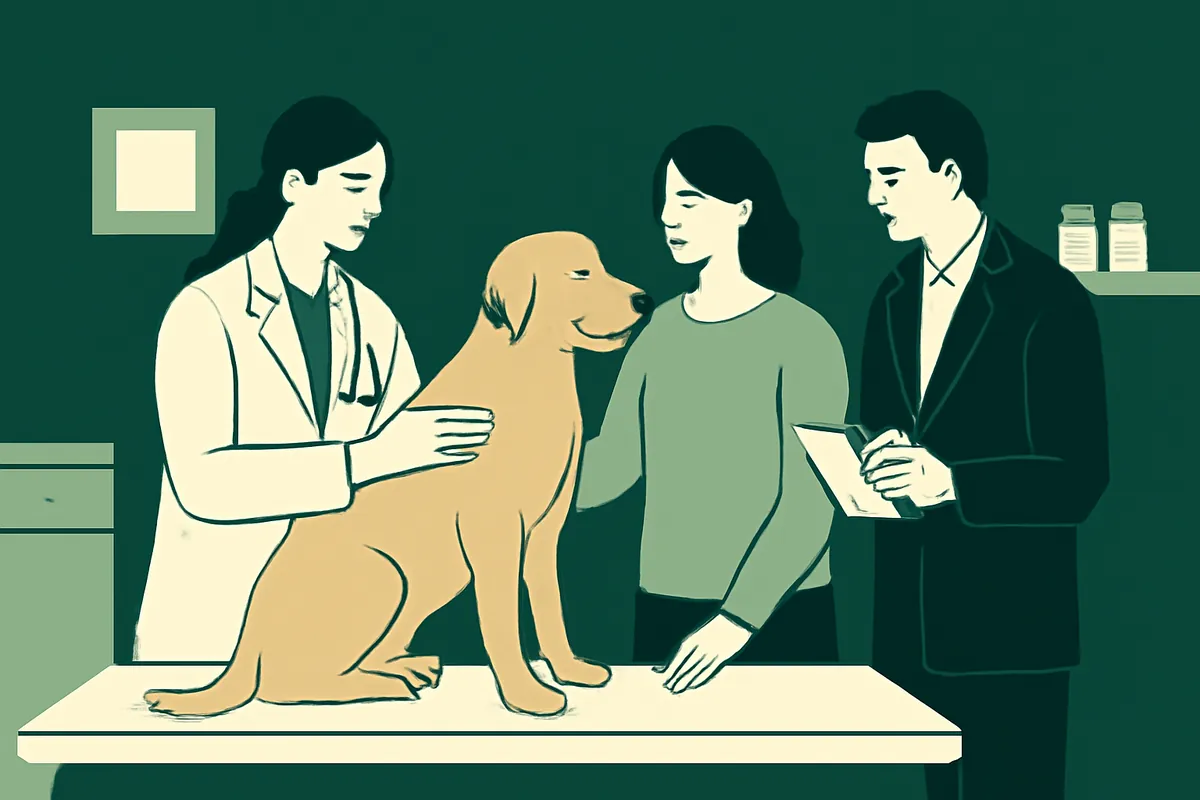
Pet Nutritionist vs Veterinary Nutritionist: Who Does What
The difference between a pet nutrition consultant and a board-certified veterinary nutritionist, what each may do, and how to work within your scope.
25 September 2026

How to Read a Pet Food Label: A Practical Guide for Consultants
Nutritional adequacy statements, guaranteed analysis, dry matter comparisons and the ingredient list: what a pet food label tells you and what it does not.
25 September 2026

How to Calculate a Dog's Calorie Needs
Resting and daily energy requirements, life-stage factors, body condition scoring and how to turn a calorie target into a practical feeding plan.
25 September 2026