Small Mammal Care: Rabbits, Guinea Pigs and Ferrets
Small mammal care for rabbits, guinea pigs and ferrets: diet, housing, companionship, handling, routine health checks and the warning signs that need a vet.
PetCred Editorial Team · Updated 4 September 2026 · 6 min read
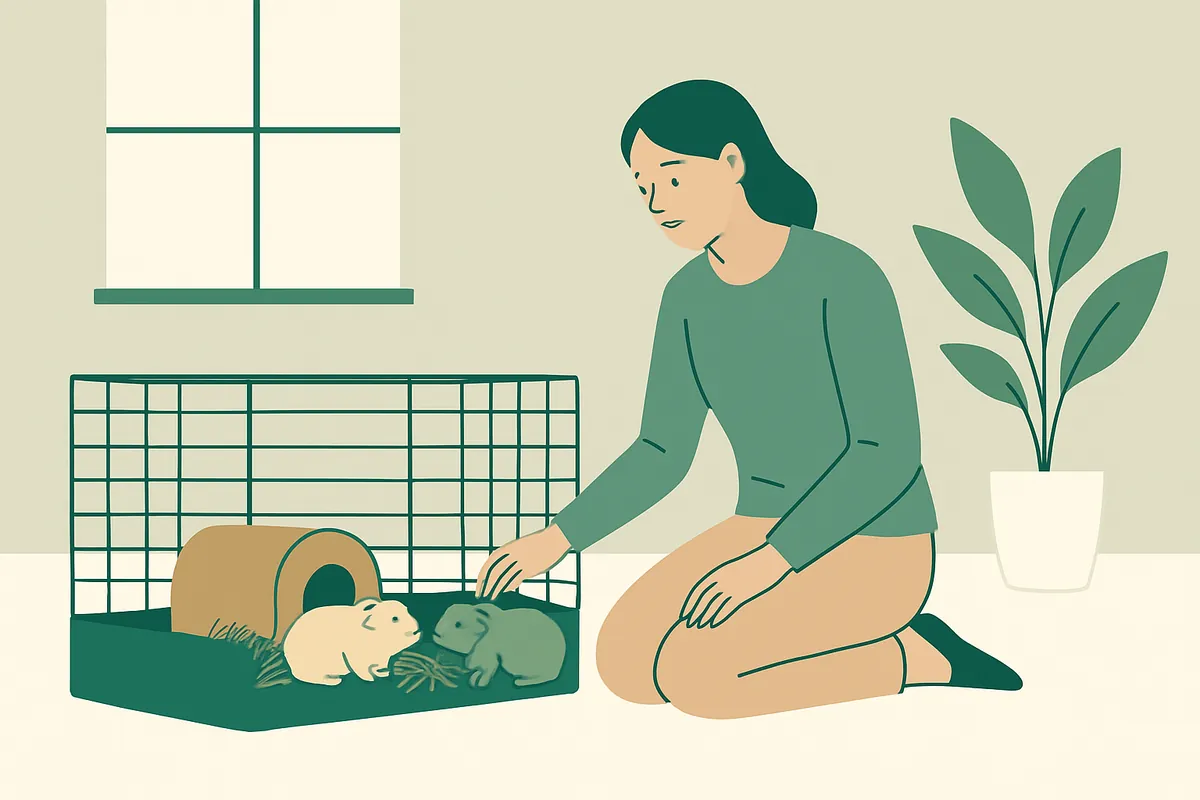
Small mammal care looks simple from the outside: a cage, some food, some bedding. In practice, rabbits, guinea pigs and ferrets have very specific needs, and they are often kept in ways that do not meet them. Rabbits and guinea pigs are prey animals that hide illness and need diets built around hay. Ferrets are carnivores with different needs again. All three are social, active and intelligent.
This guide covers the basics every exotic pet professional should know for these three species: diet, housing, companionship, handling, routine health care and the warning signs that need a vet. It is general guidance for healthy animals; any animal that is unwell needs a vet with experience of small mammals.
Small mammal care at a glance
| Rabbit | Guinea pig | Ferret | |
|---|---|---|---|
| Diet type | Herbivore | Herbivore | Carnivore |
| Diet base | Unlimited hay or grass | Unlimited hay or grass | Meat-based, high-protein diet |
| Special need | Continuously growing teeth; gut must keep moving | Needs vitamin C in the diet every day; continuously growing teeth | Needs animal protein and fat, not plant-based foods |
| Social needs | Usually happiest with a neutered rabbit companion | Should live with other guinea pigs | Usually enjoy company of other ferrets |
| Daily pattern | Most active at dawn and dusk | Active in bursts through day and night | Sleep for much of the day, with active play periods |
Rabbits
Diet
Hay or grass should make up the large majority of a rabbit's diet, available at all times. Chewing fibrous hay wears down the teeth, which grow throughout life, and keeps the gut moving. Add a daily portion of suitable leafy greens and a small, measured amount of a good-quality pellet. Muesli-style mixes are widely advised against because rabbits pick out the parts they like, leaving an unbalanced diet, and they have been linked to dental and digestive problems. Treats, including fruit and carrots, should be small and occasional.
Housing and exercise
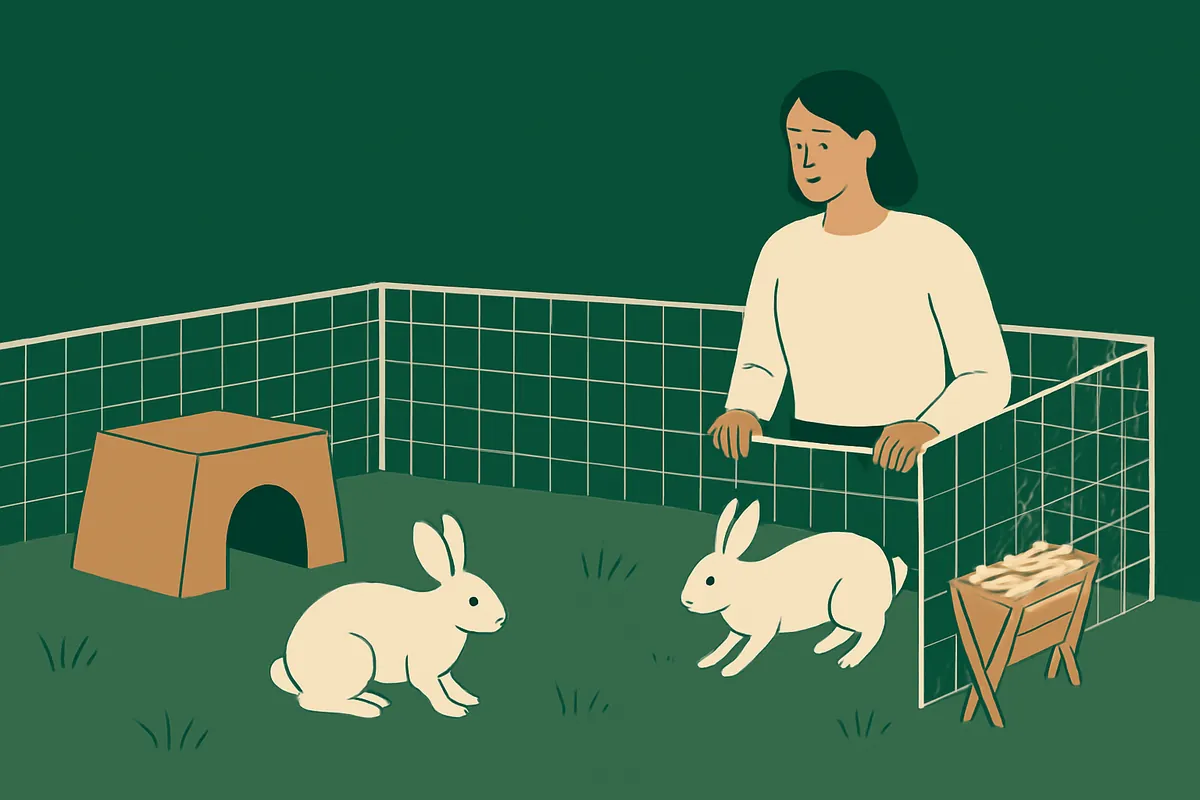
Rabbits need space to hop, run, stand fully upright on their back legs and dig. A small hutch on its own does not provide that. The UK's Rabbit Welfare Association and Fund has long campaigned on this under the message "a hutch is not enough". A good setup is a secure shelter attached to a large run or a rabbit-proofed room, with hiding places, digging opportunities and daily access to space.
Companionship
Rabbits are social animals. Most do best with another rabbit, usually a neutered pair, introduced carefully. A guinea pig is not a suitable companion: they have different needs, communicate differently and a rabbit can injure a guinea pig.
Handling
Many rabbits dislike being lifted. When you must pick one up, support the hindquarters fully, keep the rabbit close to your body, and never lift by the ears or scruff. A rabbit that kicks out while badly supported can injure its spine. Handle at floor level where possible.
Health checks
- Teeth: watch for drooling, a wet chin, dropping food or eating less, which can point to dental problems.
- Rear end: check daily, and twice daily in warm weather. Flystrike, where flies lay eggs on soiled fur, is an emergency.
- Droppings: plenty of large, round droppings is a good sign. Fewer, smaller or none is a warning.
- Vaccination: vaccines against serious viral diseases of rabbits are available in many countries. Which ones apply depends on where you live, so ask a vet.
Guinea pigs
Diet
Like rabbits, guinea pigs need unlimited hay or grass, and their teeth grow continuously. Unlike rabbits, guinea pigs cannot make their own vitamin C, so they need it in their diet every day. Fresh vegetables that are good sources of vitamin C, plus a pellet made specifically for guinea pigs, are the usual approach. Vitamin C in pellets breaks down over time, so check dates and store food well. A guinea pig with a vitamin C deficiency can develop scurvy, with signs such as reluctance to move, swollen joints and poor coat; that needs a vet.
Housing
Guinea pigs need a spacious enclosure with solid flooring, several hiding places (they are prey animals and feel safest with cover) and room to run. Wire floors can hurt their feet. Keep them away from drafts, direct sun and extreme temperatures, and bring outdoor guinea pigs in or provide proper protection in cold weather.
Companionship
Guinea pigs are highly social and should live with at least one other guinea pig. A lone guinea pig is more likely to be stressed. As with rabbits, housing guinea pigs with rabbits is widely advised against.
Handling
Scoop a guinea pig up with one hand under the chest and the other supporting the hindquarters, and hold it close. Guinea pigs can be startled and jump, so handle them low down, seated on the floor if possible.
Ferrets
Diet
Ferrets are carnivores. They need a diet high in animal protein and fat, and they digest fiber and plant material poorly. Suitable options include complete ferret foods and, for some keepers, meat-based diets planned carefully. Diets designed for other species are not suitable long term, and sugary treats are best avoided.
Housing and play
Ferrets sleep for much of the day, then play energetically. They need a secure, escape-proof enclosure with a cozy sleeping area, plus several hours outside the cage each day in a ferret-proofed space. They are skilled escape artists and can squeeze through surprisingly small gaps, and they chew things that can block their gut, such as rubber and foam.
Companionship
Most ferrets enjoy the company of other ferrets and play together. Introductions should be gradual.
Health points specific to ferrets
- Unspayed females. A female ferret (jill) that comes into season and is not brought out of it can develop a life-threatening condition caused by prolonged high estrogen. Owners must discuss with a vet how to manage this, for example by neutering or a hormonal implant.
- Canine distemper. Ferrets are highly susceptible to canine distemper, which is almost always fatal in them. Vaccination is recommended in many countries; ask a vet.
- Human flu. Ferrets can catch influenza from people, so unwell owners should limit close contact.
Ferrets are banned or restricted in some places, so check local rules before advising on keeping one.
Warning signs that need a vet
Prey animals such as rabbits and guinea pigs hide illness, so any of these can mean a problem that is already serious. Refer to a vet with small mammal experience:
- Same day: a rabbit or guinea pig that has stopped eating or passing droppings; flystrike; breathing difficulty; a head tilt or loss of balance; a ferret that is collapsed, has diarrhea with lethargy, or may have swallowed an object.
- Soon: drooling or a wet chin, weight loss, overgrown teeth or nails, hair loss, lumps, discharge from the eyes or nose, or a change in behavior.
Regular weighing on kitchen scales is one of the most useful tools for small mammals, because gradual weight loss is easy to miss by eye.
Hygiene matters for people too. Some small mammals can carry infections, including ringworm, that can pass to humans. Wash hands after handling and cleaning, and take extra care in households with young children, older people or anyone with a weakened immune system.
Where your role stops
An exotic pet professional can advise on diet, housing, companionship and handling for healthy animals, check for warning signs and explain them to owners. Diagnosis, treatment, dental work and decisions about neutering or vaccination belong to the vet. Never suggest medication, and do not advise force-feeding a rabbit or guinea pig that has stopped eating without a vet's instructions.
Keep learning
For the wider picture, read how to become an exotic pet specialist. Enclosure design is covered in safe enclosures for reptiles and small mammals, and heat, light and humidity for reptiles in reptile husbandry basics.
Small mammal care is one of the topics in the Exotic Pet Specialist assessment. You can try the format with our free sample exotic pet questions.
Written by the PetCred Editorial Team and checked against the published curriculum for this program. Laws and requirements change and differ by place: check local rules before relying on anything legal or regulatory here.
Free course
Exotic Pet Care Fundamentals: A Free 5-Lesson Course
Five short lessons, a quick check after each, no sign-up. Start now →
More exotic pets guides
How to Become an Exotic Pet Specialist
What exotic pet specialists do, the husbandry reptiles, birds and small mammals demand, where a vet takes over, and how to get experience and certified.
12 August 2026
Exotic Pet Welfare and the Law
Exotic pet welfare and the law explained for professionals: welfare frameworks, CITES and the main rules on keeping and selling exotic pets in four countries.
16 September 2026
Reptile Husbandry Basics: Heat, Light and Humidity
Reptile husbandry basics for professionals: heat gradients, UVB lighting, humidity by species, measuring conditions and the signs that something is wrong.
23 August 2026