Exotic Pet Welfare and the Law
Exotic pet welfare and the law explained for professionals: welfare frameworks, CITES and the main rules on keeping and selling exotic pets in four countries.
PetCred Editorial Team · Updated 16 September 2026 · 6 min read

Exotic pet welfare and the law are closely linked. Laws on keeping, selling and moving exotic animals exist partly to protect wild populations and ecosystems, partly to protect people, and partly to protect the animals themselves. For an exotic pet professional, knowing the basics is part of the job: you may be asked whether a species is legal to keep, whether a customer needs a license, or what an owner's duty of care means in practice.
This guide gives an overview of the principles of animal welfare and the main kinds of exotic pet law in the US, UK, Canada and Australia, at the time of writing. It is not legal advice. Laws differ between countries and often between states, provinces and local areas, and they change regularly. Before you start a business, sell animals or advise on a particular species, check the current rules with your local authority and the relevant government agencies.
Welfare first: what good care means
Most modern animal welfare thinking builds on two frameworks.
- The Five Freedoms, developed in the UK in the 1960s and 1970s: freedom from hunger and thirst; from discomfort; from pain, injury and disease; to express normal behavior; and from fear and distress.
- The Five Domains model, which looks at nutrition, physical environment, health and behavioral interactions, and how together they shape the animal's mental state. It puts more emphasis on giving animals positive experiences, not just avoiding negative ones.
For exotic pets, these frameworks raise hard questions. Can this species express its normal behavior in a home? Can the owner provide its environment for its whole life, which may be decades for some tortoises, reptiles and parrots? Can it get veterinary care from someone who knows the species? A good exotic pet professional asks these questions before an animal is bought, not after.
How exotic pet law is layered
In most countries, rules come at several levels:
- International agreements on trade in protected species.
- National laws on welfare, imports, endangered species and invasive species.
- State, provincial or territory laws, often deciding which species may be kept and whether a license is needed.
- Local rules, such as city or county bylaws, planning or zoning conditions and business licensing.
A species can be legal nationally and banned in a particular state or city. That is why "is it legal?" often has the answer "it depends where you live".
CITES: international trade in protected species
The Convention on International Trade in Endangered Species of Wild Fauna and Flora (CITES) is an international agreement that regulates trade in listed species of animals and plants, through permits and certificates. The US, UK, Canada and Australia are all parties. Many reptiles, birds and some other exotic pets are listed.
For professionals, the practical points are:
- Moving a CITES-listed animal between countries needs the correct paperwork, even if it was bred in captivity.
- Some listed species also need documents to be sold within a country.
- Keep records of where each animal came from. Legal origin matters.

The rules in four countries
The summaries below describe the main layers in each country at the time of writing. They are starting points for your own checks, not a complete list.
United States
There is no single federal law that decides which exotic animals can be kept as pets. The picture is set mainly by the states, and sometimes by counties and cities:
- States vary widely. Some have few restrictions on keeping exotic species; others ban or require permits for many. For example, ferrets are prohibited as pets in California and Hawaii, and Hawaii strictly controls reptiles such as snakes because of the risk to its ecosystems.
- Federal laws still apply. The Lacey Act makes trade in wildlife taken or sold in breach of other laws a federal offense, and allows certain species to be listed as injurious, restricting their import and movement. The Endangered Species Act protects listed species. The federal Animal Welfare Act licenses some commercial dealers and exhibitors of certain warm-blooded animals.
- Local rules add another layer. Cities and counties may restrict certain animals or the number kept, and require business licenses.
United Kingdom
- Welfare law. The Animal Welfare Act 2006 (England and Wales), the Animal Welfare (Scotland) Act 2006 and the Welfare of Animals Act (Northern Ireland) 2011 place a duty of care on anyone responsible for an animal. In England and Wales, that includes meeting its needs for a suitable environment, a suitable diet, the ability to exhibit normal behavior, housing with or apart from other animals as appropriate, and protection from pain, suffering, injury and disease. This applies to exotic pets as much as to dogs and cats.
- Dangerous wild animals. Under the Dangerous Wild Animals Act 1976, keeping certain species considered dangerous, such as some venomous snakes, requires a license from the local council.
- Selling animals as pets. Businesses that sell animals as pets need a license from their local council. In England this is under the 2018 regulations on licensing activities involving animals; Scotland, Wales and Northern Ireland have their own rules.
- Invasive species. Some species listed as invasive cannot be sold, bred or released, even where existing pets may be kept for the rest of their lives.
Canada
- Provinces and municipalities decide most rules about which exotic animals may be kept, and they differ a great deal. A species allowed in one province, or one city, may be prohibited in the next.
- Federal rules cover international and interprovincial movement. The Wild Animal and Plant Protection and Regulation of International and Interprovincial Trade Act implements CITES in Canada, and animal health import rules are administered by the Canadian Food Inspection Agency.
Australia
Australia has some of the strictest rules in the world, largely to protect its native wildlife and agriculture:
- Imports. Federal law allows only species on an approved list to be imported alive. Most exotic reptiles and many other exotic pets common elsewhere cannot legally be imported, and keeping illegally imported animals is an offense.
- Native species. Keeping many native reptiles, birds and other animals requires a license from the relevant state or territory.
- State and territory rules. Some familiar pets are restricted. For example, Queensland does not allow rabbits to be kept as pets without a permit, and ferrets are banned or restricted in some states and territories.
What this means for your daily work
- Know the rules where you work. Keep a note of which species are restricted locally and which need licenses, and review it regularly.
- Keep records. Source, date, paperwork and health records for every animal you sell, board or rehome.
- Sell responsibly. Give buyers clear information about the species' needs, lifespan and costs of care, and be willing to decline a sale that is not in the animal's interest.
- Never release. Released exotic pets can suffer and die, and some establish invasive populations. Help owners who can no longer keep an animal find a rescue or suitable new home.
- Report concerns. If you believe an animal is being neglected or kept illegally, you can report it to local animal welfare organizations (such as the RSPCA in the UK and Australia, or SPCAs and humane societies in North America) or to animal control and the relevant authorities.
Where your role stops
An exotic pet professional can explain welfare principles, point people to the right authorities and apply the rules to their own business. Interpreting the law for a particular case is a job for the relevant authority or a lawyer, and health questions belong with a vet. When in doubt, say so and refer.
Keep learning
For the wider picture, read how to become an exotic pet specialist. Practical welfare starts with husbandry: see reptile husbandry basics and small mammal care basics.
Welfare, husbandry and multi-species care are part of the Exotic Pet Specialist assessment. You can try the format with our free sample exotic pet questions.
Written by the PetCred Editorial Team and checked against the published curriculum for this program. Laws and requirements change and differ by place: check local rules before relying on anything legal or regulatory here.
Free course
Exotic Pet Care Fundamentals: A Free 5-Lesson Course
Five short lessons, a quick check after each, no sign-up. Start now →
More exotic pets guides
How to Become an Exotic Pet Specialist
What exotic pet specialists do, the husbandry reptiles, birds and small mammals demand, where a vet takes over, and how to get experience and certified.
12 August 2026

Small Mammal Care: Rabbits, Guinea Pigs and Ferrets
Small mammal care for rabbits, guinea pigs and ferrets: diet, housing, companionship, handling, routine health checks and the warning signs that need a vet.
4 September 2026
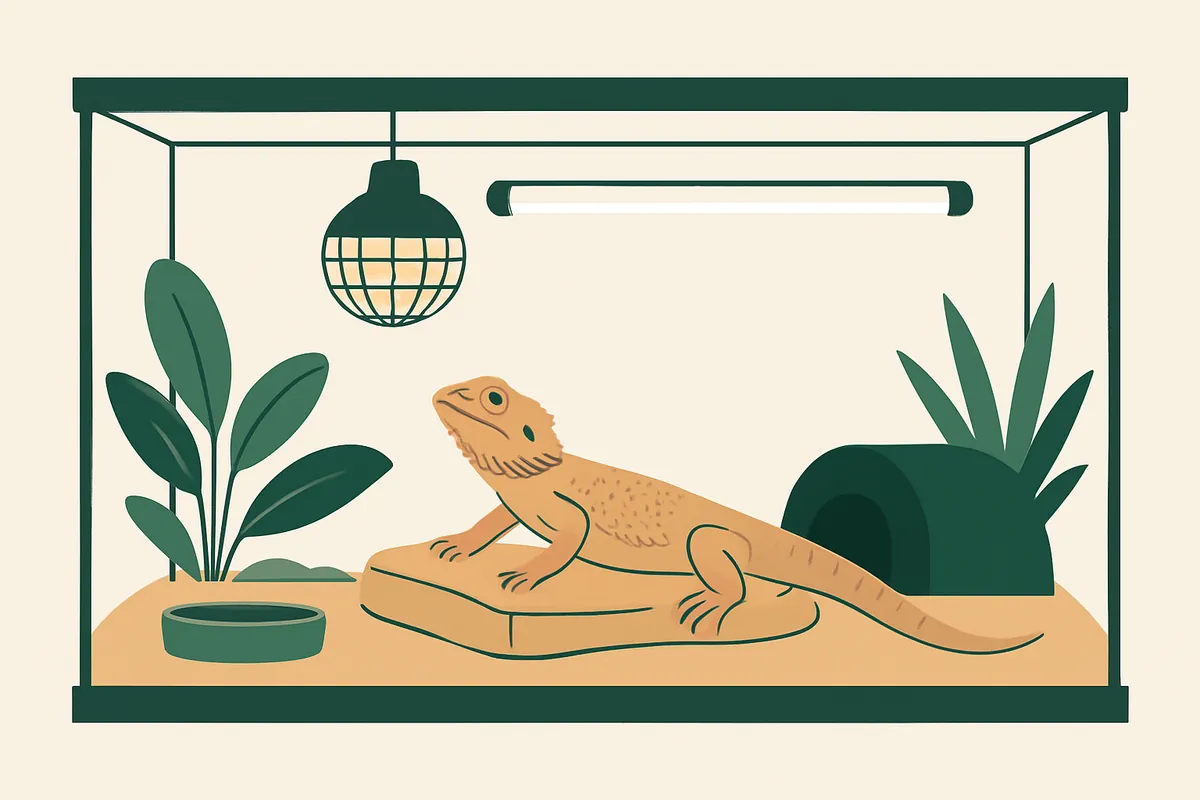
Reptile Husbandry Basics: Heat, Light and Humidity
Reptile husbandry basics for professionals: heat gradients, UVB lighting, humidity by species, measuring conditions and the signs that something is wrong.
23 August 2026