Reptile Husbandry Basics: Heat, Light and Humidity
Reptile husbandry basics for professionals: heat gradients, UVB lighting, humidity by species, measuring conditions and the signs that something is wrong.
PetCred Editorial Team · Updated 23 August 2026 · 6 min read
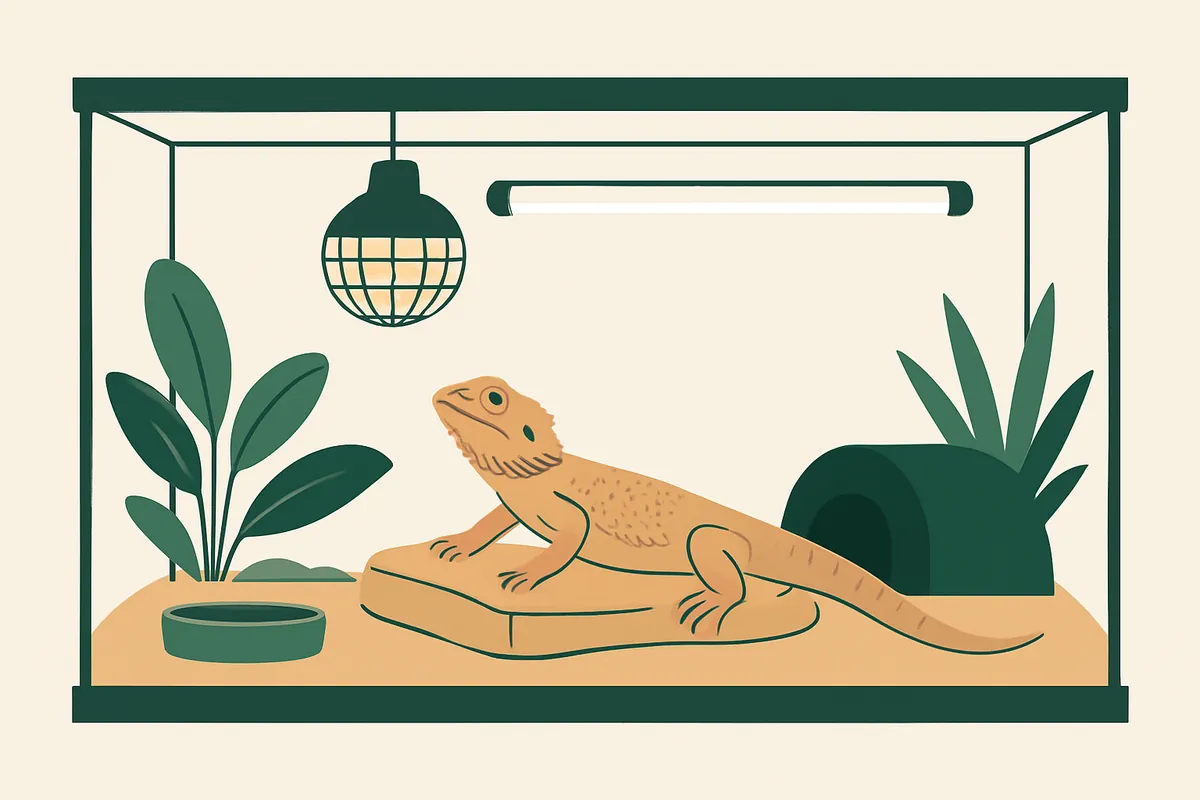
Reptile husbandry basics come down to three things that most reptiles cannot provide for themselves in a home: the right heat, the right light and the right humidity. Get them right, and a reptile can digest its food, fight off infection, shed cleanly and behave normally. Get them wrong, and many of the problems exotic vets see follow: animals that will not eat, stuck sheds, respiratory infections and metabolic bone disease.
This guide explains the principles behind heat, ultraviolet light and humidity for pet reptiles, how to measure them, and how to spot signs that something is wrong. It is written for exotic pet professionals and knowledgeable keepers. Every species has its own needs, so use species-specific guidance from a reptile vet or a reliable, current source for exact figures. Any reptile showing signs of illness needs a vet with reptile experience.
Why heat, light and humidity matter so much
Reptiles are ectotherms: their body temperature depends on their surroundings. In the wild they move between sun and shade, burrows and open ground to keep their body within a preferred range. That temperature affects almost everything: how fast they digest food, how well their immune system works, how active they are and how they breed.
In an enclosure, the keeper controls all of this. A reptile cannot find a warmer rock or a damper burrow if the keeper has not provided one. That is why husbandry is so closely tied to health in reptiles, and why the first question about a reptile that is unwell is often "tell me about its setup".
Heat: build a gradient, not a temperature
The goal is not one temperature but a range across the enclosure, so the animal can choose.
- A thermal gradient. One end warmer, the other cooler, with the animal able to move freely between them. This lets it regulate its own temperature through the day.
- A basking area for species that bask, such as bearded dragons: a spot directly under an overhead heat source where the surface and air are warmest.
- Night-time conditions. Many species cope with, and benefit from, a drop in temperature at night, but how far depends on the species and the room.
Heat sources
- Basking lamps give light and heat from above, which suits day-active basking species.
- Ceramic heat emitters and deep heat projectors give heat without bright visible light, useful for night-time heat where needed.
- Heat mats and cables warm from below. They suit some species but do not create a basking spot from above, which basking lizards rely on.
Whatever the source, two rules apply. Every heat source must be controlled by a suitable thermostat, because unregulated heaters can overheat an enclosure or cause burns. And overhead lamps and emitters need guards, because reptiles do not always move away from a surface that is burning them. Heat rocks are widely advised against for the same reason.
Measuring heat
Stick-on dial thermometers are unreliable. Use digital thermometers with probes at the warm and cool ends, and an infrared thermometer to check surface temperatures at the basking spot. Check readings daily, and again whenever the season or the room changes.
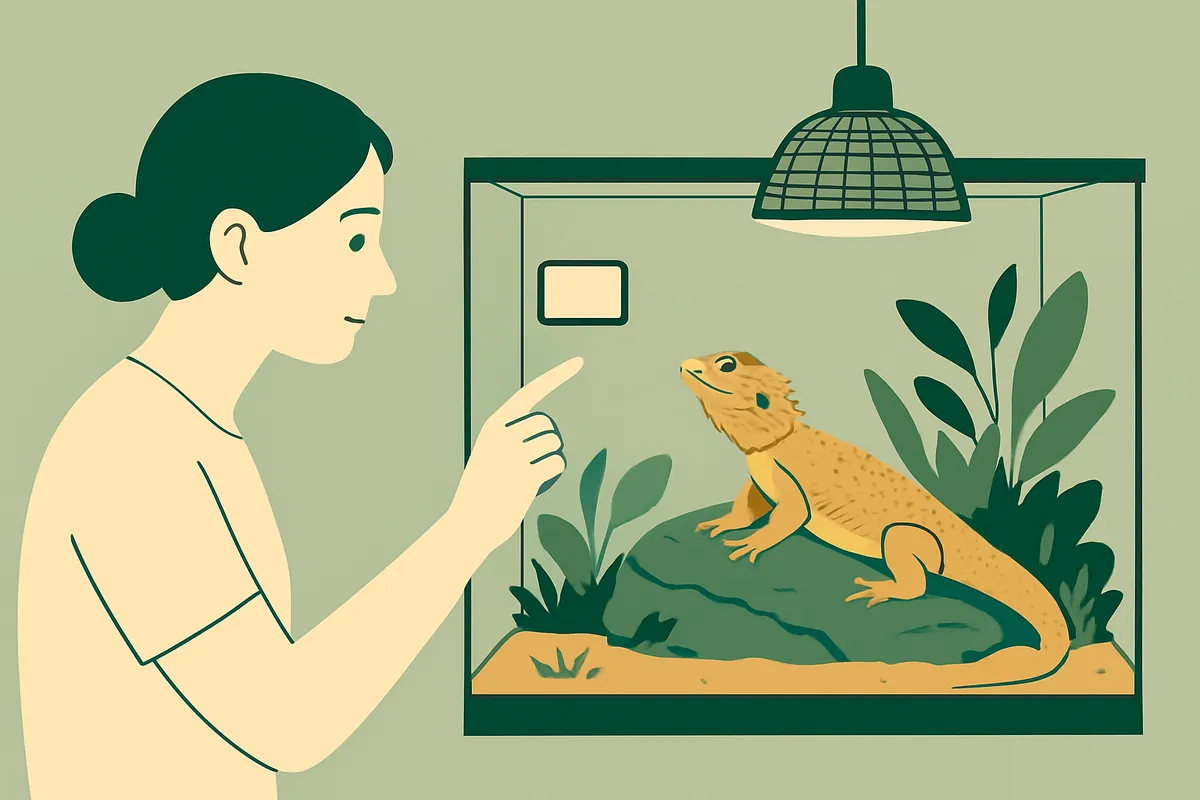
Light: day length and ultraviolet
Reptiles need a regular day and night cycle, with a dark night. Many also need ultraviolet light.
UVB lets many reptiles make vitamin D3 in their skin, which they need to absorb and use calcium. Without enough UVB (or, for some species, enough dietary vitamin D3), a reptile can develop metabolic bone disease, in which bones become weak and deformed.
Key points about UVB:
- Needs vary by species. Day-active basking lizards need considerably more than nocturnal or shade-dwelling species. Reptile researchers have grouped species into zones based on the UV levels they meet in the wild, known as Ferguson zones, which many keepers use as a starting point.
- Glass and most plastics block UVB. A lamp outside a glass tank, or a sunny window, provides little or none.
- Mesh reduces it. A lamp above a mesh lid delivers less UVB than the same lamp inside the enclosure.
- Distance matters. UVB drops quickly with distance from the lamp. Follow the manufacturer's guidance for mounting distance.
- Output falls over time. A UVB lamp can still give visible light long after its UVB output has declined. Replace it on the manufacturer's schedule, or measure it with a UV index meter.
- Provide shade. The animal must be able to move out of the UV and heat.
Humidity: match the natural habitat
Humidity is the amount of moisture in the air. Species from deserts, grasslands and rainforests need very different levels.
- Too low for the species can cause incomplete sheds (retained skin, especially on toes and tail tips, and retained eye caps in snakes) and dehydration.
- Too high, especially with poor ventilation, can contribute to skin infections and respiratory problems.
Practical tools:
- Hygrometers (digital, not dial) at more than one point in the enclosure.
- A humid hide (a hide with damp moss or substrate) gives species that need it a moist retreat, especially when shedding.
- Misting, water bowls and substrate choice raise humidity; ventilation lowers it. Balancing the two is the skill.
How common species differ
Exact figures belong in species-specific care guidance, but the broad profiles show why one setup does not fit all:
| Species | Natural habitat | Heat | Light | Humidity |
|---|---|---|---|---|
| Bearded dragon | Arid scrub and desert | Hot overhead basking spot, cooler end | Strong UVB needed | Low |
| Leopard gecko | Dry, rocky grassland | Warm ground and a cooler area; active at dusk | Many keepers now offer low-level UVB with shade; ask a reptile vet | Low, with a humid hide for shedding |
| Ball python | Grassland and forest edges in West and Central Africa | Warm end and cooler end | Day and night cycle; low-level UVB is increasingly offered | Moderate to high |
| Crested gecko | Humid forest, living in trees | Moderate; sensitive to overheating | Day and night cycle; low-level UVB is often offered | High, with drying periods between mistings |
| Corn snake | Woodland and fields in the southeastern US | Warm end and cooler end | Day and night cycle | Moderate |
Signs the husbandry may be wrong
Many of these also point to illness, so treat them as reasons to review the setup and to involve a vet:
- Not eating, or eating much less than usual.
- Lethargy, or spending all its time at one end of the enclosure.
- Incomplete or patchy sheds, retained eye caps.
- Soft or swollen jaw, swollen limbs, tremors or difficulty walking, which can be signs of metabolic bone disease.
- Breathing with the mouth open, bubbles around the nose or mouth, or wheezing.
- Burns on the belly or back.
- Weight loss, which you can only see reliably by weighing regularly.
Where your role stops
An exotic pet professional can set up and review husbandry, measure conditions, explain why they matter and help owners correct them. Diagnosis and treatment belong to a vet with reptile experience. Refer the same day if a reptile has breathing problems, burns, a soft or swollen jaw, tremors, is unable to move normally, or has stopped eating along with other signs of illness. Do not recommend medication or change supplements for a sick animal without the vet.
A simple reptile husbandry routine
- Daily: check temperatures at both ends and the basking spot, check humidity, confirm lights and heaters are working, look at the animal's behavior and droppings.
- Weekly: weigh small reptiles on kitchen scales and record the weight, check lamp guards and thermostat probes are in place.
- As scheduled: replace UVB lamps on the manufacturer's schedule and write the date on your records.
Keep learning
Reptile husbandry is one part of a wider field. For the whole picture, read how to become an exotic pet specialist. Enclosure design is covered in safe enclosures for reptiles and small mammals, and legal responsibilities in exotic pet welfare and the law.
Reptile husbandry is one of the topics in the Exotic Pet Specialist assessment. You can try the format with our free sample exotic pet questions.
Written by the PetCred Editorial Team and checked against the published curriculum for this program. Laws and requirements change and differ by place: check local rules before relying on anything legal or regulatory here.
Free course
Exotic Pet Care Fundamentals: A Free 5-Lesson Course
Five short lessons, a quick check after each, no sign-up. Start now →
More exotic pets guides
How to Become an Exotic Pet Specialist
What exotic pet specialists do, the husbandry reptiles, birds and small mammals demand, where a vet takes over, and how to get experience and certified.
12 August 2026
Exotic Pet Welfare and the Law
Exotic pet welfare and the law explained for professionals: welfare frameworks, CITES and the main rules on keeping and selling exotic pets in four countries.
16 September 2026
Small Mammal Care: Rabbits, Guinea Pigs and Ferrets
Small mammal care for rabbits, guinea pigs and ferrets: diet, housing, companionship, handling, routine health checks and the warning signs that need a vet.
4 September 2026