Breed Trims Every Groomer Should Know
Dog grooming styles by breed: poodle, doodle, terrier, spaniel and small breed trims, show versus pet styles, and why most groomers avoid shaving double coats.
PetCred Editorial Team · Updated 7 August 2026 · 7 min read
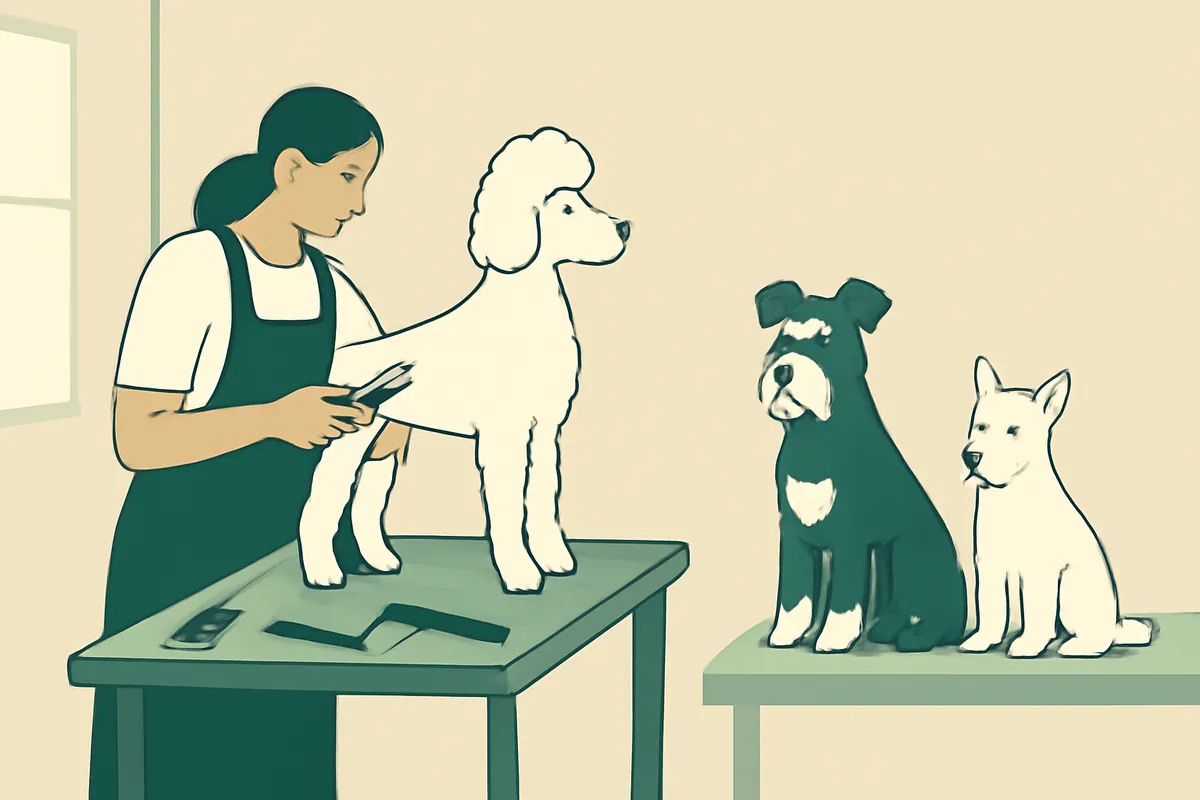
Clients rarely ask for a trim by name. They show you a photo, say "like last time" or ask for "a puppy cut, but not too short". A groomer who knows the common dog grooming styles by breed can turn those requests into a clear plan, explain what is realistic for the coat, and deliver a result that looks right for the dog.
This guide covers the trims every groomer meets again and again: the classic breed styles, the practical pet trims most owners actually want, and the coats that should not be clipped at all. It is an overview for working and trainee groomers, not a step-by-step technique manual. Scissoring and clipper work are learned on real dogs, under supervision.
Breed standards, show trims and pet trims
Three ideas are worth keeping apart.
- The breed standard is the description of the ideal dog of a breed, written by breed clubs and kennel clubs. For some breeds it describes how the coat is presented; for others it says little about grooming.
- Show trims present a dog for the show ring according to its standard and the conventions of the breed. Some are elaborate, take years to master and need a coat grown and maintained for months.
- Pet trims are practical versions for family dogs. They keep the character of the breed, such as a Schnauzer's beard or a Westie's round head, but they are shorter and easier to maintain at home.
Most salon work is pet trims. Knowing the breed style still matters, because it tells you the outline owners expect and the proportions that make a dog look like itself.
The building blocks
Almost every trim is made from the same decisions:
- Body length. Clipped with a blade or a blade and guard comb, or scissored for a softer finish.
- Head and face. Round, square, with a beard, with eyebrows, with a topknot, or kept short and clean.
- Legs and feet. Columns, fuller "pants", tidy round feet or neat cat feet.
- Tail. Left natural, shaped into a plume or finished with a pompom.
- Hygiene areas. The sanitary area, the underside and the pads, trimmed short and clean on almost every dog.
When you understand how each decision changes the outline, you can adapt any trim to the dog in front of you.
Common trims by breed
| Breed or type | Classic style | What most pet owners ask for | Notes |
|---|---|---|---|
| Poodle | Show clips such as the Continental and English Saddle | Lamb trim, sporting trim or a teddy face with a topknot | The most varied coat to trim; clean face and feet are traditional |
| Doodles and poodle crosses | No breed standard | Teddy bear or puppy cut, face rounded | Coats vary widely; mats are common, see below |
| Miniature Schnauzer | Classic Schnauzer outline with beard, eyebrows and leg furnishings | Clipped body, the same outline kept | Show coats are hand-stripped |
| West Highland White Terrier | Rounded head, hand-stripped coat | Clipped body with a round head | Clipping softens the harsh coat over time |
| American Cocker Spaniel | Short back, longer skirt and leg feathering | Shorter all over, face and feet neat | Ears and feet need regular care |
| Bichon Frise | Rounded, scissored "powder puff" outline | The same shape, shorter | A curly coat that mats easily |
| Shih Tzu, Lhasa Apso, Maltese | Long, flowing show coat | Puppy cut or teddy bear trim, sometimes a topknot | Keep hair out of the eyes |
| Yorkshire Terrier | Long, fine show coat | Short puppy cut | A fine coat that tangles quickly |
| Pomeranian, Husky, Golden Retriever | Natural double coat, tidied | Deshed and a tidy trim, not a shave | See "Coats you should not shave" |
Poodles
The Poodle is the breed that teaches groomers to scissor. Show Poodles wear formal clips described in the breed standards, but pet Poodles are usually in one of a few practical styles:
- Lamb trim. The body is shorter and the legs fuller, with a rounded topknot. It keeps a Poodle look with less maintenance.
- Sporting or kennel trim. Short all over, with a topknot and often a pompom on the tail. Practical for active dogs.
- Teddy face. A rounded, fuller face instead of the traditional clean-shaved face, popular with owners who like a softer look.
Clean feet and a clean face are traditional for Poodles, but they need careful clipper work around the lips, eyes and toes.
Doodles and poodle crosses
Doodles have no breed standard and their coats range from straight to tightly curled, often in the same litter. Owners usually want a "teddy bear" look: an even length on the body, fuller legs and a rounded face. The biggest challenge is not the style but the coat underneath, which often mats close to the skin between grooms. Our guide to de-matting a dog safely explains when a shorter clip is the kinder choice.
Terriers and wire coats
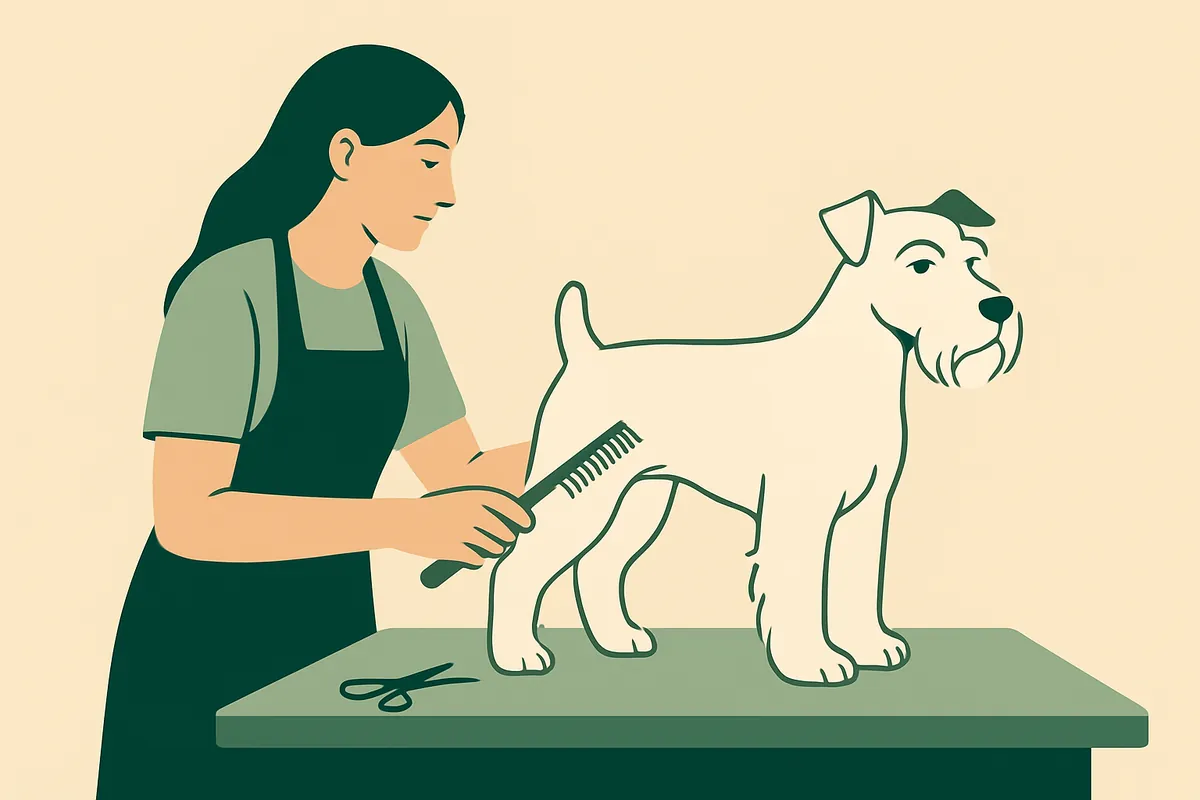
Many terriers, including Schnauzers, Westies, Scotties and Border Terriers, have wire coats. In the show ring these are hand-stripped: dead hair is pulled out so the new, harsh coat grows through. Clipping cuts the hair instead of removing it, so over time a clipped wire coat tends to become softer and lighter in color.
Most pet owners choose clipping for convenience, which is fine as long as they understand the trade-off. Keep the breed's characteristic outline: the Schnauzer's beard, eyebrows and furnishings, the Westie's round head, the Scottie's skirt and eyebrows.
Spaniels
The American Cocker Spaniel is usually trimmed with a short back and a longer skirt and legs, while English Cocker Spaniels and Springers are usually kept closer to their natural outline and tidied rather than clipped short. Pet owners often ask for everything shorter. Pay attention to the ears, which can trap moisture and debris, and to the feet, where hair between the pads collects mud and grass seeds.
Long, drop-coated small breeds
Shih Tzus, Lhasa Apsos, Maltese and Yorkshire Terriers can grow long, flowing coats, but very few pet owners keep them that way. A puppy cut, with an even, manageable length all over, is the most common request. Keep hair clear of the eyes, either with a short face trim or a topknot, and watch for tangles behind the ears and in the armpits.
Coats you should not shave
Double-coated breeds such as Huskies, Malamutes, Pomeranians, German Shepherds and Golden Retrievers have a dense undercoat and a coarser top coat. Owners sometimes ask for them to be shaved to keep them cool or reduce shedding.
Most groomers advise against it. The coat helps protect the skin from sun and helps regulate temperature, and after a close shave some double coats grow back slowly, unevenly or with a changed texture. A thorough deshed, with bathing, high-velocity drying and brushing out the loose undercoat, usually does more for comfort. A tidy trim of the feet, the hygiene area and the feathering keeps the dog neat.
There are exceptions, such as a severely matted coat where clipping is the humane option. Explain the reasons and the possible effects to the owner, and record their agreement. Our guide to dog coat types explains how each coat grows.
Talking to owners about the trim
A trim is only right if the owner can live with it. Before you start:
- Ask how they live with the dog. Swimming, muddy walks and how often they brush all change what is realistic.
- Use photos, but check the coat. A photo of a show dog with a full coat cannot be recreated on a matted pet.
- Agree lengths in plain terms. "Short enough to see the shape of the legs" is clearer than a blade number to most owners.
- Agree the face. It is what owners notice first, and the part they are most likely to be unhappy with.
- Write it down on the dog's record, so next time you can say "the same as last time" and mean it.
Learning breed trims
Breed styles take years to master. Good ways to build the skill:
- Work alongside an experienced groomer and ask why each decision is made.
- Study breed standards and photos of well-groomed dogs of each breed, and practice seeing the outline.
- Start with pet trims on cooperative dogs before attempting show-style work.
- Keep safety first: scissor tips away from the skin, and never rush around the eyes, ears and feet. Our grooming safety guide covers the main risks.
Next steps
Breed styles are one part of a groomer's knowledge, alongside coats, handling and health. For the full route into the profession, see how to become a certified dog groomer.
Breed standards and common pet trims are one of the topics in the Professional Dog Groomer curriculum. To see how the assessment works, try the free sample dog groomer questions, each with a model answer.
Frequently asked questions
What is the difference between a puppy cut and a teddy bear cut?
Both leave an even, manageable length on the body. The names are used loosely and differ between salons, but a teddy bear trim usually means a fuller, rounded face and legs, while a puppy cut can be shorter and simpler. Agree the lengths and the face with the owner rather than relying on the name.
Should you shave a double-coated dog in summer?
Most groomers advise against it. The double coat helps protect the skin and regulate temperature, and some double coats grow back slowly or unevenly after a close shave. A thorough deshed usually helps more, unless the coat is so matted that clipping is the humane option.
Written by the PetCred Editorial Team and checked against the published curriculum for this program. Laws and requirements change and differ by place: check local rules before relying on anything legal or regulatory here.
Free course
Dog Grooming Fundamentals: A Free 5-Lesson Course
Five short lessons, a quick check after each, no sign-up. Start now →
More dog grooming guides
How to Become a Certified Dog Groomer: A Practical Guide
The skills a dog groomer needs, how to train through a school, apprenticeship or salon, which certification to choose and how to start working safely.
15 July 2026
How to Trim Dog Nails Safely, Including Dark Nails
How to trim black dog nails and pale nails safely: finding the quick, choosing tools, a step-by-step method, what to do if you cut the quick and when to refer.
11 September 2026
How to Start a Mobile Dog Grooming Business
How to start a mobile dog grooming business: choosing a van or house calls, equipment, local rules and insurance, heat safety, pricing, routes and clients.
30 August 2026
How to Groom an Anxious Dog: Low-Stress Techniques
Grooming an anxious dog safely: reading early stress signals, preparing the salon, low-stress handling, muzzles, split grooms and when to stop and refer.
18 August 2026