Reactivity in Dogs: How Professionals Work With It
Reactive dog training for professionals: what drives reactivity, thresholds and trigger stacking, management, behavior modification and when to refer.
PetCred Editorial Team · Updated 26 August 2026 · 7 min read
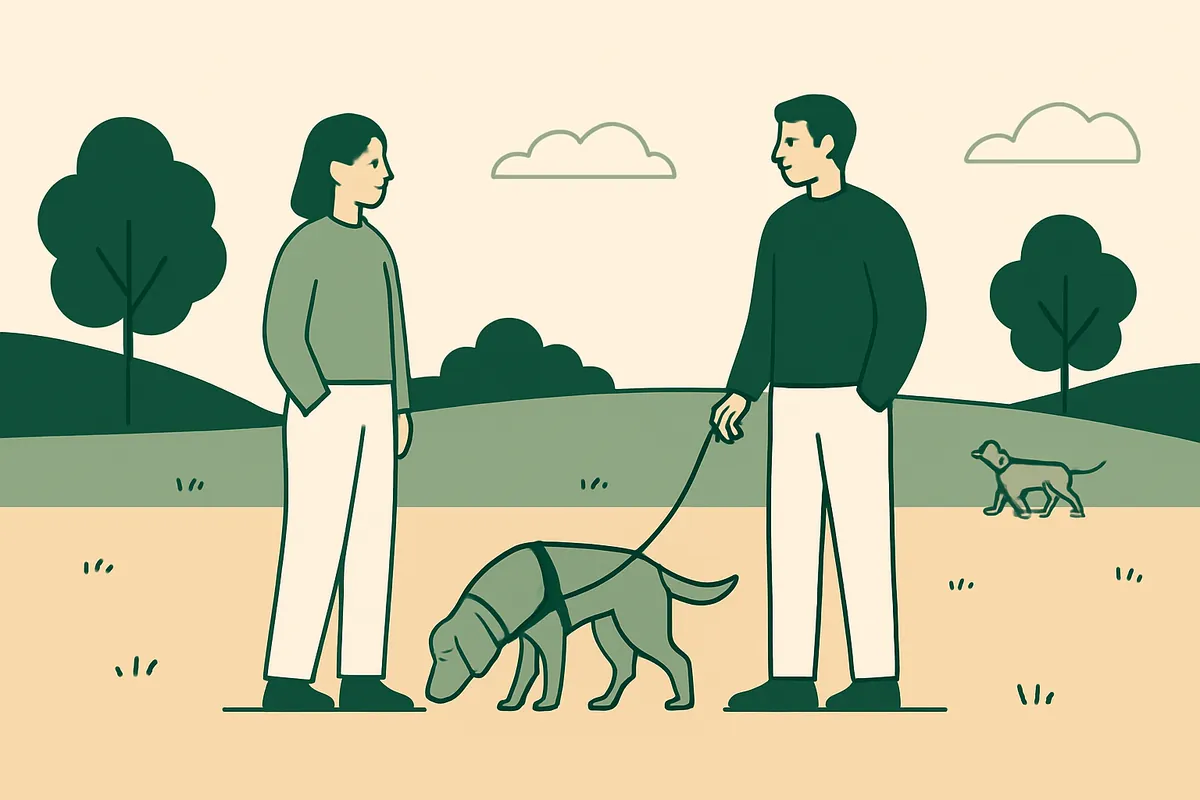
Reactivity is one of the most common reasons owners look for help beyond ordinary training. A reactive dog barks, lunges, spins or growls at a trigger (other dogs, people, bikes, cars) with an intensity out of proportion to the situation. For professionals, reactive dog training is a daily part of the job, and doing it well means understanding why the dog reacts, not only how to stop the noise.
This guide is written for trainers, behaviorists, walkers and other pet professionals. It covers what reactivity is, what drives it, how to assess and manage it, how behavior modification works, and where your role stops and a vet's or a more experienced behaviorist's begins.
This article is general guidance for professionals. It does not replace a veterinary examination. Any dog whose behavior changes suddenly should see a vet, and cases involving bites or a risk of injury should be handled by a qualified behaviorist.
What reactivity is, and what it is not
"Reactive" is a description, not a diagnosis. It describes what the dog does, not why. Two dogs lunging at the end of a lead can look identical and have entirely different motivations:
- Fear. The dog wants the trigger to go away. Barking and lunging are an attempt to make it leave, and they often work, because the other dog or person does move on.
- Frustration. The dog wants to reach the trigger (to greet or play) and the lead prevents it. Frustration can tip into aggression if the dog does reach the trigger in that state.
- Overarousal. Some dogs are simply overexcited and have not learned to cope with stimulation.
Many dogs show a mix, and the plan for a frightened dog is not the same as the plan for a frustrated one. Reactivity is also not the same as aggression, although a reactive dog can bite if pushed too far or if the trigger comes too close. For the signals that tell you a dog is moving toward that point, see fear, stress and aggression: reading the warning signs.
Why dogs become reactive
Common contributing factors include:
- Limited or poor socialization during puppyhood, so that other dogs, people or traffic feel unfamiliar and threatening.
- Frightening experiences, such as being attacked by another dog.
- Genetics and temperament. Some dogs are more sensitive or more easily aroused than others.
- Learning. If barking makes the trigger leave, the barking is reinforced and becomes more likely.
- Punishment. Lead jerks or harsh corrections in the presence of a trigger can make the dog more worried about it.
- Pain and health problems. A dog that is sore or unwell may be less tolerant and quicker to react.
That last point is why a vet check belongs early in any reactivity case, especially if the behavior started suddenly or is getting worse.
Key concepts: thresholds and trigger stacking
Threshold
A dog's threshold is the point at which it stops coping and starts reacting. Below threshold, the dog can notice the trigger, stay relatively calm, take food and respond to its handler. Above threshold, it cannot think or learn; it can only react.
Threshold is not a fixed distance. It depends on the trigger (a calm dog walking away versus a dog running straight at you), the environment, the dog's health and what has already happened that day.
Trigger stacking
Stress builds up. A dog that has already met a loud truck, a jogger and a barking dog behind a fence will react to things it would have ignored on a quiet morning. Stress hormones take time to settle, so a bad day can affect the next one too. When owners say the reaction "came out of nowhere", trigger stacking is often part of the explanation.
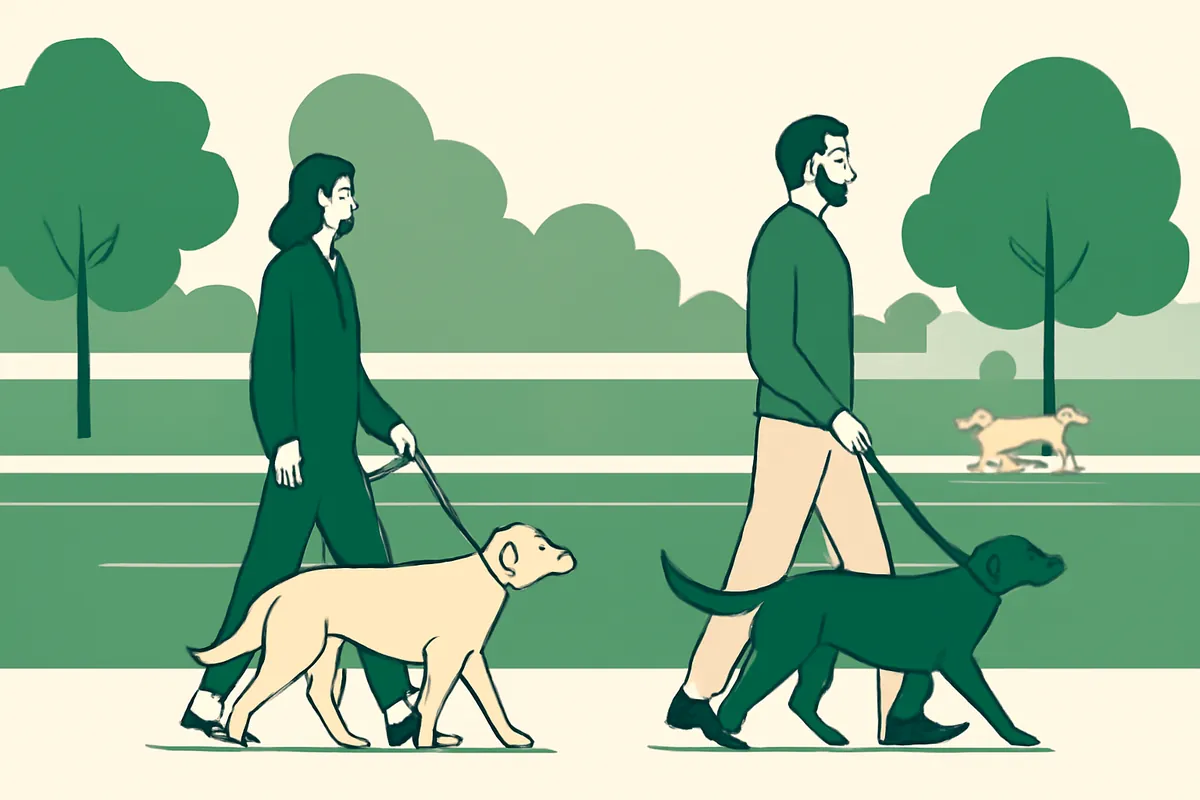
Assessing a reactive dog
A good assessment is mostly questions and observation. Useful information includes:
- Triggers: exactly what the dog reacts to, and whether some versions are worse than others (large dogs, men with hats, bikes at speed).
- Distance: how close the trigger must be before the dog reacts, and whether it can take food at that distance.
- History: when it started, whether it followed an incident, and whether it is getting worse.
- Severity: whether the dog has ever made contact, and with what result.
- Health: any signs of pain, illness or recent changes.
- What has been tried, including any punishment-based methods, which tend to make fear-based reactivity worse.
- The owner's situation: where they live, when they can walk, how strong they are relative to the dog, and what they can realistically manage.
Watch the dog at a comfortable distance from a trigger and note the body language before a reaction. Those early signals show you where the threshold is.
Management comes first
Before any training starts, the dog must stop rehearsing the reaction. Every lunge that makes the trigger go away strengthens the behavior. Management is also what keeps everyone safe.
- Choose quieter times and places. Walk early or late, in open areas with good visibility, and avoid narrow paths and blind corners.
- Increase distance early. Teach the owner to cross the road, turn around or step behind a parked car before the dog reacts.
- Use safe equipment. A well-fitted harness and a secure lead give the owner control without pressure on the neck. Avoid equipment designed to cause pain.
- Reduce triggers at home. Blocking the view from a window can stop a dog practicing barking at passers-by all day.
- Consider muzzle training where there is any risk of a bite. A well-fitted basket muzzle, introduced gradually with rewards, is a safety tool, not a punishment.
- Allow rest days. After a difficult encounter, a few quieter days with sniffing games and enrichment can help the dog recover.
Behavior modification: changing how the dog feels
Reactivity is driven by emotion, so the aim is to change the dog's emotional response to the trigger. The core techniques are desensitization and counterconditioning:
- Desensitization means exposing the dog to the trigger at a level so low that it stays calm, then increasing the intensity very gradually.
- Counterconditioning means pairing the trigger with something the dog loves (usually high-value food) so the trigger starts to predict good things.
In practice, you find the distance at which the dog can see the trigger and still eat. Each time the trigger appears, food follows; when the trigger disappears, the food stops. Over many repetitions, the dog's response shifts from "threat" to "treats". We explain both techniques in detail, with a worked plan, in desensitization and counterconditioning explained.
Many professionals also teach simple, structured patterns that give the dog something predictable to do:
- Look and reward: the dog looks at the trigger, then back at the handler, and is rewarded.
- Emergency U-turn: a practiced, happy turn away from a trigger that appears too close.
- Find it: food scattered on the ground so the dog can sniff and disengage.
- Rewarding calm choices: turning away, sniffing, sitting or looking at the owner.
Teach these at home first, then in easy places, and only then near triggers.
What not to do
- Flooding. Exposing the dog to the trigger at full strength until it "gets used to it" usually makes fear worse and can end in a bite.
- Punishing the reaction. Lead jerks, shouting or spraying the dog may stop the barking in the moment but can increase fear and suppress the warning signals that come before a bite.
- Forcing greetings. Pushing a reactive dog to meet other dogs or people is a common way to make things worse.
- Promising a cure. Many reactive dogs improve a great deal. Some will always need management. Say so at the start.
Referral, medication and the vet
Medication
Some dogs are so anxious that they cannot learn, even at a distance. In these cases, a vet may consider medication alongside a behavior plan. This is a medical decision, and only a vet can make it.
As a professional without veterinary training:
- Do not suggest, name or discuss specific medications or doses, and do not suggest supplements as a replacement for a vet visit.
- If you think a dog's anxiety is severe enough to prevent learning, tell the owner and suggest they talk to their vet.
- If the dog is already on medication, follow the vet's guidance and report back on the dog's behavior if the owner agrees.
When to refer
Refer the case on when:
- The behavior started suddenly or has changed rapidly, which needs a vet first.
- The dog has bitten, or you judge the risk of a bite to be high, and you are not experienced in aggression cases.
- The dog is so fearful that it cannot function at any distance from triggers.
- Progress stalls despite a sound plan followed well.
Referral may be to a vet, to a qualified behaviorist, or, through the vet, to a veterinary behaviorist.
Coaching the owner
Owners of reactive dogs are often embarrassed, anxious or exhausted. Some coaching points:
- Explain what is happening in plain words, and that the dog is struggling, not being bad.
- Set small, measurable goals (react less often, recover more quickly, cope at a slightly shorter distance).
- Ask the owner to keep a simple log of walks, triggers and reactions.
- Celebrate progress, and warn that setbacks are normal.
Next steps
Reactivity sits at the center of the Canine Behaviorist curriculum, alongside body language, learning theory and plan design. The free sample canine behaviorist questions include a reactive dog case with a model answer. For the full route into behavior work, see how to become a certified dog behaviorist, and for the difference between the roles, dog trainer vs dog behaviorist.
Frequently asked questions
Can a reactive dog be cured?
Many reactive dogs improve a great deal with management and a behavior modification plan, reacting less often and recovering faster. Some will always need management in certain situations. Honest expectations from the start help owners stay with the plan.
Is reactivity the same as aggression?
No. Reactivity describes an intense response to a trigger, often driven by fear or frustration. A reactive dog can bite if it is pushed too far, so cases with bites or a high risk of injury should be handled by a qualified behaviorist.
Written by the PetCred Editorial Team and checked against the published curriculum for this program. Laws and requirements change and differ by place: check local rules before relying on anything legal or regulatory here.
Free course
Dog Behavior Fundamentals: A Free 5-Lesson Course
Five short lessons, a quick check after each, no sign-up. Start now →
More dog behavior guides
How to Become a Certified Dog Behaviorist: A Practical Guide
What a dog behaviorist does, the knowledge to learn, where your role stops and a vet's begins, and how to choose a dog behaviorist certification.
1 August 2026

Dog Behaviorist Certifications Compared
Veterinary, academic, consultant, course and online options for animal behaviorist certification: what each one proves, who can get it and how to choose.
24 September 2026
Desensitization and Counterconditioning Explained
How desensitization and counterconditioning change a dog's fear, why the order of trigger and food matters, and how to build a step-by-step plan.
21 September 2026
Fear, Stress and Aggression: Reading the Warning Signs
The dog aggression warning signs every pet professional should know, from subtle stress signals to growls, what to do when you see them and when to refer.
18 September 2026