Fear, Stress and Aggression: Reading the Warning Signs
The dog aggression warning signs every pet professional should know, from subtle stress signals to growls, what to do when you see them and when to refer.
PetCred Editorial Team · Updated 18 September 2026 · 6 min read
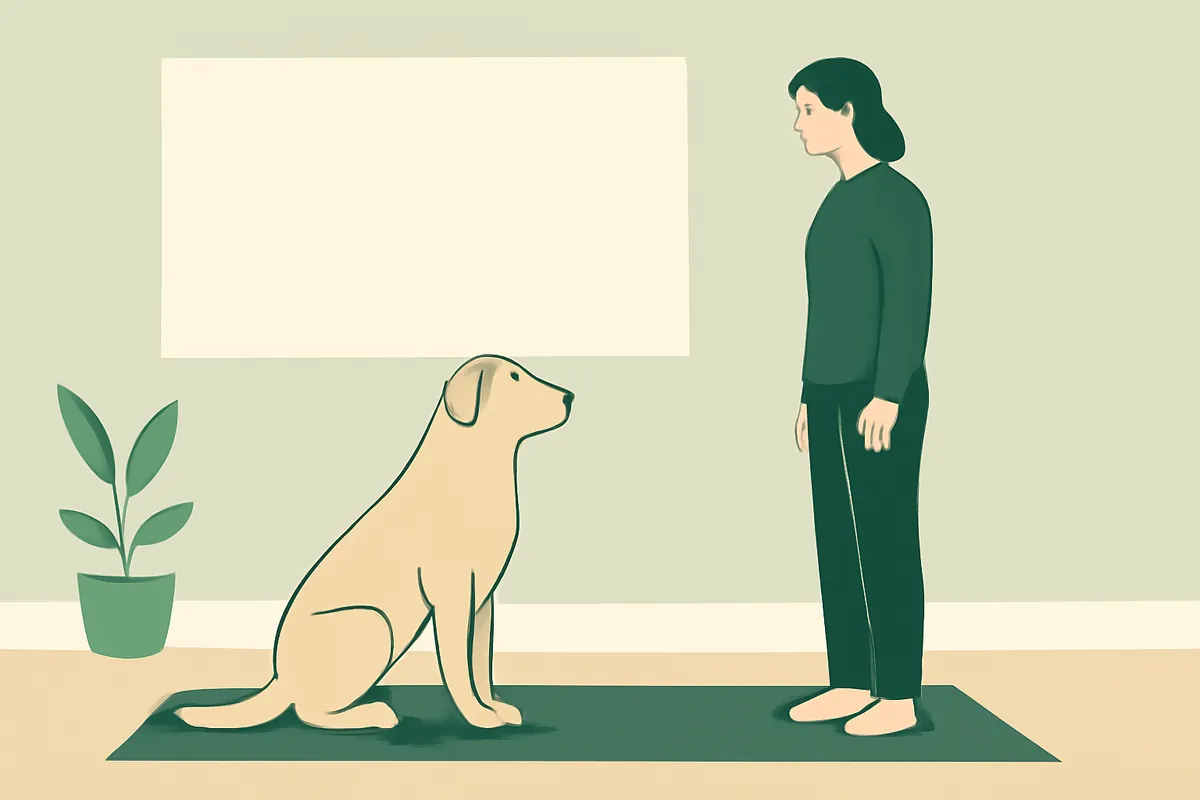
Most bites do not come out of nowhere. Dogs usually tell us, often for some time, that they are worried and want space. The problem is that the early signals are quiet and easy to miss, and the louder ones (growling, snarling) are often punished until the dog stops giving them. For anyone who works with dogs, knowing the dog aggression warning signs is the most practical safety skill there is.
This guide is written for trainers, groomers, walkers, sitters, shelter staff and other pet professionals. It covers how fear and stress lead to aggression, the signals to look for from the earliest to the most obvious, what to do when you see them, and when a case needs a vet or a qualified behaviorist.
This article is general guidance for professionals. It is not a substitute for assessment by a qualified behaviorist. Any dog whose behavior changes suddenly should be seen by a vet, and any case involving bites should be referred to a qualified behaviorist.
Why dogs become aggressive
Aggression is a normal part of the behavior of any animal, used to protect itself or something it values. In dogs it is most often driven by:
- Fear: of people, other dogs, handling or unfamiliar situations. Fear is the most common motivation professionals see.
- Pain: a dog that hurts may snap to stop someone touching the sore area. Pain is easy to overlook, especially in older dogs.
- Resource guarding: protecting food, toys, resting places or people.
- Frustration: being restrained from something the dog wants.
- Protecting territory or offspring.
Understanding the motivation matters because it shapes both the immediate safety response and the longer-term plan. But in the moment, you do not need to know why a dog is uncomfortable to respect that it is.
The escalation of warning signs
Behaviorists often describe warning signals as a ladder or a scale, from subtle signs of discomfort at the bottom to a bite at the top. Dogs do not always climb it step by step. A dog may skip steps if it has learned the early ones do not work, or if it is very frightened or in pain. But the general pattern is useful.
Early, subtle signs of stress
These are easy to miss, especially in a busy salon, class or kennel:
- Lip licking or tongue flicks when there is no food around.
- Yawning out of context.
- Turning the head or body away.
- Blinking, or looking away to avoid eye contact.
- Lifting a front paw.
- Sniffing the ground suddenly, as if to disengage.
- Ears held back or to the side, a lowered tail, a slightly crouched posture.
- Refusing food, especially food the dog took happily moments earlier.
On their own, some of these have innocent explanations. A dog yawns when tired and licks its lips after drinking. What matters is the context and the cluster: several of these together, in response to something happening, mean the dog is uncomfortable.
Middle signs: the dog is asking more clearly
- Whale eye: the head turned away while the eyes track the person or trigger, showing the whites.
- Freezing or becoming very still, often with a closed mouth.
- Stiffening of the body, weight shifted forward or back.
- Moving away, hiding or trying to leave.
- Tucked tail or tail held stiffly.
- A hard stare toward the person or trigger.
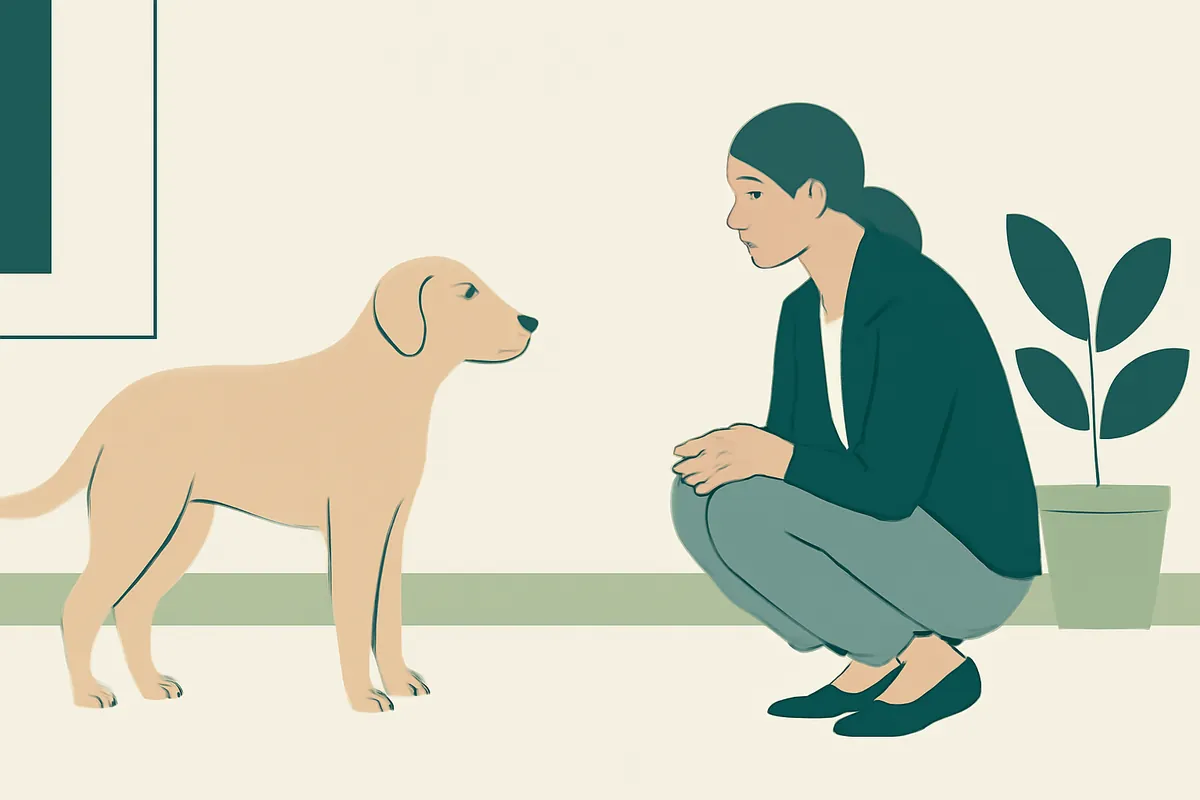
Late signs: a bite may be close
- Lip curl, showing the teeth.
- Growling.
- Snarling: lips drawn back, teeth bared, often with a growl.
- Air snapping: a snap that does not make contact.
- A bite.
A dog that is showing these signs has already tried quieter ways of communicating, or has learned they do not work.
Why you should never punish a growl
A growl is information. It tells you the dog is uncomfortable and gives you a chance to back off before anyone is hurt. If the dog is punished for growling, the fear or discomfort does not go away; the dog simply learns not to warn. The result is a dog that seems to bite "without warning", which is far more dangerous.
When a dog growls, the right response is to stop what you are doing, give it space and work out what caused it. Then change the situation so the dog does not need to growl again.
Reading the whole dog, in context
Single signals can mislead. A wagging tail does not always mean a happy dog; a stiff, high, fast wag can accompany arousal and tension. A dog that rolls over may be relaxed, or may be trying to stop an interaction. Look at:
- The whole body: ears, eyes, mouth, tail, weight and posture together.
- Changes: what the dog was like a moment ago, and what changed.
- The context: what is happening, who is nearby, what the dog might be protecting.
- The individual: some breeds have ears, tails or coats that make signals harder to read, and some dogs are naturally more expressive than others.
What to do when you see warning signs
The aim is to lower the pressure on the dog and keep everyone safe.
- Stop whatever you are doing that seems to be causing the discomfort, whether that is reaching toward the dog, grooming a sensitive area or approaching.
- Give space. Move away slowly, turning slightly sideways rather than facing the dog head-on.
- Avoid staring, leaning over the dog or making sudden movements.
- Do not try to grab the dog's collar or pick it up if it is showing late warning signs, unless it is essential for immediate safety.
- Let the dog calm down, and reassess before trying again, if at all.
- Record what happened, what the dog did and what triggered it, and tell the owner.
If you work with a dog that shows warning signs regularly, change the plan: shorter sessions, easier steps, a quieter environment, or deciding the work cannot safely be done at all.
Safety management for professionals
Most professionals are not treating aggression; they are working with dogs that sometimes show it. Sensible measures include:
- Asking about history at intake: any growling, snapping or bites, and in what situations.
- Muzzle training: a well-fitted basket muzzle, introduced gradually with rewards, lets a dog pant and drink while keeping people safe. Encourage owners to teach it before it is needed.
- Handling with care: avoiding reaching over the head, allowing the dog to approach, using calm, predictable movements.
- Barriers and space: gates, separate rooms and leads to prevent risky encounters.
- Never leaving a known guarder alone with food or valued items around other dogs or children.
When to refer
Warning signs are often a normal response to a situation that can be changed. But some cases need specialist help.
Refer to the vet when:
- The behavior started suddenly or has got much worse.
- The dog shows signs of pain, such as growling when touched in one area, limping or reluctance to move.
- An older dog has become irritable or confused.
Refer to a qualified behaviorist when:
- The dog has bitten a person or another animal.
- Warning signs are frequent, intense or unpredictable.
- Children or vulnerable people are at risk.
- The case is beyond your experience, whatever the details.
Only a vet can diagnose medical causes or decide whether medication might help. As a professional without veterinary training, never suggest or name medications or supplements; refer instead.
Local rules on reporting bites and on dogs considered dangerous vary widely. Check with your local authority, and make sure your insurer knows the kind of work you do.
Common mistakes
- Reading only the tail. A wag is not a green light.
- Ignoring the quiet signals until the dog growls.
- Punishing warnings, which teaches the dog to skip them.
- Forcing interactions: insisting that a dog be petted, groomed or approached despite clear signs of discomfort.
- Assuming a dog is "fine with everyone" because the owner says so.
Next steps
Body language and aggression safety are two of the core topics in the Canine Behaviorist curriculum. The free sample canine behaviorist questions include a question on when to refer to a vet, with a model answer. For related guides, see reactivity in dogs, desensitization and counterconditioning explained and the full route in how to become a certified dog behaviorist.
Frequently asked questions
Do dogs bite without warning?
Rarely. Most dogs show quieter signals first, such as lip licking, turning away, freezing or whale eye, before growling or snapping. Dogs punished for growling can learn to skip warnings, which makes a bite seem to come from nowhere.
What should I do if a dog growls at me?
Stop what you are doing, give the dog space by moving away slowly and slightly sideways, and avoid staring or reaching for it. Then work out what caused the growl and change the situation. Do not punish the growl, and refer to a qualified behaviorist if warnings are frequent or the dog has bitten.
Written by the PetCred Editorial Team and checked against the published curriculum for this program. Laws and requirements change and differ by place: check local rules before relying on anything legal or regulatory here.
Free course
Dog Behavior Fundamentals: A Free 5-Lesson Course
Five short lessons, a quick check after each, no sign-up. Start now →
More dog behavior guides
How to Become a Certified Dog Behaviorist: A Practical Guide
What a dog behaviorist does, the knowledge to learn, where your role stops and a vet's begins, and how to choose a dog behaviorist certification.
1 August 2026

Dog Behaviorist Certifications Compared
Veterinary, academic, consultant, course and online options for animal behaviorist certification: what each one proves, who can get it and how to choose.
24 September 2026
Desensitization and Counterconditioning Explained
How desensitization and counterconditioning change a dog's fear, why the order of trigger and food matters, and how to build a step-by-step plan.
21 September 2026
Separation-Related Problems in Dogs: A Guide for Professionals
Dog separation anxiety and look-alike problems: how professionals recognize them, assess a case, build a graduated plan and know when to refer to a vet.
7 September 2026