Desensitization and Counterconditioning Explained
How desensitization and counterconditioning change a dog's fear, why the order of trigger and food matters, and how to build a step-by-step plan.
PetCred Editorial Team · Updated 21 September 2026 · 6 min read
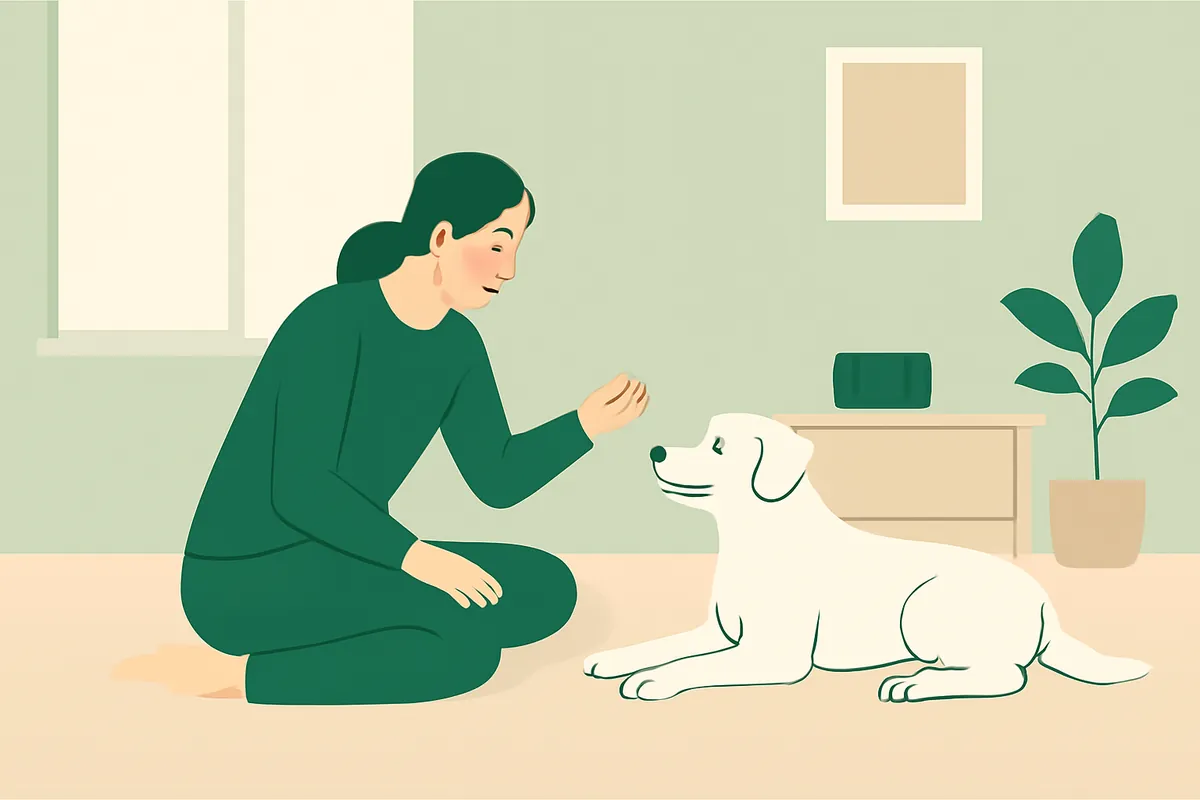
Desensitization and counterconditioning are the two techniques at the heart of most behavior modification for fearful, anxious and reactive dogs. Almost every professional plan for a dog that is frightened of other dogs, strangers, noises, handling or being left alone uses them in some form. Done well, they change how the dog feels about the thing it fears. Done badly, they can make the fear worse.
This guide is written for trainers, behaviorists and other pet professionals. It explains what desensitization and counterconditioning mean for a dog, how they work together, how to build a plan step by step, the most common mistakes, and when a case needs more than a training plan.
Why feelings come first
Most problem behavior in fearful dogs (barking, lunging, hiding, growling, trying to escape) is the outward sign of an emotional state. The dog is not choosing to misbehave; it is frightened, and it is doing what frightened animals do.
You can sometimes suppress the behavior with punishment, but the fear remains, and often grows. You can teach an alternative behavior, but a very frightened dog may not be able to perform it. Desensitization and counterconditioning take a different route: they change the emotional response itself, so the behavior it drove fades with it.
The science behind this is classical conditioning, the kind of learning in which one event comes to predict another. If a trigger has come to predict something frightening, a new, repeated experience can teach the dog that it predicts something good instead.
Desensitization
Desensitization means exposing the dog to a trigger at an intensity so low that it does not provoke fear, then increasing that intensity in very small steps, always staying at a level the dog can cope with.
The key idea is threshold: the point at which the dog stops coping and starts reacting. Below threshold, the dog notices the trigger but stays relatively relaxed. Above it, the dog is frightened and cannot learn much. Desensitization only works below threshold.
You can usually make a trigger easier by changing:
- Distance: another dog 50 steps away is easier than one 5 steps away.
- Intensity: a recorded noise played quietly is easier than one played loudly.
- Duration: a brief glimpse is easier than a long stare.
- Movement: a person standing still is easier than one walking toward the dog.
- Context: a familiar, quiet place is easier than a busy, new one.
A good plan changes only one of these at a time.
Counterconditioning
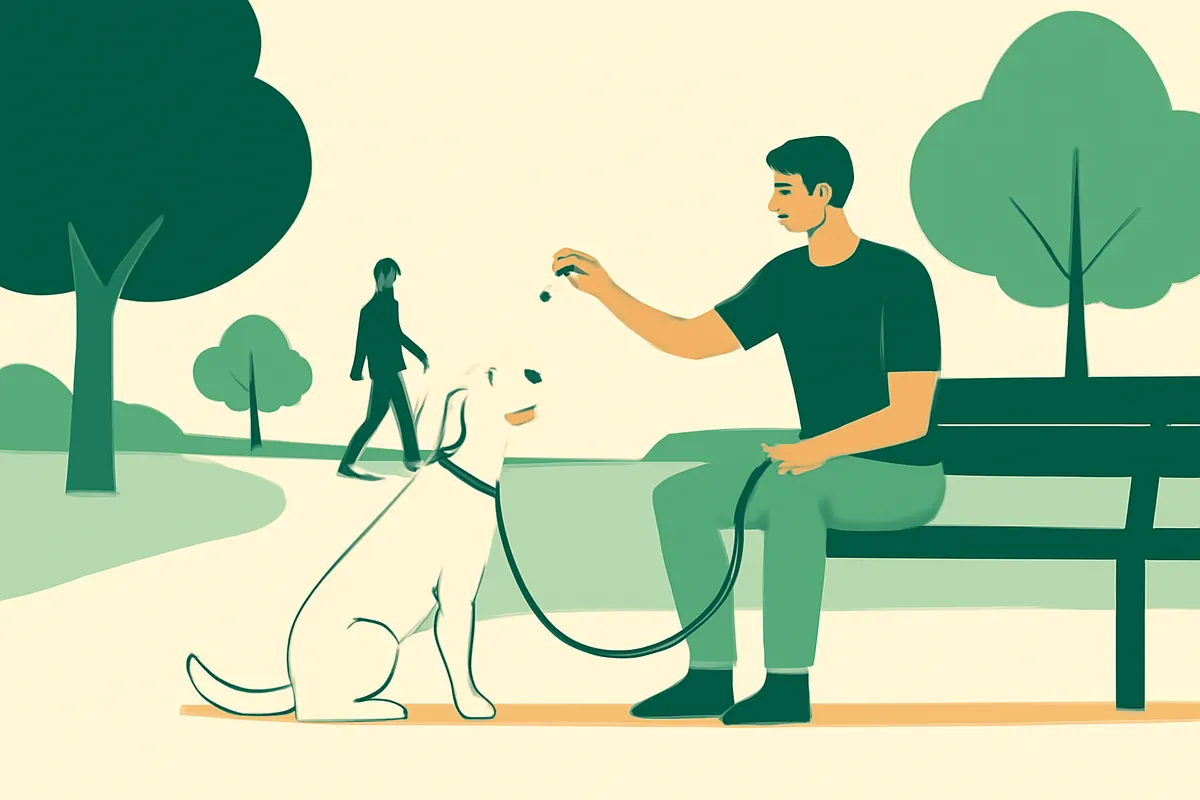
Counterconditioning means pairing the trigger with something the dog loves, so the trigger comes to predict that good thing. Over many repetitions, the dog's emotional response to the trigger shifts from worry to anticipation.
The most common pairing is high-value food: small pieces of something the dog really wants, such as soft meat or cheese, not dry biscuits. Some dogs respond better to a favorite toy or game.
The order matters. The trigger must come first, then the food. If food appears first, the dog may learn that food predicts the trigger, which can make it wary of the food. A useful pattern is often described as "open bar, closed bar": the food flows while the trigger is present, and stops when it goes away.
Why they work best together
Used alone, each technique has weaknesses:
- Desensitization alone can be slow, and the dog may simply learn to tolerate the trigger rather than feel good about it.
- Counterconditioning alone, at a level where the dog is frightened, often fails. A dog above threshold may refuse food entirely, and even if it eats, the fear can win.
Together, they are powerful. Desensitization keeps the dog below threshold, where it can learn. Counterconditioning builds a positive association at each step.
Building a plan: a worked example
Take a dog that barks and hides when people come to the door.
Step 1. Make sure it is safe and the dog has been checked
Put management in place so the dog is not practicing the fear response while you work. For example, the dog could be in a quiet room with a food toy when visitors arrive. If the fear appeared suddenly or has changed recently, ask the owner to see their vet first: pain and illness can drive fear.
Step 2. Break the trigger into parts
"Visitors" is not one trigger but many: the doorbell, a knock, footsteps on the path, the door opening, a stranger's voice, someone coming inside, someone reaching toward the dog. List them, and rank them from easiest to hardest for this dog.
Step 3. Find the starting point
Start with the easiest element at an intensity so low the dog barely reacts. That might be a recording of the doorbell played very quietly in another room.
Step 4. Pair and repeat
Play the sound, then feed. Stop the sound, stop the food. Repeat in short sessions of a few minutes. Watch the dog's body language: relaxed ears and body, soft eyes, taking food gently.
Step 5. Look for the conditioned response
You know counterconditioning is working when the dog hears the trigger and looks toward you, expecting food. That hopeful look is the sign that the association is forming.
Step 6. Raise the difficulty slowly
Make the sound a little louder, or play it a little closer, one change at a time. If the dog shows any sign of stress, go back to the previous step.
Step 7. Move through the list
Work through each element on the list, then begin combining them. Eventually, practice with real visitors who follow instructions: no staring, no reaching, tossing a treat and ignoring the dog.
Step 8. Keep records
Note each session: what trigger, at what level, and how the dog responded. Records show progress that is otherwise hard to see, and they reveal when a step was too big.
Common mistakes
- Going too fast. The commonest error. If the dog reacts, the step was too big. Slower is faster in the end.
- Working above threshold. If the dog cannot eat, or snatches food frantically, it is too close or the trigger is too strong.
- Getting the order wrong. Food before trigger, or food continuing after the trigger has gone, weakens the association.
- Using low-value food. Kibble rarely competes with fear.
- Uncontrolled exposure. If the dog meets the full-strength trigger in daily life between sessions, progress can unravel. Management matters.
- Changing several things at once: closer and louder and longer in the same step.
- Expecting a straight line. Progress includes bad days. Plan for them.
Related techniques
Several other approaches are often used alongside desensitization and counterconditioning:
- Teaching an alternative behavior, such as going to a mat when the doorbell rings, once the dog is calm enough to learn it.
- Pattern games that give the dog a predictable, rewarding routine in the presence of a trigger.
- Rewarding calm choices that the dog offers on its own, such as looking away or sniffing.
Flooding, the opposite approach, involves exposing the dog to the full trigger until it stops reacting. It is not recommended: it is stressful, it can increase fear, and a dog that stops reacting may simply have shut down rather than recovered.
When DS/CC is not enough
Some cases need more than a training plan:
- Sudden or worsening fear. A vet should check for pain or illness.
- Fear so severe the dog cannot cope at any distance or intensity. A vet may consider whether the dog needs additional support. Only a vet can decide on medication, and professionals without veterinary training should never suggest or name one.
- Aggression with bites or high risk. Refer to a qualified behaviorist.
- No progress despite a sound plan followed well. Review the plan and consider referral.
Next steps
Desensitization and counterconditioning are part of the "Designing Behavior Modification Plans" topic in the Canine Behaviorist curriculum. For how they apply to specific cases, see reactivity in dogs and separation-related problems. The free sample canine behaviorist questions include a case where you plan the first steps of a behavior program, and the full route into the profession is in how to become a certified dog behaviorist.
Frequently asked questions
What is the difference between desensitization and counterconditioning?
Desensitization exposes the dog to a trigger at a level low enough that it stays calm, then raises it gradually. Counterconditioning pairs the trigger with something the dog loves, so the trigger starts to predict good things. Most plans use both together.
How long does desensitization and counterconditioning take?
It depends on the dog, the trigger and how consistently the plan is followed. Short, frequent sessions and small steps usually work best, and many plans run for weeks or months. Going faster than the dog can cope with tends to slow progress down.
Written by the PetCred Editorial Team and checked against the published curriculum for this program. Laws and requirements change and differ by place: check local rules before relying on anything legal or regulatory here.
Free course
Dog Behavior Fundamentals: A Free 5-Lesson Course
Five short lessons, a quick check after each, no sign-up. Start now →
More dog behavior guides
How to Become a Certified Dog Behaviorist: A Practical Guide
What a dog behaviorist does, the knowledge to learn, where your role stops and a vet's begins, and how to choose a dog behaviorist certification.
1 August 2026

Dog Behaviorist Certifications Compared
Veterinary, academic, consultant, course and online options for animal behaviorist certification: what each one proves, who can get it and how to choose.
24 September 2026
Fear, Stress and Aggression: Reading the Warning Signs
The dog aggression warning signs every pet professional should know, from subtle stress signals to growls, what to do when you see them and when to refer.
18 September 2026
Separation-Related Problems in Dogs: A Guide for Professionals
Dog separation anxiety and look-alike problems: how professionals recognize them, assess a case, build a graduated plan and know when to refer to a vet.
7 September 2026