Dog Trainer vs Dog Behaviorist vs Veterinary Behaviorist
Dog behaviorist vs trainer vs veterinary behaviorist: what each one does, what each may and may not do, and how professionals decide where a case belongs.
PetCred Editorial Team · Updated 15 August 2026 · 6 min read
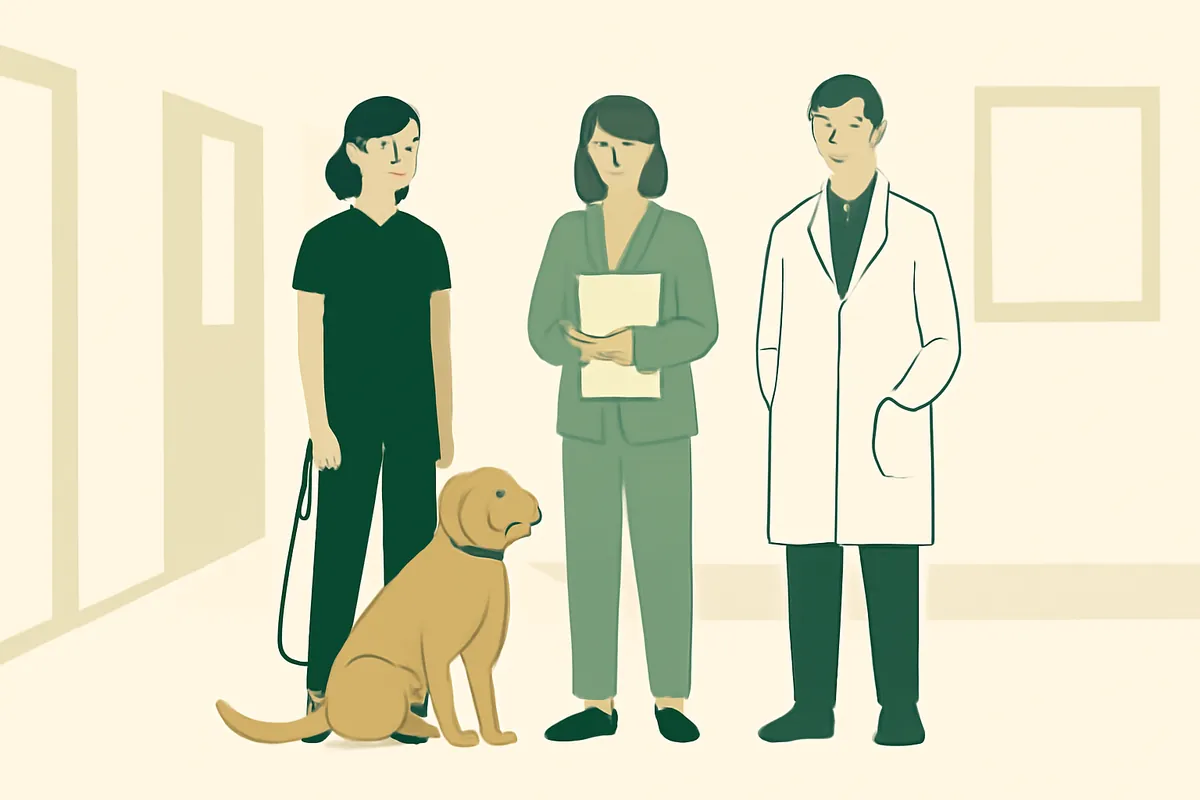
Owners with a difficult dog often do not know who to call. Is it a trainer, a behaviorist or the vet? For professionals the question matters even more, because taking a case that belongs with someone else can leave a dog suffering and a family at risk. The short answer to "dog behaviorist vs trainer" is this: a trainer teaches skills, a behaviorist works on problem behavior with emotional roots, and a veterinary behaviorist is a vet who can diagnose medical conditions and prescribe medication.
In practice the lines blur. Many trainers handle mild behavior problems, many behaviorists also teach basic skills, and titles are used loosely because most of them are not protected by law at the time of writing. This guide explains what each role does, what each one may and may not do, and how to decide where a case belongs.
The three roles at a glance
| Dog trainer | Dog behaviorist or behavior consultant | Veterinary behaviorist | |
|---|---|---|---|
| Main focus | Teaching skills and manners | Changing problem behavior driven by fear, anxiety, frustration or aggression | Behavior problems with a medical side, and complex cases |
| Typical cases | Recall, loose-lead walking, puppy manners, jumping up | Reactivity, separation problems, fear of people, guarding, aggression | Any of these, plus cases involving illness, pain or medication |
| Can diagnose medical conditions | No | No | Yes |
| Can prescribe medication | No | No | Yes |
| Usual background | Practical training experience, courses, credentials | Training experience plus behavior study, sometimes a degree | A veterinary degree plus specialist training |
What a dog trainer does
A trainer teaches dogs to do things, and teaches owners how to ask for them. The work is mostly about building behaviors: sit, down, stay, come when called, walk nicely on a lead, settle on a mat, leave things alone. Trainers run puppy classes, group courses and one-to-one sessions, and many specialize in areas such as sports, assistance work or puppies.
Good trainers read body language, spot a stressed dog early and adjust their sessions, and they use reward-based methods grounded in learning theory. A trainer is the right first call for most everyday issues: pulling, jumping up, mouthing in puppies, poor recall, basic manners.
The limit comes when the behavior is driven by strong emotion. A dog that lunges at other dogs because it is frightened is not missing a skill. Teaching "heel" will not change how it feels. That is where behavior work begins. For more on the foundations trainers use, see positive reinforcement dog training explained.
What a dog behaviorist does
A behaviorist, often called a behavior consultant, works on why a dog behaves the way it does, not only on what it does. The typical cases are fear, anxiety, frustration and aggression, and the problems they cause: reactivity on walks, distress when left alone, fear of visitors, guarding food or toys, growling or biting.
The work usually involves:
- A detailed history, including the dog's health, routine and the exact circumstances of the problem.
- Observation to find the triggers and the body language around them.
- A referral to the vet when health could be involved.
- Management to keep everyone safe and stop the behavior being rehearsed.
- A modification plan, often built on desensitization and counterconditioning, and coaching the owner through it.
Behaviorists come from different backgrounds. Some hold academic degrees in animal behavior and clinical credentials; many are experienced trainers who have studied behavior and earned a behavior consultant credential. Because "behaviorist" is not a protected title in most places, owners and referring professionals should look at what a person has actually studied and been assessed on.

What a veterinary behaviorist does
A veterinary behaviorist is a veterinarian who has completed further specialist training in behavioral medicine. In the US and Canada, the recognized specialists are diplomates of the American College of Veterinary Behaviorists. In Europe, the equivalent specialist college covers animal welfare and behavioral medicine. Other countries have their own routes for vets to gain recognized behavior qualifications.
Because they are vets, veterinary behaviorists can do what no other behavior professional can:
- Diagnose medical conditions that cause or worsen behavior problems, such as pain, hormonal disease or cognitive decline.
- Prescribe medication when a dog's fear or anxiety is so severe that it cannot learn, and monitor its effects.
- Take the most complex cases, including dogs with a serious bite history, several interacting problems or illness alongside behavior change.
They are relatively few, so many work by referral, and some consult remotely with the dog's own vet. A general practice vet can also examine a dog, rule out medical causes and discuss medication, and is often the first step.
Where the lines overlap
Real cases do not arrive labeled. A puppy that bites hands in play is a training case; an adult dog that bites when its paws are touched may be a behavior case, and if it started suddenly, a medical one. Some useful principles:
- Skills versus feelings. If the dog has not learned what you want, it is training. If the dog is frightened, anxious or frustrated, it is behavior work.
- Severity and risk. Mild, predictable problems with no injury risk suit a trainer with behavior knowledge. Aggression with bites, or problems affecting the dog's welfare, need a qualified behaviorist.
- Health. Any sudden change, any sign of pain and any case not improving as expected needs a vet.
Many professionals work in teams: the vet rules out medical causes and handles medication, the behaviorist designs the plan, and a trainer helps the owner practice the skills.
When to refer, and to whom
A simple rule set helps professionals stay within their competence.
Refer to the vet when:
- The behavior changed suddenly, or the dog seems unwell or in pain.
- An older dog shows new confusion, anxiety, night waking or house soiling.
- The owner asks about medication. Only a vet can decide on it.
- A case is not improving despite a sound plan followed well.
Refer to a qualified behaviorist when:
- There is aggression toward people or other animals, especially if anyone has been bitten.
- The dog is severely fearful or distressed, for example panicking when left alone.
- The case is beyond your training or experience, whatever the problem.
Refer to a veterinary behaviorist (usually through the dog's vet) when:
- The case combines behavior problems with a medical condition.
- Medication is likely to be part of the treatment.
- There is a serious bite history or high risk to people.
Referring is not a failure. It is what professionals do, and vets and behaviorists are more likely to send cases back to people who refer well. For the warning signs that tell you a situation is escalating, see fear, stress and aggression: reading the warning signs.
Qualifications and titles
Titles tell you less than you would hope. At the time of writing:
- "Dog trainer" is generally not a regulated title in the US, UK, Canada or Australia, although related businesses such as boarding can need licenses.
- "Dog behaviorist" is generally unregulated too, although some registers and credentials, such as clinical animal behaviorist registers in the UK, set their own standards.
- "Veterinary behaviorist" describes a vet with specialist training, and a veterinary professional must be registered with the veterinary regulator where they practice.
Check the rules where you work, and describe your own qualifications accurately. For a comparison of the main credentials and what each proves, see dog behaviorist certifications compared.
Moving from trainer to behaviorist
Many behaviorists start as trainers, and it is a natural route. Training gives you handling, timing and experience coaching owners, all of which behavior work needs. What changes is the depth of knowledge required:
- Learning theory in more detail, especially classical conditioning and emotional responses.
- Fear, anxiety and aggression: how they develop, how to assess risk and how to keep people safe.
- Designing written, stepwise modification plans.
- Recognizing when health is part of the picture, and how to refer.
- Coaching owners through long, slow programs.
Start with mild cases, keep detailed case notes, and seek mentoring from an experienced behaviorist before taking on aggression. The full route is in how to become a certified dog behaviorist.
Next steps
If you are a trainer wondering whether your knowledge is ready for behavior cases, test it against scenarios. The free sample canine behaviorist questions include a reactivity case and a question on when to refer to a vet, with model answers. The Canine Behaviorist program lists the full curriculum, from learning theory to aggression safety and client coaching.
Frequently asked questions
Should I see a dog trainer or a behaviorist?
A trainer is the right call for skills and manners such as recall, lead walking and puppy habits. For fear, anxiety, reactivity or aggression, a behaviorist is better placed, and any sudden change in behavior should be checked by a vet first.
Is a veterinary behaviorist the same as a dog behaviorist?
No. A veterinary behaviorist is a vet with specialist training in behavioral medicine, who can diagnose medical conditions and prescribe medication. A dog behaviorist without veterinary training works on behavior through management and modification plans, and refers medical questions to a vet.
Written by the PetCred Editorial Team and checked against the published curriculum for this program. Laws and requirements change and differ by place: check local rules before relying on anything legal or regulatory here.
Free course
Dog Behavior Fundamentals: A Free 5-Lesson Course
Five short lessons, a quick check after each, no sign-up. Start now →
More dog behavior guides
How to Become a Certified Dog Behaviorist: A Practical Guide
What a dog behaviorist does, the knowledge to learn, where your role stops and a vet's begins, and how to choose a dog behaviorist certification.
1 August 2026

Dog Behaviorist Certifications Compared
Veterinary, academic, consultant, course and online options for animal behaviorist certification: what each one proves, who can get it and how to choose.
24 September 2026

Desensitization and Counterconditioning Explained
How desensitization and counterconditioning change a dog's fear, why the order of trigger and food matters, and how to build a step-by-step plan.
21 September 2026

Fear, Stress and Aggression: Reading the Warning Signs
The dog aggression warning signs every pet professional should know, from subtle stress signals to growls, what to do when you see them and when to refer.
18 September 2026