Raising and Socializing a Litter: A Breeder's Week-by-Week Guide
How to raise and socialize a litter from birth to going home: the stages of puppy development, what to introduce and when, weaning, and when to call your vet.
PetCred Editorial Team · Updated 14 September 2026 · 6 min read
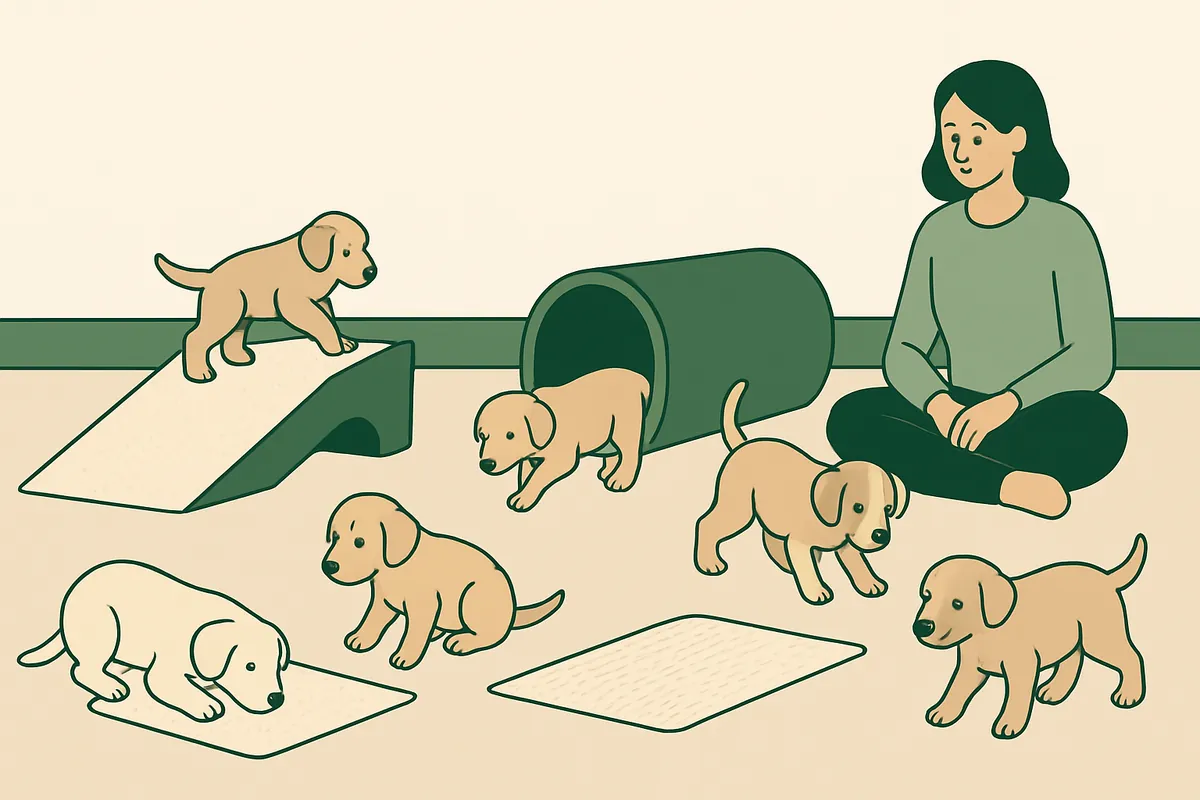
Raising and socializing a litter well is one of the biggest things a breeder can do for the dogs their puppies will become. The first eight weeks or so happen in the breeder's home, and they include the start of the period when puppies learn most easily what is safe and normal in the world. A puppy that meets gentle handling, household sounds, different surfaces and friendly people in those weeks is far better prepared for life in a new home than one raised in a quiet kennel.
This guide covers the stages of puppy development from birth to going home, what to do at each stage, how to socialize a litter without overwhelming it, and when to involve your vet. It is written for breeders and people raising a first litter.
Health points here are general guidance. Your vet should check the mother and puppies, advise on worming, vaccination and feeding, and is the first call whenever you are worried.
The stages at a glance
Puppies develop quickly, and each stage needs something different from you. The ages below are approximate and vary between individuals and breeds.
| Stage | Roughly when | What is happening | Your focus |
|---|---|---|---|
| Neonatal | Birth to about two weeks | Eyes and ears closed; puppies sleep, feed and cannot regulate their own temperature | Warmth, feeding, daily weighing, watching mother and puppies |
| Transitional | About two to three weeks | Eyes and ears open, puppies begin to stand, walk and respond to sound | Gentle handling, first changes in the environment |
| Socialization period begins | From about three weeks | Puppies become curious, play with each other and learn from everything they meet | New experiences, people, weaning |
| Late litter period | About five to eight weeks and beyond | More confident exploring, stronger play, early learning | Wider experiences, short separations, preparing for new homes |
The socialization period continues after puppies leave, which is why good breeders also coach new owners on how to carry on.
The first two weeks: warmth, feeding and watching
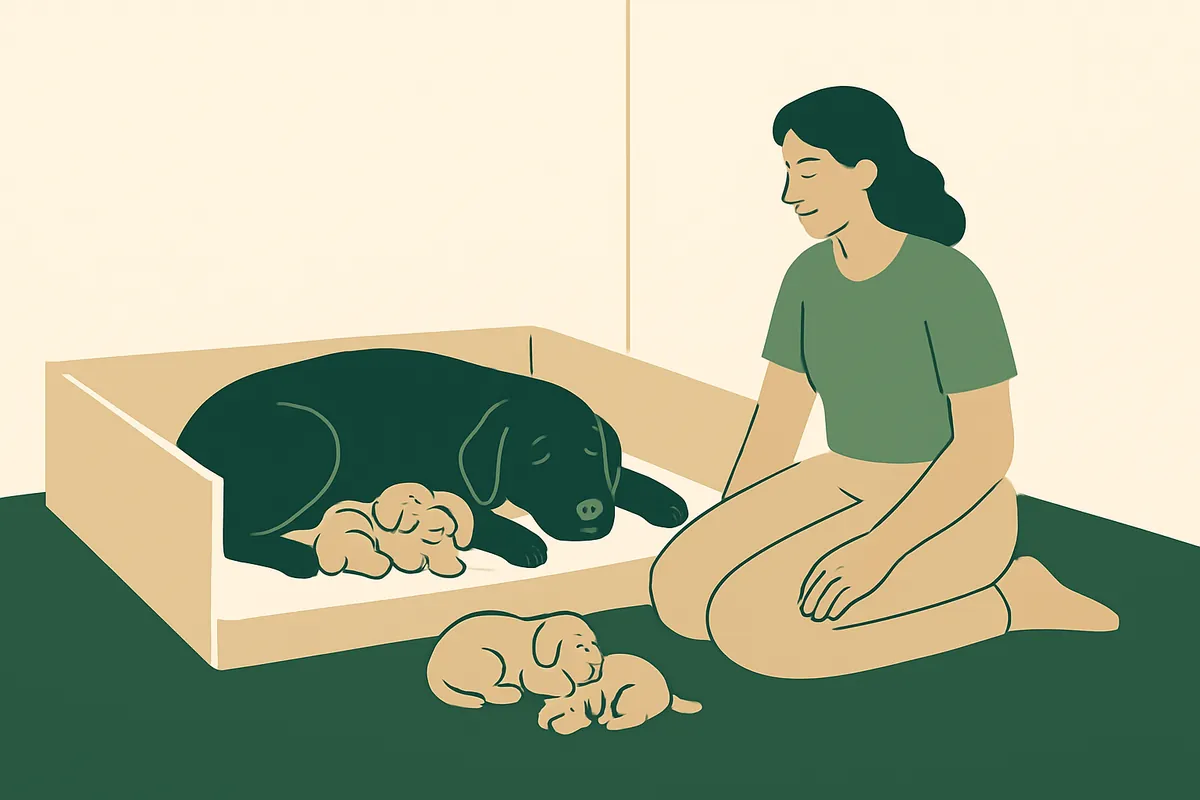
Newborn puppies cannot keep themselves warm, so the whelping area must be warm, draft-free and have space for the mother to move away from the heat if she needs to. The puppies spend almost all their time sleeping and feeding.
Your role is mainly to watch:
- Weigh each puppy daily at the same time and record it. Steady weight gain is one of the best signs that a puppy is feeding well; a puppy that loses weight or stops gaining needs your vet's advice.
- Check every puppy is feeding. Weak or small puppies can be pushed off by stronger littermates.
- Keep the bedding clean and dry.
- Watch the mother. She needs food, water, rest and quiet. Contact your vet straight away if she seems unwell, restless, trembling or stiff, if her mammary glands become hot, hard or painful, or if she loses interest in the puppies.
Contact your vet urgently about any puppy that is cold, weak, not suckling or crying constantly. Newborn puppies can decline quickly.
Weeks two to three: waking up
Eyes and ears open, and puppies start to crawl, then wobble to their feet. They begin to notice sounds and each other. This is the time to:
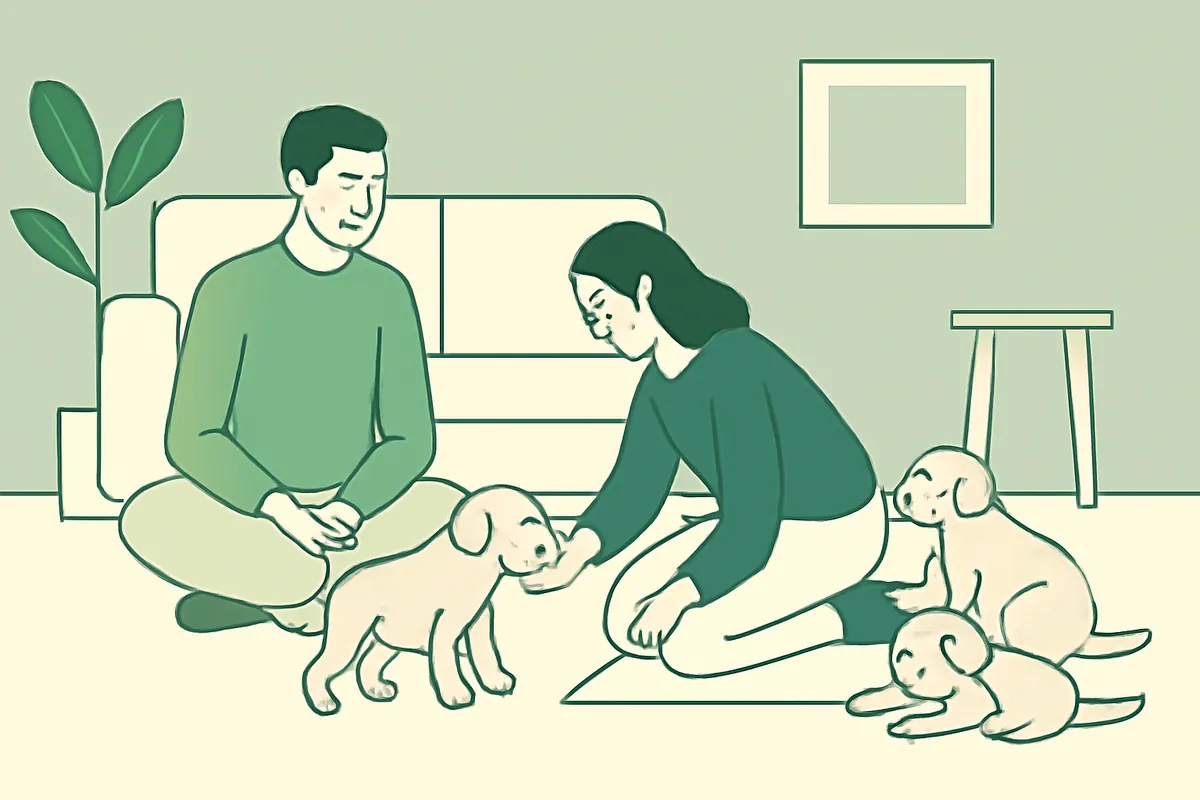
- Handle each puppy gently every day: holding, touching paws and ears, turning it over briefly.
- Introduce small changes in the environment, such as a different texture of bedding or quiet household sounds nearby.
- Keep everything calm and short. At this age, a little goes a long way.
Many breeders use a short daily routine of gentle handling from the first days. Whatever routine you use, keep it brief and stop if a puppy becomes distressed.
Weeks three to eight: socialization and weaning
From around three weeks, puppies enter the period when they learn most easily what is safe. What they meet now, calmly and pleasantly, they are likely to accept later. What they never meet may worry them as adults.
What to introduce
Aim for variety, a little at a time:
- People. Adults and, supervised, calm children, people of different ages and appearances, people wearing hats, glasses or coats.
- Handling. Being held, having feet, ears and mouth gently touched, being brushed, being lifted onto a table.
- Sounds. Everyday household noises such as the vacuum cleaner, the washing machine, a doorbell and the television, starting quietly.
- Surfaces. Carpet, tiles, grass, a rubber mat, a low wobbly board, a shallow tray.
- Objects and play. Tunnels, boxes, toys of different textures, safe things to climb on and explore.
- Time alone. Short spells away from littermates, in a crate or pen with something comfortable, to start preparing for life without them.
- Travel. A short, calm car journey, for example to the vet.
How to do it well
- Let puppies choose. Offer new things and let puppies approach them. A puppy that retreats should be allowed to, and shown the experience again more gently later.
- Keep it short and pleasant. Pair new experiences with food, play or comfort.
- Watch each puppy. Some are bold, some cautious. The cautious ones need more time, not more pressure.
- Avoid overwhelming the litter. A crowd of visitors or a very loud sound can frighten a puppy more than help it.
- Protect health. Ask your vet about vaccination and which visitors, dogs and places are safe before puppies are fully protected. Ask visitors to wash their hands and leave outdoor shoes at the door.
Weaning
Weaning usually starts around three to four weeks, with the mother gradually spending more time away from the puppies as they begin eating solid food. Follow your vet's advice on what to feed and how quickly, and keep weighing the puppies through the change.
Learning about each puppy
By the later weeks, you will know each puppy's character: bold or cautious, independent or people-focused, energetic or calm. Note it down. This is what lets you match each puppy to the right home, rather than letting buyers choose by color or by which one runs over first. Some breeders use a structured puppy assessment around seven to eight weeks; whatever method you use, combine it with what you have seen every day.
Before the puppies go home
- Vet checks. Have each puppy examined by your vet, and follow their advice on worming and vaccinations.
- Microchipping. In some places, including England, breeders must microchip puppies before they go to their new homes. Check the rules where you live.
- Age. Puppies should not leave their mother and littermates too early. In England, licensed breeders must not sell a puppy under eight weeks old.
- Puppy pack. Include feeding instructions, vet records, microchip details, registration documents where they apply, the parents' health test results, your contract and guidance on continuing socialization.
- A plan for the new owner. Explain what the puppy has already experienced and what to introduce next.
Common mistakes
- Raising puppies in isolation. A quiet kennel or outbuilding without people, sounds and variety leaves puppies unprepared for home life.
- Too much, too soon. Flooding puppies with noise or visitors can frighten them.
- Treating the litter as one. Every puppy needs individual handling and attention.
- Forgetting the mother. She needs rest, space and vet care of her own.
- Stopping at eight weeks. Socialization continues in the new home. Give owners the tools to carry it on.
Next steps
For the full picture of responsible breeding, read how to become a responsible dog breeder. To prepare for a litter before it arrives, see health testing before breeding and dog breeding licenses in the US, UK, Canada and Australia.
To check your knowledge of whelping, neonatal care, socialization and buyer education, try our free sample breed professional questions, or read about the Breed Professional assessment.
Written by the PetCred Editorial Team and checked against the published curriculum for this program. Laws and requirements change and differ by place: check local rules before relying on anything legal or regulatory here.
Free course
Responsible Dog Breeding Fundamentals: A Free 5-Lesson Course
Five short lessons, a quick check after each, no sign-up. Start now →
More responsible breeding guides
How to Become a Responsible Dog Breeder: A Practical Guide
What responsible dog breeding involves: breed knowledge, health testing, mentors, breed clubs, planning a litter, raising puppies and choosing good homes.
10 August 2026
Dog Breeding Licenses in the US, UK, Canada and Australia
When you need a dog breeding license or registration in the US, UK, Canada and Australia, what inspections look at, and a checklist for your first litter.
2 September 2026
Health Testing Before Breeding: A Breeder's Guide
The main health tests for breeding dogs (hips, elbows, eyes, heart and DNA), how to find the tests your breed needs and how to use the results to plan pairings.
21 August 2026