Dog Breeding Licenses in the US, UK, Canada and Australia
When you need a dog breeding license or registration in the US, UK, Canada and Australia, what inspections look at, and a checklist for your first litter.
PetCred Editorial Team · Updated 2 September 2026 · 6 min read
Whether you need a dog breeding license depends on where you live, how many litters you breed and how you sell puppies. In the US, UK, Canada and Australia, rules come from several levels of government at once: national laws, state or provincial laws, and local council or municipal rules. A breeder with one litter a year may need nothing beyond following animal welfare law; a breeder who sells regularly, advertises puppies or keeps several breeding females may need a license, registration or permit.
This guide summarizes, country by country, the rules we are confident of at the time of writing, and the kinds of rule to look for where they vary. It is written for breeders and people planning a first litter.
This is general information, not legal advice. Laws change and differ between states, provinces, territories and councils, and several have changed in recent years. Before you breed or sell puppies, check with your local authority and, where relevant, your state, provincial or national government.
Rules that apply almost everywhere
Whatever the licensing position, some obligations apply to anyone breeding dogs:
- Animal welfare law. Every country covered here has laws requiring people responsible for animals to meet their needs and not cause unnecessary suffering. They apply to a single litter as much as to a large kennel.
- Local rules on keeping dogs. Limits on the number of dogs per property, kennel permits, noise rules and zoning or planning permission.
- Business and tax rules. Selling puppies regularly may count as running a business, with registration and tax obligations.
- Consumer protection. When puppies are sold as part of a business, consumer law may give buyers rights if a puppy is sick or not as described.
United States
Federal rules
At the federal level, the Animal Welfare Act, enforced by the US Department of Agriculture (USDA) through its Animal and Plant Health Inspection Service (APHIS), requires some dog breeders to hold a USDA license. At the time of writing, this generally covers breeders who sell dogs wholesale, for example to pet stores or brokers, and may cover breeders who sell to buyers who do not see the dog in person before buying. There is an exemption for breeders with four or fewer breeding females who sell only puppies born and raised on their premises as pets. The details, and other exemptions, are set out by APHIS, so check its current guidance if you sell online or to anyone other than the final owner.
State and local rules
Many states have their own laws on commercial breeders or kennels, often triggered by the number of dogs kept, litters bred or puppies sold. Some states and cities restrict the sale of commercially bred puppies through pet stores. Many states have laws, sometimes called "puppy lemon laws," that give buyers rights if a puppy is found to be sick shortly after sale.
Locally, counties and cities may require a kennel license or permit above a certain number of dogs, a business license, and zoning permission for keeping dogs at home.
United Kingdom
The UK's four nations each make their own rules on dog breeding.
England
In England, dog breeding is licensed by local councils under the Animal Welfare (Licensing of Activities Involving Animals) (England) Regulations 2018. At the time of writing, you need a license if you breed three or more litters in any 12-month period, or if you breed dogs and advertise a business of selling them, even with fewer litters. The council decides whether an activity counts as a business.
Licensed breeders must meet the conditions in the regulations and their guidance. Among them, puppies must be shown to buyers with their mother, and must not be sold under eight weeks old.
Other rules apply to every breeder in England, licensed or not:
- Lucy's Law. Since April 2020, puppies under six months can only be sold by the person who bred them (or by a rescue or rehoming organization). Third-party sales through dealers or pet shops are banned.
- Microchipping. Breeders must have puppies microchipped by the time they are eight weeks old and before they go to a new home, and register the details on an approved database.
Wales, Scotland and Northern Ireland
Wales, Scotland and Northern Ireland each have their own breeding licensing regulations, with their own thresholds and conditions, and their own microchipping laws. Check with your local council for the rules that apply to you.
Canada
Canada has no national dog breeding license. Rules come mainly from provinces and municipalities:
- Provincial animal welfare laws set standards of care for all animals, and in some provinces include specific rules for people who keep or sell animals.
- Municipal bylaws often require a kennel license above a certain number of dogs, limit the number of dogs per household, set zoning rules and, in some cities, restrict pet store sales.
If you sell puppies as purebred, be aware that the Canadian Kennel Club operates under the federal Animal Pedigree Act, which affects how dogs of recognized breeds can be registered and sold as purebred. Check the Canadian Kennel Club's guidance if this applies to you.
Australia
Australia has no national breeder license. Each state and territory makes its own rules, and councils add their own. Several states have changed their rules in recent years. Examples we are confident of at the time of writing:
- Victoria. Anyone advertising a dog or puppy for sale or to give away must include a source number from the state's Pet Exchange Register. Breeders above a certain size must register as a domestic animal business with their council and follow the state's code of practice.
- Queensland. Breeders must register and include their breeder identification number in any advertisement for a puppy.
- South Australia. Breeders must register with the Dog and Cat Management Board, and include their breeder registration number when advertising.
In New South Wales, Western Australia, Tasmania, the Australian Capital Territory and the Northern Territory, check the current rules with the state or territory government and your council; several have introduced or proposed new requirements for breeders.
What an inspection usually looks at
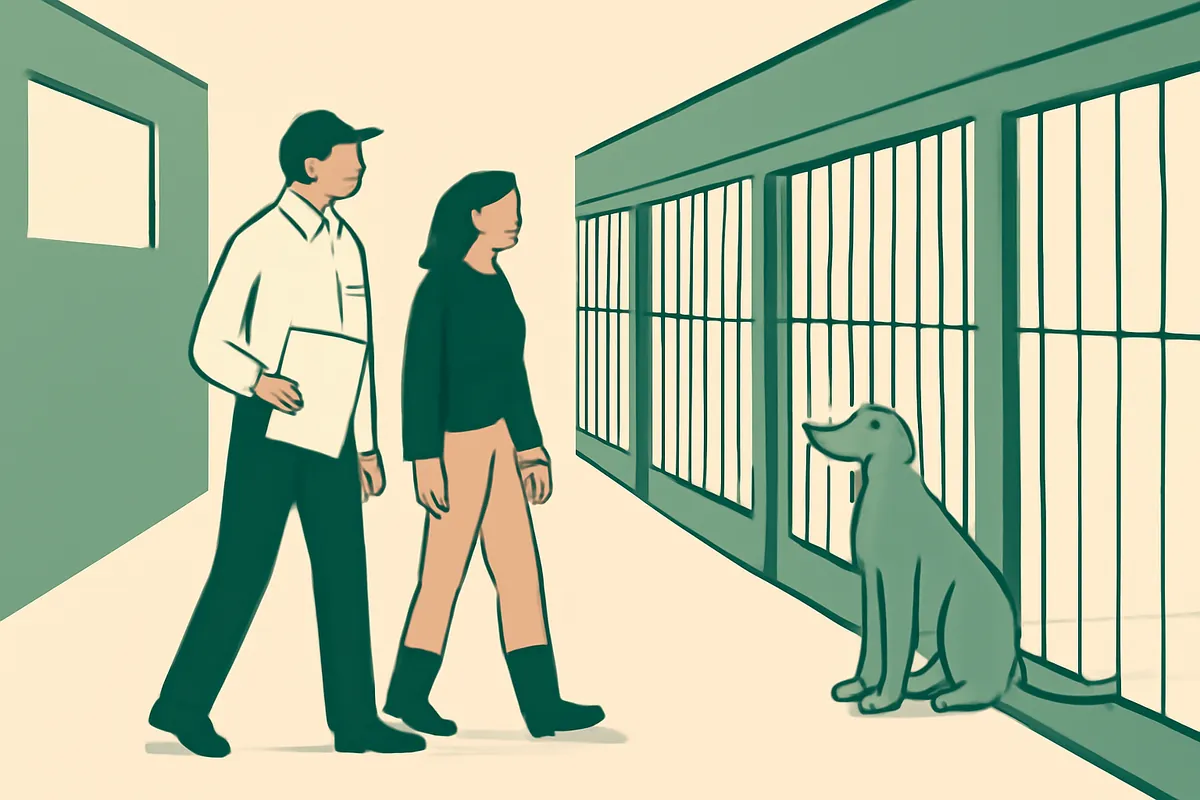
Where breeders are licensed, an inspector from the council or agency usually visits before a license is granted and may return. Although the details vary, inspections commonly look at:
- The accommodation: space, cleanliness, temperature, lighting and safety.
- The dogs' health, condition and access to vet care.
- Records of matings, litters, puppies sold and vet treatment.
- Exercise, enrichment and socialization for adults and puppies.
- How puppies are sold, including the age at which they leave and what information buyers receive.
- Written procedures for emergencies and for caring for dogs if you are unavailable.
Even if you do not need a license, meeting these standards is good practice.
A checklist before your first litter
- Find out whether a breeding license, registration or permit applies to you, and at what threshold.
- Check local rules on the number of dogs, kennel permits and zoning.
- Check microchipping and advertising rules where you live.
- Find out whether selling puppies makes you a business for tax purposes.
- Keep records of every mating, litter, vet visit and sale from the start.
- Prepare a written contract and puppy pack for buyers.
- Recheck the rules before each litter, as they change.
Why knowledge matters as much as the license
A license shows you meet a legal minimum. It does not show you understand genetics, health testing, whelping or how to match a puppy to the right home, which is what buyers and breed clubs care about. For the full picture, read how to become a responsible dog breeder, and for the health side, health testing before breeding. To see how puppies should be raised before they go home, read raising and socializing a litter.
To check your own knowledge, try our free sample breed professional questions, or read about the Breed Professional assessment.
Written by the PetCred Editorial Team and checked against the published curriculum for this program. Laws and requirements change and differ by place: check local rules before relying on anything legal or regulatory here.
Free course
Responsible Dog Breeding Fundamentals: A Free 5-Lesson Course
Five short lessons, a quick check after each, no sign-up. Start now →
More responsible breeding guides
How to Become a Responsible Dog Breeder: A Practical Guide
What responsible dog breeding involves: breed knowledge, health testing, mentors, breed clubs, planning a litter, raising puppies and choosing good homes.
10 August 2026
Raising and Socializing a Litter: A Breeder's Week-by-Week Guide
How to raise and socialize a litter from birth to going home: the stages of puppy development, what to introduce and when, weaning, and when to call your vet.
14 September 2026
Health Testing Before Breeding: A Breeder's Guide
The main health tests for breeding dogs (hips, elbows, eyes, heart and DNA), how to find the tests your breed needs and how to use the results to plan pairings.
21 August 2026