Health Testing Before Breeding: A Breeder's Guide
The main health tests for breeding dogs (hips, elbows, eyes, heart and DNA), how to find the tests your breed needs and how to use the results to plan pairings.
PetCred Editorial Team · Updated 21 August 2026 · 7 min read
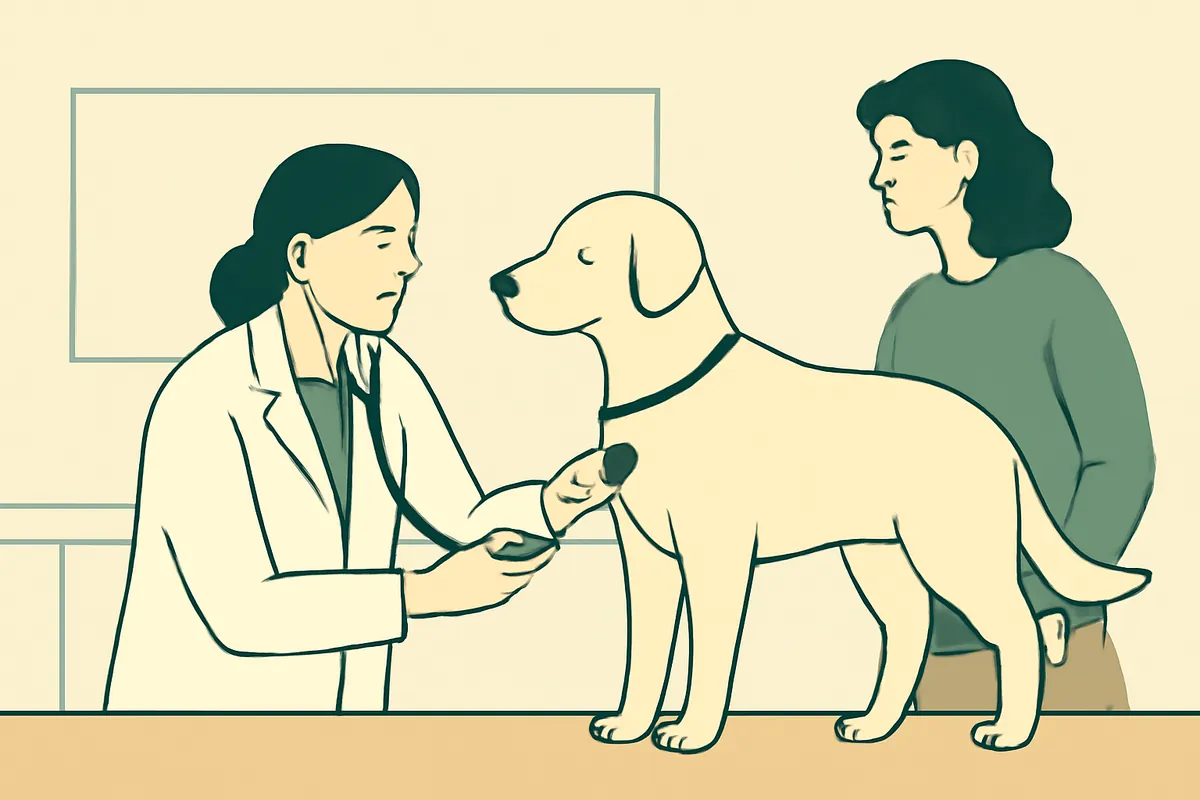
Health testing before breeding is how a responsible breeder avoids passing inherited disease on to puppies. Many hereditary conditions cannot be seen in a young, healthy-looking dog: hip dysplasia may not cause signs for years, an inherited eye disease can appear in middle age, and a dog that carries a single-gene disorder may never show it at all. Tests find what looking at the dog cannot.
This guide explains the main types of health test for dogs, how to find out which ones your breed needs, how to read the results, and how to use them when choosing which dogs to breed and which to pair. It is written for breeders and people planning a first litter, not as veterinary advice.
Health testing is arranged and interpreted with your vet and, for many tests, a veterinary specialist. This article explains the principles. Your vet and your breed club are the people to ask about your breed and your dogs.
Why health testing matters
Every breed has a set of conditions that are more common in it than in dogs overall, because of the breed's small founding population and the way it has been bred. Some are inherited through a single gene and can be tested with DNA. Others are influenced by many genes and by the environment, and are screened by examination or imaging.
Testing helps you:
- Avoid breeding from dogs that are affected by a condition.
- Avoid pairings likely to produce affected puppies.
- Improve the health of your line, and your breed, over generations.
- Give buyers honest information about the parents of their puppy.
It does not guarantee healthy puppies. Many conditions have no test, and some tests only show a dog's status at the time it was examined. What testing does is shift the odds in the puppies' favor.
Which tests does your breed need?
There is no single list for all dogs. The right tests depend on your breed and, sometimes, your country. Places to look:
- Your breed club. Most breed clubs publish recommended or required health tests for members, and many run health surveys.
- Your national kennel club. Kennel clubs publish breed health information and, in some countries, list the tests recommended for each breed.
- Health databases. In the US, the Orthopedic Foundation for Animals (OFA) maintains a public database of results and, through its Canine Health Information Center (CHIC) program, lists the tests each participating breed club recommends. In the UK, the Kennel Club publishes health test results for registered dogs.
- Your vet. Your vet can explain what each test involves and refer you to specialists.
The main types of test
Hip and elbow screening
Hip and elbow dysplasia are developmental joint conditions influenced by many genes and by environment, such as growth rate and exercise. Screening schemes assess X-rays of the dog's hips and elbows, taken by a vet and evaluated by a panel of specialists who give a score or grade.
Different countries use different schemes, including the OFA in the US, the British Veterinary Association and Kennel Club scheme in the UK, and the PennHIP method used in several countries. Each has its own procedure, and schemes set a minimum age for official results, commonly between one and two years. Ask your vet which scheme applies and how the X-rays must be taken.
Eye examinations
Many inherited eye conditions are diagnosed by a veterinary ophthalmologist, who examines the eyes and issues a certificate. Because some eye diseases develop with age, eye examinations are often repeated through a breeding dog's life rather than done once. In the US these exams are recorded through the OFA; in the UK through the BVA, Kennel Club and International Sheep Dog Society Eye Scheme.
Heart testing
For breeds with inherited heart conditions, testing may include listening to the heart by a specialist, an ultrasound of the heart (echocardiography) or longer monitoring of the heart rhythm. Which tests matter depends on the condition that affects the breed.
DNA tests for single-gene conditions
For conditions caused by a single known gene variant, a cheek swab or blood sample can show whether a dog is:
- Clear: no copies of the variant.
- Carrier: one copy. For recessive conditions, carriers are usually not affected themselves.
- Affected (or at risk): two copies for a recessive condition, or at least one for a dominant one.
DNA tests are available for many conditions, but a test is only useful if it has been shown to be relevant in your breed. The same gene variant can matter in one breed and not in another. Use a reputable laboratory and check that the test is recommended for your breed.
Other breed-specific tests
Some breeds need other tests: hearing tests in breeds where congenital deafness is known, such as Dalmatians; breathing assessments in flat-faced breeds, such as the Respiratory Function Grading Scheme run in the UK by the Kennel Club and the University of Cambridge; kneecap checks; and more. Your breed club will know which apply.
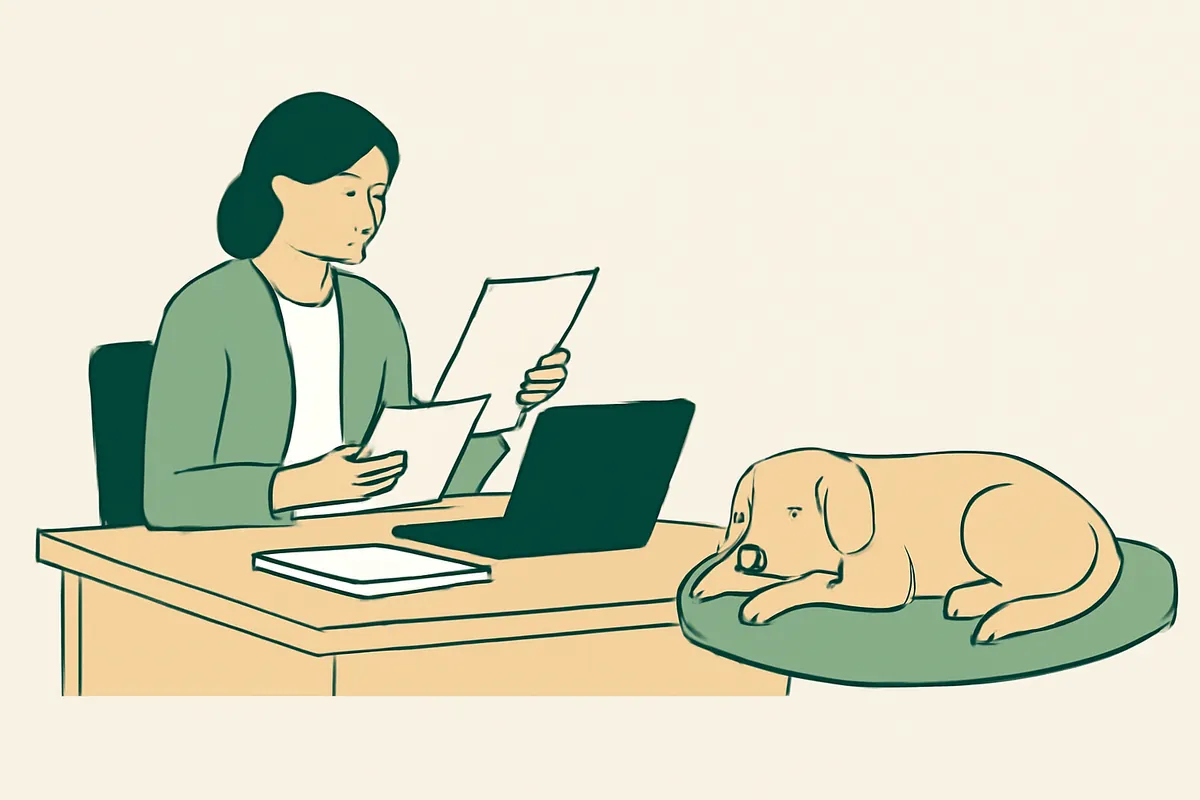
Reading DNA results: carriers and pairings
For a simple recessive condition, the pairing matters more than either parent alone:
| Parent 1 | Parent 2 | Puppies, on average |
|---|---|---|
| Clear | Clear | All clear |
| Clear | Carrier | About half clear, half carriers, none affected |
| Carrier | Carrier | About a quarter clear, half carriers, a quarter affected |
| Clear | Affected | All carriers, none affected |
| Carrier | Affected | About half carriers, half affected |
This is why a carrier does not have to be removed from breeding. A healthy carrier paired with a clear partner produces no affected puppies, and puppies kept for breeding can be tested. Removing every carrier from a breed would shrink its gene pool, which can create new problems. Carrier to carrier pairings, and any pairing that can produce affected puppies, should be avoided. Always check how a specific condition is inherited: not every condition is a simple recessive one.
Reading screening results: scores and grades
For conditions influenced by many genes, such as hip and elbow dysplasia, a single score is less predictive. Two parents with good hips can still produce a puppy with poor hips, and the reverse. Some general principles:
- Breed from dogs with results at or better than the breed's typical results, as reported by the scheme or breed club.
- Look at the family, not only the individual: the results of parents, siblings and previous offspring tell you more.
- Use breeding values where they exist. In some countries and breeds, estimated breeding values combine the results of a dog and its relatives into a better prediction than one score. The UK Kennel Club, for example, publishes them for hips and elbows in some breeds.
Inbreeding and genetic diversity
Health testing sits alongside another tool: keeping an eye on how closely related your pairings are. A coefficient of inbreeding (COI) estimates how likely it is that a puppy inherits two identical copies of a gene from a shared ancestor. Higher inbreeding increases the risk of recessive conditions, including ones no test exists for. Many kennel clubs and pedigree databases provide COI calculations; compare your pairing with the breed average and with other options.
Common mistakes
- Testing only one parent. Both parents' results matter, especially for DNA tests.
- Relying on a dog "looking healthy." Many conditions show no signs in a young dog.
- Using a DNA test that does not apply to the breed. Check that the test is recommended for your breed.
- Taking results on trust. Ask to see certificates, or check public databases, for the stud dog and for any dog you buy to breed.
- Testing too early. Screening schemes set minimum ages because results before then are not reliable.
- Excluding every carrier. For simple recessive conditions, careful pairing is often better for the breed than exclusion.
Where the breeder's role stops
A breeder arranges tests, keeps records and makes breeding decisions. Diagnosis, interpretation of clinical findings and advice on treatment belong to the vet and specialists. If a dog you have bred from, or one of its puppies, develops a condition later, speak to your vet and inform your breed club, and consider whether to change your breeding plans.
Next steps
For the full picture of responsible breeding, read how to become a responsible dog breeder. For the legal side, see dog breeding licenses in the US, UK, Canada and Australia, and for what happens after the puppies are born, raising and socializing a litter.
To check your understanding of genetics, inheritance and health screening, try our free sample breed professional questions, or read about the Breed Professional assessment.
Written by the PetCred Editorial Team and checked against the published curriculum for this program. Laws and requirements change and differ by place: check local rules before relying on anything legal or regulatory here.
Free course
Responsible Dog Breeding Fundamentals: A Free 5-Lesson Course
Five short lessons, a quick check after each, no sign-up. Start now →
More responsible breeding guides
How to Become a Responsible Dog Breeder: A Practical Guide
What responsible dog breeding involves: breed knowledge, health testing, mentors, breed clubs, planning a litter, raising puppies and choosing good homes.
10 August 2026
Raising and Socializing a Litter: A Breeder's Week-by-Week Guide
How to raise and socialize a litter from birth to going home: the stages of puppy development, what to introduce and when, weaning, and when to call your vet.
14 September 2026

Dog Breeding Licenses in the US, UK, Canada and Australia
When you need a dog breeding license or registration in the US, UK, Canada and Australia, what inspections look at, and a checklist for your first litter.
2 September 2026