Can You Make a Living as a Dog Breeder?
Can you make a living breeding dogs? An honest look at official figures, the real costs of a litter, health testing, licensing and why profit is never certain.
PetCred Editorial Team · Updated 4 October 2026 · 8 min read
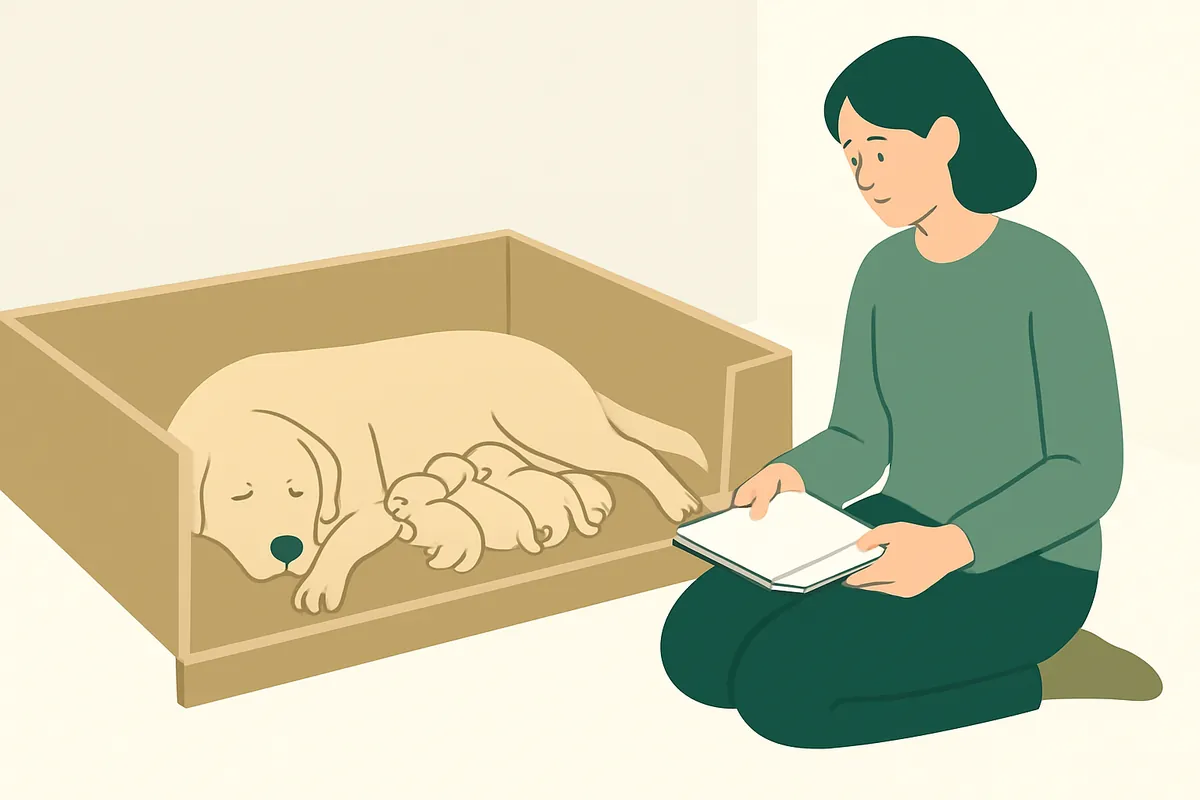
Can you make a living as a dog breeder? Some people earn money from breeding, many break even, and some lose money, especially in a year when a litter goes wrong. Nobody can promise a profit, and anyone who presents a breeding plan as an income plan is leaving out the costs, the risks and the welfare duties that come with every litter. There is no official "dog breeder salary" either: statistics offices place breeders in groups that are mostly about farming or employed animal care, while most dog breeders are not employees at all.
This guide is honest about all of that. It shows what official statistics in the US, UK, Canada and Australia actually cover, and why none of them tells you what a litter earns. Then it sets out what responsible breeding costs (health testing, veterinary care, time, licensing and lifelong support for every puppy) and how to work out a break-even price from your own numbers. Figures checked October 2026.
This guide is general information about income and costs, not veterinary or legal advice. Your vet, your breed club and your local authority are the people to check with before you breed.
What official statistics say about dog breeder pay
All amounts are gross, before tax, in the local currency. Read each one as context about a wider group, not as a figure for dog breeding.
United States
The Bureau of Labor Statistics has a category called Animal Breeders (SOC 45-2021). Its handbook describes breeders who work with livestock such as chickens, pigs and sheep, and notes that others breed and raise cats, dogs and other household pets. The median annual wage for animal breeders was USD 51,130 in May 2025. Source: BLS Occupational Outlook Handbook, Agricultural Workers.
It comes from a survey of wage and salary workers in nonfarm establishments that does not include the self-employed, and the examples in the official occupation definition are a dairy husbandry worker and a horse breeder. Someone breeding dogs at home and selling puppies is not earning a wage, so the figure says nothing about what a litter brings in.
United Kingdom
The National Careers Service has no job profile for dog breeders at the time of writing.
The Office for National Statistics codes dog breeders to Animal care services occupations n.e.c. (SOC 2020 unit group 6129), alongside dog groomers, kennel workers, dog walkers, stable hands and zoo keepers. In the Annual Survey of Hours and Earnings (2025 provisional results), the median gross annual pay for full-time employees in that group was GBP 25,067. Source: ONS, ASHE Table 14. ASHE covers employee jobs only, not the self-employed, so it mostly reflects employed animal care work rather than breeding.
Canada
Job Bank classifies the job title "breeder, dogs" within Managers in agriculture (NOC 80020), a group of people who run farms and usually own their own establishment. For Canada as a whole it shows a low of CAD 16.25, a median of CAD 30.00 and a high of CAD 57.69 an hour, reference period 2023-2024 (wages updated November 19, 2025). Source: Job Bank, dog breeder wages in Canada. Job Bank publishes wages paid to employees, and the group is about running farms, so the figure describes neither a home breeder's income nor the result of a litter.
Australia
Jobs and Skills Australia lists dog breeder as an example within Livestock Farmers nec (OSCA 152999), alongside alpaca, crocodile, deer and worm farmers. Based on the 2021 Census, that whole group has about 1,200 people, and the profile publishes no earnings figure. The older group, Livestock Farmers (ANZSCO 1213), shows none either. There is no official Australian pay figure for dog breeding.
Why no salary figure can answer the question
- A litter is not a wage. Costs come first, often months before any puppy goes home, and income arrives in irregular lumps.
- Results depend on things you cannot control. Litter size, the health of the mother and puppies, and complications at birth all change the outcome.
- Responsible breeding cannot simply be scaled up. The mother's health comes first, and some kennel clubs, and in some places licensing rules, limit how often and how many times a female may be bred.
- Prices are set by the market for your breed, not by what your litter cost you.

What a responsibly bred litter costs
The amounts vary too much by breed and place to quote, but the categories are the same for everyone. Write each one down before you plan a litter.
- Health testing of both parents for the conditions recommended in the breed, such as hip and elbow scoring, eye examinations, heart testing and DNA tests. Some tests can only be done once a dog is adult, and a dog that does not pass should not be bred, so you can pay for tests and have no litter. Our guide to health testing before breeding explains the main tests.
- A stud fee, or the cost of keeping, testing and caring for your own stud dog.
- Veterinary care for the mother: a check before breeding, care during pregnancy as your vet advises, and money set aside for an emergency such as a cesarean section.
- Whelping and rearing: a whelping box, heating, bedding, scales, and food for the mother and puppies for at least eight weeks.
- Puppy veterinary care: health checks, vaccinations and microchipping, which is a legal requirement before sale in some places.
- Registration, licensing and paperwork: registration fees where they apply, any breeding license and inspection, and written contracts.
- Finding homes: advertising, and the time it takes to meet, screen and advise buyers.
- The dogs between litters: food, vet care and insurance for your breeding dogs for their whole lives, including retirement.
- Your time. The first weeks after birth need someone present much of the day and night. Many breeders take time off work around a litter, which is a cost even when no money changes hands.
Welfare and the law come with the job
Whether you need a license depends on where you live, how many litters you breed and whether you sell as a business. In England, for example, a council license is needed at the time of writing for anyone breeding three or more litters in a 12-month period, or breeding and advertising a business of selling dogs. Other countries, states and councils set their own rules. Our guide to dog breeding licenses in the US, UK, Canada and Australia summarizes them; check with your local authority before you breed.
A worked example: a litter's break-even price
The free pet service price calculator is built for services sold by the visit, but its method works for a litter on paper: add up your costs and what you need, spread them over what you can actually sell, and see where the break-even sits. The inputs below are invented to show the method. They are not typical costs, litter sizes or puppy prices, and they are in no particular currency.
| Input | Example value |
|---|---|
| Health testing, the mother's share for this litter | 500 |
| Stud fee | 1,000 |
| Vet care for the mother before and during pregnancy | 600 |
| Whelping equipment, heating and bedding | 300 |
| Food for the mother and puppies | 400 |
| Registration, licensing share and advertising | 300 |
| Costs per puppy (health check, first vaccination, microchip) | 150 |
| Puppies placed in homes | 5 |
Working through it:
- Fixed costs for the litter: 500 + 1,000 + 600 + 300 + 400 + 300 = 3,100.
- Break-even per puppy: 3,100 ÷ 5 + 150 = 770. That covers costs only and pays you nothing for months of work.
- When something goes wrong: add an emergency cesarean costing 2,000 and suppose only three puppies are placed. The break-even becomes 5,100 ÷ 3 + 150 = 1,850, more than double, from events you did not choose.
- Paying yourself: to keep 1,000 after setting aside 25 percent for tax, you need 1,000 ÷ 0.75 = about 1,333 in profit. With five puppies, that means (1,333 + 3,100) ÷ 5 + 150 = about 1,036.67 per puppy.
A few honest conclusions follow. First, the break-even is very sensitive to litter size and complications. Second, buyers pay what the market for your breed will bear. If that is below your break-even, the litter loses money; if it is below the price that pays you, the litter does not cover your time, however carefully you raised it. Third, the gap must never be closed by cutting health tests, veterinary care, socialization or the time puppies spend with their mother. Finally, divide whatever is left by the hours you actually spent on the litter, from planning to the last settling-in call. That hourly figure is the one to compare with a wage.
How to make breeding sustainable without cutting corners
- Plan litters around the mother and the homes, not around income. Breed only from health-tested adults, at an age and frequency your vet and breed club support.
- Build a waiting list before mating. Screened homes waiting for puppies protect the puppies and remove the pressure to sell to the first caller.
- Treat breeding as one part of your working life, alongside a job or a related service such as grooming or training, rather than relying on litters for a living.
- Be honest in every advert, show puppies with their mother, and hand over complete health and vet records.
- Plan for the long term: retirement for breeding dogs, and money for dogs that come back to you, because a responsible breeder takes back any dog an owner can no longer keep.
Where to go next
For the full picture of the work, read how to become a responsible dog breeder, and for the weeks after birth, raising and socializing a litter. To test your knowledge of genetics, health screening, whelping and buyer education, try the free breed professional sample questions, and see what the Breed Professional certification covers. If you also offer services by the visit, such as grooming or training, the pet service price calculator works out those prices from your own numbers.
Frequently asked questions
Is dog breeding profitable?
It can be, but it is never guaranteed. Health testing, vet care, food, registration and your time are paid for up front, litter size and complications are outside your control, and puppy prices are set by the market. Some breeders make money, many break even and some lose money.
Do you need a license to breed dogs?
It depends on where you live, how many litters you breed and whether you sell as a business. Some places require a license or registration above a number of litters or when breeding is run as a business. Check with your local authority before you breed.
Does a breeding certification let you charge more for puppies?
No credential sets puppy prices. A certification can show buyers and breed clubs that you understand genetics, health screening, whelping and puppy development, but health test results, how your puppies are raised and your support for buyers are what earn their trust.
Written by the PetCred Editorial Team and checked against the published curriculum for this program. Laws and requirements change and differ by place: check local rules before relying on anything legal or regulatory here.
Free course
Responsible Dog Breeding Fundamentals: A Free 5-Lesson Course
Five short lessons, a quick check after each, no sign-up. Start now →
More responsible breeding guides
How to Become a Responsible Dog Breeder: A Practical Guide
What responsible dog breeding involves: breed knowledge, health testing, mentors, breed clubs, planning a litter, raising puppies and choosing good homes.
10 August 2026
Raising and Socializing a Litter: A Breeder's Week-by-Week Guide
How to raise and socialize a litter from birth to going home: the stages of puppy development, what to introduce and when, weaning, and when to call your vet.
14 September 2026

Dog Breeding Licenses in the US, UK, Canada and Australia
When you need a dog breeding license or registration in the US, UK, Canada and Australia, what inspections look at, and a checklist for your first litter.
2 September 2026
Health Testing Before Breeding: A Breeder's Guide
The main health tests for breeding dogs (hips, elbows, eyes, heart and DNA), how to find the tests your breed needs and how to use the results to plan pairings.
21 August 2026