How to Become a Dog Agility Instructor: A Practical Guide
What a dog agility instructor does, the knowledge the job needs, how to build teaching experience and how agility instructor certification works, step by step.
PetCred Editorial Team · Updated 9 August 2026 · 10 min read
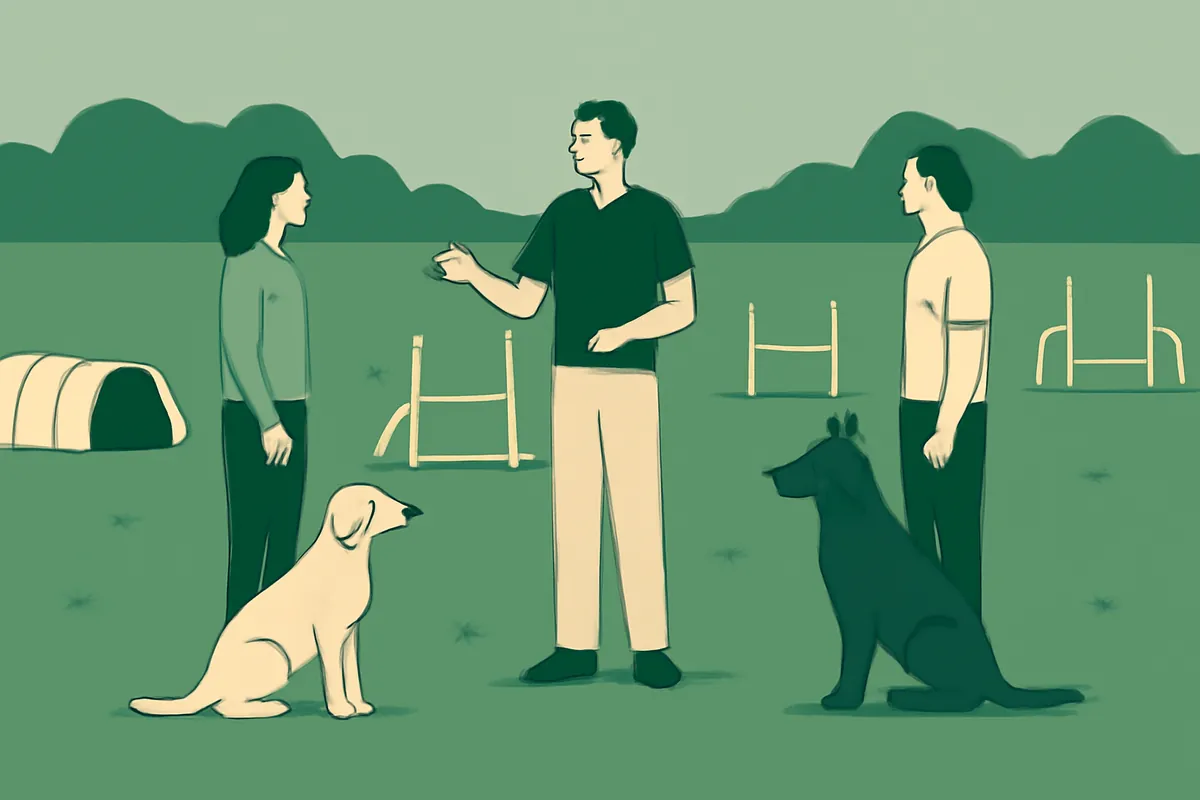
Most dog agility instructors start the same way: they fell in love with the sport through their own dog, trained for years, and one day the club asked them to take the beginners' class. Being good at agility and being good at teaching agility are different skills, though. An instructor is responsible for several dogs and several people at once, for their safety as much as their progress, and has to explain in plain words what their own body does without thinking.
This guide covers what a dog agility instructor actually does, the knowledge the job needs, how people build the experience to teach, how agility instructor certification works, and how to set up classes that keep dogs sound and handlers coming back. It is written for people who already train dogs or compete, and for dog trainers who want to add agility to what they offer.
There is no single official agility instructor qualification in the US, UK, Canada or Australia. That makes it more important, not less, to be able to show what you know.
What a dog agility instructor does
Agility asks a dog to run a numbered course of jumps, tunnels, weave poles and contact obstacles (the A-frame, dog walk and seesaw) while the handler directs it with body movement and verbal cues. The instructor's job is to get dog and handler to that point safely, and then to help them get better at it.
A typical week for an instructor includes:
- Teaching foundation classes, where young or new dogs learn body awareness, focus, and the basic skills that come before any full-size obstacle.
- Teaching handling classes, where handlers learn to move and cue so the dog knows where to go next.
- Setting up and checking equipment before every session, and designing short sequences and courses that suit the level of the class.
- Watching each dog for signs of fatigue, discomfort or stress, and adjusting the session when they appear.
- Coaching people: breaking a skill into steps, giving feedback a nervous beginner can use, and keeping a mixed group moving.
- For competition students, analyzing courses, explaining rules and helping them plan how to handle a run.
Some instructors teach one or two evenings a week at a club. Others run their own business with a field or an indoor arena, private lessons, seminars and online coaching.
The knowledge the job needs
Dog training fundamentals
Agility is dog training at speed. You need a solid grasp of how dogs learn: reinforcement, marker timing, building behaviors in small steps, and keeping arousal at a level where the dog can still think. Reward-based training is the norm in the sport, and a dog that loves the game is both faster and safer than one that is pushed through it. If this side is new to you, our guide to positive reinforcement dog training is a good starting point.
Obstacle training and performance criteria
Every obstacle has a safe way to be performed, and a set of behaviors to teach before the dog meets the full-size version: how the dog takes off and lands over a jump, how it enters and moves through the weave poles, how it drives to and holds or runs through the contact zone on the A-frame and dog walk, and how it copes with the moving board of the seesaw. An instructor needs to know what each criterion is, why it matters for the dog's body, and how to teach it in steps.
Handling systems
Handlers talk to their dogs mostly with their bodies: shoulders, feet, arm position and the line they run. The main moves have names (front cross, rear cross, blind cross, serpentine, threadle and others), and several handling systems organize them in slightly different ways. You do not need to teach every system, but you need to understand one thoroughly, recognize the others, and be able to explain why a cue works or fails from the dog's point of view.
Fitness, conditioning and injury prevention
Agility is athletic. Dogs turn sharply, jump repeatedly and land with force on their front legs. Instructors should understand warm-ups and cool-downs, basic conditioning, how to spot subtle lameness or a change in the way a dog jumps, and why young dogs need a different program from adults. They should also know where their role stops: when a dog looks sore, stiff or reluctant, the next step is the dog's vet, not more practice. Our guide to starting puppies in agility safely covers the young dog side.
Course design and analysis
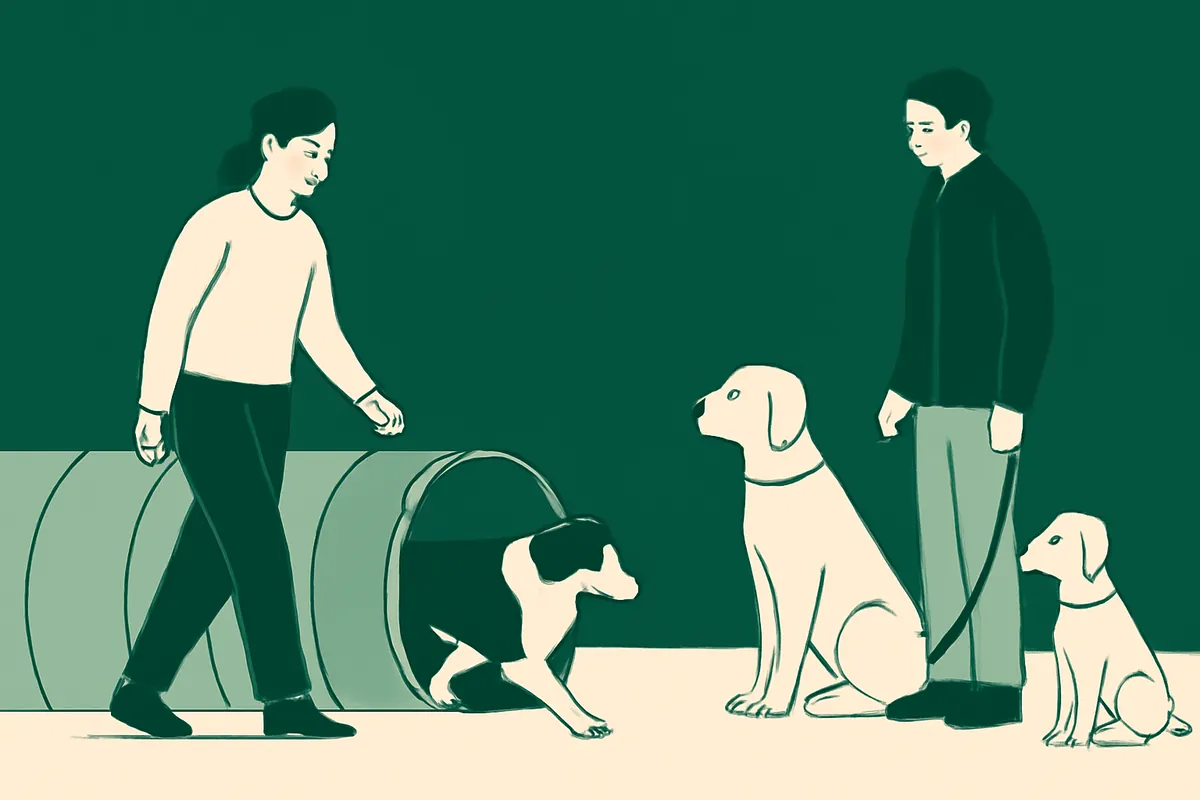
A good course for a novice class is short, flowing and hard to get wrong. A good course for a competition class tests handling decisions without asking the dog to do anything unsafe. Instructors need to design both, and to read a course the way a handler at a trial will: where the dog's line goes, where it might go off course, and where the handler needs to be. We look at this in detail in agility equipment safety and course design.
Competition rules
Students who compete will ask about classes, levels, jump heights, faults and qualifying runs. Each organization writes its own rules, and they change. You do not need to memorize every rulebook, but you should know the rules of the organizations your students compete in and know where to check the current version.
Coaching people
This is the part most new instructors underestimate. The dog usually knows its job; the handler is late, unclear or anxious. Good instructors explain one thing at a time, show rather than tell, give specific feedback ("your shoulders turned before the dog had committed to the jump" rather than "you were late"), and keep the class feeling safe for beginners. Group management, lesson planning and patience matter as much as knowing the sport.
How to build experience
Most instructors get there through a mix of four routes.
- Train and compete with your own dog. Nothing replaces taking at least one dog from foundations to competition. You learn what the path looks like, and your students will ask what you have done.
- Assist in someone else's classes. Clubs and training schools often welcome helpers to set up equipment, reset bars and hold dogs. Over time you take on part of the class, then a class of your own under supervision. This is where you learn to teach, as opposed to learning to do.
- Find a mentor. An experienced instructor who watches you teach and tells you honestly what to change will shorten the learning curve more than anything else.
- Study the theory. Seminars, books and online courses cover handling systems, course analysis, canine conditioning and learning theory. They cannot teach your timing, but they give you the vocabulary and reasoning to explain what you do.
Many instructors also volunteer at trials as ring crew or scribes, which is a quick way to learn how competitions are run and to watch many dogs and handlers on the same course.
Agility instructor certification
Because nobody licenses agility instructors, the credentials you will come across fall into a few types:
- Schemes run by clubs or governing bodies, where they exist, which assess instructors against the body's own standard.
- Courses from agility schools and well-known handlers, which teach a system or a curriculum and may give a certificate of completion.
- General dog trainer credentials, which show knowledge of learning theory and behavior but say little about agility itself.
- Knowledge assessments focused on agility coaching, including online ones, which test whether you understand obstacle criteria, handling, conditioning, course design, rules and coaching.
Each proves something different. A practical assessment shows someone watched you teach. A course certificate shows you completed a curriculum. A knowledge assessment shows you can explain the reasoning behind safe, effective coaching, but it does not show how you handle a dog or run a class. We compare the options, including our own, in agility instructor certifications compared.
Why bother with a credential at all, if the law does not ask for one? Mostly for three reasons: clubs and venues want some evidence before they hand you a class, insurers may ask about your training, and owners choosing between instructors have little else to go on beyond word of mouth.
Setting up your own classes
If you teach independently rather than for a club, plan these before your first class:
- A safe venue. Level ground with good footing, enough space between obstacles, secure fencing, shade and water. Indoor arenas need a surface that does not get slippery. Check the ground before every session.
- Equipment. Displaceable jump bars, weave poles, a tunnel with a way to stop it moving, and contact equipment with a non-slip surface. Start with foundation equipment; you do not need a full course to teach beginners well.
- Insurance. Public liability insurance is standard for anyone teaching classes with dogs, and many venues require it. Check what your policy covers for agility specifically.
- Local rules. Business registration, and permission to use the land for classes. Rules depend on where you are, so check with your local authority.
- Class structure. Small groups, clear levels, and entry criteria for each level. A foundation class, a beginners' class on low equipment, and progressive handling classes is a common structure.
- Written policies. Health requirements (vaccinations as your vet and venue require, no dogs in season or unwell), minimum ages for each level, a code of conduct, and what happens if a dog is reactive.
A sample class plan
For a one-hour beginners' class of four to six dog and handler teams, a workable plan looks like this:
| Time | Activity | Purpose |
|---|---|---|
| 5 minutes | Arrival, check-in, handlers walk dogs on lead | Settle the dogs, spot anyone lame or unwell |
| 10 minutes | Group warm-up led by the instructor | Raise heart rate gradually, loosen muscles |
| 10 minutes | Demonstration and explanation of the skill for the day | One clear teaching point |
| 25 minutes | Teams work in turn on a short sequence, with individual feedback | Practice at the right level for each dog |
| 5 minutes | Cool-down walk | Bring dogs down gradually |
| 5 minutes | Questions and homework | Give handlers one thing to practice at home |
The key is short turns with rest in between. Dogs waiting their turn should be settled in crates, on mats or on lead at a distance, never loose.
Mistakes new instructors make
- Moving dogs to full-height equipment too early. Speed and excitement come fast in agility; physical maturity and solid foundations do not.
- Designing courses they would enjoy running. Beginners need courses that set them up to succeed, not tests of handling.
- Correcting everything at once. Handlers can change one thing per run. Pick the one that matters most.
- Ignoring the waiting dogs. Many incidents in agility classes happen away from the equipment, between dogs waiting their turn.
- Pushing a dog that slows down. A dog that hesitates, knocks bars it used to clear or avoids an obstacle may be in pain. Stop, and suggest a vet visit.
- Teaching only the dog. The handler is the one who comes back next week. If they leave confused or embarrassed, they may not.
Common questions about the job
Do you need to compete at a high level to teach? No, but you need enough experience to know the path your students are on. Many excellent foundation instructors have never competed at the top level; they are simply very good at the early stages.
Can a dog trainer teach agility? A trainer has most of the learning theory already. What they need to add is the sport-specific knowledge: obstacle criteria, handling, course design, rules and conditioning.
Can you make a living from it? Some instructors do, usually by combining group classes, private lessons, seminars and online coaching. Many teach part time alongside other work. We would rather not quote earnings: they depend on your area, your venue and how many students you can reach.
Where to start today
If you want to teach agility, a good first month is: offer to help at your club's beginners' classes, write down the steps you used to teach your own dog each obstacle, watch a trial from start to finish, and read up on one handling system until you can explain every move in it.
When you want to check your knowledge against the topics an instructor needs, try our free sample agility coach questions. They use the same format as the Agility Coach assessment, with model answers so you can compare your thinking. From there, agility equipment safety and course design is a good next read.
Frequently asked questions
Do you need a qualification to teach dog agility?
Generally not by law: agility instruction is not a licensed profession in the US, UK, Canada or Australia. Clubs, venues and insurers may still ask for evidence of experience or training, so most instructors build a record of competing, assisting and study before teaching on their own.
How long does it take to become an agility instructor?
It varies a great deal. Most instructors have trained at least one dog from foundations to competition and assisted in classes for a good while before running their own. The theory can be learned in months; confident teaching of mixed groups takes longer.
Can I teach agility if I have only trained my own dog?
Your own dog is where most instructors start, but teaching needs more: seeing many different dogs, explaining skills to people, and managing a group safely. Assisting an experienced instructor is the usual bridge between the two.
Written by the PetCred Editorial Team and checked against the published curriculum for this program. Laws and requirements change and differ by place: check local rules before relying on anything legal or regulatory here.
Free course
Dog Agility Coaching Fundamentals: A Free 5-Lesson Course
Five short lessons, a quick check after each, no sign-up. Start now →
More dog agility guides
Agility Instructor Certifications Compared: What Each One Proves
Club schemes, handler programs, trainer credentials and knowledge assessments: how agility instructor certifications differ and how to choose one.
13 September 2026
Agility Equipment Safety and Course Design
How agility instructors check the ground and equipment, design courses that suit each level, and read a course for the places where dogs get hurt or go wrong.
1 September 2026
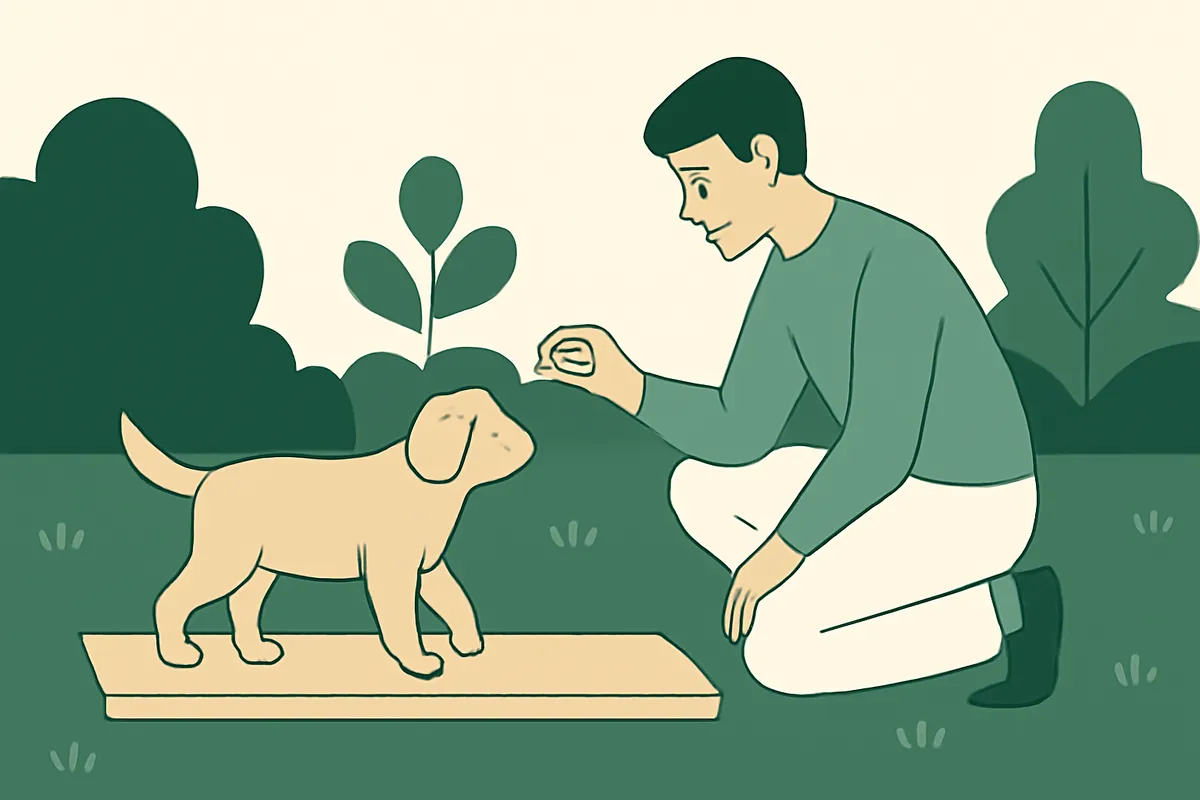
Starting Puppies in Agility Safely
What young dogs can safely learn in agility, what waits until they are physically mature, how to run a puppy class and when to send a young dog to its vet.
20 August 2026