Agility Equipment Safety and Course Design
How agility instructors check the ground and equipment, design courses that suit each level, and read a course for the places where dogs get hurt or go wrong.
PetCred Editorial Team · Updated 1 September 2026 · 6 min read
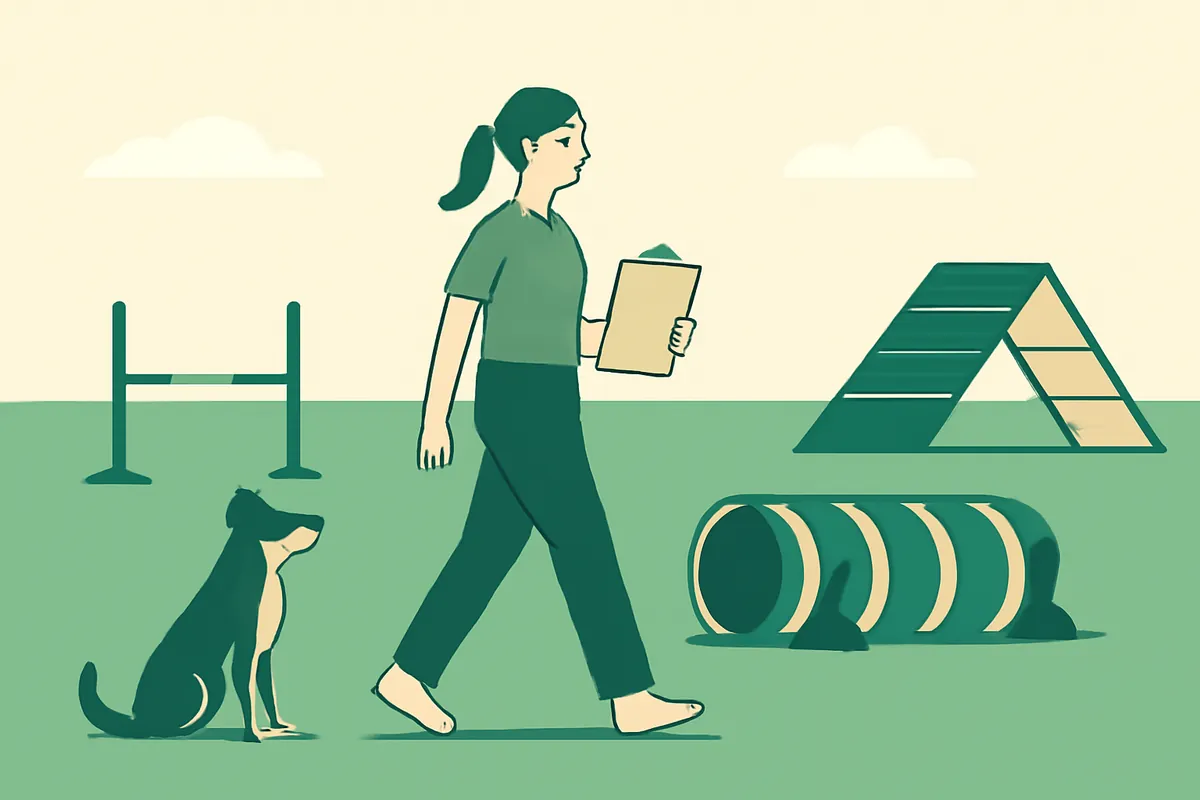
Most agility injuries are not bad luck. They come from ground that is slippery or uneven, equipment that moves when it should not, obstacles set too close together, and courses that ask a dog to do something its body or training is not ready for. All of these are in the instructor's hands, which makes agility equipment safety and course design two of the most important skills an agility instructor has.
This guide covers how to check the ground and each type of equipment, how to design courses that suit the level of a class, and how to read a course for the places where dogs get hurt or go wrong. It is written for instructors and club organizers, and for experienced handlers who set up their own practice.
Equipment specifications (heights, lengths, slat spacing and contact zone sizes) are set by each governing body and change over time. Use the current rulebook of the organization your students compete with.
Start with the ground
The surface under the course matters as much as the equipment on it. Before every session, walk the whole area and check for:
- Holes, stones and uneven patches that could catch a foot at speed.
- Slippery ground. Wet grass, frost, mud and some indoor floors become dangerous for dogs that turn hard. Rubber matting and artificial turf give better grip indoors, but check that edges are flat and joins do not lift.
- Debris. Toys, treat bags, lead clips and anything left from the last session.
- Heat. Dark artificial surfaces and rubber can get hot in the sun. On warm days, check the surface with your hand, provide shade and water, and shorten or move sessions.
If the ground is not safe, change the plan. Lower-impact work (foundation skills, handling on the flat, tunnels only) or a cancelled session is better than an injured dog.
Checking each type of equipment
Jumps
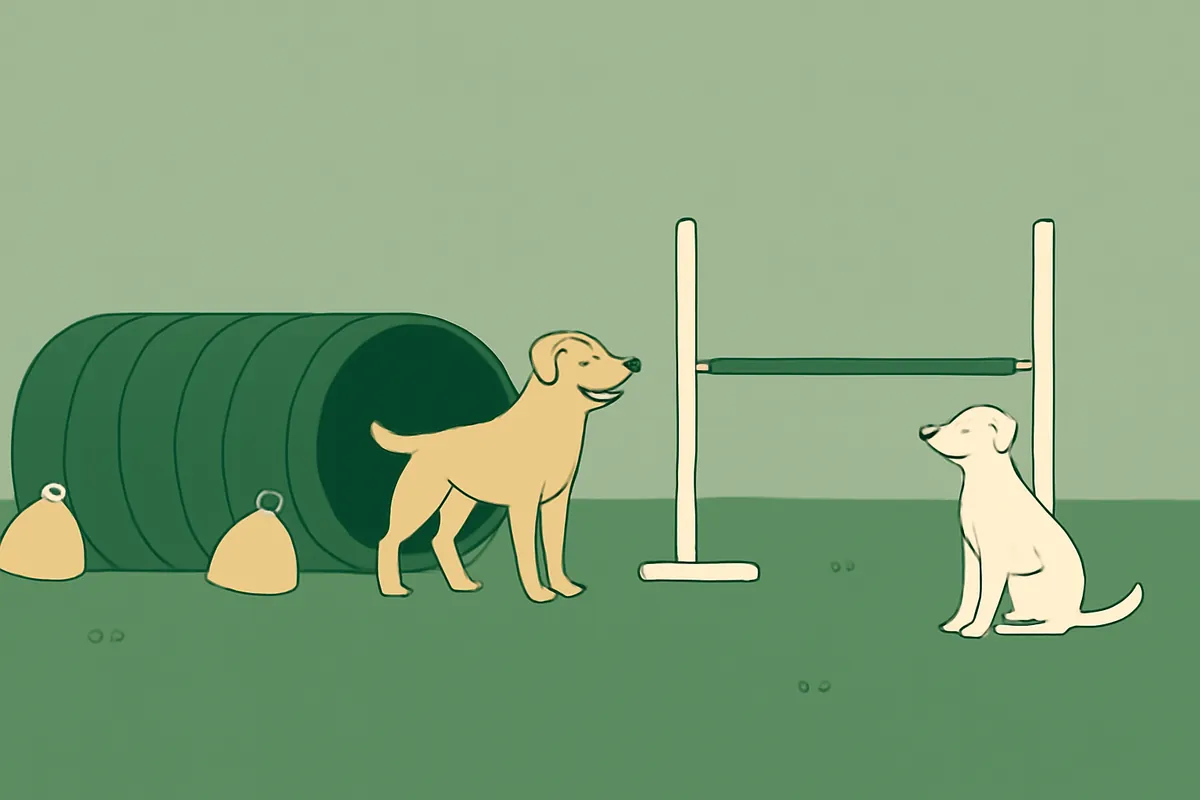
Bars should rest in cups so they fall easily when a dog touches them. A bar that is fixed, taped or wedged can trip a dog and cause a bad fall. Wings and uprights should be stable and free of sharp edges or protruding bolts. Tire jumps should follow current design rules; many organizations now use tires that break apart or displace when hit.
Tunnels
A tunnel must not roll, slide or twist when a dog runs through it. Hold it firmly with sandbags or purpose-made holders along its length, especially at curves. Check the fabric for tears and the inside for water or debris, and make sure the entrance is fully open.
Weave poles
Poles should be straight, firmly fixed to a stable base, and free of cracks. Bases should lie flat so they do not rock or catch a foot.
A-frame, dog walk and seesaw
Contact equipment carries the highest risk of falls, so it needs the closest checks:
- A non-slip surface that is intact and not worn smooth.
- Slats, where used, firmly attached and not loose.
- Stable legs and supports; nothing wobbles when you push it.
- For the seesaw, a board that pivots smoothly and settles steadily, and a pivot point that is secure. A young or nervous dog should meet the seesaw only after gradual training on a low, stable board.
After storage and transport
Equipment that has been moved or stored for a while needs a full check before use. Bolts loosen, surfaces crack and fabric tears. Keep a simple log of when each item was checked and repaired.
Principles of safe course design
A course is safe when it matches the level of the dogs and handlers running it. Some principles apply at every level:
- Give dogs room. Obstacles set too close together force sharp turns at speed and leave no space to land or adjust stride. Governing bodies set minimum distances; for classes, err on the side of more space.
- Think about the approach to every obstacle. A dog should be able to see and line up for each obstacle. Sharp angles into contact equipment or weave poles are risky, especially for less experienced dogs.
- Watch the landing side. Nothing should sit directly where a dog lands after a jump or comes off a contact.
- Avoid dangerous traps. An "off-course" option can test handling, but not when the wrong choice sends a dog at speed into a solid obstacle or a crash.
- Consider the conditions. On slippery ground, remove tight turns. In heat, make courses shorter.
Designing for different levels
Beginners
Beginner courses should be short, flowing and easy to get right. Use wide, gentle curves rather than sharp turns, lower jump heights, and only obstacles every dog in the class has already learned. Four to six obstacles in a smooth line is plenty for a new team. Put the success first: the aim is confidence for dog and handler.
Intermediate
Introduce changes of direction that need a clear handling cue, a choice between two obstacles, and longer sequences. Each course should have one or two clear teaching points, not ten.
Advanced and competition preparation
Courses can include the kind of challenges seen at trials: threadles, backsides, serpentines and tighter lines. Even here, every challenge should be a handling question, not a physical risk. If a line only works when a dog slips or crashes into a wing, redesign it.
Reading a course like an instructor
Before a class runs a course, walk it yourself as a dog would. Ask:
- Where is the dog's path, and is there room for it to take each obstacle safely at speed?
- Where will dogs be tempted to go off course, and what happens to them if they do?
- Where does the handler need to be to cue each section, and can a beginner get there?
- Where are the hard turns, and are they appropriate for this class?
- What is the single most important handling skill this course teaches?
Then watch the first team run it. If a dog struggles in the same place, change the course, not the dog.
Common mistakes
- Setting up and not checking. Equipment moves during a session. Recheck tunnels and bars between groups.
- Using the same course for every level. A course designed for the advanced class will overface beginners.
- Borrowing a trial course for a class. Trial courses are designed for dogs already competing at that level.
- Letting handlers reset equipment carelessly. Show them how bars sit in cups and how tunnels are secured.
- Ignoring the waiting area. A safe course with a crowded waiting area next to it is not a safe class.
Documenting and improving
Keep a short record of each session: what equipment was used, any issues found in checks, any incident, and what changed as a result. It helps you notice patterns (the same corner where dogs slip, the same obstacle that is often knocked) and shows insurers and venues that you take safety seriously. Check your insurance policy's requirements, as some ask for records of this kind.
Further reading
For the full route into teaching, see how to become a dog agility instructor. For young dogs, starting puppies in agility safely explains which equipment to hold back and why. And to understand the credentials instructors hold, read agility instructor certifications compared.
To see how equipment safety and course design come up in an assessment, try our free sample agility coach questions, or read about the Agility Coach assessment.
Written by the PetCred Editorial Team and checked against the published curriculum for this program. Laws and requirements change and differ by place: check local rules before relying on anything legal or regulatory here.
Free course
Dog Agility Coaching Fundamentals: A Free 5-Lesson Course
Five short lessons, a quick check after each, no sign-up. Start now →
More dog agility guides
How to Become a Dog Agility Instructor: A Practical Guide
What a dog agility instructor does, the knowledge the job needs, how to build teaching experience and how agility instructor certification works, step by step.
9 August 2026
Agility Instructor Certifications Compared: What Each One Proves
Club schemes, handler programs, trainer credentials and knowledge assessments: how agility instructor certifications differ and how to choose one.
13 September 2026
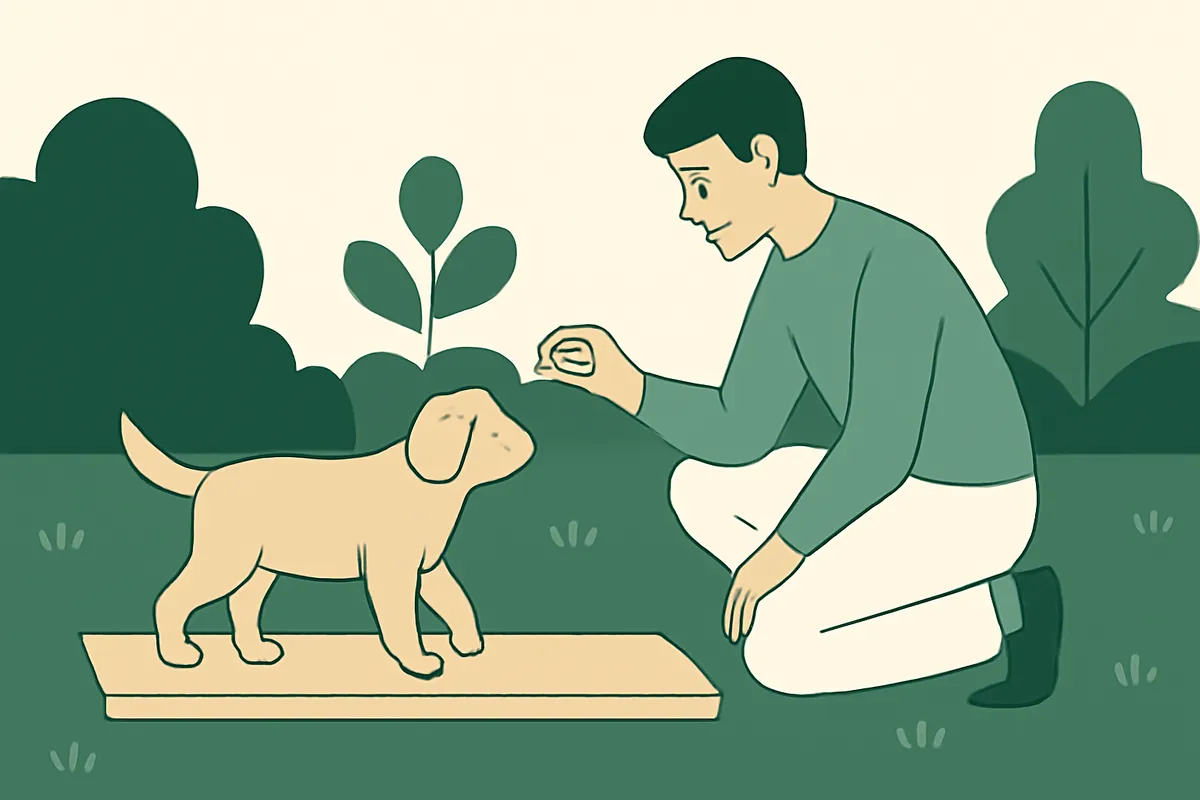
Starting Puppies in Agility Safely
What young dogs can safely learn in agility, what waits until they are physically mature, how to run a puppy class and when to send a young dog to its vet.
20 August 2026