Whelping Kit Checklist
A printable whelping kit checklist for breeders: the vet plan, contacts, whelping area and supplies to have ready, plus the signs that mean calling the vet now.
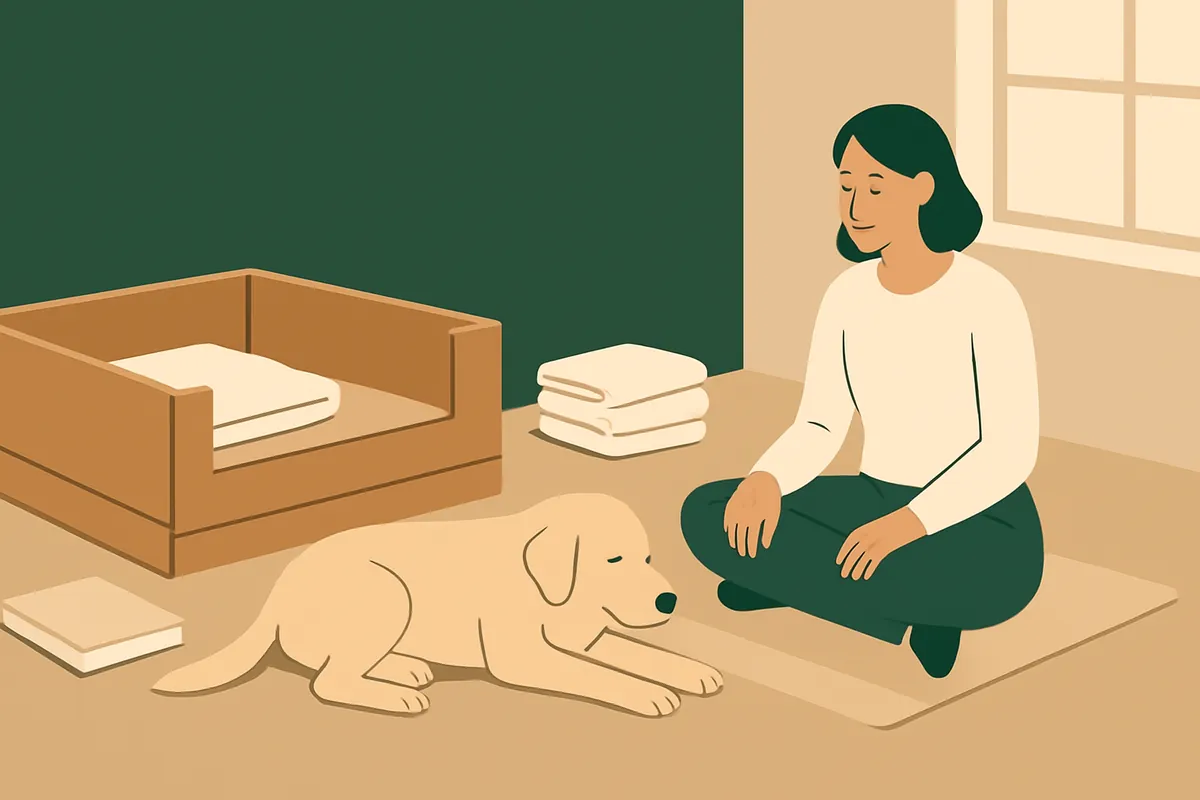
Whelping kit checklist
0 of 31 items ready
Work through it during the pregnancy, well before the due date. Your ticks are saved in this browser.
Agree a plan with your vet0 of 6
Do this during the pregnancy. Your vet's limits are the ones to follow, not a book's or a forum's.
Contacts, transport and help0 of 6
The whelping area0 of 5
Supplies to have ready0 of 9
Ready for the first weeks0 of 5
Newborn puppies cannot keep themselves warm and can go downhill fast, so the first weeks are about watching.
Call the vet now
Call straight away if you see any of these, and describe exactly what you see. When in doubt, call: a vet would much rather take a call that turns out to be nothing than see a mother or litter too late.
During labor
- Strong, frequent straining with no puppy born, for longer than your vet told you to wait
- A long gap between puppies while you know more are still to come, beyond the limit your vet gave you
- A puppy visibly stuck in the birth canal (do not pull hard on it)
- Dark green or black discharge before the first puppy, or heavy bleeding at any stage
- The mother is weak, collapsing, in obvious distress or not responding to you normally
- The due date has passed with no sign of labor
The mother after the birth
- She is restless, trembles, walks stiffly or has a seizure
- A foul-smelling discharge, a high temperature (if your vet has shown you how to take it), or she stops eating
- Mammary glands that are hot, hard or painful
- She seems unwell or loses interest in the puppies
Any puppy
- Cold, limp or lying apart from the litter: warm it gently and call straight away
- Weak, not suckling, or crying constantly
- Stops gaining weight or loses weight: call, do not wait and see
If the mother has a seizure: keep the area safe and move the puppies away, do not restrain her or put anything in her mouth, time the seizure and call the vet.
Where your role stops
A breeder supports the mother, watches, records and calls for help. A breeder does not:
- give any medication, including anything to speed up labor or relieve pain, unless your vet has prescribed it for this dog
- attempt surgery, stitching or any internal procedure
- pull hard on a puppy that is stuck
- diagnose a sick puppy or mother, or decide alone that a problem can wait
- tube-feed a puppy unless your vet has shown you how and asked you to
- carry out any procedure that the law where you live bans or reserves for vets (tail docking is one example; check your local rules)
Your own safety
A gentle dog can behave differently in labor or when guarding a new litter.
- Move slowly, speak quietly, and avoid reaching over her to the puppies when she is tense
- Keep visitors, children and other dogs away
- If she growls or stiffens, give her space
- If you must move or handle her while she is in pain, have a second person help and use a towel if there is any risk of a bite
- Never put your hands near her mouth unless you can do so without being bitten
This checklist explains principles for breeders. It does not replace your vet's advice or hands-on guidance from an experienced mentor, and it gives no times, medicines or doses on purpose: agree those with your own vet, who knows your dog. Every emergency in whelping ends the same way: with the vet.
At a glance
- 31 items in five sections: the plan with your vet, contacts and transport, the whelping area, supplies, and the first weeks.
- It gives no drug names, doses or time limits: agree with your own vet when they want a call at each stage, and follow their limits.
- The "call the vet now" signs cover labor, the mother after the birth and any puppy, taken from our breeding guides.
- A breeder supports, watches, records and calls for help: no medication unless the vet has prescribed it, and no internal procedures.
- Your ticks are saved only in your own browser, and the list prints cleanly.
Last updated by the PetCred editorial team.
What the checklist is for
Most whelpings go smoothly. When one does not, things can go wrong quickly for the mother and the puppies, and the breeders who cope best are the ones who prepared weeks earlier: the vet's limits agreed and written down, the emergency clinic's number on the wall, the car ready, and the whelping area set up long enough for the mother to feel at home in it. This checklist turns that preparation into a list you can work through during the pregnancy, tick off and print.
It is written for breeders, including people raising a first litter, and for the mentors who support them. It follows lesson 4 of our free course, whelping and puppy care: safety and when to call the vet, and our guide to raising and socializing a litter.
How it works
The list has five sections:
- Agree a plan with your vet. Confirm the pregnancy and the expected date, ask what your vet wants you to do if labor stalls, and agree when they want a call. Many vets give breeders their own limits for how long to wait at each stage. Write those limits down: they are the ones to follow.
- Contacts, transport and help. Your vet's emergency number, the nearest emergency clinic and how long it takes to get there at night, a car, a second person, a mentor, money set aside for an emergency such as a cesarean section, and someone at home almost all the time around the birth.
- The whelping area. Warm, quiet, clean and free of drafts, with room for the mother to move away from the heat, and set up early.
- Supplies to have ready. Bedding and towels, scales and a record sheet for daily weights, a way to tell the puppies apart, a clock to note times for your vet, and a thermometer only if your vet has shown you how to use it.
- Ready for the first weeks. Routines for weighing, feeding and warmth checks, and quiet for the mother.
Tick each item once it is done, not just planned. Your ticks are saved in this browser only, and "Start a new litter" clears them. Below the list, three panels stay on screen and on the printout: the signs that mean calling the vet now, where a breeder's role stops, and how to stay safe with a mother in pain.
Why there are no times or medicines
Some whelping checklists list medicines and say exactly how long to wait before calling for help. This one deliberately does not. The right limits depend on the dog, the breed and the vet's knowledge of both, and a figure copied from a website can delay a call that should have been made. A breeder should never give any medication, including anything to speed up labor or relieve pain, unless the vet has prescribed it for that dog. So wherever timing matters, the checklist points back to one thing: the limit your own vet gave you.
A worked example
A breeder is expecting her first litter from a young Labrador. At the pregnancy check, she asks her vet when they want a call during labor and writes the answers on the printed checklist, next to the "call the vet now" signs. She looks up the emergency clinic, drives the route one evening to see how long it takes, and arranges for her partner to stay home around the due date. She sets up the whelping area in a quiet spare room early, so the mother sleeps there for several nights before labor begins, and ticks off the bedding, towels, scales and record sheet as she gathers them.
During the whelping, she notes when each puppy is born. When the gap before the next puppy runs past the limit her vet gave her, she calls straight away and reads out her notes. Nothing has to be remembered under pressure, because it is all on the sheet.
When not to rely on it
- It is not a substitute for your vet. The checklist explains principles. Your vet's instructions for your dog always come first.
- It does not teach hands-on skills. Supporting a whelping is learned beside an experienced mentor, not from a list.
- It is not a guide to medical procedures. Surgery, stitching and internal procedures are for the vet. So is tube feeding, unless your vet has shown you how and asked you to.
- It does not cover the law. Rules on breeding, microchipping and procedures such as tail docking differ between countries. Check what applies where you live.
When in doubt, call. A vet would much rather take a call that turns out to be nothing than see a mother or litter too late.
Learn more
For the whole picture, read how to become a responsible dog breeder. Once the puppies are about three weeks old, the puppy socialization checklist helps you plan their first experiences and gives new owners a list to carry on with.
Frequently asked questions
What do I need in a whelping kit?
A warm, quiet, clean whelping area the mother is settled in before labor, with room for her to move away from the heat; plenty of clean bedding and towels; scales and a record sheet for daily puppy weights; a way to tell the puppies apart; your vet's and the emergency clinic's numbers; transport ready for the night; and a thermometer only if your vet has shown you how to use it.
When should I call the vet during whelping?
Straight away for strong, frequent straining with no puppy born, or a long gap between puppies, beyond the limits your vet gave you; a puppy visibly stuck; dark green or black discharge before the first puppy, or heavy bleeding; a mother who is weak, collapsing or in obvious distress; or a due date that has passed with no labor. Agree those limits with your own vet before the due date. When in doubt, call.
Why does the checklist give no times or medicines?
Because they are your vet's decisions for your dog. Many vets give breeders their own limits for how long to wait at each stage, and those are the limits to follow. A breeder should never give any medication, including anything to speed up labor or relieve pain, unless the vet has prescribed it for that dog.
More free tools
- Body Condition Score Guide: Three hands-on checks that point to your dog's or cat's score on the 9-point scale.
- Cat Calorie Calculator: Daily calories, treat allowance and portion size for a healthy cat, from weight and life stage.
- Dog Calorie Calculator: Daily calories and grams of food for a healthy dog, from weight and life stage.
- Dog Grooming Schedule by Coat Type: A home care and professional grooming rhythm for each coat type, with the signs that need a vet.