Pet Technology: Cameras, Feeders and Monitors That Help
Pet technology for professionals: what cameras, smart feeders, pet doors, trackers and sensors really help with, what to watch for and how to plan for failure.
PetCred Editorial Team · Updated 5 September 2026 · 6 min read
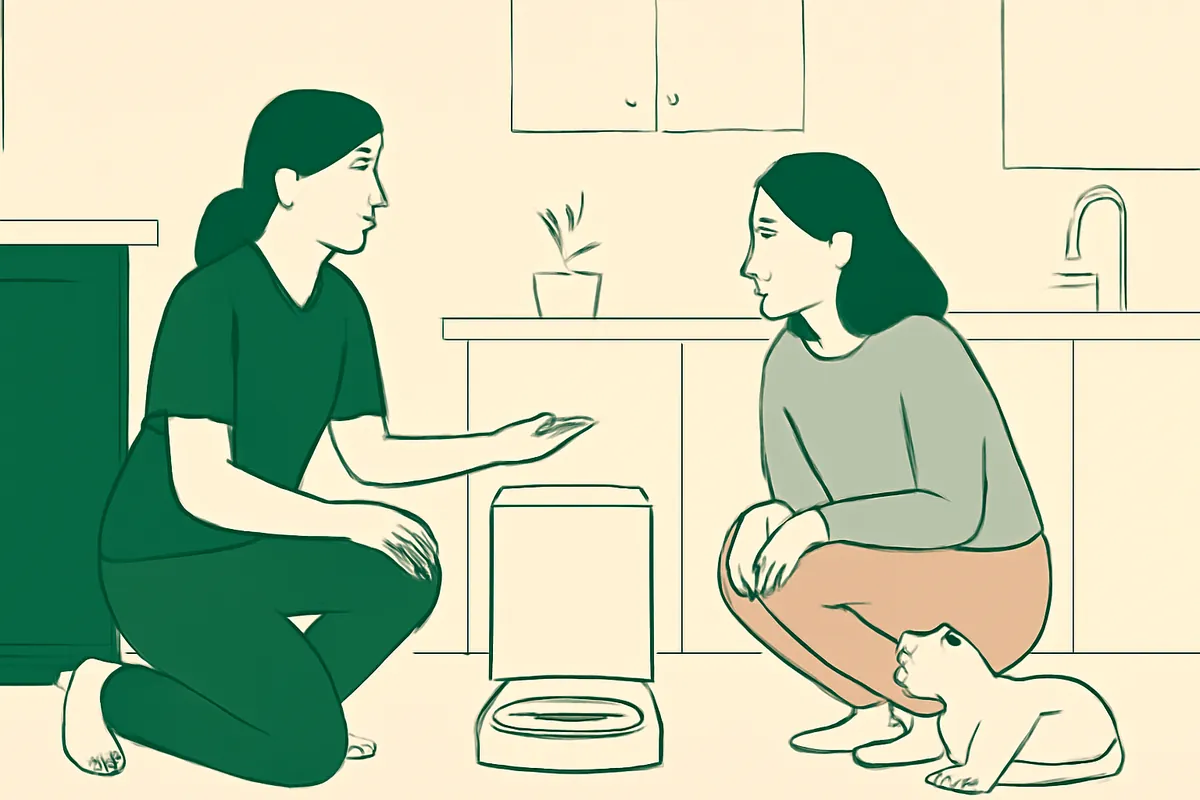
Pet technology has moved from novelty to everyday: cameras that let owners check in from work, feeders that serve meals on schedule, pet doors that open only for the right microchip, and monitors that track activity, drinking or litter box visits. Chosen well and set up carefully, these devices can make care more consistent and help owners notice changes sooner. Chosen badly, they give false reassurance, stress the animal or fail at the worst moment.
This guide is for professionals who advise owners on their homes and routines, from pet-friendly designers to sitters and trainers. It covers the main kinds of pet technology, what each actually helps with, what to watch out for, and how to plan for failure. It deliberately names no brands or prices: models change quickly, and the principles do not.
Choosing pet technology: start with the problem
Before recommending any device, ask what problem it solves:
- Is the owner worried about what the pet does when alone?
- Do two pets need different diets?
- Is a neighbor's cat coming in through the pet door?
- Does an older pet need its drinking or activity monitored for changes?
- Does a reptile enclosure need an alert if the heating fails?
If there is no clear problem, the device may add cost, noise and something else to break. Technology supports good care; it never replaces a person seeing the animal.
Watching and feeding: cameras, feeders and fountains
Cameras
Helps with: seeing how a pet behaves when alone (useful for trainers and behavior consultants assessing separation-related problems), checking on a pet during the day, and reassurance for owners.
Watch out for:
- Two-way audio can confuse or unsettle some pets, who hear the owner but cannot find them. Try it carefully and stop if the pet seems unsettled.
- Treat-tossing features can be fun, but a pet may start waiting by the camera instead of resting.
- Security. Change default passwords, keep firmware updated and use two-factor login where offered. An unsecured camera is a window into a client's home.
- Privacy. Sitters, cleaners and visitors should be told there are cameras. Rules on recording people, especially audio, vary, so owners should check local law.
Automatic feeders
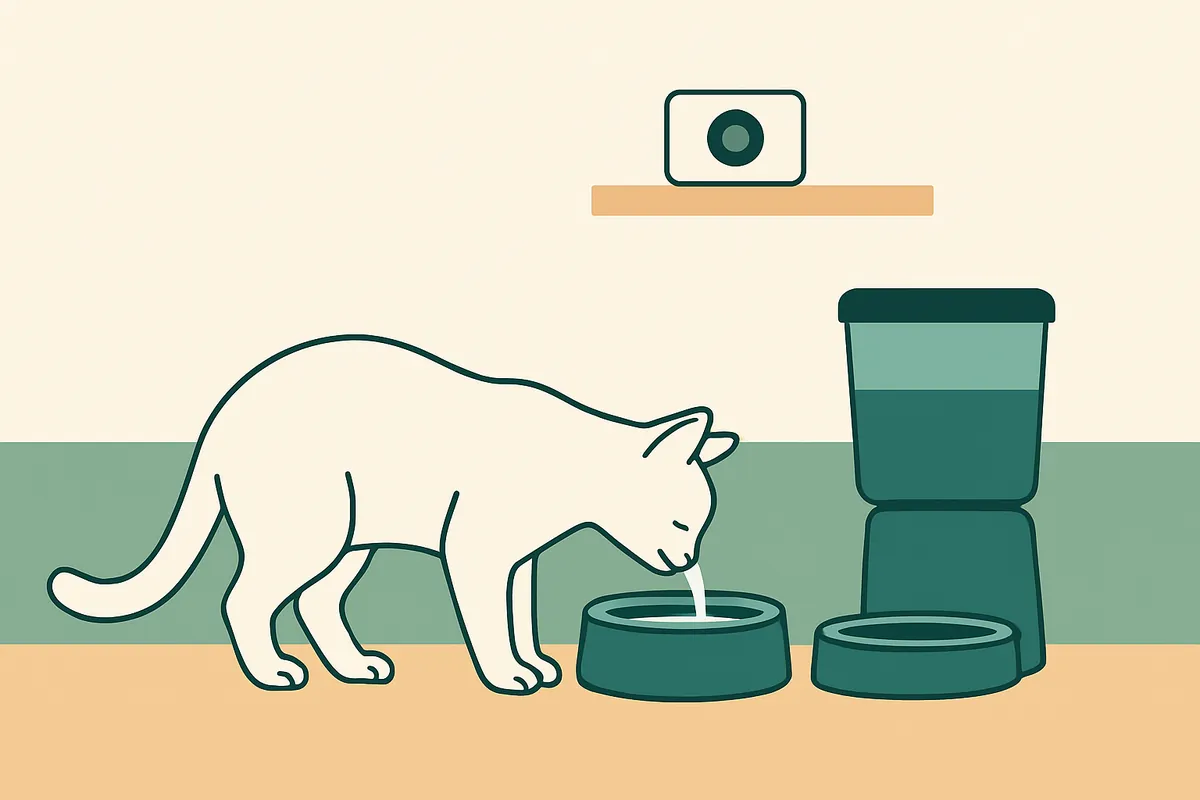
Helps with: keeping meal times consistent, splitting a daily ration into small meals (useful for weight management), and feeding on schedule when the owner is delayed.
Microchip-activated feeders open only for a registered pet, so two animals on different diets can eat in the same home, and a food thief cannot finish another pet's meal.
Watch out for:
- Jams, power cuts and empty hoppers. Check how the feeder behaves when power or Wi-Fi fails, fit backup batteries and set up alerts.
- Portion accuracy. Weigh a few dispensed portions to check them.
- Wariness. Some pets are frightened of a feeder that moves and makes noise. Introduce it gradually, switched off at first.
- Long absences. A feeder is not a pet sitter. Someone still needs to see the animal in person, because a device cannot tell that a pet is unwell, has not eaten or is trapped.
Water fountains
Helps with: encouraging some cats and dogs to drink more, since many prefer moving water.
Watch out for: filters and pumps need regular cleaning to stay hygienic, and a pump failure can leave a pet with no water if the fountain is the only source. Keep a second, ordinary water bowl.
Access and monitoring: doors, trackers, litter boxes and sensors
Microchip and smart pet doors
Helps with: keeping neighboring animals out, letting a pet in and out on its own, and setting curfews (for example, keeping a cat in at night).
Watch out for: batteries running down, which can lock a pet in or out; a door that is too small for the pet to use comfortably; and the effect of sudden changes on pets used to coming and going. Check the door works with the pet's microchip before installing.
Activity monitors and GPS trackers
Helps with: noticing trends. A collar-mounted monitor can show that a dog is sleeping more or moving less than usual, which may be an early sign of pain or illness. GPS trackers help find pets that escape.
Watch out for:
- Trends matter more than single readings. One quiet day means little; a steady change over a week is worth mentioning to a vet.
- Battery life. A GPS tracker with a flat battery is no help. Build charging into the routine.
- Identification. A tracker is not a replacement for a microchip and an ID tag. In some places microchipping is required by law; in England, for example, it is compulsory for dogs and, since 2024, for cats. Check local rules.
- Collar safety. Cats should wear quick-release collars.
Smart litter boxes
Helps with: recording how often a cat uses the box and, on some models, its weight. Changes in litter box habits can be early signs of urinary or kidney problems, diabetes or stress.
Watch out for: some cats are frightened by self-cleaning mechanisms and start toileting elsewhere. Introduce gradually, keep a conventional box available, and remember that a cat straining without passing urine needs a vet immediately, whatever the app says.
Environmental sensors
Helps with: alerts for temperature, humidity, smoke, carbon monoxide, water leaks and power cuts. These are particularly valuable for:
- Reptile and amphibian enclosures, where a failed heater or thermostat can quickly become dangerous.
- Birds, which are very sensitive to smoke and fumes.
- Pets left alone in hot or cold weather, especially flat-faced dogs and small mammals, which are vulnerable to heat.
Sensors do not replace thermostats, which control heat. They tell you when something is going wrong, so someone can act.
Toys, and devices to question
Automated toys
Helps with: extra activity during the day.
Watch out for: automated laser toys can frustrate cats, because the "prey" can never be caught. Follow laser play with a toy or treat the cat can catch. Supervise toys with small parts that could be chewed off and swallowed, and remember that nothing replaces interactive play with a person.
Devices to question
Some products are sold as pet technology but rely on discomfort to work, such as electronic shock collars and some bark-control and boundary devices. Their use is restricted or banned in some places, including parts of the UK, and many trainers and welfare organizations advise against them. Recommend reward-based alternatives and involve a qualified trainer or behaviorist for behavior problems.
Quick reference
| Device | Helps with | Main risk |
|---|---|---|
| Camera | Seeing behavior when alone | Security, privacy, confusing audio |
| Automatic feeder | Consistent meals, portion control | Jams, power loss, false reassurance |
| Microchip feeder | Different diets in one home | Training the pets to use it |
| Water fountain | Encouraging drinking | Pump failure; cleaning |
| Microchip pet door | Keeping other animals out, curfews | Flat batteries locking pets in or out |
| Activity monitor or GPS | Spotting trends, finding lost pets | Over-reading single data points, charging |
| Smart litter box | Tracking toileting changes | Frightening some cats |
| Environmental sensors | Early warning of heat, cold, smoke, leaks | Only useful if someone responds |
Always plan for failure
Before an owner relies on any device, agree:
- What happens if it stops working? A backup bowl, a manual override, spare batteries.
- Who gets the alert, and what do they do? An alert with no one able to respond helps nobody.
- Who checks in person? For any absence longer than the owner's normal working day, a person should see the pet.
- What does the data mean? Changes in activity, drinking or toileting are reasons to call the vet, not to diagnose.
Keep learning
Technology is one part of good habitat design. For the principles behind it, read designing pet-friendly homes and smart habitats. To combine technology with enrichment, see environmental enrichment for indoor cats, and for heating and monitoring enclosures, see safe enclosures for reptiles and small mammals.
Smart devices and interpreting activity data are topics in the Smart Habitat Architect assessment. Try our free sample smart habitat questions to see the format.
Written by the PetCred Editorial Team and checked against the published curriculum for this program. Laws and requirements change and differ by place: check local rules before relying on anything legal or regulatory here.
Free course
Smart Habitat Design Fundamentals: A Free 5-Lesson Course
Five short lessons, a quick check after each, no sign-up. Start now →
More pet-friendly homes guides
Designing Pet-Friendly Homes and Smart Habitats
How to design pet-friendly homes around each animal's needs: zones, retreats, vertical space, safe materials, air quality, smart devices and multi-pet homes.
13 August 2026
Safe Enclosures for Reptiles and Small Mammals
How to design safe enclosures for reptiles and small mammals: size, materials, security, heat and electrical safety, bedding, placement and predator-proofing.
17 September 2026
Environmental Enrichment for Indoor Cats
Environmental enrichment for indoor cats, based on the five pillars of feline needs: safe places, separated resources, play, predictable contact and scent.
24 August 2026