Environmental Enrichment for Indoor Cats
Environmental enrichment for indoor cats, based on the five pillars of feline needs: safe places, separated resources, play, predictable contact and scent.
PetCred Editorial Team · Updated 24 August 2026 · 6 min read
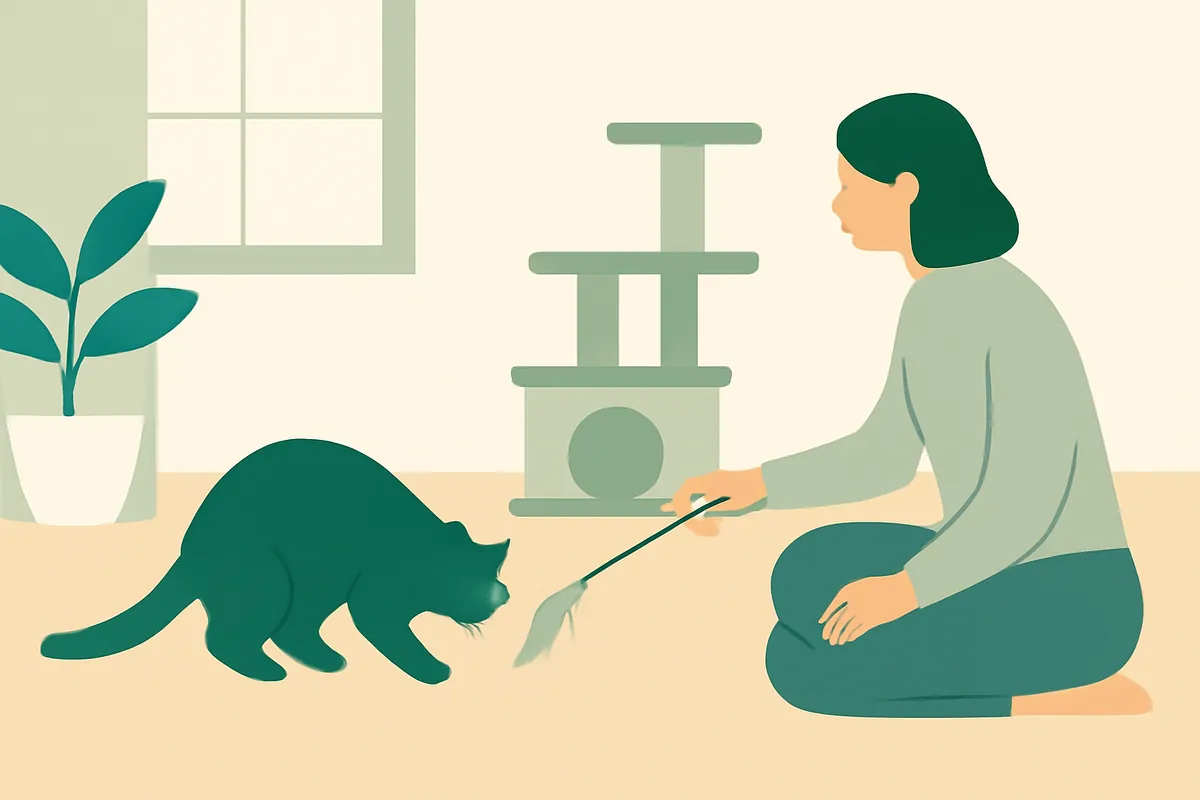
Environmental enrichment for indoor cats means shaping the home so a cat can do the things cats are built to do: climb, hide, scratch, hunt, explore and choose where to be. An indoor life can be safe and long, but a cat kept in a space that offers nothing to do and nowhere to retreat is more likely to become stressed, bored or overweight. Stress in cats is linked to problems such as house soiling, overgrooming and some urinary problems, so enrichment is not a luxury.
This guide is for professionals who advise cat owners on their homes: designers, sitters, trainers, shelter staff and anyone working in pet-friendly design. It builds on the widely used feline environmental needs guidelines published by the American Association of Feline Practitioners and the International Society of Feline Medicine, and turns them into practical design choices.
The five pillars of a healthy feline environment
The AAFP and ISFM guidelines describe five pillars. They make a useful checklist for any home:
- A safe place. Somewhere the cat can retreat to and feel secure, usually enclosed and often raised.
- Multiple, separated key resources. Food, water, litter boxes, scratching areas, play areas and resting places, spread out so that no cat has to pass another to reach them.
- Opportunity for play and predatory behavior. Chances to stalk, chase, pounce and catch.
- Positive, consistent and predictable human interaction. Contact the cat chooses, on its terms.
- An environment that respects the cat's sense of smell. Cats communicate by scent, and strong artificial smells can be stressful.
The rest of this guide takes each pillar in turn.
Safe places and vertical space
Cats are both predators and prey. They feel safest when they can see without being seen, and they often choose high places.
- Hiding places on the floor and up high: covered beds, boxes on their side, a space under furniture the cat can reach but people cannot.
- Height: cat trees, wall shelves, window perches and the tops of cupboards made accessible. Each high place should have more than one route up and down so a cat cannot be cornered.
- Quiet location: away from doors, washing machines and busy routes, especially for anxious or elderly cats.
- Access for older cats: ramps or steps up to favorite high spots as joints stiffen.
Vertical space is especially valuable in small apartments, because it adds territory without taking floor area.
Key resources, separated
A common cause of stress, especially in multi-cat homes, is resources placed together or in places one cat can control.
- Food and water apart. Many cats prefer their water away from their food. Some prefer running water from a fountain; offer more than one water point.
- Litter boxes: a common guideline is one per cat plus one, in quiet, separate locations, not all in one room. Keep them clean, and away from food and water. Many cats prefer large, uncovered boxes and unscented litter, but preferences vary, so watch what the cat chooses.
- Scratching: sturdy posts or pads tall and stable enough for the cat to stretch fully, placed near resting areas and near entrances, where cats like to mark. Offer both vertical and horizontal surfaces.
- Resting places: several, in different parts of the home, including warm spots.
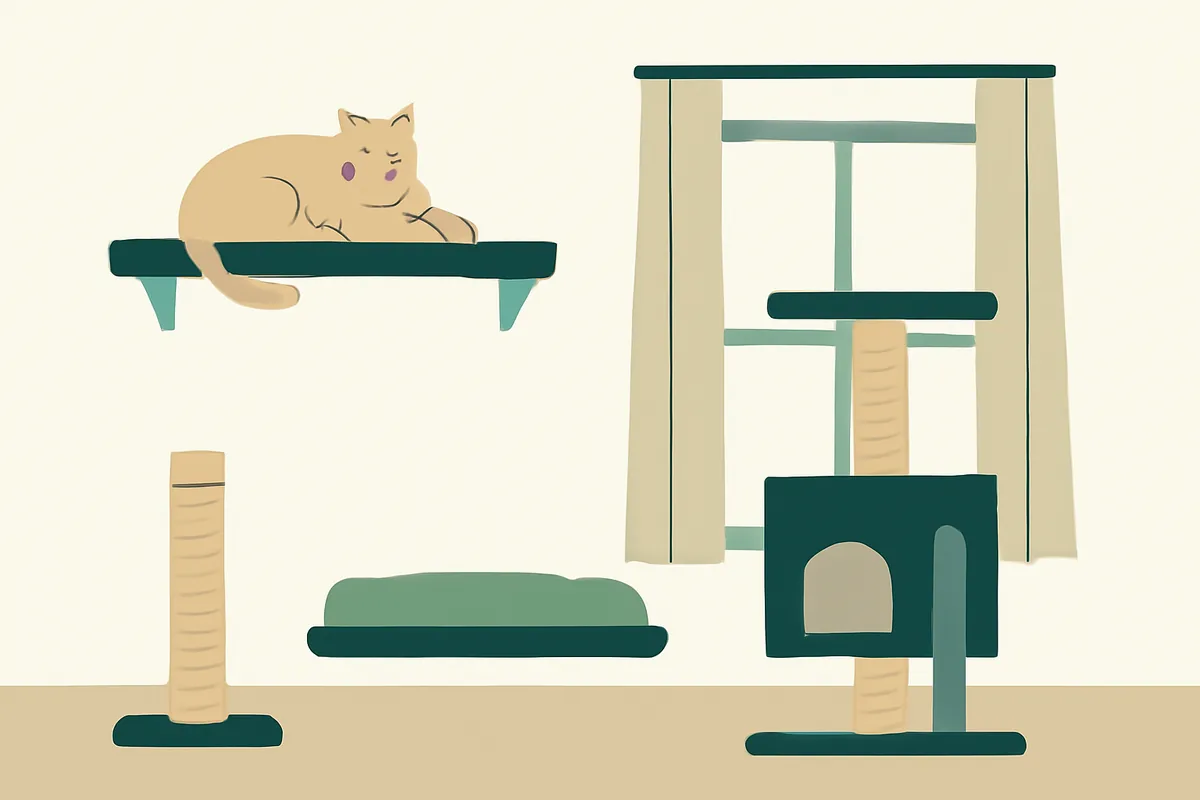
Play and predatory behavior
Hunting is a sequence: watch, stalk, chase, pounce, catch, and then eat. Indoor cats still have that drive, and play is how they use it.
- Short, frequent play sessions suit most cats better than one long one. Several sessions a day, a few minutes each, are ideal.
- Wand toys let you move a "prey" item the way prey moves: darting, hiding, pausing. Let the cat catch it regularly.
- End with a catch. After laser pointer play, finish with a physical toy or a treat the cat can catch, so the sequence is completed and the cat is not left frustrated.
- Food puzzles and foraging. Puzzle feeders, treat balls and hiding portions of the daily food around the home turn eating into hunting. Introduce them at an easy level so the cat succeeds.
- Rotate toys. Put some away and bring them out again later, so they stay interesting.
Play also helps with weight management and can reduce night-time activity if the last session and a meal come just before the owner's bedtime.
Contact and scent
Human interaction on the cat's terms
Cats do best with people who are predictable and let the cat choose.
- Let the cat approach, and let it walk away.
- Most cats prefer to be stroked around the head and cheeks rather than the belly or base of the tail.
- Keep routines (meals, play, quiet time) consistent.
- Teach children to invite the cat rather than chase or pick it up.
Some cats enjoy a lot of contact; others prefer to be nearby without being touched. Both are normal.
Respecting the cat's sense of smell
Cats mark their territory by rubbing their faces on objects and by scratching. These scent marks help them feel secure.
- Avoid cleaning away facial rubbing marks on furniture corners unless necessary.
- Avoid strong artificial scents: plug-in air fresheners, scented litter, heavily perfumed cleaning products and essential oil diffusers. Some essential oils can be harmful to cats.
- When bringing in new furniture, let the cat investigate it and rub on it in its own time.
- A new pet or a visitor brings new smells; give the cat time and space.
Safe outdoor experiences
Indoor cats can still enjoy outdoor stimulation safely:
- Window perches overlooking a garden or street, and a bird feeder placed outside a window, give hours of watching. Make sure window screens are secure.
- Catios (enclosed outdoor spaces) let cats experience fresh air, sun and outdoor smells without the risks of roaming. They need secure mesh, shade and shelter.
- Cat-proof fencing for gardens, where suitable and allowed locally.
- Harness walks suit some confident cats, introduced gradually and never forced.
- Cat grass and safe plants indoors give something to chew. Check every plant is safe; lilies in particular are extremely toxic to cats.
Environmental enrichment ideas by need
| If the cat... | Consider |
|---|---|
| Hides most of the day | More covered hiding places, high perches with two routes, a quiet room of its own |
| Scratches furniture | Sturdy posts beside the furniture, near entrances and resting places |
| Is overweight | Food puzzles, daily food split into small portions hidden around the home, more play |
| Is active at night | A play session and a meal just before the owner goes to bed |
| Lives with another cat and there is tension | Duplicate resources in separate locations, more vertical space and routes |
| Is elderly | Ramps and steps, warm resting places, easy-access litter boxes with a low side |
Signs a cat may need more than enrichment
A lack of enrichment can contribute to many problems, but so can illness. Before assuming a problem is about the environment, the cat should see a vet if it:
- Urinates or defecates outside the litter box, or strains in the box.
- Overgrooms, with bald patches or sores.
- Changes its appetite, weight, activity or sleeping.
- Becomes suddenly aggressive, withdrawn or vocal.
A cat, especially a male cat, that strains in the litter box without passing urine needs a vet immediately: it is an emergency. For serious behavior problems, a qualified behaviorist is the right referral after the vet.
Where your role stops
A smart habitat professional can assess and redesign the home and explain why each change helps. Health problems belong to the vet, and behavior problems beyond what the environment can address belong to a qualified behaviorist. Design works best alongside both.
Keep learning
For the wider design principles, read designing pet-friendly homes and smart habitats. Some devices, such as automatic puzzle feeders and cameras, can support enrichment; pet technology that helps explains how to choose them. For other species, see safe enclosures for reptiles and small mammals.
Environmental enrichment design is one of the topics in the Smart Habitat Architect assessment. You can try the format with our free sample smart habitat questions.
Written by the PetCred Editorial Team and checked against the published curriculum for this program. Laws and requirements change and differ by place: check local rules before relying on anything legal or regulatory here.
Free course
Smart Habitat Design Fundamentals: A Free 5-Lesson Course
Five short lessons, a quick check after each, no sign-up. Start now →
More pet-friendly homes guides
Designing Pet-Friendly Homes and Smart Habitats
How to design pet-friendly homes around each animal's needs: zones, retreats, vertical space, safe materials, air quality, smart devices and multi-pet homes.
13 August 2026
Safe Enclosures for Reptiles and Small Mammals
How to design safe enclosures for reptiles and small mammals: size, materials, security, heat and electrical safety, bedding, placement and predator-proofing.
17 September 2026
Pet Technology: Cameras, Feeders and Monitors That Help
Pet technology for professionals: what cameras, smart feeders, pet doors, trackers and sensors really help with, what to watch for and how to plan for failure.
5 September 2026