Designing Pet-Friendly Homes and Smart Habitats
How to design pet-friendly homes around each animal's needs: zones, retreats, vertical space, safe materials, air quality, smart devices and multi-pet homes.
PetCred Editorial Team · Updated 13 August 2026 · 8 min read
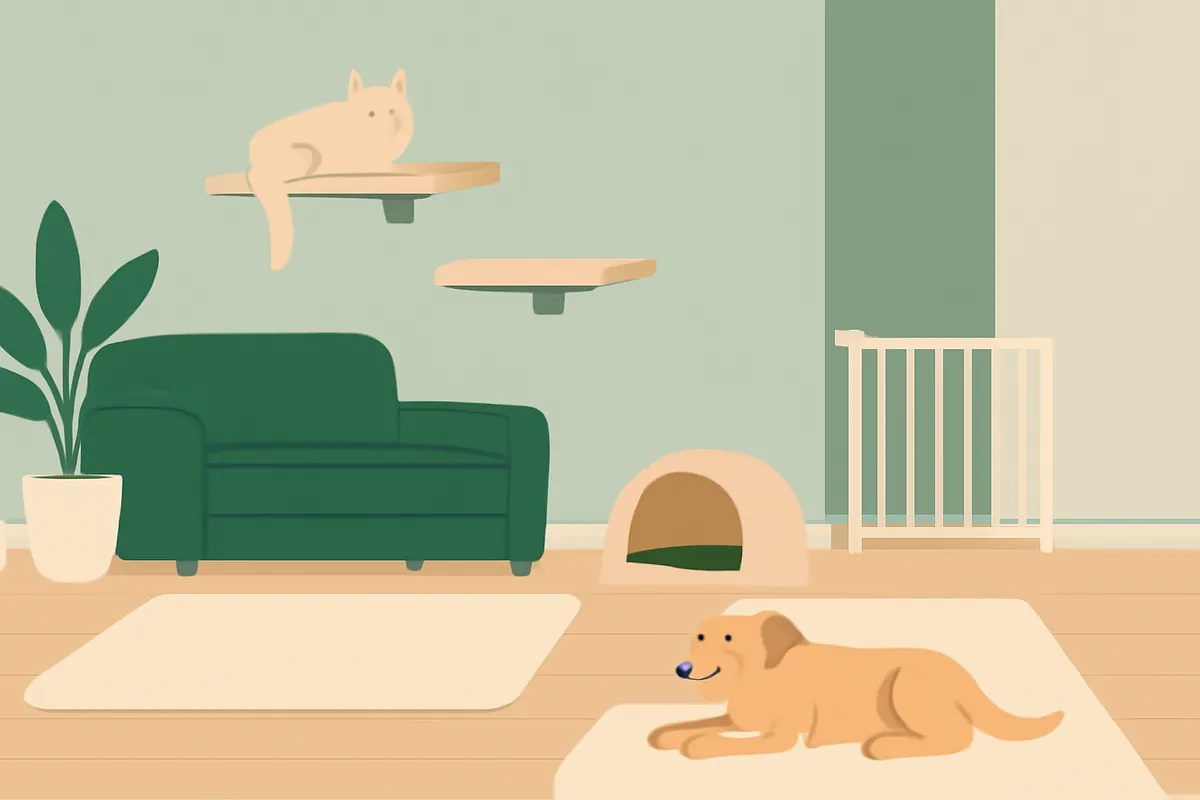
Designing pet-friendly homes means more than choosing scratch-resistant floors and washable sofas. A home that works for animals gives each one what its species needs: places to rest undisturbed, room to move and explore, safe ways to express natural behavior, and an environment free of hidden hazards. Increasingly it also includes technology (feeders, cameras, pet doors, sensors) that can help, or get in the way, depending on how well it is chosen and set up.
This guide is for professionals who plan spaces for animals and their people: interior designers and architects taking on pet-owning clients, builders and installers, trainers and behavior consultants who advise on home setup, shelter staff designing rooms, and anyone who wants to specialize in smart habitats. It covers the principles of pet-friendly design, space planning, safety, climate and air quality, smart devices and multi-pet homes, with a worked example.
What "pet-friendly" really means
Many pet-friendly design features are really human-friendly: surfaces that hide hair, fabrics that clean easily, a place to hide the litter box. Those matter to clients, but they are only half the job. A space works for an animal when it:
- Meets its sensory needs. Animals perceive the world differently. Dogs live through smell; cats and many small animals are sensitive to sound; birds are very sensitive to airborne fumes.
- Supports natural behavior. Cats climb, scratch and hide; dogs sniff, chew and rest in dens; rabbits dig and hop; reptiles need to move between warmer and cooler areas.
- Offers choice and control. The ability to move away from something unpleasant, to a quiet retreat, reduces stress.
- Is safe. Free of toxic materials, escape routes, falls, entrapment and electrical hazards.
- Is easy to keep clean and consistent. Routines are easier to keep when the space supports them.
Good design is never generic. A home that suits a young Border Collie will not suit an elderly Persian cat, and neither will suit a parrot.
Who does this work
The field overlaps with several professions:
- Interior designers and architects who add pet-focused features to homes or specialize in pet-owning clients.
- Builders and installers of catios, dog runs, fencing, pet doors and built-in furniture.
- Trainers and behavior consultants who advise owners to change the home as part of a behavior plan, such as creating a retreat for a noise-sensitive dog.
- Shelter and boarding staff who design kennels, cat rooms and enrichment areas.
- Pet technology specialists who help owners choose and set up smart devices.
Whatever the starting profession, the core knowledge is the same: how animals perceive and use space, and how to design around that safely.
Start from the animal, not the room
Before sketching anything, gather information about each animal:
- Species, age, size and health, including mobility problems or sensory loss.
- Temperament: confident or anxious, sociable or independent.
- Current problems: scratching furniture, house soiling, barking at the window, fights between pets.
- Daily routine: when the animal is alone, where it sleeps, where it eats.
- The people: children, visitors, working hours, allergies, how much time they have for maintenance.
Then map what each animal needs against the space. The most common mistake is designing a beautiful room first and trying to fit the animal into it afterward.
Space planning: zones, retreats and vertical territory
Zones
Think in zones for key activities: resting, eating, drinking, toileting and play. For most species, food and water should be separate from toileting areas, and resting places should be away from busy doors and noisy appliances.
Retreats
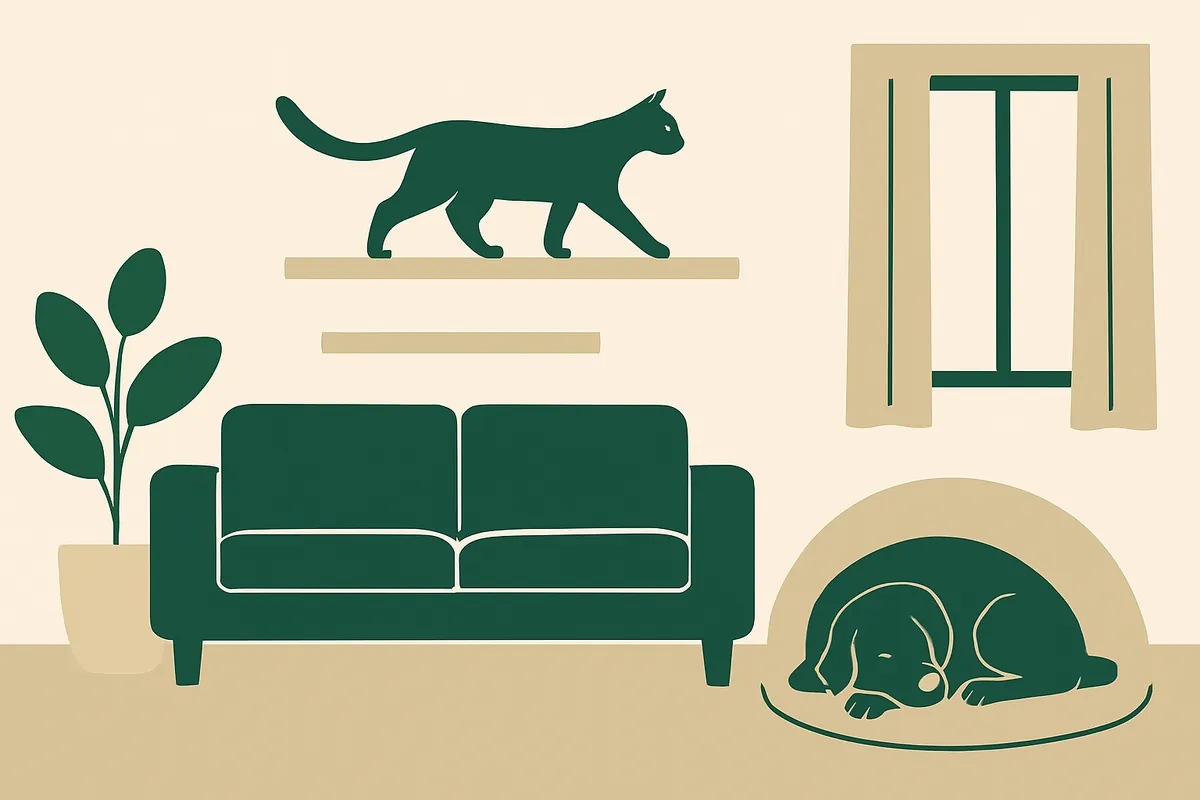
Every animal needs somewhere it can go to be left alone. For a dog, that might be a covered crate or a bed in a quiet corner; for a cat, a high shelf or a covered bed; for a rabbit or guinea pig, a hideaway it can fully enter. Place retreats where they are not on a through route, and teach the household (especially children) that an animal in its retreat is not to be disturbed.
Vertical territory
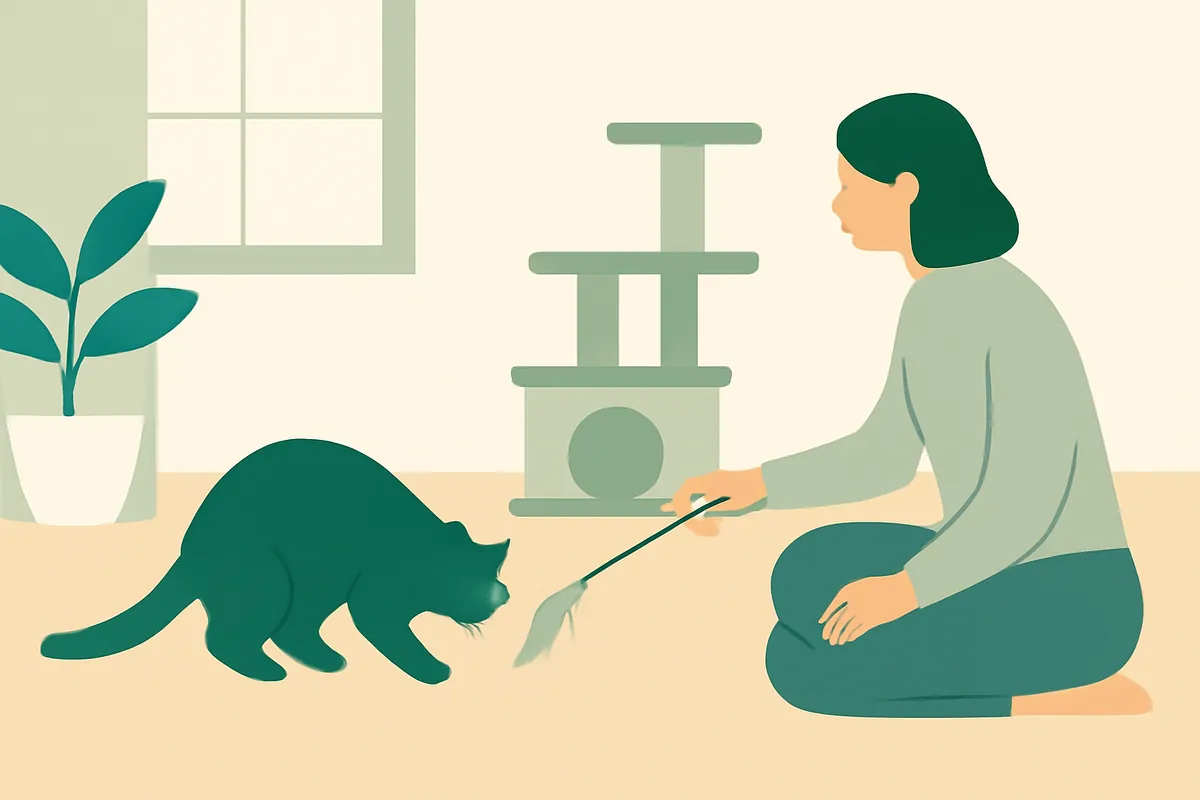
Cats in particular use height to feel safe, survey their surroundings and avoid conflict. Shelves, cat trees, window perches and walkways multiply the usable space without taking floor area. Plan routes with more than one way up and down so a cat cannot be trapped by another animal. See environmental enrichment for indoor cats.
Traffic and entrances
Front doors are where dogs dash out and cats slip past. A lobby, a gate or an internal door between the entrance and the living space reduces escapes and makes deliveries less stressful.
Materials and surfaces
- Traction. Smooth, polished floors are hard for many dogs, especially older dogs or dogs with joint problems. Rugs and runners with non-slip backing on key routes help them move confidently.
- Durability and cleaning. Choose surfaces that tolerate claws and cleaning, and fabrics that are easy to wash or replace.
- Scratching. Cats need to scratch. Give them sturdy, suitable scratching surfaces near where they rest and near entrances, rather than trying to stop the behavior.
- Non-toxic materials. Check finishes, glues and treated wood, especially for animals that chew, such as rabbits, parrots and puppies.
- Plants. Many common houseplants and garden plants are toxic to pets. Lilies are extremely dangerous to cats, even in small amounts such as pollen. Check every plant against a reliable toxic plant list before recommending it.
Safety and hazard-proofing
Walk through the space at the animal's eye level. Look for:
- Falls and escapes. Open windows, balconies and gaps in fencing. Cats can fall from open windows and balconies; secure screens or netting prevent it.
- Entrapment and strangulation. Blind cords, gaps behind appliances, recliner mechanisms and furniture an animal can get stuck under.
- Electrical hazards. Cables within reach of chewers, especially puppies, rabbits and parrots. Use cable protection or route cables out of reach.
- Chemicals and medication. Cleaning products, garden chemicals and medication stored where animals cannot reach them.
- Water. Pools and ponds need fencing or safe exits for animals that might fall in.
- Heat. Fires, heaters and hot surfaces need guards.
Safety design also includes escape-proofing enclosures and gardens. The right fence height, a secure base against digging and self-closing gates matter as much as how the space looks.
Climate, lighting and air quality
- Temperature. Animals need to be able to move away from heat and cold. Avoid placing beds and enclosures in direct sun, next to radiators or in drafts. Flat-faced dogs, elderly animals, and small mammals are especially vulnerable to heat.
- Lighting. Natural daylight and a regular day and night cycle help most animals. Reptiles need specific heat and UV lighting inside their enclosures; see safe enclosures for reptiles and small mammals.
- Air quality. Birds are extremely sensitive to airborne toxins: fumes from overheated non-stick cookware, aerosols, smoke and strong scents can kill them. Scented products and essential oil diffusers can also be harmful to cats and other pets. Good ventilation helps every species.
- Noise. Place retreats away from washing machines, speakers and street noise. Some animals benefit from a room where sound is dampened.
Smart devices: where they fit
Smart feeders, water fountains, cameras, microchip pet doors, activity monitors and environmental sensors can make daily care more consistent and give owners information. They also fail: batteries die, Wi-Fi drops, feeders jam. Good design treats technology as a support for good care, never a replacement, and plans for what happens when it stops working. See pet technology that helps.
Multi-pet homes
Most conflict between pets in a home is about resources and space. Design reduces it:
- Enough resources, spread out. Several feeding stations, water points, resting places and, for cats, litter boxes in different locations, so one animal cannot guard them all.
- Separate routes. More than one way into rooms and up to high places.
- Separate feeding for animals on different diets, which microchip feeders can help with.
- Predator and prey. Keep prey species such as rabbits, guinea pigs, birds and small reptiles in secure spaces away from the view, sound and reach of cats and dogs where possible.
A worked example
A client lives in a one-bedroom apartment with a young, confident dog and a shy, middle-aged cat. The cat hides under the bed most of the day and has started toileting outside the litter box, which is in the hallway next to the dog's bed. The vet has checked the cat and found no medical cause.
A design plan might:
- Give the cat height. Wall shelves and a cat tree in the living room and bedroom, with two routes up, so the cat can move through the apartment above the dog.
- Move and add litter boxes. One in a quiet corner of the bedroom and another in a low-traffic part of the living area, away from food and from the dog's routes.
- Create a dog-free zone. A baby gate with a cat-sized gap, or a microchip door, so the bedroom becomes the cat's safe space.
- Separate feeding. The cat eats on a raised surface out of the dog's reach.
- Give the dog a retreat and something to do. A covered bed in the living room and chew toys, so it is less likely to follow the cat.
- Review in a few weeks. Ask the owner to note where the cat spends its time and whether toileting improves, and to go back to the vet if problems continue.
The design supports the cat's needs for safety, choice and separated resources. Behavior change is still the owner's and, where needed, a behaviorist's work; design makes it easier.
Mistakes to avoid
- Designing for looks first. A beautiful space that ignores the animal's needs will be rearranged by the animal.
- One resource for everyone. A single litter box or water bowl in a multi-pet home invites conflict.
- Forgetting old age. Slippery floors, high beds and steep stairs become barriers as animals age. Plan ramps and non-slip surfaces.
- Trusting technology blindly. Every device needs a backup plan.
- Ignoring toxic plants and materials. Check everything, every time.
Where your role stops
A smart habitat professional designs environments. You do not diagnose health or behavior problems. A sudden change in behavior, house soiling, loss of appetite or signs of pain need a vet first, and serious behavior problems such as aggression need a qualified behaviorist. Building work, electrical work and structural changes must follow local building codes and, where required, be carried out by licensed trades. Check local rules on fencing, balconies and alterations before recommending them.
Where to start today
Pick one home you know well and walk through it from each animal's point of view: where does it rest, eat, hide and toilet, and what could hurt it? Write down three changes that would make the biggest difference. Then read environmental enrichment for indoor cats and pet technology that helps to go deeper.
When you want to test your knowledge, try our free sample smart habitat questions. They use the same format as the Smart Habitat Architect assessment, with model answers you can compare against.
Frequently asked questions
What makes a home pet-friendly?
A pet-friendly home meets each animal's needs, not only the owner's wish for easy cleaning. That means places to retreat, room for natural behavior such as climbing or digging, separated resources in multi-pet homes, and a space free of hazards such as toxic plants, open windows and exposed cables.
Who designs pet-friendly homes?
Interior designers, architects, builders, trainers, behavior consultants and shelter staff all do this work. What they share is knowledge of how animals perceive and use space, combined with the practical skills of their own profession.
Can smart technology replace a pet sitter?
No. Feeders, cameras and sensors can make care more consistent and give early warnings, but they can fail and they cannot tell that an animal is unwell. For any absence longer than a normal working day, a person should check on the animal in person.
Written by the PetCred Editorial Team and checked against the published curriculum for this program. Laws and requirements change and differ by place: check local rules before relying on anything legal or regulatory here.
Free course
Smart Habitat Design Fundamentals: A Free 5-Lesson Course
Five short lessons, a quick check after each, no sign-up. Start now →
More pet-friendly homes guides
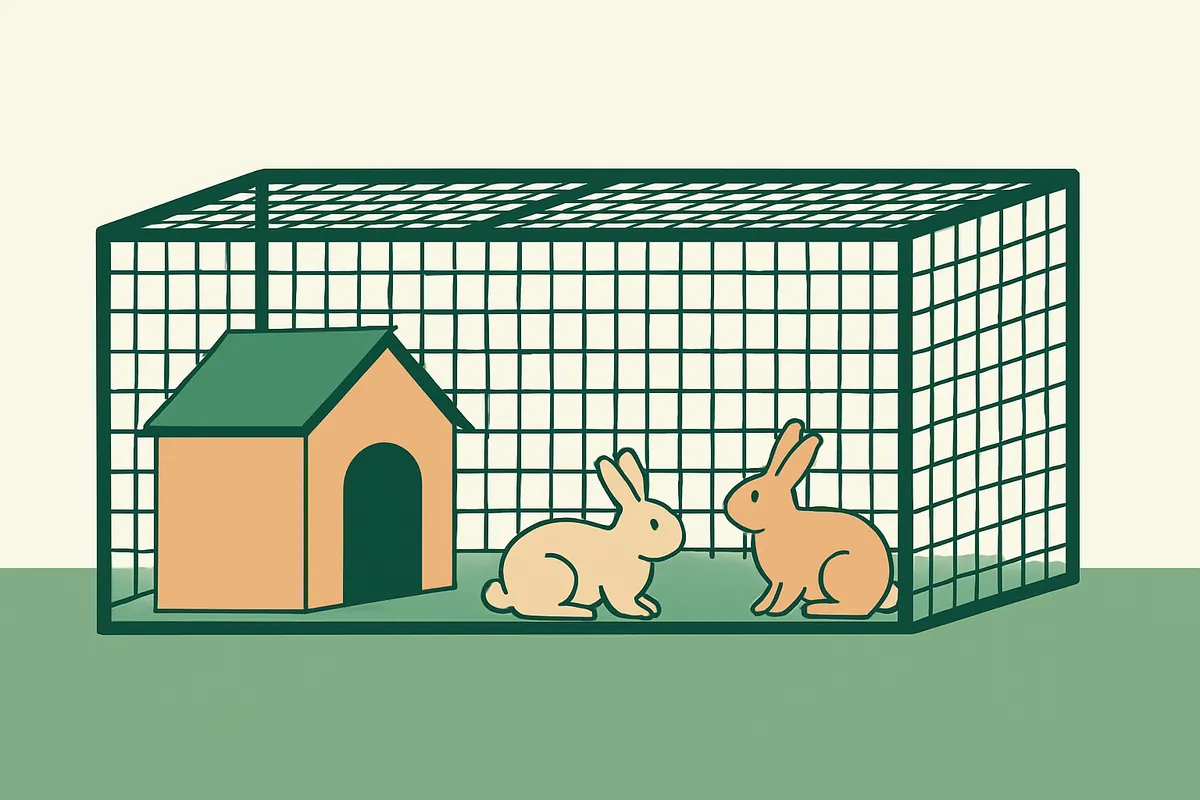
Safe Enclosures for Reptiles and Small Mammals
How to design safe enclosures for reptiles and small mammals: size, materials, security, heat and electrical safety, bedding, placement and predator-proofing.
17 September 2026
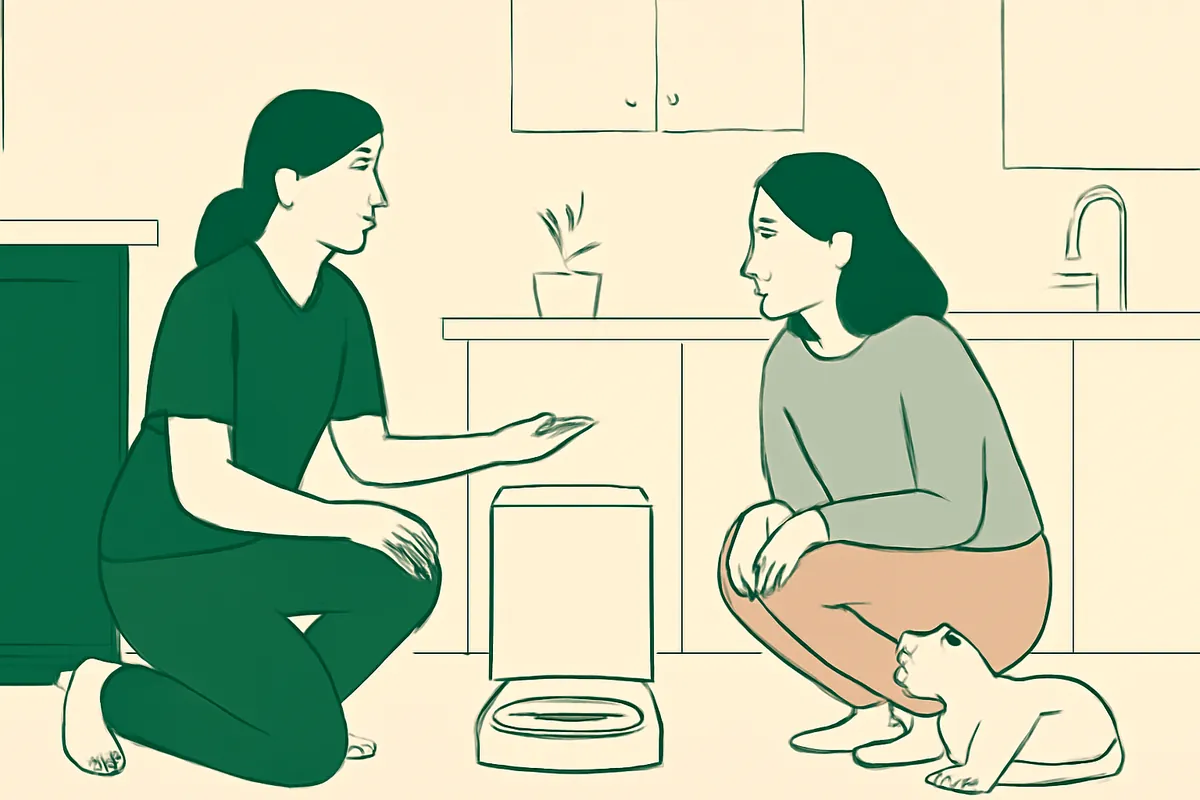
Pet Technology: Cameras, Feeders and Monitors That Help
Pet technology for professionals: what cameras, smart feeders, pet doors, trackers and sensors really help with, what to watch for and how to plan for failure.
5 September 2026
Environmental Enrichment for Indoor Cats
Environmental enrichment for indoor cats, based on the five pillars of feline needs: safe places, separated resources, play, predictable contact and scent.
24 August 2026