Reading Horse Body Language and Signs of Pain
How to read a horse's ears, eyes, face, posture and movement, spot the quiet signs of pain and colic early, and know when it is time to call the vet.
PetCred Editorial Team · Updated 22 August 2026 · 6 min read
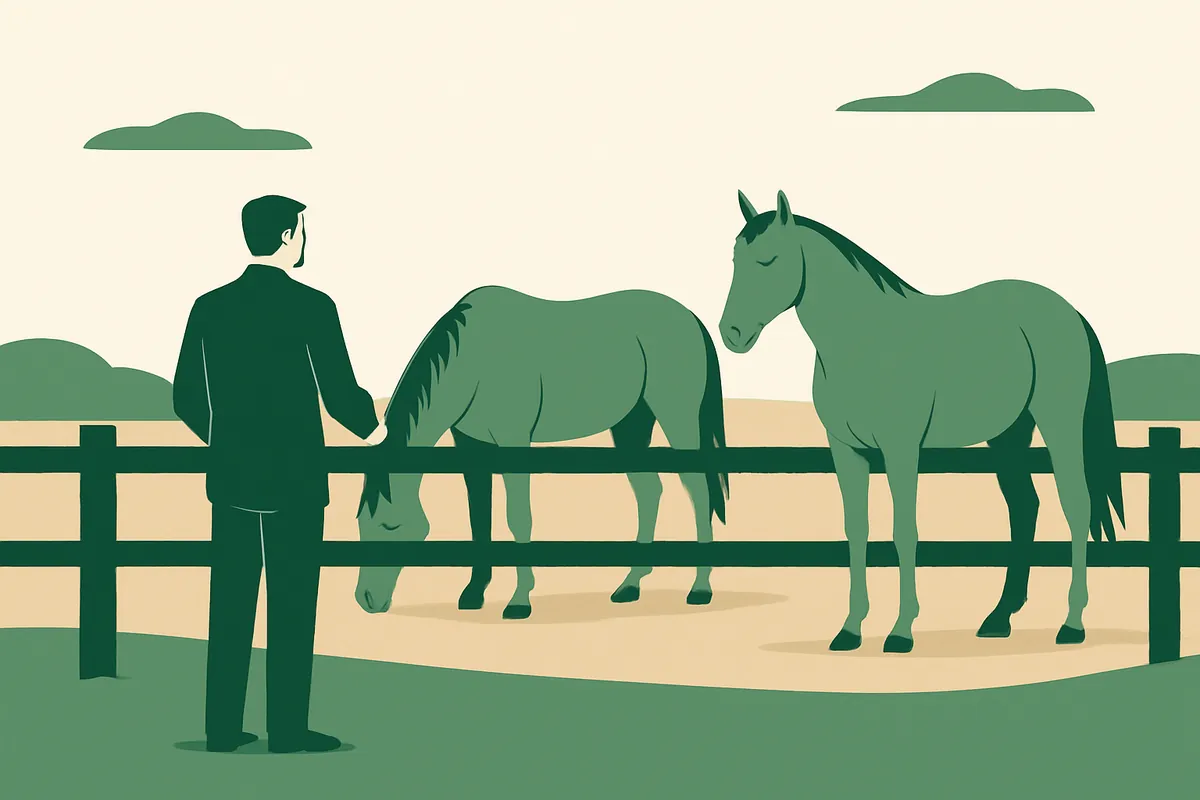
Reading horse body language is how you find out what a horse cannot tell you: that it is worried, that its saddle hurts, or that it is starting to colic. Horses are prey animals, and many are very good at hiding pain until it is serious. The professionals who catch problems early are not the ones with a special gift. They know each horse's normal, they look at the whole horse rather than one sign, and they act on small changes.
This guide explains how to read a horse's ears, eyes, face, posture and movement, which signs of pain are easy to miss, how pain shows up under saddle, and what to do when you see something that worries you. It is written for grooms, yard staff, instructors and consultants. It does not replace a vet: its purpose is to help you notice and refer sooner.
Why horses hide pain
In the wild, a horse that looks weak attracts predators and may be left behind by the herd. Domestic horses keep that instinct. Many stand quietly with a painful foot, a sore back or an aching gut, especially when people are around, and only show obvious signs when the problem is advanced.
This has two consequences for anyone working with horses. First, the absence of dramatic signs does not mean the absence of pain. Second, what looks like a "behavior problem" (bucking, refusing, biting when girthed, being hard to catch) is often a horse telling you that something hurts.
Start with the horse's normal
You cannot spot a change if you do not know the baseline. For every horse in your care, learn:
- How it usually stands, rests and lies down.
- How eagerly it eats, and how much it usually leaves.
- How many droppings it usually passes overnight, and what they look like.
- How it usually greets people and reacts to other horses.
- How it moves at walk and trot on a straight line.
If you have been trained to take a heart rate, breathing rate and temperature, record each horse's resting figures on a quiet day, and learn from your vet which ranges should prompt a call. A written record makes small changes visible, and it is exactly what a vet will ask about.
Reading horse body language: the whole horse
No single sign tells the whole story. Ears can go back because a horse is listening behind it; a swishing tail can mean flies. Look at the whole body, in context, and compare with what is normal for that horse.
| Area | Relaxed horse | Worried, tense or possibly in pain |
|---|---|---|
| Ears | Soft, moving to follow sounds, or relaxed to the side when dozing | Pinned flat back, or held stiffly back or out and not moving |
| Eyes | Soft, fully open or half-closed when dozing | Tight, withdrawn or staring; white showing; tension above the eye |
| Nostrils and mouth | Soft nostrils, loose lower lip | Flared or strained nostrils, tight lips, clamped or chewing jaw |
| Head and neck | Carried at a natural height, moving freely | Held high and rigid, or low and dull, with little interest in surroundings |
| Tail | Hanging loosely, swishing at flies | Clamped down, held stiffly, or swishing hard with no flies |
| Body and stance | Weight even, or resting one hind leg while dozing | Tense muscles, weight shifted oddly, a front foot pointed, rocking back onto the heels |
Pain in the face
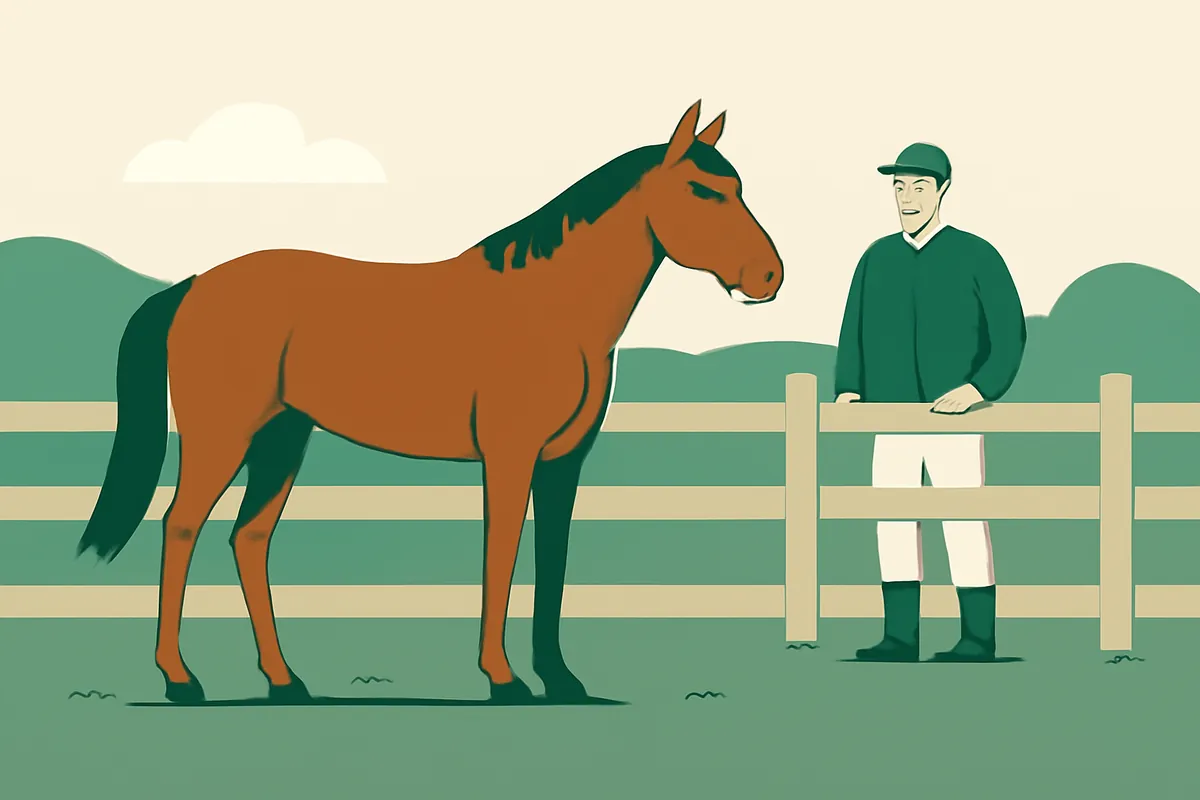
Researchers have developed facial pain scales for horses, such as the Horse Grimace Scale, which describe the expressions associated with pain. You do not need to score faces formally to benefit from them. The changes to learn are:
- Ears held stiffly backward or out to the side.
- Eyes partly closed or tight, with a withdrawn look.
- Tension above the eye.
- Tense chewing muscles and a tight, strained mouth and chin.
- Strained, flattened nostrils.
A horse standing quietly at the back of its stable with this face, not interested in you or in food, may well be in pain. Look again at its stance, its droppings and its feed bucket.
Pain under saddle
Many signs of discomfort are labeled as bad manners. A horse in pain when ridden may:
- Toss its head, open its mouth repeatedly or fight the contact.
- Swish its tail hard and constantly.
- Pin its ears back while working.
- Refuse to go forward, rush, buck or rear.
- Stumble or trip more than usual, or change leads behind.
- Resist being girthed or mounted, turning to bite or moving away.
Researchers led by the veterinary surgeon Sue Dyson developed the Ridden Horse Pain Ethogram, a list of behaviors like these, to help riders and professionals recognize when a ridden horse may be in pain. The key idea is that several of these behaviors together, repeated, point to discomfort rather than naughtiness. The causes can include lameness, back pain, poor saddle fit, dental problems or a badly fitting bridle. The right response is to stop, look for the cause and involve the vet and, where relevant, a saddle fitter, not to ride through it.
Signs of colic
Colic means abdominal pain. It has many causes, some mild and some life-threatening, and it is always a reason to call a vet. Signs include:
- Leaving feed, or not eating at all.
- Pawing, restlessness, getting up and down.
- Looking or nipping at the flank, or kicking at the belly.
- Rolling, or lying down more than usual, sometimes stretched out.
- Fewer droppings than usual, or none.
- Sweating, or a raised breathing rate at rest.
- A dull, withdrawn horse standing quietly at the back of the stable.
That last sign matters: a horse with colic does not always roll. Call the vet as soon as you suspect it, remove feed, keep yourself safe around a horse that may go down suddenly, and do not give any medication unless the vet tells you to.
Signs of lameness and foot pain
Lameness is pain or dysfunction that changes how a horse moves. Watch for:
- A head nod at trot: the head rises when a painful front leg lands.
- Uneven steps, shortened stride or a hip that rises and falls unevenly.
- Pointing a front foot, or shifting weight from foot to foot.
- Reluctance to turn, walk on hard ground or pick up a foot.
- Heat in the hoof or a stronger pulse at the back of the fetlock.
A horse leaning back onto its heels, reluctant to walk, can be showing the classic stance of laminitis, a painful and serious condition of the feet. That needs a vet urgently.
What to do when you see a sign
- Keep yourself safe. A horse in pain can kick, bite or go down suddenly. Stay out of the stable with a rolling horse, and have help if you need to handle it.
- Look at the whole horse. Check posture, appetite, droppings, and movement if it is safe to lead it.
- Compare with its normal. Use your records.
- Write it down. Time, signs, changes, and anything you did.
- Call the vet or tell the owner. Call the vet straight away for suspected colic, sudden severe lameness, laminitis stance, injury, or a horse that is getting worse. For subtler changes, tell the owner, suggest a vet check and keep watching.
Your role is to notice, record and refer. Diagnosis and treatment belong to the vet.
Mistakes to avoid
- Waiting for dramatic signs. By the time a horse is rolling or cannot walk, you have lost time.
- Punishing discomfort. Correcting a horse that bites at the girth or bucks under saddle, without looking for pain, makes the horse more defensive and hides the problem.
- Reading one sign alone. Pinned ears at feeding time are not the same as pinned ears in a quiet stable. Context matters.
- Relying on memory. Records turn "he seems a bit off" into information a vet can use.
Keep learning
Body language and pain recognition are part of the foundation every horse professional builds. For the wider picture, read how to start a career in horse care. Feeding plays a large part in colic prevention, so equine nutrition basics is a natural next step, and equine certifications compared explains how to show what you know.
Recognizing pain, colic and emergency signs is one of the topics in the Equine Foundation Consultant assessment. You can see how questions on it are asked in our free sample equine questions.
Written by the PetCred Editorial Team and checked against the published curriculum for this program. Laws and requirements change and differ by place: check local rules before relying on anything legal or regulatory here.
Free course
Horse Care Fundamentals: A Free 5-Lesson Course
Five short lessons, a quick check after each, no sign-up. Start now →
More horse care guides
How to Start a Career in Horse Care and Consulting
The jobs, knowledge, experience and qualifications behind a career in horse care, where your role stops and a vet's begins, and how to set up as a consultant.
11 August 2026
Equine Certifications Compared
Equine certifications compared: horse care qualifications, coaching awards, degrees, trade routes and online assessments, what each proves and how to choose.
15 September 2026
Equine Nutrition Basics for Professionals
The equine nutrition basics every horse professional needs: forage first, water and salt, concentrates, body condition, safe diet changes and grazing risks.
3 September 2026